Vietti Barolo Castiglione

Vietti Barolo Castiglione

Vietti Barolo Castiglione – the “entry” Barolo from Vietti. But, I am not sure calling it an “entry” Barolo really does it justice, as it’s a very high level Barolo, so I’ll refer to it as their “classic” Barolo instead. And what do I mean by “classic”? In the Barolo lineup, the Vietti Barolo Castiglione is the only blend Barolo, made with wines from different plots in the Barolo area. The rest are single vineyard Barolo’s, including Brunate, Monvigliero, Lazzarito, and Ravera.
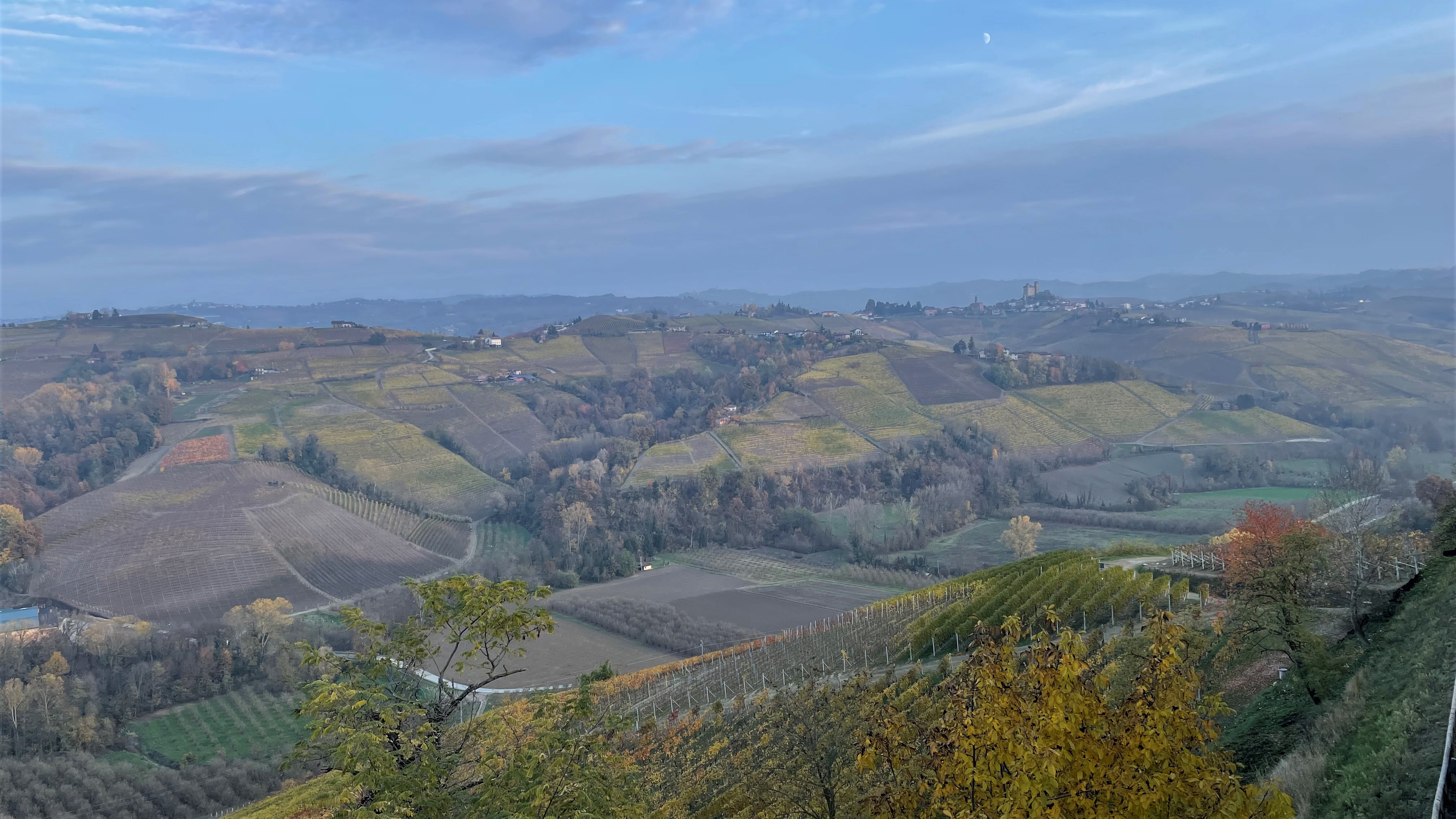
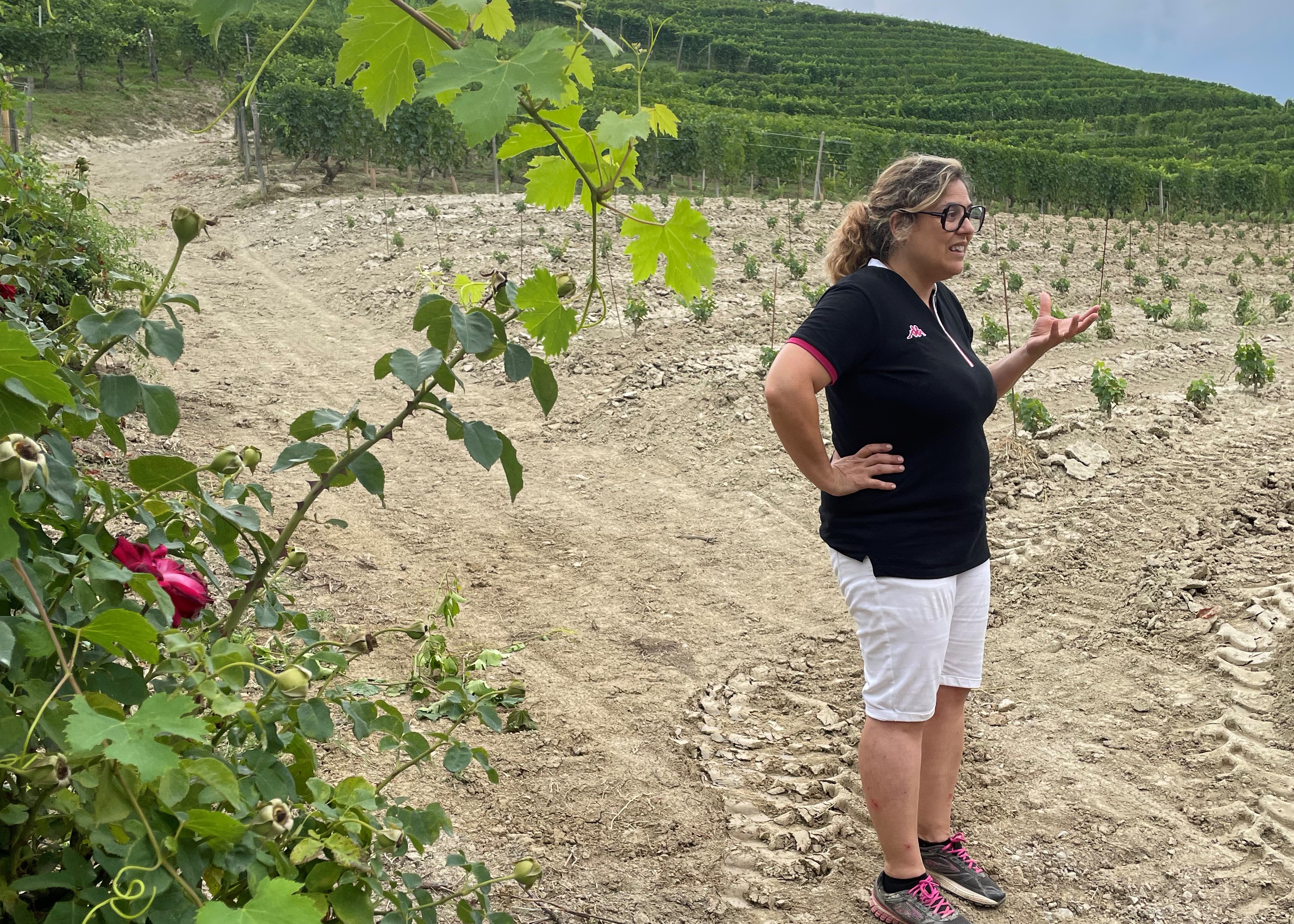
View of Serralungs vineyards, including Lazzarito

When deciding which grapes to blend in the Barolo Castiglione, they always start with Ravera and add in the others. The blend can differ every year, but usually includes some grapes from Castiglione, Monforte, Barolo and La Morra. Vietti has many different vineyards to choose from, including: Bricco Boschis, Scarrone, Villero, Codana, Parussi, Brunella, Bussia, Le Coste, Le Liste, Ginestra, Mosconi, Boiolo, Rocchettevino, Fossati and Camilla.

Winemaking

They select the grapes from many different vineyards from different villages in the Barolo area, always starting with Ravera. The different single vineyards are vinified and aged separately, and then blended right before bottling. This allows them to highlight the typical characteristics of each terroir, resulting in the best wine possible. The wine ages for about 30 months in oak barrels of different sizes, before it’s blended and then bottled.
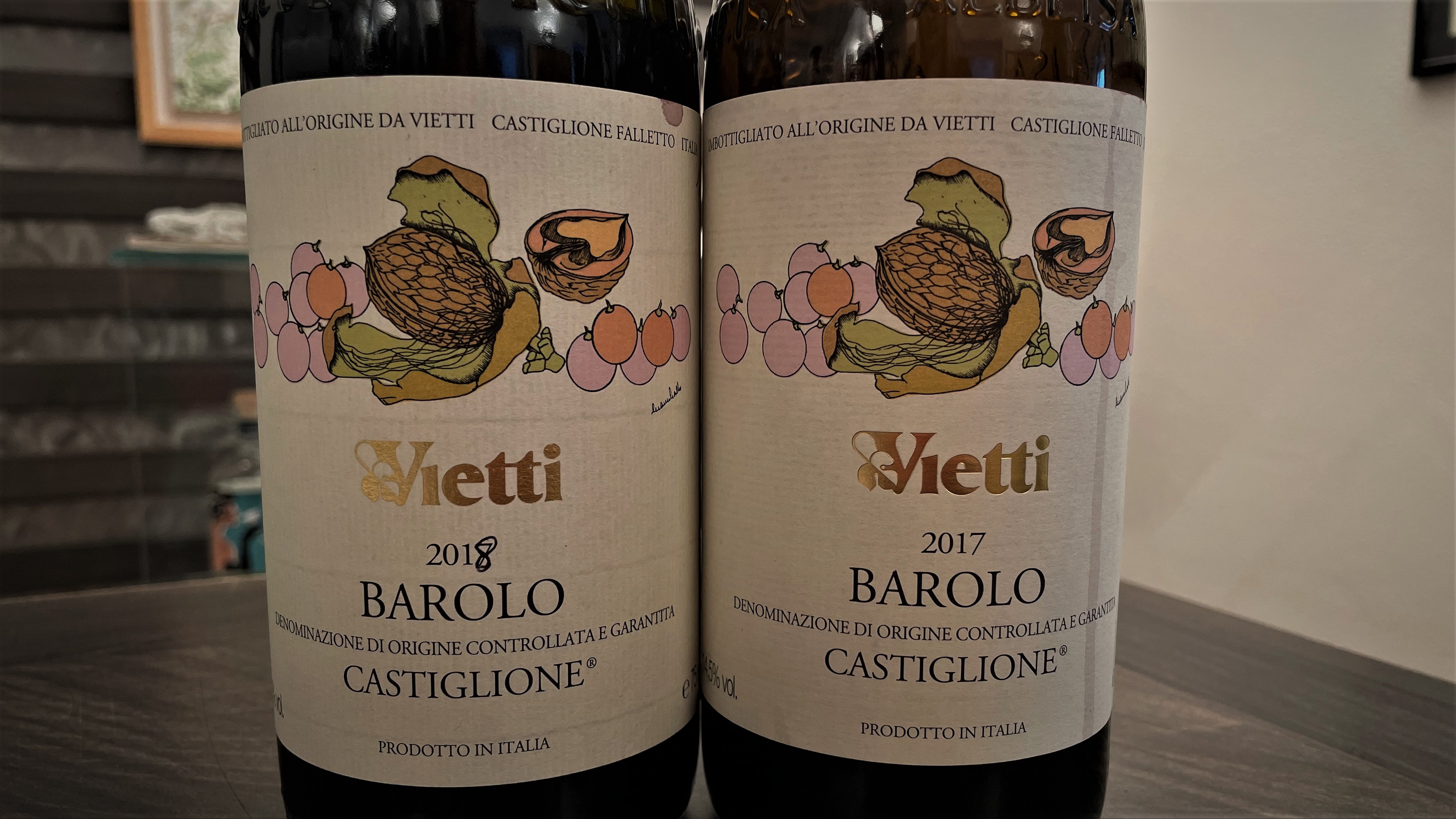
Vietti Barolo Castiglione 2017 and 2018

Vietti Barolo Castiglione Tasting Notes

I recently tasted the 2017 and 2018 Vietti Barolo Castiglione side by side, allowing me to really see some of the differences between the two vintages. As most of us know, in 2017 is was very dry and quite hot, as opposed to 2018 which was quite rainy. But, we, myself included, must be careful not to judge a vintage before we have had the chance to taste some of the wines. More often than not I am pleasantly surprised by the wines. Even in what could be classified as a “difficult” vintage. I think Fabio Alessandria said it so well:

Because we pay a lot of attention in the vineyard and in the cellar, I think that it’s difficult to have a bad vintage

Fabio Alessandria

In the Vietti Barolo Castiglione 2017, I found some warm notes, of darker and a bit riper fruits, but the wine is still fresh and fruity. I also found some spice notes. The tannins are quite round, and warm, if that makes sense. I would definitely call this a balanced wine, with a good finish. The 2018 is a bit more elegant. Fruity with beautiful floral notes. A fairly structured wine with good depth.
CannuBio

It’s not like we need yet another reason to love Chiara Boschis, but CannuBio definitely makes the list! And what is CannuBio you might ask? Well, it’s one of the many projects Chiara is currently working on.

Chiara Boschis  has always worked in a sustainable and organic way, but in 2010, she decided to get the organic certification. She thinks it’s “very important to push on this and let people know. And to start to change the mind of the people.” One of the reasons why it’s important for Chiara to try and convince others to farm organically, is because her plants can be affected by her neighbors actions. So even if she farms organically, if one of her neighbors use chemicals, some of it might transfer over to her plants. This is a problem in any vineyard, including Cannubi, where the parcels are quite small. So she decided to start a project: CannuBio.

CannuBio

In Cannubi, there are 26 different owners. And Chiara, accompanied by what she calls the “guru of the organic farming”, went around to all the different owners and tried to convince the ones who weren’t already doing so, to start farming organically. One by one they agreed, and today 23 have joined the CannuBio project.

“I had nothing to lose. Even if it seems a crazy project, you know, the classical mission impossible, I really wanted hard to try to convince the other people.”

Chiara Boschis

One of the winemakers farming in Cannubi, is Fabio Alessandria from Burlotto. He sees first hand how important this project is, acknowledging that “when all the vineyard is treated like this, the benefit are much bigger than a single winemaker working this way”. And the benefits aren’t just limited to this one vineyard. In addition, he says that this project “motivated (them) to work more and more in this way”.

What does it all mean?

One of the main aspects of organic farming, is to avoid using chemicals. But for Chiara, it’s about so much more. Of course, not using chemicals is incredibly important, but “it’s really an holistic approach that means to care about every aspect of the agriculture and the winemaking. Not using chemicals is number 1 but you need to create the right environment which means of course to take care of the fauna and the birds, the insect, organize the soil, to have cover crop, flowers in the vineyard, manage the canopy.”

Let’s take it one step further, from organic farming to sustainable winemaking. As Carlotta Rinaldi says, “it’s a wider conversation, than just saying organic or biodynamic, using chemicals or not using chemicals.” It’s the whole picture. She goes on: “It doesn’t just cover treatments, it covers the amount of time of passages of the tractor in the vineyard for example.”

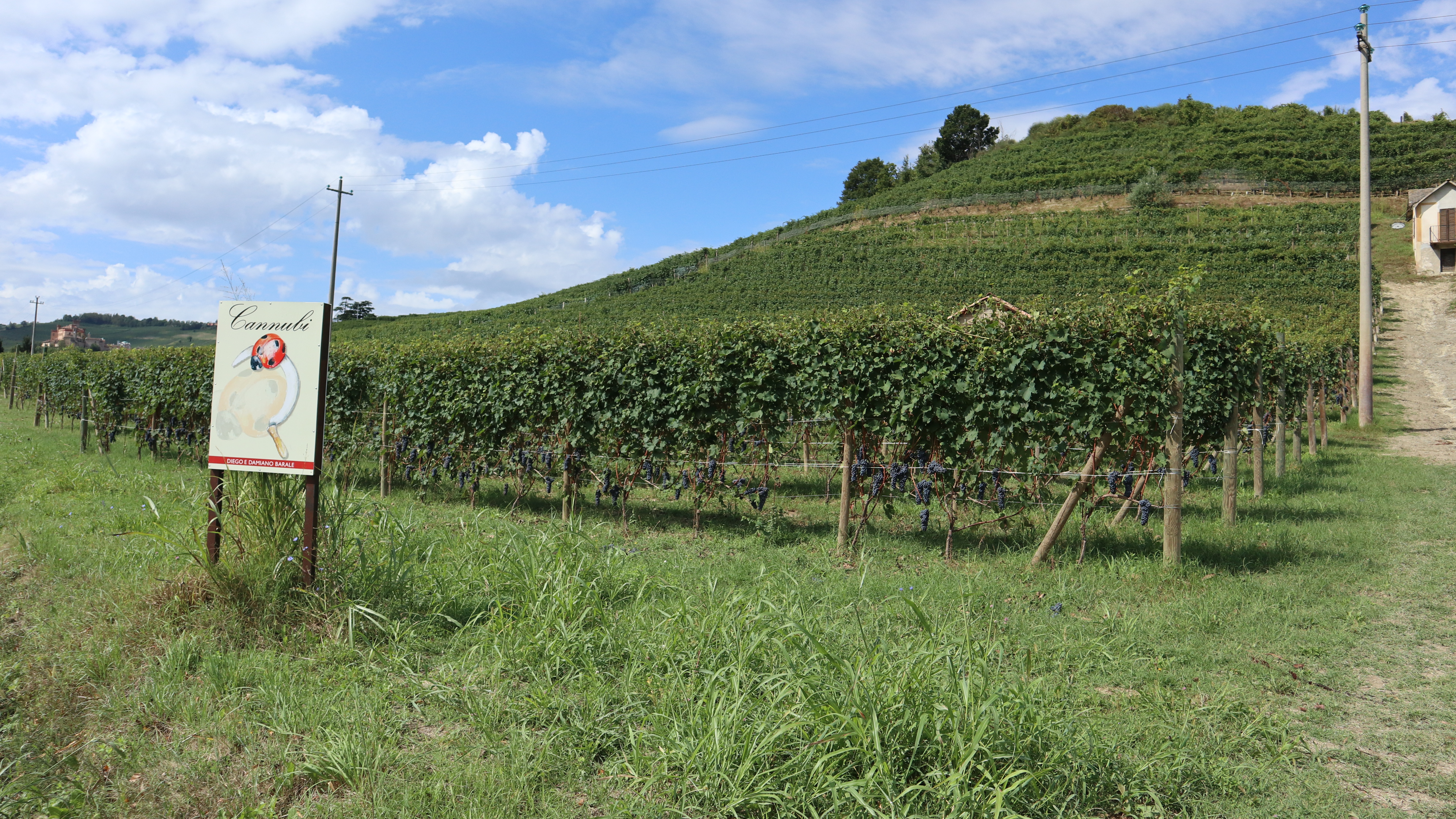
Picture of Cannubi, the location of the CannuBio project.

What motivates them to farm organically?

Another winemaker who farms organically is Nadia Curto. And when asked what motivates her to farm organically, Nadia had the best answer: “One more philanthropic reason, for we would like to offer to the customer wine that are healthy, that don’t give problem to the stomach. to the head, etc. But also for an ego reason because we are in the front line in the field, and so when we use chemicals we breathe these chemicals and we stay really in between that situation and so also for myself, and for the child, for my dog, because the little dog runs every day in the field, and so it’s very important to also protect this situation, for try to stay better.”

I think this is so important to keep in mind: they are on the front lines. They are in the field. They spend a lot of time in the vineyard. Of course they don’t want to be surrounded by chemicals. I bet you don’t either. I mean, we are so concerned with avoiding chemicals in the other aspects of our lives. Why shouldn’t this be extended to the wine we consume? And, for many of you, it probably already does. But I bet there are a lot of people who buy organic spinach, free range eggs, or BPA free water bottles, yet they drink wine that was made using chemicals.

So that was the “egoistic” and ethical reason behind organic farming. But Nadia also says that “the wine is better”. Why? “The wine without chemicals is something different. Every time is something  unique. The character is special. When you drink a natural wine the heart become big, the joy arrive, its something different because give the life” she adds.

The future of CannuBio

Chiara’s goal is to reach 100% participation rate of the project in Cannubi, but it’s easier said than done. One of the hopes was that this idea would spread to other vineyards like Brunate. But Carlotta says that so far, “the response was a bit difficult.” However, even if it seems like a “mission impossible”, no one is giving up. And the CannuBio project had other positive “side effects” like the birth of the Green Experience. What started as a passion project in Cannubi, evolved into something bigger. And it’s definitely not the end.

So, let’s keep talking about it. Let’s do our part. And let’s support those who farm organic, so that they can do their part.

Recent Release from Burlotto

Recent Release from Burlotto

Curious about the recent release from Burlotto? So was I.

The visits with Fabio usually tends to be one of the most educational. Yes, we taste the wines, but we also talk. About everything. And the more he talks, the more you realize how profound he is. Want to see for yourself? Check out this recording of our zoom session from last year. We talk about Dolcetto, Freisa, the 2020 and the new Burlotto entry: Castelletto 2018!

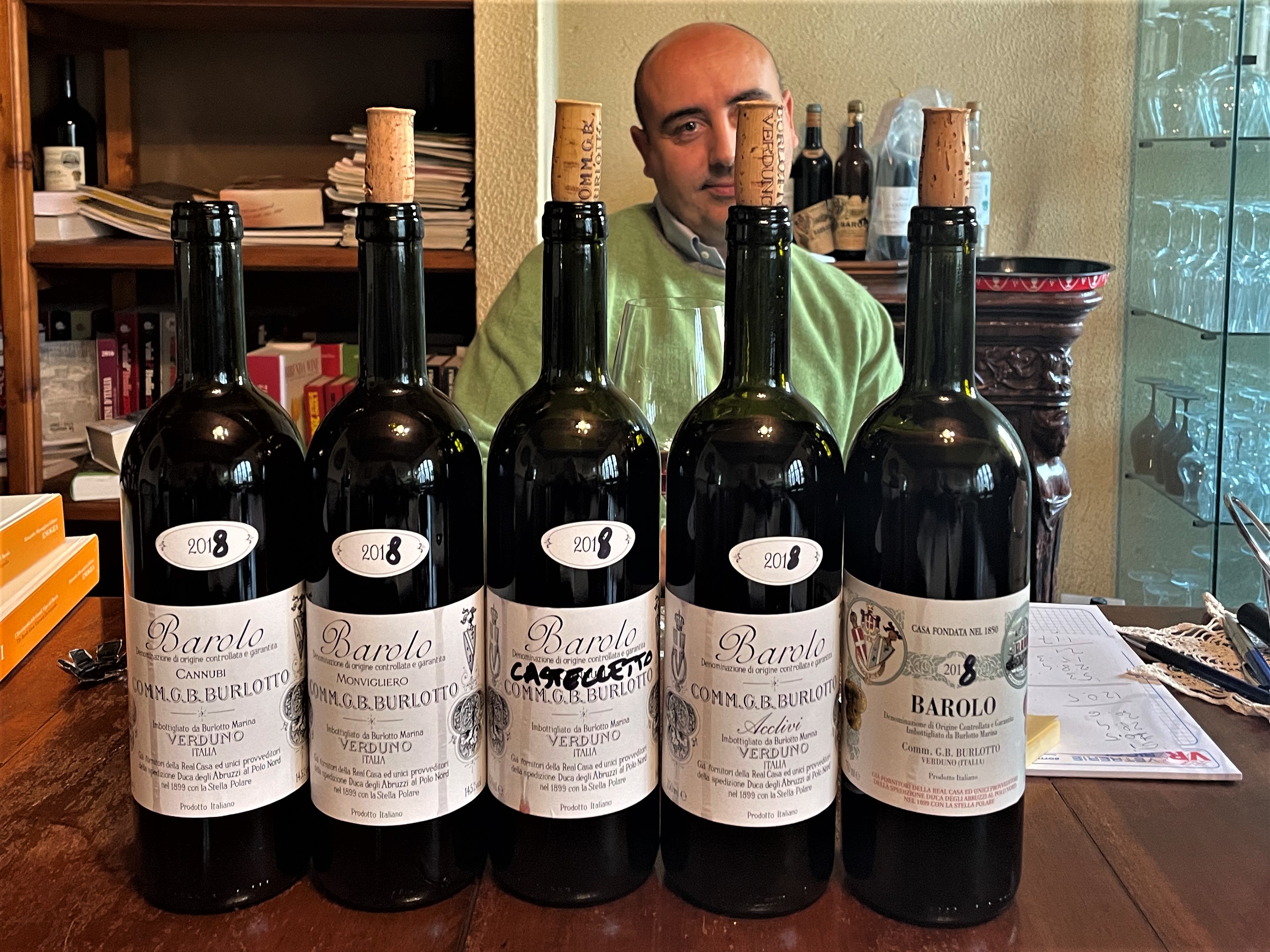
Now, back to the recent release from Burlotto. I did not taste the full lineup this time around. Both the Freisa and Pelaverga were “left out”, but I did get to sneak a peak at the 2018 Barolo’s!

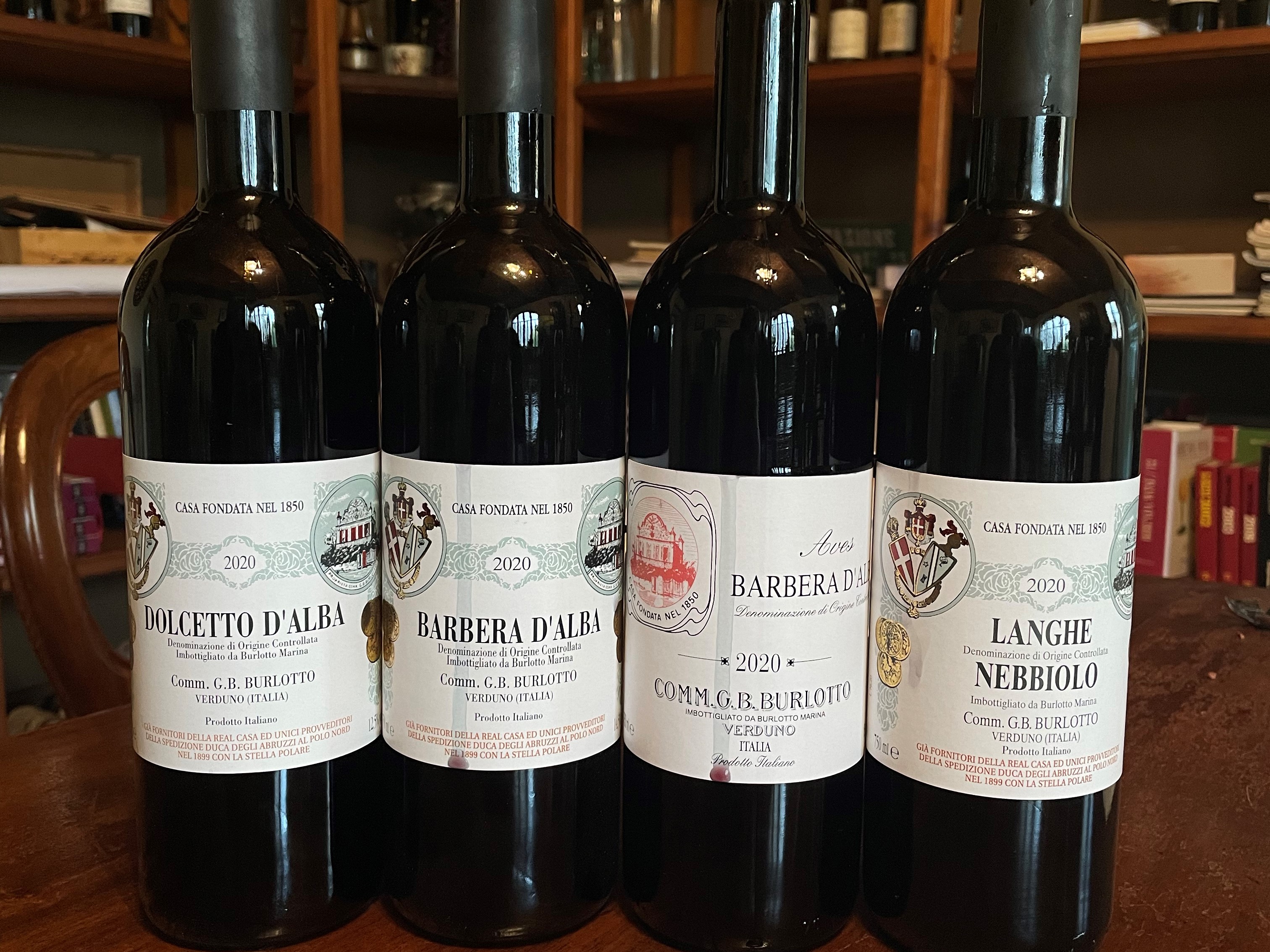
Burlotto Dolcetto 2020

A very fruity and elegant Dolcetto, with a bit of structure. As Fabio says, “a lot of brightness”. There is also a sensation of bitter almonds and cherry. I am not sure if you know, but they use around 50% whole cluster in the Dolcetto, giving it that structure.

Burlotto Barbera 2020

Balanced, good body, long finish. Has a bit of spiciness and aromas of pepper, probably from stemming from the soil in Verduno. We all know the Monvigliero has that white pepper characteristic.  

Burlotto Barbera Aves 2020

The Burlotto Barbera Aves is probably one of my all-time favorite Barbera’s. The 2020 is no exception. The Aves 2020 is rich and fleshy but not heavy. Spice notes and red fruit, good structure and high acidity, followed by a long finish.

Burlotto Langhe Nebbiolo 2020

Fabio decided he wouldn’t make Acclivi in 2020, so he put the grapes into the Langhe Nebbiolo instead. Perhaps that’s why this has quite a complex nose. I found aromas of fruit and flowers, as well as leather, and tobacco. Is equally complex in the mouth. It could probably benefit from a few years in the bottle.   

Barolo 2018: A Preview

Recent Release from Burlotto

As Fabio said, “I adore the 18’s”. I too adore the 18’s. Don’t get me wrong, I like the 17. And 16. And 15. And 14. I think each vintage has their own characteristics, and will honestly go so far as to say that there is no such thing as a bad vintage. And it seems, on this, Fabio and I agree.

Because we pay a lot of attention in the vineyard and in the cellar, I think that it’s difficult to have a bad vintage

Fabio

According to Fabio, he had more work in the vineyards in 2018 than 2017. The spring was more humid, which led to more mildew. The wetness also led to more vegetation and good growth. Overall, the 18’s are quite approachable, gentle and elegant. Although Fabio finds it hard to predict the age of a wine, he thinks the 17 might age a bit better than 18. But as he also said, “it’s important to have wines that are more drinkable in the beginning.”

Burlotto Barolo 2018

Masculine nose with aromas of leather and tobacco, but still fruity and quite approachable. A gentle and elegant wine.

Burlotto Barolo Acclivi 2018

The Acclivi is a bit deeper than the Classico. So elegant in the mouth with a very gentle structure. Fruity and crisp, with a long finish.

Burlotto Barolo Monvigliero 2018

Incredible nose with aromas of white pepper and red fruit, with a hint of spice. It was actually a bit spicy in the mouth as well. A very distinctive wine with a lot of personality.

Burlotto Barolo Cannubi 2018

With the Cannubi, the word elegance springs to mind. Elegant nose, elegant tannins, elegant structure. If I were to pick a wine to demonstrate how a Barolo should smell, this one would be a perfect example.