Most of you are probably already quite familiar, but let’s talk about Barolo. I mean, what is Barolo? I honestly don’t really know where to start but I guess I could start with the basics. Barolo is a wine made in the Barolo area, and it’s made with the Nebbiolo grape. There are strict rules with regards to the location and the vinification process of the grapes, and unless you follow those rules, you can’t call it a Barolo. I’ll just touch on some of the rules really quickly:
The grapes have to come from inside the Barolo area, which includes 11 villages
The wine has to age for a minimum of 18 months in oak
The wine should age for 36 months in total, the rest of the aging taking place in the bottle
Barolo – where to start?
Now, like I mentioned before, there are 11 villages in which you can make Barolo. Some are more “famous” than others, like the Barolo village. But one of the most important things when it comes to Barolo is the terroir. The terroir varies quite dramatically across the Barolo area, in the different villages. So much so that it’s common to make Barolo’s with grapes harvested from very specific vineyards, and there are called single vineyard or cru Barolo’s. One of the most important educators on this topic is Alessandro Masnaghetti, aka Map Man Masna. I think terroir should have it’s own article, so I won’t go into too much detail here, but basically, the soil, the altitude, the climate and the biodiversity in each village plays a huge role in how the wine tastes. And I swear it’s evident in the different wines. Don’t believe me? Try it for yourself and see!
Where to start?
Ok, let’s talk about Barolo and how to start exploring the different kinds. One way, is to start at the top (literally) and work your way down. In the north you’ll find the village of Verduno. Burlotto is one of the first winemwakers that come to mind here, but his wines are nearly impossible to find these days. But don’t worry! Diego Morra also makes a Barolo Monvigliero, as well as a classic Barolo, so you could start there. Next up on this mini tour of Barolo: La Morra. The Cristian Boffa Barolo del Comune di La Morra is a safe bet. Another favorite is the Brunate from Marengo. And let’s not forget about Arborina. Nadia Curto, Giovanni Corino and Elio Altare come to mind. There are obviously many more wines I could suggest, but the article would be 7 pages long with a 100 links…
Moving right along to Castiglione Falletto, one of the wines that immediately come to mind is the Barolo from Cavallotto. Alfio and Giuseppe make really good wines, from their Pinner to their top cru Barolo. In certain vintages, I’d dare to say that their Langhe Nebbiolo resembles a “baby Barolo”. Just a friendly tip… From Barolo there’s the Francesco Borgogno Castellero. You could try to get your hands on a Chiara Boschis Cannubi, but those are a bit harder to come by.
We’ve made it all the way to Serralunga, at least for those of you who kept reading. If you haven’t already, you have to try the Barolo from Daniele Grasso. I could give a lengthy explanation why, but this is already a long article, so you’ll just have to take my word for it. Serralunga, similar to other towns in the Barolo area, is quite known for one vineyard in particular: Vignarionda. I’d give the one from Luigi Pira a try. But Vignarionda can be quite punchy, and is on the more expensive side, so another option is the Barolo del Comune di Serralunga. It will be a bit more approachable and won’t leave as big a dent in your wallet.
Last, but not least: Monforte d’Alba. There are some important Cru’s in Monforte as well, but my mind immediately goes to the Gianfranco Alessandria Barolo San Giovanni. Their classic Barolo is also a Monforte Barolo, so that’s another option. A more unknown cru within the borders of Monforte is Perno. You might know Perno because of Repubblica di Perno, one of my favorite restaurants. Right across the street you’ll find a brand new winemaker named Paolo Giordano. He makes a Perno Barolo, and it’s definitely worth a try.
Disclaimer: I know I didn’t touch on all 11 villages here, but I tried to include some of the most important ones. The thing to note is that I didn’t forget them! Maybe that’s a topic for the next article?
Before I dive into the actual topic of this article, Marengo Barolo 2019, I need to make one thing clear. I do not consider myself a wine critic. If we go by Wikipedia’s definition of the word, I guess I technically could be called a wine critic. But I’d rather consider myself a wine lover, on a mission to help people drink good wines. I try to tell stories. About the winemakers. About the wines. Yes, I do write tasting notes. But when I do, I try to accompany those notes with some background information and perhaps a few anecdotes. I do this to try and give you the bigger picture. Not just my subjective opinions about the wines.
Which brings me to another point. If I taste a wine that I don’t like, I don’t write about it. If, for whatever reason, I don’t like a wine, I leave it alone. And there could be many reasons why I don’t like a wine. Maybe it was a bad bottle. Maybe there was something wrong with the wine. Or maybe I just didn’t like it. It wasn’t for me. It could also be that the wine was bad. Because there are wines out there that are bad. But who am I to tell the world that? Now, I understand that it’s a wine critics job to critique wine. But when I was little I learned that “if you don’t have something nice to say, don’t say anything at all.” This is especially true if what you say can affect someone’s life. Someone’s livelihood.
Some friends of mine recently received a particularly bad review of some of their wines. I won’t spend much time on that, but when I read that review I knew I had to taste those wines for myself to see they really were as bad as they were made out to be. And spoiler alert, they absolutely were not! My friends, Jenny and Marco, make excellent wines, and the 2019 Barolo’s are no different. I was also happy to see that Jancis Robinsons agrees with me, in her Financial Times article.
Jenny and Marco Marengo
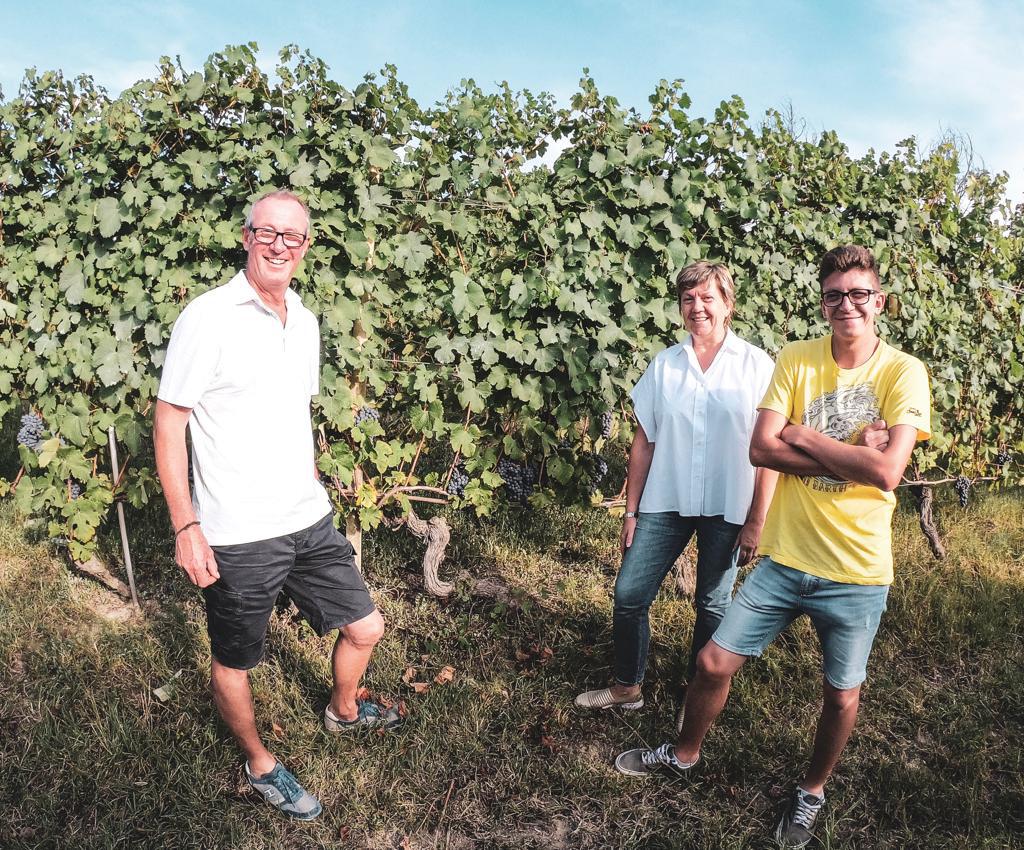
Jenny and Marco Marengo are warm and generous people, who are very passionate about their wines. Together with their son, Stefano, the three of them work enthusiastically together in the pursuit of excellent winemaking. Marco really is a nerd, in the modern, positive, definition of the word. The same way Bill Gates is often referred to as a nerd, an expert and enthusiast, and obsessed with intellectual pursuit of winemaking.
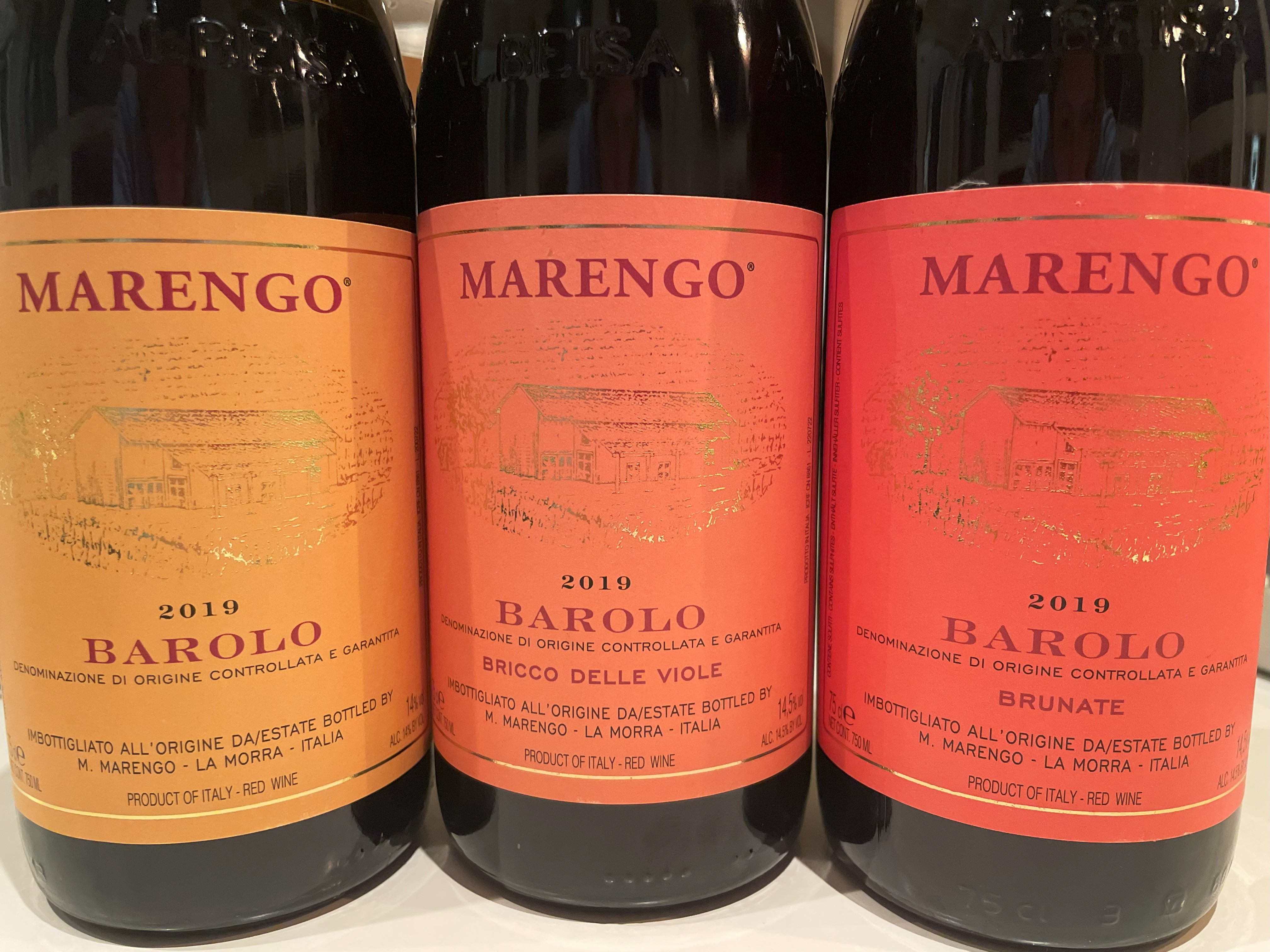
And without further ado, here are my tasting notes on the Marengo Barolo 2019:
Marengo Barolo 2019
The classic Barolo has an intense nose with aromas of red fruit, flowers, tobacco and a hint of spices. The tannins are smooth. Round in the mouth, with good balance and quite long finish.
Marengo Barolo Bricco Delle Viole 2019
Beautiful nose on the Bricco Delle Viole. More explosive than intense. A bit more floral and fruity than the classic Barolo. Bigger tannins, but still smooth. A balanced, beautiful wine.
Marengo Barolo Brunate 2019
The Brunate was, not surprisingly, a bit more complex than the other two. Beautiful nose with aromas of red fruit and spices, with a hint of floral notes. Bigger tannins, more structure, yet smooth. Good balance with a long finish.
Anyone else excited about the most recent release from Vietti? I am! Believe me, these are wines to get excited about! As I’ve mentioned before, I like wines in every vintage. Vietti certainly makes good wines every year, and 2018 is no exception.
2018 Vintage
Looking back at the year 2018, you might remember that it rained quite a bit. It’s comparable to 2002, but the difference between the two vintages is when the rain fell. In 2018, the rain was concentrated around the growing season, especially in May.[1] It did rain above average most of the other months as well, causing an increase in work for the winegrowers. It’s not strange that one could think the 18’s would be “light”, especially compared to the 17’s. But so far I have been rather impressed with the 2018 Barolo’s I’ve tasted so far.
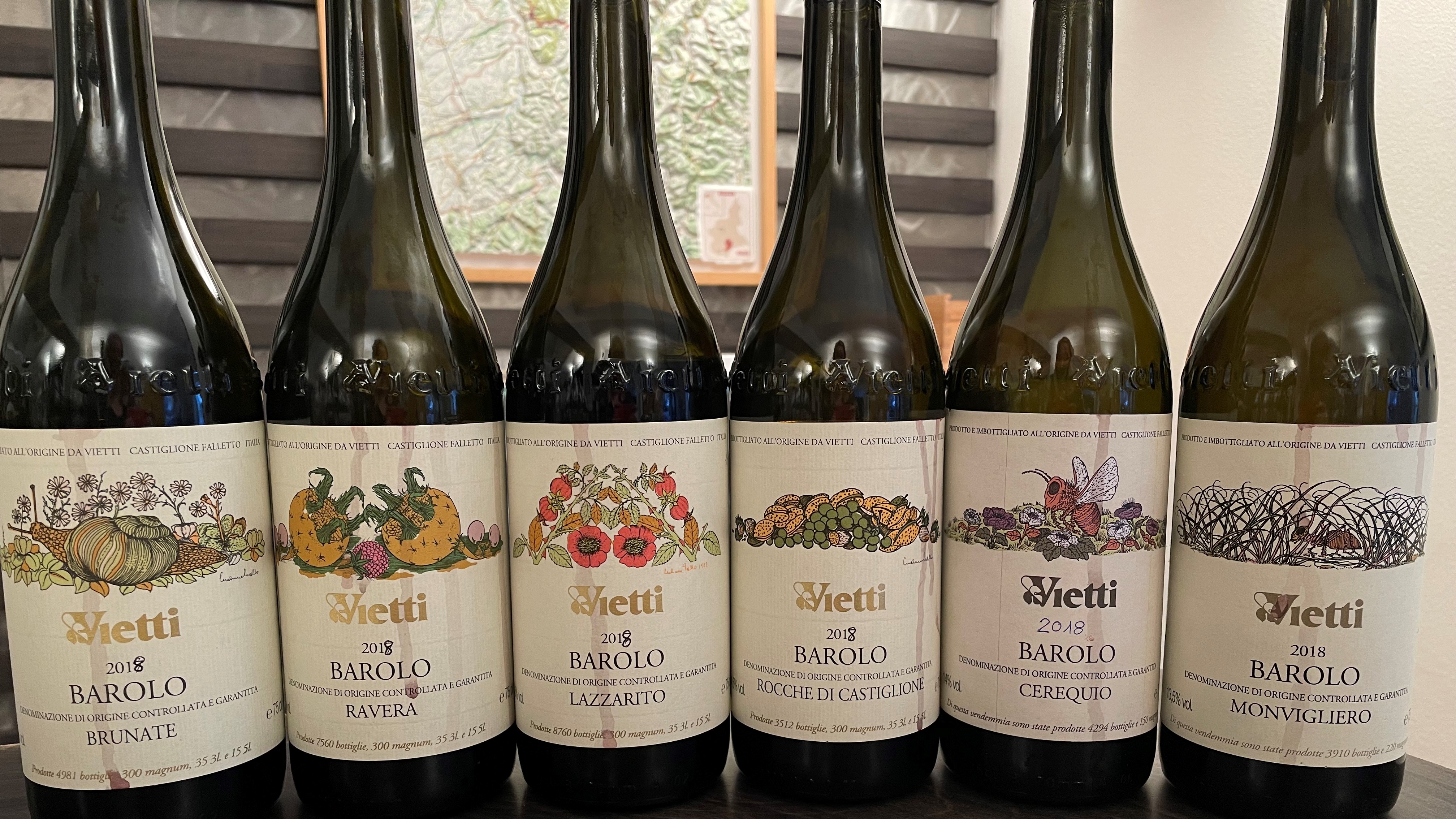
Recent Release from Vietti: Barolo 2018
Vietti Barolo Castiglione 2018
The 2018 is a bit more elegant compared to the 2017. Fruity with beautiful floral notes. A fairly structured wine with good depth.
Vietti Barolo Brunate 2018
The Brunate had a perfect Barolo nose. Complex and structured, but at the same time extremely elegant.
Vietti Barolo Ravera 2018
You can feel that power in the Ravera. Aromas of leather with a hint of balsamic. Complex but balanced.
Vietti Barolo Lazzarito 2018
Minty and herbal with a touch of balsamic. Round in the mouth, with a good finish. Very good.
Vietti Barolo Rocche di Castilgione 2018
A beautiful floral nose, a bit similar to the Brunate. Quite structured, but still elegant with a fresh fruitiness.
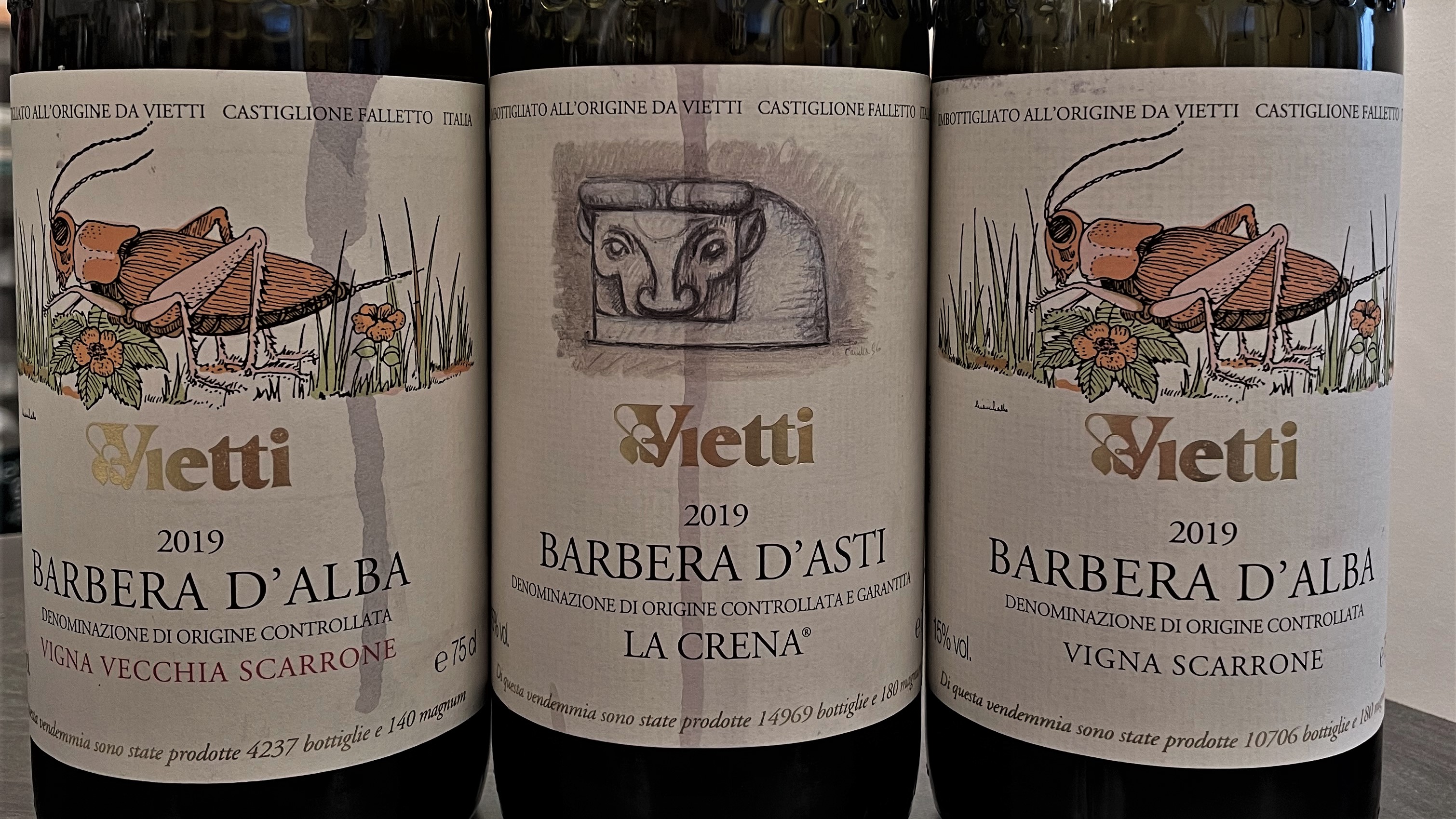
Vietti Barbera 2019
Vietti Barbera D’Alba 2019
A beautifully floral Barbera. Very aromatic. Quite concentrated, with good complexity. An incredible wine!
Vietti Barbera d’Asti 2019
A crisp and mineral Barbera, with aromas of cherry. Also quite concentrated, but a little bit less aromatic compared to the Barbera d’Alba.
Vietti Barbera d’Alba Vigna Scarrone 2019
Aromas of red fruits, especially cherry. Also some spice notes. A complex, balanced Barbera.
Vietti Barbera d’Asti La Crena 2019
The La Crena was a bit more subtle on the nose compared to the Vigna Scarrone, but also more structured in the mouth. Aromas of red fruits and spices. Will probably benefit from some time in the bottle. Has excellent potential.
Vietti Barbera d’Alba Vigna Vecchia Scarrone 2019
A very young wine that opened up in the glass. Good structure with a long finish. A full bodied, complex Barbera.
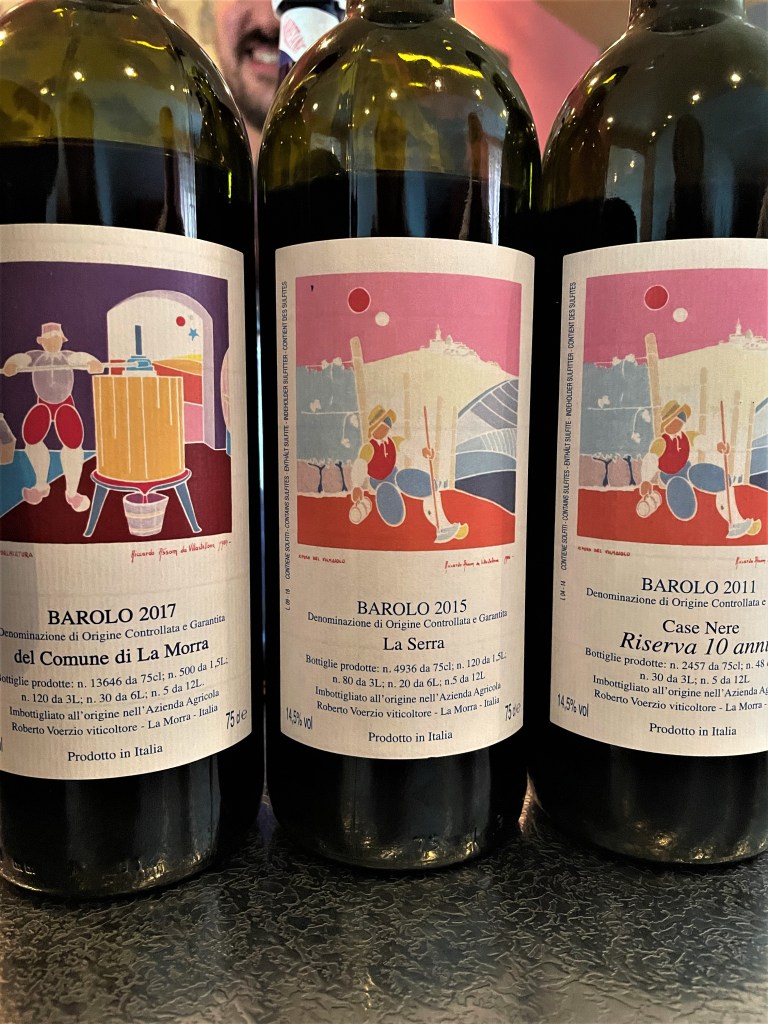
Here are my notes on the Roberto Voerzio La Serra 2015: I like it. Concise and to the point. There was just something about it. So drinkable. So approachable. So good. And out of all the wines I tasted that day, the La Serra was clearly a favorite.
La Serra
The La Serra vineyard is located in La Morra, right at the top above Cerequio and Case Nere. Why is the location so important? Altitude. Like MapMan Masna says: “elevation is always called into question, because at these heights (the border between La Serra and Cerequio is at exactly 400 meters) even 20-30 meters of difference can be important.”
2015
2015 is know as a “warm” vintage. But, being bookended by 2014 and 2016, 2015 kind of gets lost in translation. May, June and July were very hot, with very little rain, and it was not looking great for a while. Then, August came along with a whole 8 days of rain, followed by a relatively normal September, and a bit of rain in October, giving the vintage what it needed to avoid a 2003 situation.
Roberto Voerzio La Serra 2015
The Roberto Voerzio La Serra 2015 was so approachable with incredibly smooth tannins and lots of good fruit. I tasted it next to the Barolo del Comune di La Morra 2017 and the Case Nere Riserva 2011, and I can honestly say that the La Serra 2015 was my favorite out of the two!
Tasting Notes
During my visit to Roberto Voerzio, I tasted quite a few wines. Here are some notes:
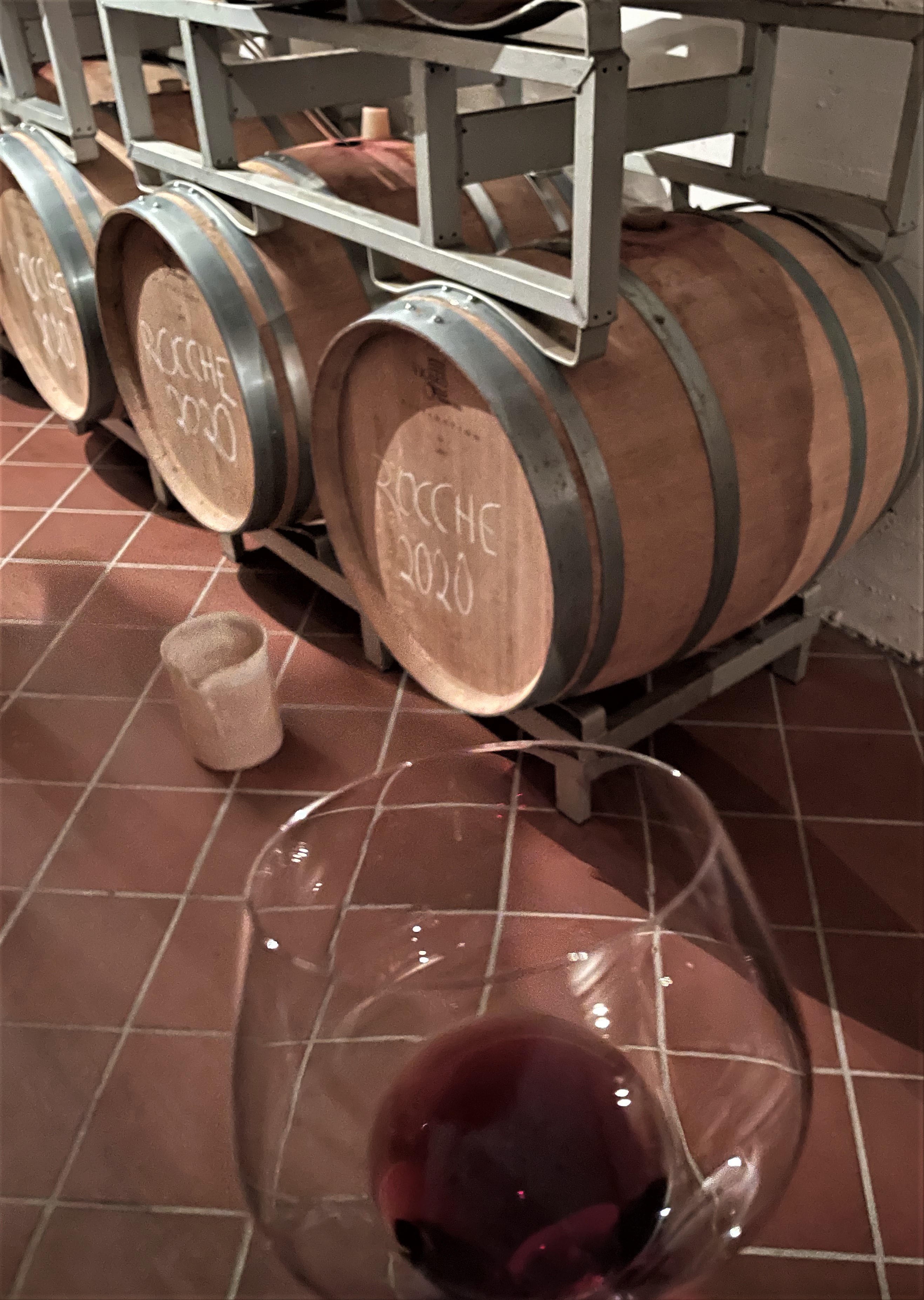
Roberto Voerzio Cerequio 2020
Barrel tasting. The Cerequio 2020 had a beautiful nose. Fruity, fresh. This wine has a bit of structure. Will obviously develop further over the next few years.
Roberto Voerzio Rocche 2020
Barrel tasting. The Rocche had less structure than Cerequio, as of right now, maybe a bit more classic? This is a wine I look forward to taste once it’s in the bottle!
Roberto Voerzio Sarmassa 2019
Barrel tasting. The Sarmassa is made only in magnums! It had a beautiful nose, with a bit more concentration than Rocche, quite typical of the 2019 vintage. A very good wine, a good roundness in the mouth.
Roberto Voerzio La Serra 2019
Barrel tasting. The 2019 La Serra was even more concentrated than the Sarmassa with harsher tannins as well. A big wine with aromas of darker fruits, dark cherry. Very different to the 2015!
Roberto Voerzio Brunate 2018
Tasted from tank. Wow, what an incredible nose. Elegant and concentrated, all at the same time with aromas of dark fruit. Elegant in the mouth as well. A classic wine.
Roberto Voerzio Fossati 2018
Tasted from tank. The Fossati is one of the more masculine wines I tasted that day. Aromas of tobacco, some herbs, red fruit. The tannins were quite harsh, at least compared to the other wines tasted.
Roberto Voerzio Barolo del Comune di La Morra 2017
The Barolo del Comune di La Morra 2017 is a mix of grapes from Boiolo 50% and 50% other cru’s. This was the first wine I tasted during this visit that had really prominent oak notes. Probably because the other wines had some months(+) left in the barrels.
Roberto Voerzio Case Nere riserva 2011
When tasting the Case Nere Riserva 2011, we had reached the end of the visit. And to be honest, we were all a bit preoccupied with out lunch plans, so the only note I have here is: “Quite impressive”. Incidentally, it’s the wine we ended up bringing to lunch. Pretty good way to end the tasting!
Have you tried the recent release from Marengo? Wondering if you should? I think it’s a no brainer, but maybe these tasting notes might help persuade you!
Dolcetto d’Alba 2020
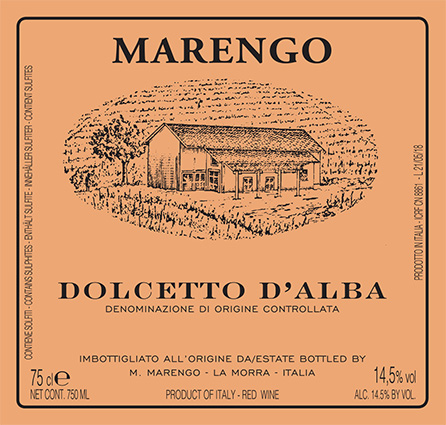
This Dolcetto is on fire! Quite concentrated with good structured and lots of fruit. It lasts forever! So good!
Barbera d’Alba Vigna Pugnane 2019
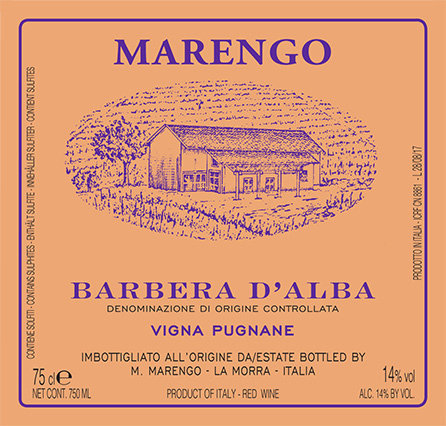
What a beautiful Barbera nose with aromas of red berries and spices. Explosive, both on the nose and in the mouth.
Nebbiolo d’Alba Valmaggiore 2019
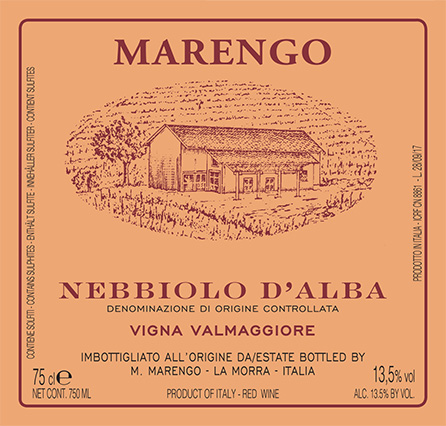
The Marengo Nebbiolo d’Alba Valmaggiore might be my favorite Marengo wine. And one of my favorite Nebbiolo’s. The 2019 is no different! A very balanced wine with good structure and elegant tannins. On the nose you’ll find rose petals, mineral notes and a hint of tobacco.
Barolo: Recent Release from Marengo
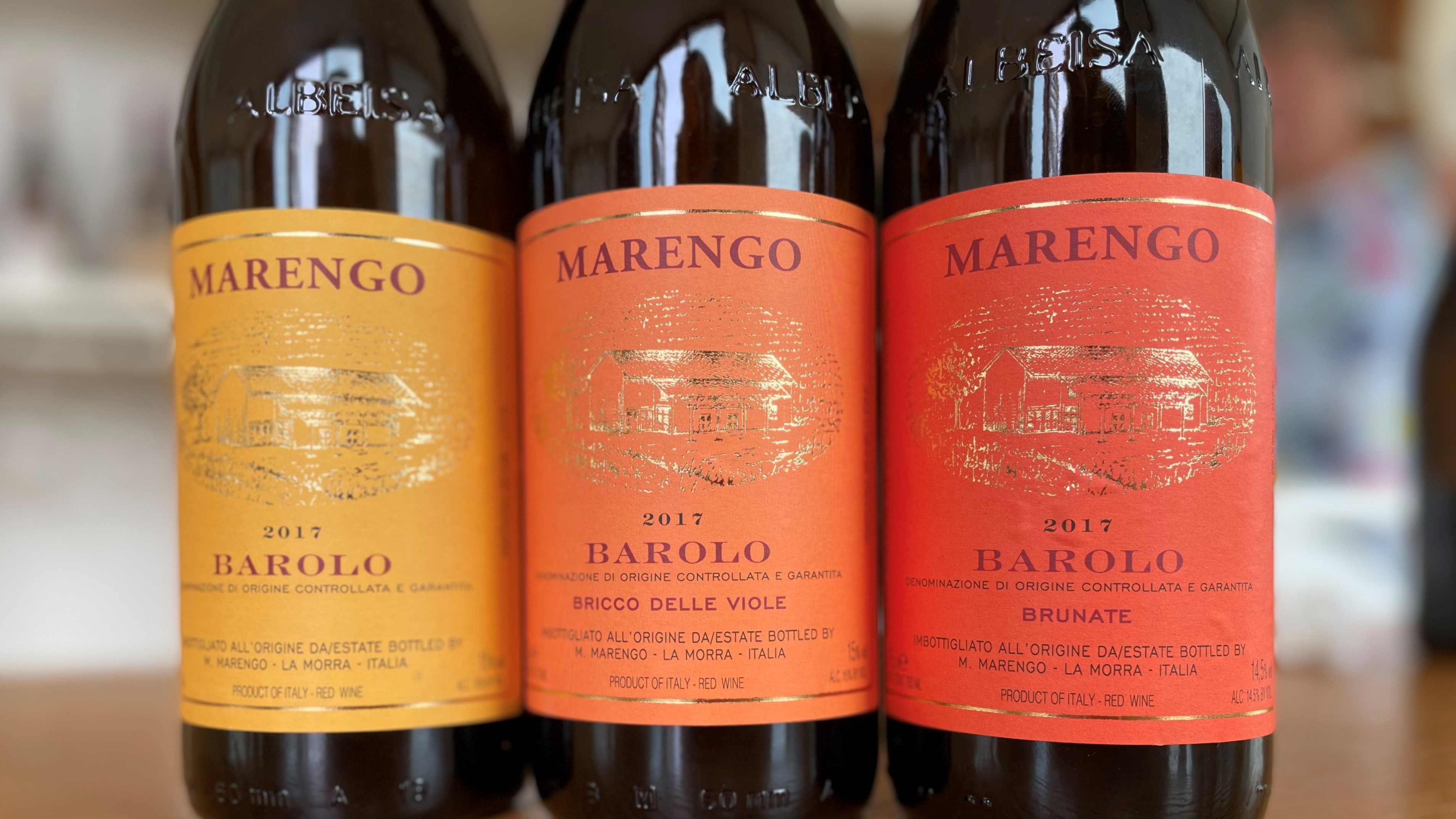
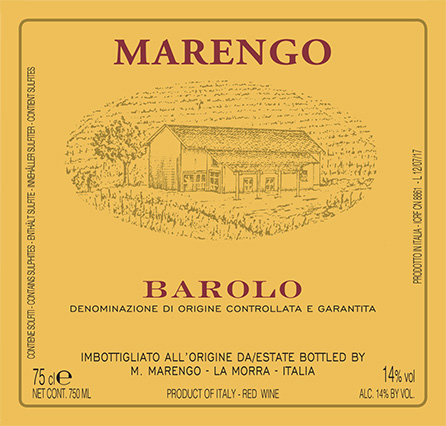
Marengo Barolo 2017
The classic Barolo is a bit concentrated, similar to many other 2017 Barolo’s. The tannins are big and a bit more chewy compared to the 2016, but the wine is good!
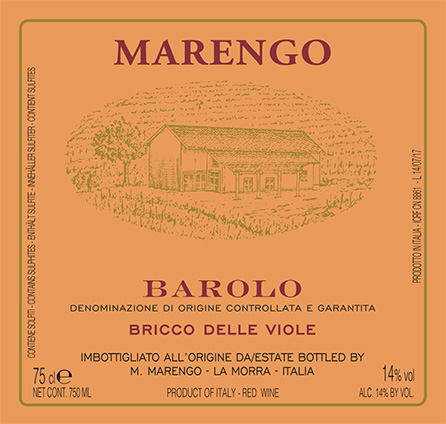
Barolo Bricco Delle Viole 2017
The Bricco delle Viole has a beautiful floral nose with aromas of dark fruit. Also quite concentrated. Very easy to drink with lots of fruit and good length.
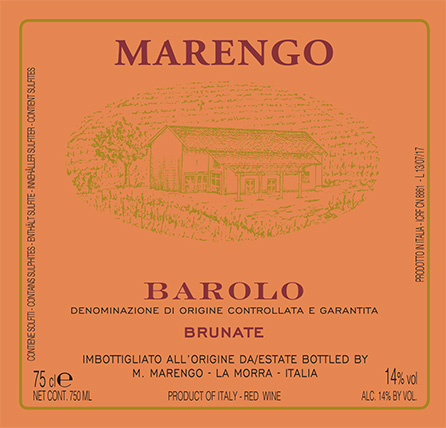
Marengo Barolo Brunate 2017
The Brunate was a little bit closed at first, but opens up in the glass and becomes the Brunate we all know and love. A big but elegant wine with hints of tobacco and leather.
Meet the Marengo Family
Marengo: Geek or nerd, in the modern, positive, definition of the words. The same way Bill Gates is often referred to as a nerd, an expert and enthusiast, and obsessed with intellectual pursuit of winemaking.
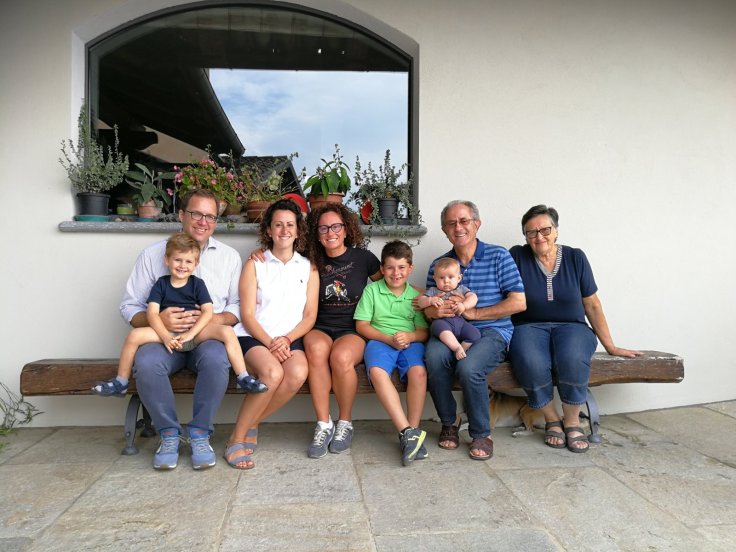
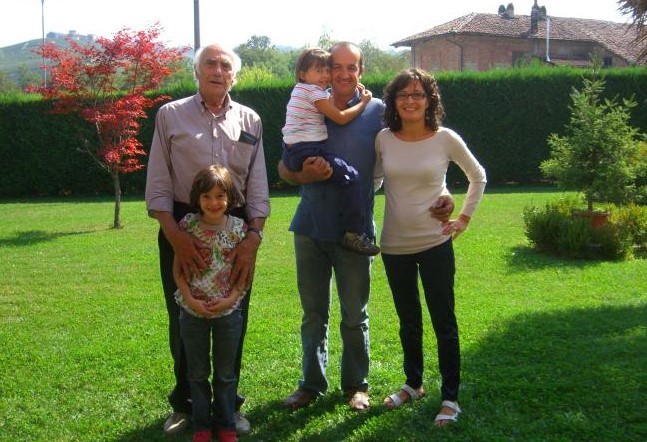
Jenny and Marco Marengo are warm and generous people, who are very passionate about their wines. Their son, Stefano, recently joined the winery full time, and the three of them work enthusiastically together in the pursuit of excellent winemaking.
Marco Marengo: Geek or nerd, in the modern, positive, definition of the words. The same way Bill Gates is often referred to as a nerd, an expert and enthusiast, and obsessed with intellectual pursuit of winemaking.
Cantina Marengo has about 6 hectares of vineyard in total, and the majority is used for nebbiolo for barolo. They make about 35,000 bottles of wine per year, which is spread out over the 6 (or 7) different wines they make. Both the Brunate and Bricco delle Viole vinyeards have belonged to the family for 5 generations.
Brunate is a well known name for many people.. Located in La Morra (73%) and Barolo (27%), the vineyard has mixed clay and silt soil with south/southeast exposure. There are 14 different wineries that have plots in Brunate (and some private).
Marengo Barolo Brunate
The vines Marengo use for Brunate are almost 80 years old. The vineyard has mixed clay and silt soil and south exposition. Harvest happens in September/october, depending on the vintage. Then the wine goes through natural acoholic and malolactic fermentation, before spending 24 months in french barrique. After an additional 6 months in bottle, the Marengo Barolo Brunate is ready to go!
Brunate is perhaps one of my favorite cru’s from Piemonte, and Marengo makes a very good one. You’ll find aromas of fruit, black cherry and some spices. The wine is full body, with silky but persistent tannins. Goes well with meat and cheese.
Where can you find the Marengo Barolo Brunate?
Norwegians, you can order it at www.vinmonpolet.no or get it in these local stores: Aker Brygge – 5 Moss – 22
Marengo’s wine are availale in many other countries as well. Look for them in the US and Italy. You can always ask Jenny where to find their wines: marengo@cantinamarengo.it
Silvia Altare, Queen of the Andals, the Rhoynar and the first Cry, Protector of the grape, Queen of the Langhe, Khaleesi of the Great Grass Sea, Mother of Dragons, The Unburnt, Breaker of Chains and the Lady of the Annunziata
Toni Fadnes
Photo of the Altare Family, from their website
The words that come to mind when thinking of the Altare family are: Insieme & Energy.
And for those of you who are not Game of Throners, when I say that the Altare family is first of their name, I am referring to the “Barolo Revolution” and the introduction of barrique to the area. On top of that, they are known for their extraordinary wines and and incomparable energy.
Winemaking
In 1976, Elio traveled to Burgundy and it was a trip that would change the course of history forever. Elio infamously took his father’s big barrels outside and chopped them up. He wanted to use small barrels instead, barrique, like the french. This act would eventually lead to his disinheritance. But Elio persevered.
Today, the family still use small barrels (barrique) for most of their wines, and steel tanks for the dolcetto d’alba , barbera d’alba and langhe nebbiolo. The oak is used as a tool, and none of their wines have a significant presence of oak flavors. Try putting it in a blind tasting lineup and see for yourself.
With a total of 10 hectares, they make about 70,000 bottles a year.
Fun fact
SEVEN PRODUCERS, SEVEN DIFFERENT STORIES, ONE SINGLE LABEL: L’INSIEME
Silvia’s father, Elio Altare, isthe founder of L’Insieme. And what is L’Insieme? It’s a project between 7 winemakers in Langhe where they donate a percentage of the proceeds to a good cause. Below you will see their own explanation of the project (found on their website).
The project aims to make wines which, under a single brand, tell a story of friendship and collaboration, of hard work, shared passion for the Langhe and its outstanding grapes.
The dream is that, from this union, the resultant label will be a symbol of friendship and mutual aid. A wine that is our personal way of thanking the land that gave us our roots and its support.
Our goal is to make L’Insieme wine a practical ethical tool, allowing us to fund projects of high social value as a way of giving back to our local area a part of the good fortune and beauty it has given us.
Fun fact II
When it comes to blind tasting, we all know Silvia and Elio are very good. They have trained their noses for years. But the one who always seems to surprise us with her incredible ability is Lucia, Elio’s wife. She will sit quietly, while everyone shares their opinions and then all of a sudden she will blow you away with her analysis. A very impressive woman.
The Altare Wines
Wines available in: Norway Sweden Denmark USA UK Italy
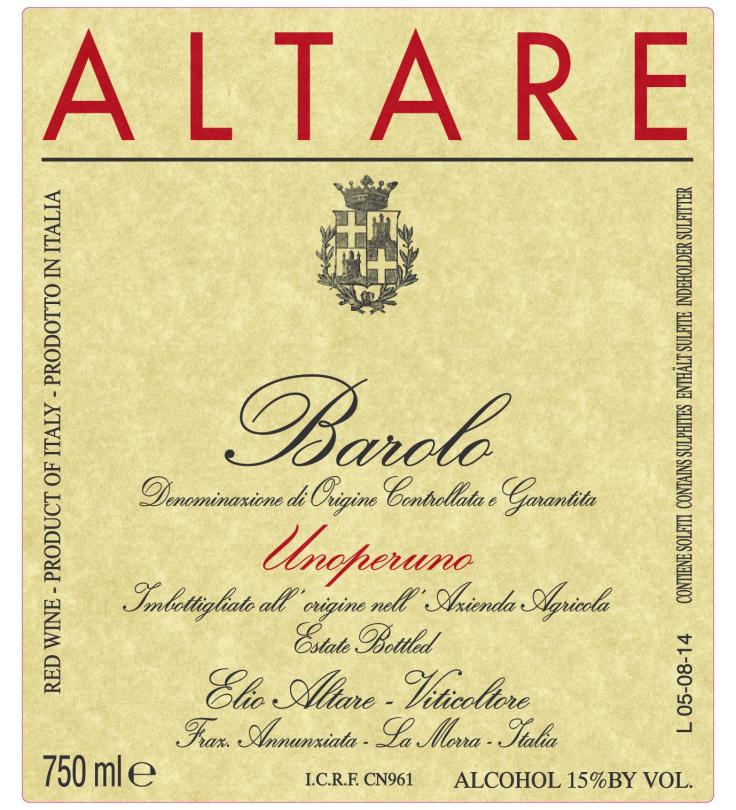
Altare Uno Per Uno
It’s exactly what it says: one by one. The family hand destems the grapes, berry by berry, and the results are magnificent. It’s also why the price might be a little higher. Imagine the work behind this wine. And if you can’t, check out the picture below.
BASIC INFORMATION
Product name: Uno Per Uno Grape: 100% nebbiolo Classification: DOCG Number of bottles produced: 1,500 Color: light ruby red with garnet reflections Fragrance: fresh fruits, rose petals and flowers Taste: warm, elegant, smooth silky tannins Food pairing: red meat, aged cheese
VINIFICATION (Wine-making)
Method: hand-destemming the berries, one by one. Looking for the purity of the fruit of nebbiolo, making sure there are no stems, no leaves and no ugly berries Ageing:
VINEYARD
Soil: marna with clay and sand Exposure: south, south-east Year of plantation: 1948
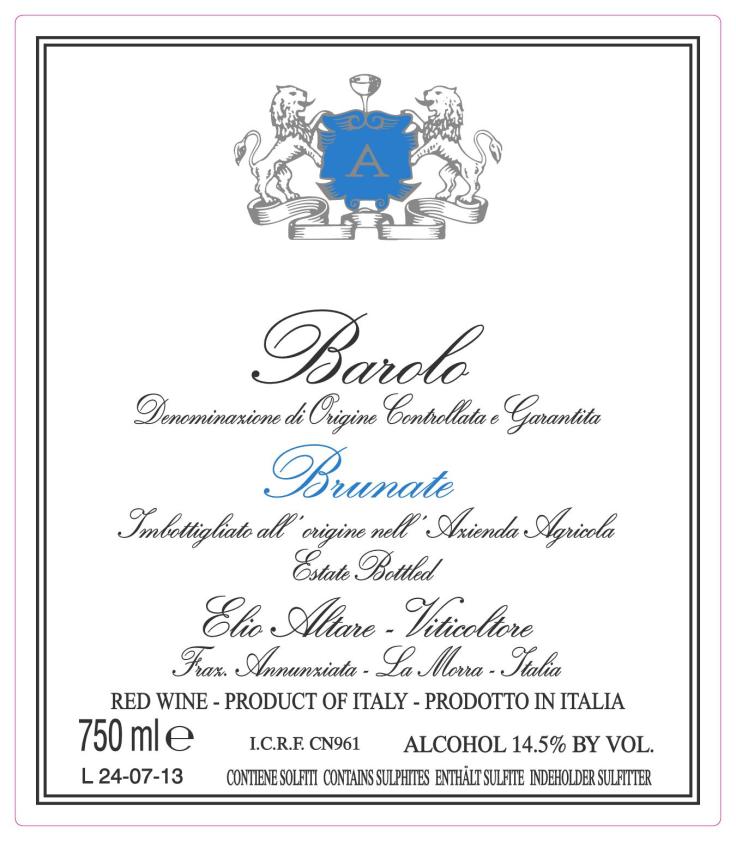
Barolo Brunate
The last vintage of Brunate is 2011. Altare rented the plot and the owners decided to make their own wine.
BASIC INFORMATION
Product name: Brunate Grape: 100% Nebbiolo Classification: DOCG Number of bottles produced: 1,200 – 1,500 Color: intense ruby red with garnet reflections Fragrance: red fruits, floral, light and feminine Taste: warm, elegant, long finish with wild rose and violet Food pairing: red meat, game, aged cheese
VINIFICATION (Wine-making)
Method: maceration on the skins for 4/5 days in rotary fermentors with temperature control Ageing: 24 months in french barrique
VINEYARD
Soil: various Exposure: south, south-east Age of plants: 20 to 90 years old
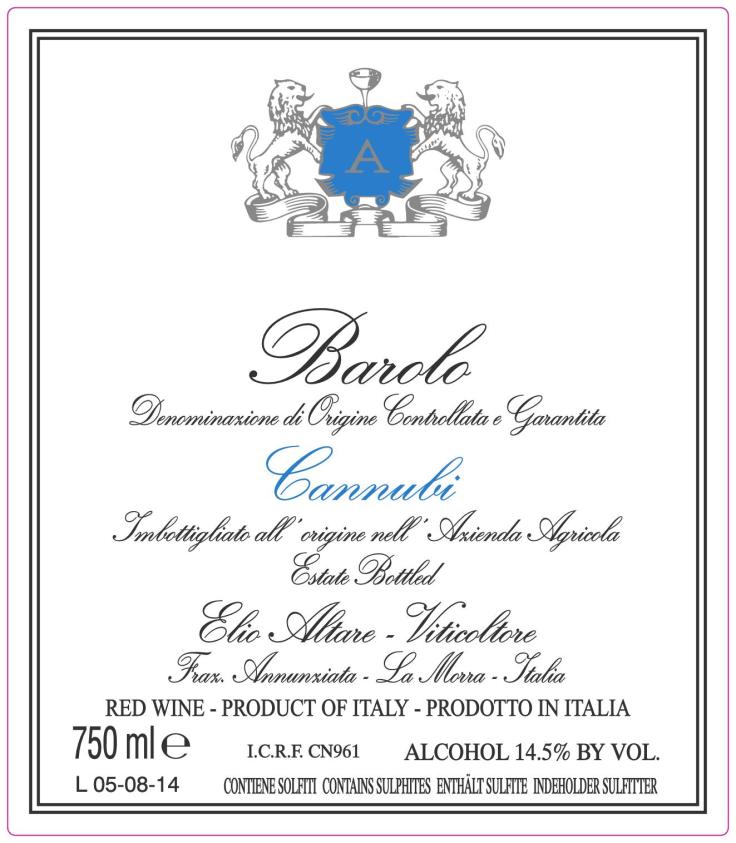
Cannubi
BASIC INFORMATION
Product name: Cannubi Grape: 100% Nebiolo Classification: DOCG Number of bottles produced: 1,500 Color: light ruby red with garnet reflections Fragrance: fresh fruits, rose petals and flowers Taste: elegant, soft silky tannins Food pairing: red meat, aged cheese
VINIFICATION (Wine-making)
Method: maceration on the skins for 4/5 days in rotary fermentors with temperature control Ageing: 24 months in french barrique
VINEYARD
Soil: marna with clay and sand Exposure: south Age of plants: 30 years old
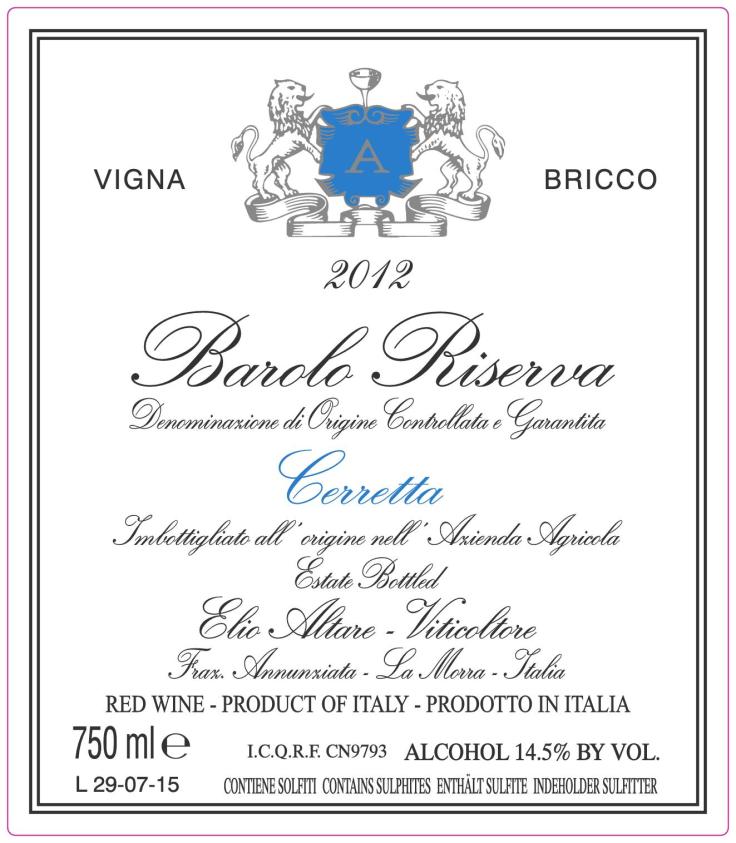
Barolo Ceretta Vigna Bricco Riserva
Altare chooses to release this wine later than the rest of the barolo’s. The extra time can be beneficial for a wine with more masculine characteristics.
BASIC INFORMATION
Product name: Ceretta Vigna Bricco Riserva Grape: 100% Nebbiolo Classification: DOCG Number of bottles produced: 5,000 – 6,000 Color: intense ruby red with garnet reflections Fragrance: mature fruits, spicy, tobacco, darker fruits, licorice Taste: warm and elegant, with mint and spice notes Food pairing: red meat, aged cheese
VINIFICATION (Wine-making)
Method: maceration on the skins for 4/5 days in rotary fermentors with temperature control Ageing: 24 months in french barrique
VINEYARD
Soil: sandstone, limestone and chalk Exposure: south, south-east and south-west Age of plants: 15 years old
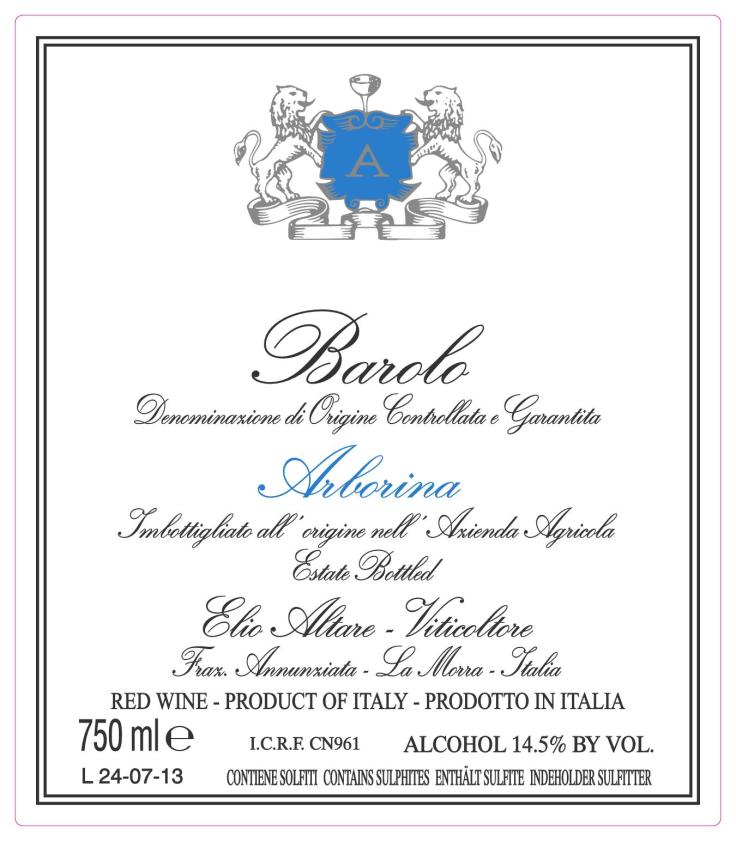
Barolo Arborina
BASIC INFORMATION
Product name: Arborina Grape: 100% Nebbiolo Classification: DOCG Number of bottles produced: 6,000 Color: intense ruby red with garnet reflections Fragrance: rose petals, flowers, light, sweet Taste: elegant, with smooth but intense tannins Food pairing: red meat, game, aged cheese
VINIFICATION (Wine-making)
Method: maceration on the skins for 4/5 days in rotary fermentors with temperature control Ageing: 24 months in french barrique
VINEYARD
Soil: marna stone with clay and sand Exposure: south, south-east Year of plantation: 1948
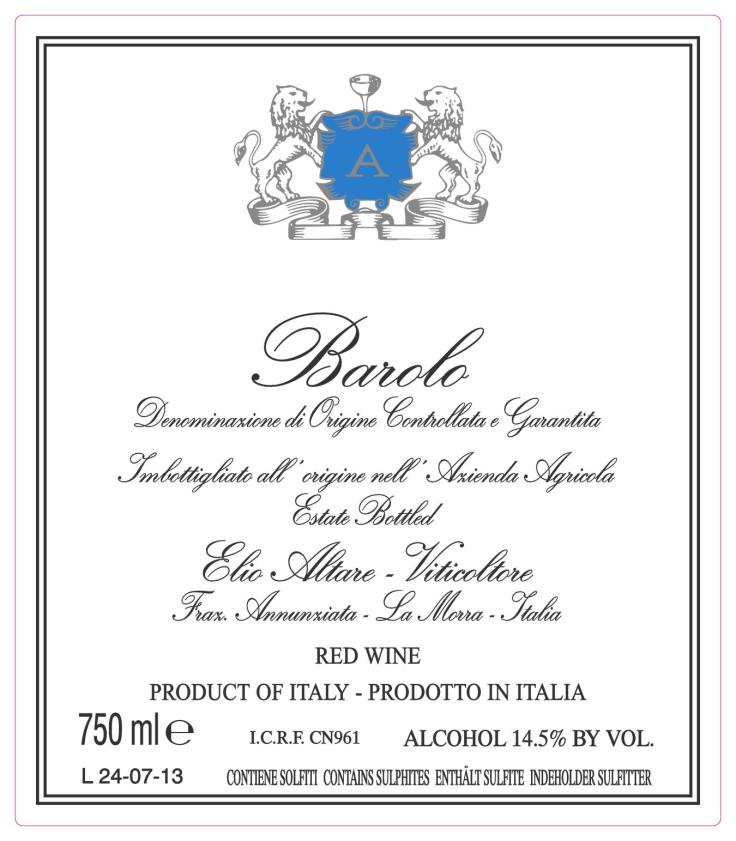
Barolo
BASIC INFORMATION
Product name: Barolo Grape: 100% Nebbiolo Classification: DOCG Number of bottles produced: 10,000 Color: intense ruby red with garnet reflections Fragrance: red fruit, raspberry, redcurrant, wold roses that evolve into licorice and spice notes Taste: elegant, persistent with long finish ans soft tannins Food pairing: red meat, aged cheese
VINIFICATION (Wine-making)
Method: maceration on the skins for 4/5 days in rotary fermentors with temperature control Ageing: 24 months in french barrique
VINEYARD
Soil: various Exposure: south, south-east Age of plants: from 20 to 30 years
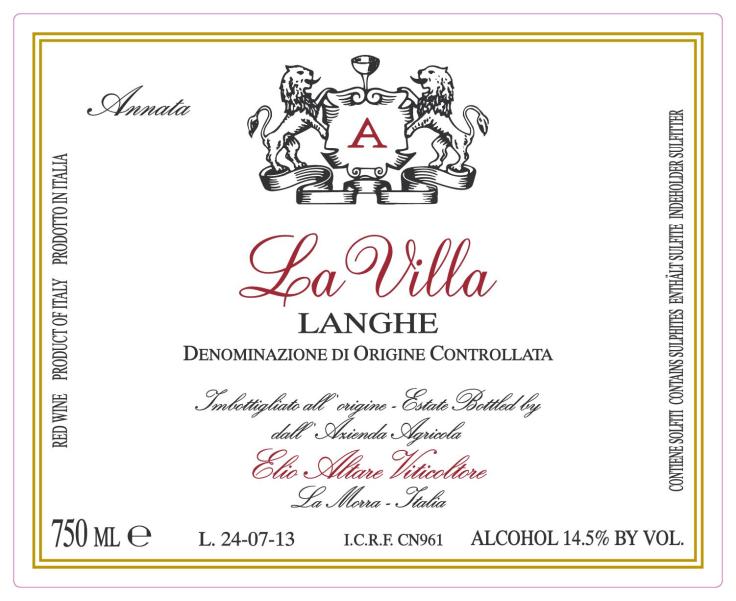
La Villa
La Villa is a blend of nebbiolo and barbera grapes, which gives the best of both worlds; tannins and acidity.
BASIC INFORMATION
Product name: Langhe La Villa Grape: Barbera & Nebbiolo Classification: DOC Number of bottles produced: 2,500 – 3,000 Color: intense ruby red Fragrance: plums, berries, rose petals Taste: fresh, well balanced tannins, pleasant acidity from the barbera Food pairing: pasta, charcuterie, meat
VINIFICATION (Wine-making)
Method: maceration on the skins for 3/4 days in rotary fermentors with temperature control Ageing: new french barrique for 18 months
VINEYARD
Soil: clay and tufa stone Exposure: south-east Year of plantation/age of plants: various
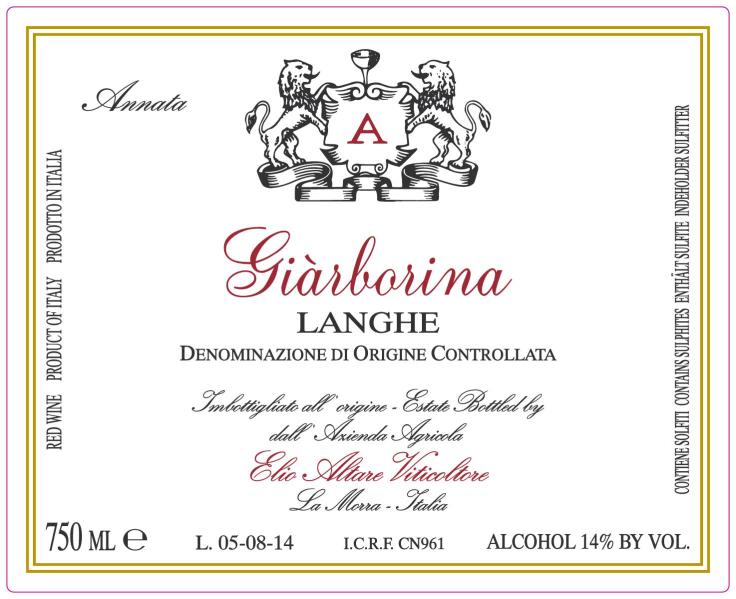
Giarborina
A “baby barolo”, somewhat in the middle of a langhe nebbiolo and a barolo, made with grapes from the Arborina vineyard.
BASIC INFORMATION
Product name: Langhe Giarborina Grape: 100% nebbiolo Classification: DOC Number of bottles produced: 2,000 – 2,500 Color: ruby red with garnet reflections Fragrance: intense balasmic notes, aromas of fruit, rose petals Taste: red fruit, raspberry, persistant Food pairing: red meat, soft to medium aged cheese
VINIFICATION (Wine-making)
Method: maceration on the skins for 3/4 days in rotary fermentors with temperature control Ageing: new french barrique for 18 months
VINEYARD
Soil: clay and sand Exposure: south, south-east Year of plantation: 1948, 1989
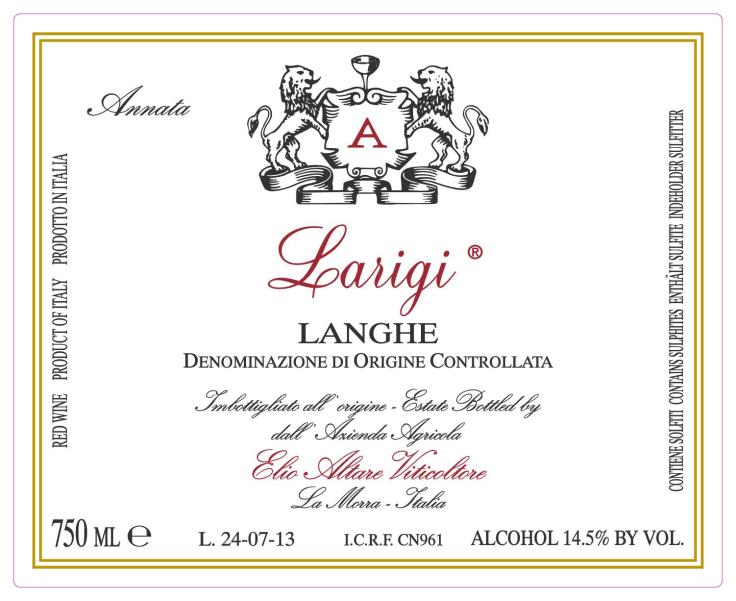
Larigi
Could also be called a “barbera superiore”, but I prefer the name Larigi. The vineyeard is located next to the winery. A “single vineyard” barbera named Larigi.
BASIC INFORMATION
Product name: Larigi Grape: Barbera Classification: DOC Number of bottles produced: 2,500 – 3,000 Color: dense purple red Fragrance: small red fruits, very persistent Taste: warm, soft, intense, silky tannins, pleasant acidity, red berries Food pairing: grilled meat,c heese and salami
VINIFICATION (Wine-making)
Method: maceration on the skins for 3/4 days in rotary fermentors with temperature control Ageing: new french barrique for 18 months
VINEYARD
Soil: clay and sand Exposure: south, south-east Year of plantation/age of plants: 1948
Product name: L’Insieme Grape: various Classification: Number of bottles produced: 1,500 Color: intense ruby red Fragrance: spicy and intense Taste: big structure, taste is much more “international”, spicy and herbal Food pairing: red meat, game, cheese
VINEYARD
Soil: various Exposure: various Age of plants: 10 to 30 years
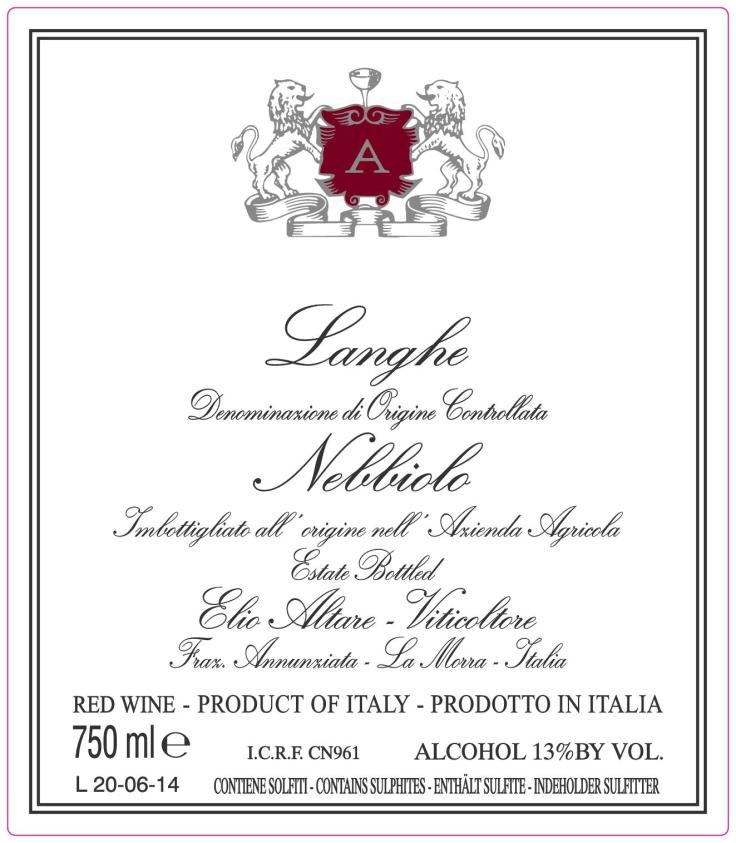
Langhe Nebbiolo
BASIC INFORMATION
Product name: Langhe Nebbiolo Grape: Nebbiolo Classification: DOC Number of bottles produced: 8,000 Color: intense ruby Fragrance: rose petals and red fruits Taste: Tannins, but not dry. Red fruits and good acidity Food pairing: antipasto, pasta, red meat
VINIFICATION (Wine-making)
Method: maceration on the skins for 3/4 days in rotary fermentors with temperature control Ageing: 5 months in aged french barrique
VINEYARD
Soil: calcareous but also sandy Exposure: various, south-east, east Age of plants: 20 to 50 years old
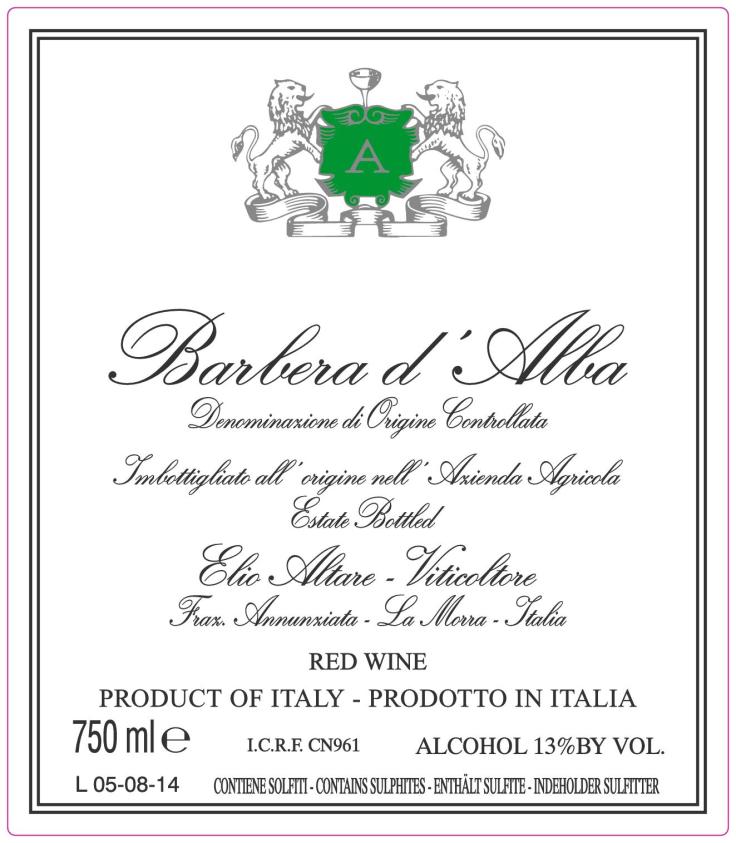
Barbera d’Alba
BASIC INFORMATION
Product name: Barbera d’Alba Grape: Barbera Classification: DOC Number of bottles produced: 15,000 Color: ruby red with violet reflections Fragrance: violets and black cherry Taste: full bodied, good acidity, dark red fruits Food pairing: antipasto, pasta, fatty cheese and salami
VINIFICATION (Wine-making)
Method: maceration on the skins for 3/4 days in rotary fermentors with temperature control Ageing: 5 months in aged french barrique
VINEYARD
Soil: calcareous but also very sandy Exposure: various, east, north-east Age of plants: 10 to 30 years old
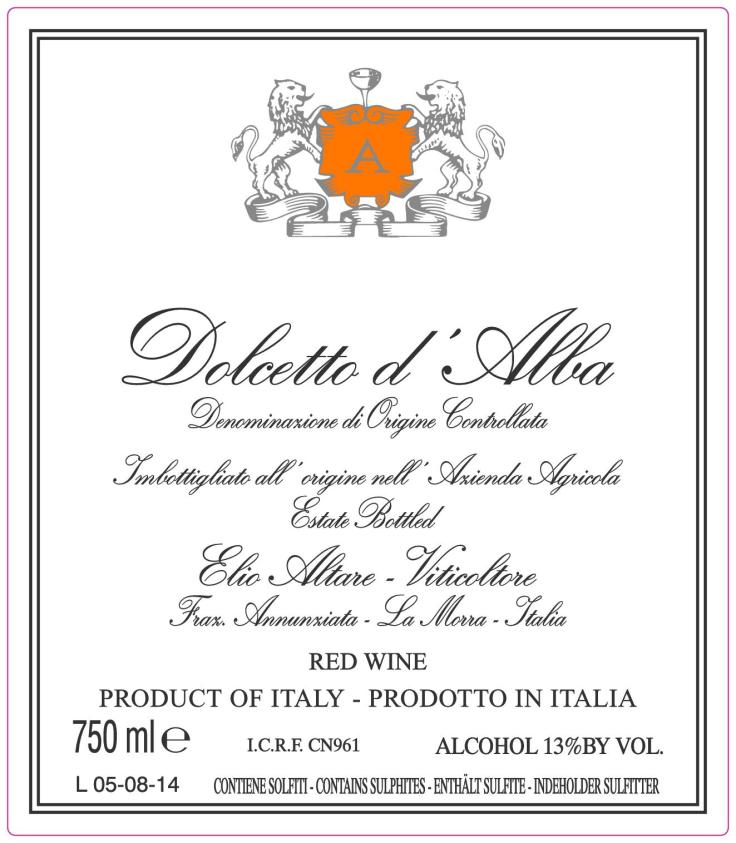
Dolcetto d’Alba
BASIC INFORMATION
Product name: Dolcetto d’Alba Grape: Dolcetto Classification: DOC Number of bottles produced: 18,000 – 20,000 Color: intense violet Fragrance: violet and black cherry Taste: cherries, black cherry, medium-bodied, easy to drink Food pairing: antipasto, pasta, light cheese, pizza, panini
VINIFICATION (Wine-making)
Method: maceration on the skins for approximately 2 to 3 days maximum in rotary fermentors with temperature control Ageing: stainless steal tank for about 10 months
VINEYARD
Soil: calcareous but also very sandy Exposure: various, mostly north and north-east Age of plants: 20 to 40 years old
Altare Winery
Frazione Annunziata 51, 12064 La Morra elioaltare@elioaltare.com +39 0173 50835
Cover photo: Elio Altare Website Labels: Elio Altare Website Other photos: Oda Randmæl Text: Oda Randmæl & Toni Fadnes
Marengo: Geek or nerd, in the modern, positive, definition of the words. The same way Bill Gates is often referred to as a nerd, an expert and enthusiast, and obsessed with intellectual pursuit of winemaking.
Jenny and Marco Marengo are warm and generous people, who are very passionate about their wines. Their son, Stefano, recently joined the winery full time, and the three of them work enthusiastically together in the pursuit of excellent winemaking.
Wines
Cantina Marengo has about 6 hectares of vineyard in total, and the majority is used for nebbiolo for barolo. They make about 35,000 bottles of wine per year, which is spread out over the 6 (or 7) different wines they make. Both the Brunate and Bricco delle Viole vinyeards have belonged to the family for 5 generations.
Winemaking
Marengo uses the “modern” winemaking method, which means the wine ages in either steel tanks or small barrique. Most of the work is done in the vineyards, as naturally as possible. The wines typically go through fermentation and maceration for an average of 5-6 days, and then age in small oak casks. The dolcetto is the only wine that only wine that doesn’t pass through any wood.
Fun fact
The vineyard in Valmaggiore belonged to Jenny’s family, and they recently expanded it. So soon there will be even more Valmaggiore Nebbiolo to drink!
Fun fact II
Marco’s son, Stefano, is often referred to as Marenghino. Or Claudio. Don’t ask. It has to do with some fotball player named Claudio.
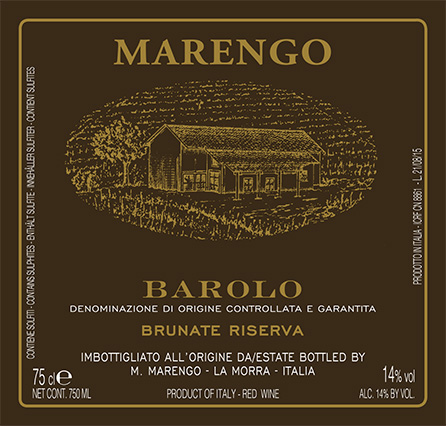
Product name: Barolo Brunate Riserva Grape: nebbiolo Classification: DOCG Number of bottles produced: 1,000 Color: garnet red Fragrance: fruity, black cherry, spicy notes Taste: full body, silky tannins, persistent Food pairing: braised and roast meat, cheese
VINIFICATION (Wine-making)
Method: maceration on the skins for about 10 days. Natural alcoholic and malolactic fermentation. No yeast or bacteria added. Ageing: 24 months in french oak barriques (15% new) Minimum aging in bottle: about 6 months
VINEYARD
Soil: mixed clay and silt tending to calcarous Exposure: south Year of plantation: 1940 Date of harvest: September/October
Barolo Brunate
Product name: Grape: Classification: Number of bottles produced: 5,200 Color: ruby red with garnet tendencies Fragrance: small red berries, balasmic notes of sage andmint, floral and flint notes. Taste: silky and well integrated tannins Food pairing: red meat & seasoned cheese
VINIFICATION (Wine-making)
Method: maceration on the skins for about 10 days. Natural alcoholic and malolactic fermentation. No yeast or bacteria added. Ageing: 24 months in french oak barriques (15% new) Minimum aging in bottle: about 6 months
VINEYARD
Soil: mixed clay and silt tending to calcarous Exposure: South/South-East Year of plantation: 1947 & 1957 Date of harvest: September/October
Barolo Bricco Delle Viole
About the wine The first vintage of Bricco Delle Viole was 1997. The grapes come from 4 different plots: Boiolo, Serradenari, Roncaglie and Fossati.
Product name: Barolo Bricco Delle Viole Grape: Nebbiolo Classification: DOCG Number of bottles produced: 5,000 Color: ruby red with orange reflections Fragrance: cherry, sweet spices, Taste: elegant, full body, balances, persistent
VINIFICATION (Wine-making)
Method: maceration with the skins for about 10 days. Natural alcoholic and malolactic fermentation. Ageing: 24 months in french oak barriques (15% new) Minimum aging in bottle: about 6 months
VINEYARD
Soil: calcarpus without rocks in the subsoil Exposure: south Year of plantation/age of plants: 1955 Date of harvest: September/October
Barolo
The grapes come from 4 different plots: Boiolo, Serradenari, Roncaglie and Fossati.
Product name: Barolo Grape: Nebbiolo Classification: DOCG Number of bottles produced: 12,000 Color: ruby red Fragrance: red fruit and spices Taste: silky tannins, with good structure Food pairing: red meat, cheese
VINIFICATION (Wine-making)
Method: maceration on the skins for about 10 days. Natural alcoholic and malolactic fermentation. No yeast or bacteria added. Ageing: 24 months in french oak barriques (15% new) Minimum aging in bottle: about 6 months
VINEYARD
% of Grape/Cépage: Soil: various soil types Exposure: various exposures Year of plantation: 1999 & 2000 Date of harvest: September/October
Product name: Nebbiolo d’Alba Valmaggiore Grape: Nebbiolo Classification: DOC Number of bottles produced: 5,000 Color: intense ruby red Fragrance: fresh, fruity, red berries Taste: sweet tannins, fresh, persistent Food pairing:
VINIFICATION (Wine-making)
Method: vinification in steel with temperature control Ageing: french oak barrique from 12-15 months (15% new oak) Minimum aging in bottle:
VINEYARD
Soil: loamy-clayey tending to calcarous Exposure: south Year of plantation: 1965 & 2019 Date of harvest: September/October
Barbera d’Alba
Product name: Barbera d’Alba Vigna Pugnane Grape: Barbera Classification: DOC Number of bottles produced: 3,200 Color: intense ruby red Fragrance: red fruit Taste: full bodied, warm, fruity Food pairing:
VINIFICATION (Wine-making)
Method: fermentation and maceration with the skins for 5-6 days. Ageing: 10 months in french oak barriques (15% new oak) Minimum aging in bottle: 4 months
VINEYARD
Date of harvest: September/October
Dolcetto d’Alba
Product name: Dolcetto d’Alba Grape: Dolcetto Classification: DOC Number of bottles produced: 3,500 Color: ruby red Fragrance: fruity Taste: fruity with aftertaste of almonds Food pairing:
VINIFICATION (Wine-making)
Method: alcoholic fermentation in stainless steel tanks with temperature control. Ageing: 10 months in stainless steel tanks Minimum aging in bottle:
VINEYARD
Soil: mixed clay and silt Exposure: south-east Year of plantation: 2000 & 1997 Date of harvest: September/October
When trying to put words to their experiences when visiting the Barolo region, the word family often make it to the top of the list. When visiting Francesco Borgogno, this is very much so.
In a
location right at the interface between Barolo’s historic Cannubi hill and La
Morra’s Brunate vineyard, you’ll find a winery founded in the early 1930s that
is the classic family-run wine estate. The passion, the knowledge, and the hard work
ethic has been handed down from father to son. Today, Francesco Borgogno’s sons
(Giancarlo and Claudio) lead the winery’s endeavours, flanked by Claudio’s wife
Silvia. They look after the winemaking, the cellar and the vineyards. Apart from Barolo, the company produces
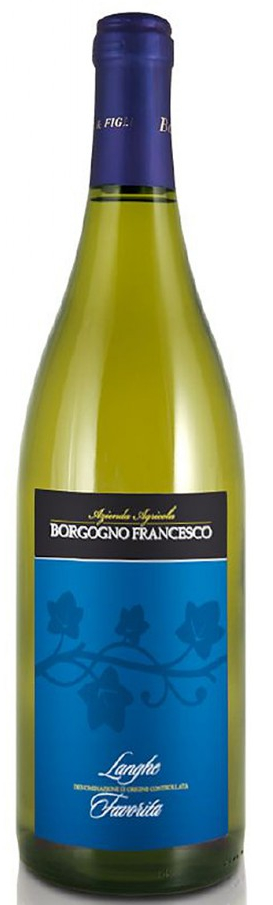
Dolcetto d’Alba, Barbera d’Alba, Langhe Nebbiolo and Langhe Favorita.
The family strives to produce high quality
wines, respecting tradition and environment fully. Aiming for genuine and terroir-based wines.
Wines
Cantina Francesco Borgogno own approx 7 hectars of land and produce every year 35.000 bottles of wine (15,000 of Barolo Brunate, 10,000 between Barbera d’Alba and Dolcetto, and some 5,000 of Nebbiolo and Favorita).
The nebbiolo for Barolo comes from a 4+ hectare vineyard located in the heart of the Brunate hill, with southwest exposure at an altitude of 350 metres, and planted on calcareous-clay marl that makes its influence felt in the wine. Their vineyards in La Morra, in the area called Liste, is their source for their Dolcetto d’Alba. Barbera is sourced from a vineyard in Monforte d’Alba. Grapes for the Langhe Favorita are from vines in Sommariva Perno (in Roero). The vineyards range in age from 19 years (planted in 2000) to over 60 (Brunate).
Winemaking
The vinification is made under temperature
controlled after the pressing of grapes. The process of fermentation and
maceration are different for each type of wine and every step is followed from
us with the help of expert of oenology Piero Ballario.
Francesco Borgogno Dolcetto d’Alba and Langhe Favorita wines stay just in stainlees steel and not in wood. Barberad d’Alba and Langhe Nebbiolo remain between 6 and 8 months in wood barrel (7 hl).
The philosophy of Barolo Brunate is rigorously traditional, with fairly lengthy macerations on the order of 20 days and more, followed by long maturations of about three years in 30-hectolitre oak botti, and 10 months’ bottle-ageing before release. Thus, Francesco Borgogno Barolo appears on the market about a year later than the average, although the word “riserva” does not appear on the label.
Francesco Borgogno Fun fact
Every August, more than forty years, La
Morra celebrates the King of Wines with an event in his honor: “The party of
the Barolo wine in his land.“
Just on this occasion, in the summer of
’71, Francesco Borgogno was awarded the title of “Buon Vignaiolo” official
recognition conferred for having distinguished himself in wine production, hard
work, passion and dedication that characterized the family’s Borgogno in the
production of their wines.
Fun fact II
The Francesco Borgogno 2015 Barolo Brunate does not say Brunate on the label, only Barolo.
Langhe Favorita
Favorita is a dry white wine made from grapes grown in a small plot of land in the Roero. The golden yellow bunches of grapes produced by the favorita vine are medium-sized, long and cylindrical.
The wine itself is straw-yellow with greenish highlights, a delicate nose showing light fruit, and a dry taste with a slightly bitter finish. It is generally drunk as a “young” wine, within a year of the vintage. It is delicate and fruity, slightly “flowery”, dry with a slightly bitter aftertaste.
Excellent as an aperitif, it goes very well with fish and white meat. Serve chilled.
Product name: Langhe Favorita DOC 2017 Classification: DOC Number of bottles produced: 1,000
Vinification (Wine-making)
Method: the
grape-harvest starts the second half of September. After the grapes are crushed
and de-stemmed, the must undergoes its alcoholic fermentation in the winery at
a constantly low temperature (17-18°C). The wine is then stored in stainless
steel, and bottling generally takes place in spring. Temperature: 17-18° Lenght: 5/6 days Aging: in steel Minimum aging in bottle: 2 months
Vineyard
% of Grape/Cépage: Favorita 100% Soil: sandy Exposure: southwest Agricultural method: sustainable agriculture with no use of herbicides Year of plantation: 1990 Date of harvest: September Type of harvest: by hand
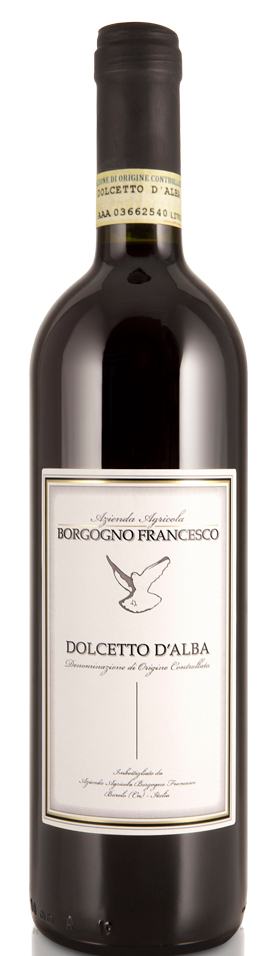
Dolcetto d’Alba
This wine is defined as “the friendship wine” because it is the true country wine. It is generally consumed at an early age.
The care of Dolcetto vines follows the same steps as Nebbiolo da Barolo – that is, winter pruning of the vines, the jobs of allegation, cleaning and cutting of branches – and finally harvesting in the month of September. Afterwards the pressing and separation, the steeping in the presence of the peels for circa 5-6 days at a maximum temperature of 25-27°C. Conservation of the wine is in stainless steel tubs, where the malolactic fermentation terminates. Then it is poured off. The bottling is in April, May.
Colour: very bright ruby red with violet reflections. Fragrance: delicate and fruity. Taste: rounded, dry and slightly bitter – recalling fruits such as amarena cherry. Temperature: 18 – 19 °C. Gastronomic combinings: antipasti, first courses with, above all, meat sauces, soups.
Product name: Dolcetto d’Alba DOC Classification: DOC Number of bottles produced: 5,000
Vinification (Wine-making)
Method: we start with pressing and separation, the steeping in the presence of the peels for circa 5-6 days at a maximum temperature of 25-27°C. Conservation of the wine is in stainless steel tubs, where the malolactic fermentation terminates. Then it is poured off. The bottling is in April, May. Temperature: 25 – 28 °C Lenght: 5/6 days Aging: in steel Minimum aging in bottle: 2 months
Vineyard
% of Grape/Cépage: Dolcetto 100% Soil: clay Exposure: southeast Agricultural method: sustainable agriculture without chemical products – mechanical weeding Year of plantation: 1973 Date of harvest: September
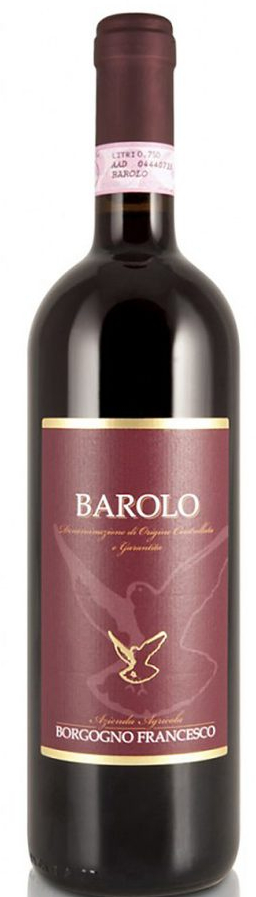
Barolo Brunate
We start during the winter by pruning the vines (“guyot” method) and then, in the following months of the year we proceed with other jobs such as cleaning and cutting the vines.
The wine-making starts in the Barolo winery with the pressing and the traditional fermentation of about thirty days. The wine ages for about 3 years in 30 or 50 hectolitre oak Slavonian barrels and then in the bottle for 12 months.
Colour: ruby red, very intense red. Fragrance: very pleasant and delicate, recalling wilted roses and notes licorice and wood vanilla. Taste: velvety, dry, rounded, rich and balanced in body and structure. Temperature: 16 – 18 °C Gastronomic’s combining: risottos, fondues, game, red meat and meat in general (roasts, grilled or skewered).
Product name: Barolo DOCG Classification: DOCG Number of bottles produced: 10,000
Vinification (Wine-making)
Method: the process of the product’s transformation begins: wine-making starts in the Barolo winery with pressing and the traditional fermentation of about thirty days. The entire philosophy of our Barolo is rigorously traditional, with fairly lengthy macerations followed by long maturations of about three years in 30 or 50-hectolitre oak Slavonian barrels and 12 months’ bottle ageing before release. It can be enjoyed after a few months in the bottle, but will continue improving and developing its elegance during the years…. it is the true jewel of Italian and international enology. Temperature: 25 – 28° Length: 1 month Malolactic: done Aging: in slavonian oak Age of barrels: 5 years Aging time in wood: 3 years Minimum aging in bottle: 6 months
Vineyard
% of Grape/Cépage: Nebbiolo da Barolo 100% Soil: clay Exposure: south Agricultural method: sustainable agriculture, without the use of herbicide – mechanical weeding Year of the plantation: 1990 Date of harvest: October
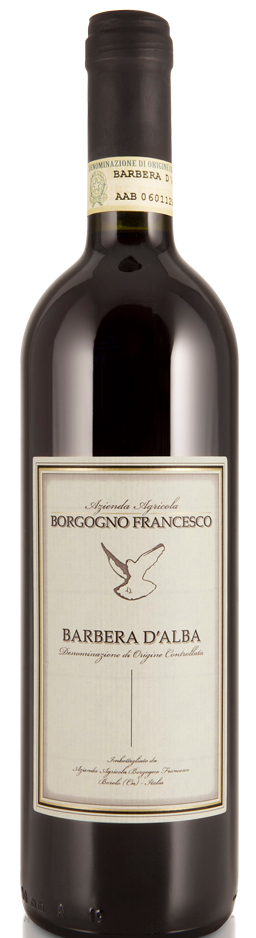
Barbera d’Alba
Cantina Borgogno also produces a small quantity of Barbera d’Alba with grapes which comes from the near village of Monforte d’Alba. Barbera is a “peppy” wine with a robust structure and it is one of a most characteristic Piemonte vine. The work in the winery begins with the crushing of the grapes, followed by fermentation – lasting around 9 days for this wine, drawing off, and a further racking approximately 18 days later. Then, the wine is stored prior to bottling in the following spring.
Colour: bright red with purplish highlights when young; deep ruby red following ageing. Fragrance: intense and fruity; dry flavour and good body. Taste: bitterish, though fresh, dry and well-bodied. Temperature: 19 – 20°C. Gastronomic’s combining: best served with strong-tasting dishes, red and grilled meats, game, and mature cheeses.
Product name: Barbera d’Alba DOC Classification: DOC Number of bottles produced: 4,000
Vinification (Wine-making)
Method: the process in winery is very traditional because grapes’ fermentation is in steel barrel at checked temperature. Then we pour off the wine and at the end of maturation we bottling it. Then, the wine is stored for about two months before release. Temperature: 25 – 28° Lenght: 8 / 9 days Aging: in steel Minimum aging in bottle: 2 months
Vineyard
% of Grape/Cépage: Barbera 100% Soil: clay Exposure: southeast Agricultural method: sustainable agriculture without the use of herbicides – mechanical weeding Year of plantation: 1961 Date of harvest: October Type of harvest: by hand
I know the list of my favorite wineries is growing (a lot) but there are just so many good winemakers to visit. And Marengo is definitely high on the list.
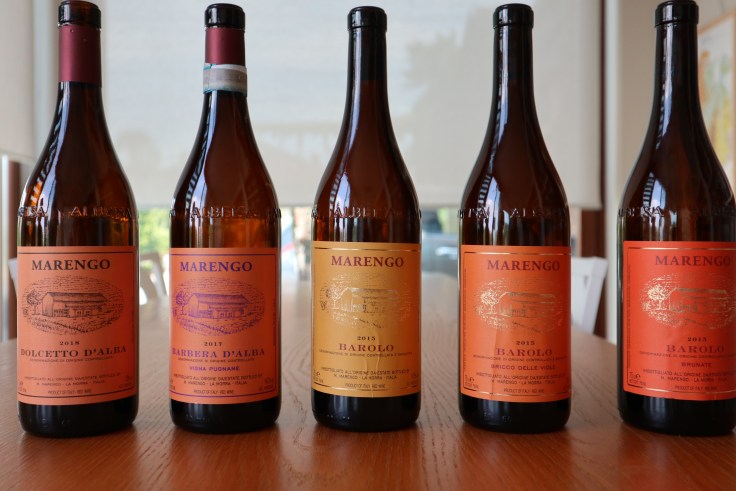
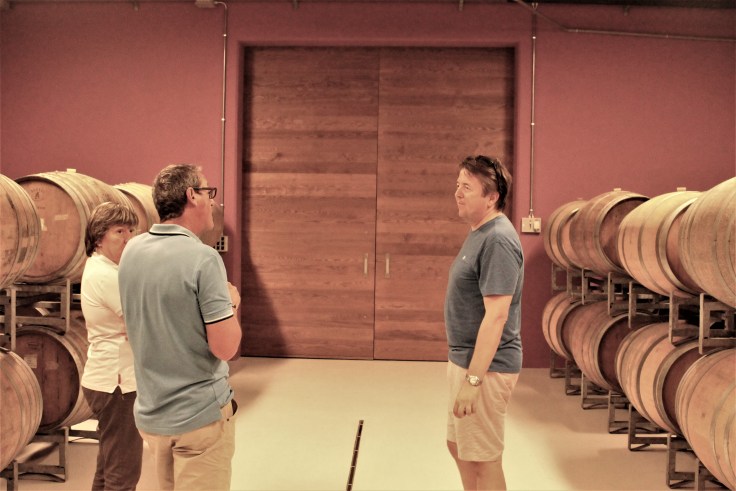
If you visit them you will most likely meet with Jenny, Marco’s wife, and you’ll maybe get to taste som of the wines you see in the picture below. One of my favorites is their Langhe Nebbiolo Valmggiore, and you’ll often see me drink it at More e Macine (just ask the locals). Marengo also has a beautiful “new” tasting room adjacent to the wine cellar so you’ll probably also get a tour!



 PIEMONTEGIRL