It started the summer of 2011. I was on vacation with my family and some family friends. A beach vacation type thing, with a whole lot of relaxing and sunbathing. And for those who know me, know that I can’t lay around on a sunbed for very long. So when my dad, who had already started his wine journey, invited us on an outing to meet a winemaker, I didn’t hesitate to say yes.
And so I learned my first ever full Italian phrase, asked for the next ferry to Corniglia, and off we went. I remember approaching the dock in Riomaggiore (we weren’t going to Corniglia…) and seeing this small figure in a straw hat waving at us. This eager man was Elio Altare. He greeted us, and quickly headed toward the little town. We soon found ourselves trailing Elio, who was walking at an incredible pace, through the winding streets of Riomaggiore, sometimes so narrow that my shoulder would brush against the walls. This journey brought us to a truck, which in turn brought us to the top of a hill.
We climbed out, and began the descent toward the ocean. Mind you, I am wearing a short blue dress and beige ballerina shoes, not exactly dressed for the occasion. And while we are tumbling down this steep hill, Elio causally calls out “Watch out for wild boars. They are very dangerous.” while continuing down the hill. We all look at each other, but there’s no time to process this information if we want to keep up with him. But I soon found myself on the cliffs of Cinque Terre, watching Elio tend to his vines while he told us about the magical world of wine.
This probably sounds cheesy, but listening to what has to be the most passionate person I’ve ever met talk about the circle of life on the cliffs of Cinque Terre was a game changer. Wine became so much more than that disgusting red liquid my parents sometimes drank at dinner. He opened up a whole new world, filled with wonderful tastes, interesting people and incredible adventures.
Fast forward 8 years. After a lot of nagging from my friends about how I should do “this” professionally, I started seriously thinking about it. But what was I going to do? Did I want to import? Be a journalist? Event planner? Tour guide? Arrange tastings? I had no idea. So I reached out to some people in the business. And I will forever be grateful to those who took the time to talk with me. I will never forget how Merete Bø spent 40 minutes on the phone with me, answering any and all of my questions. Or Hege Pedersen-Fröjd who took the time to meet with me and give me insight into the import business. And thanks to them I did get a little closer to figuring out what I wanted to do.
February 27th 2019
It’s February 27th, 2019, and I have just submitted the documents to start my own company. I skipped a bunch of stuff here but just imagine 8 years filled with all kinds of wonderful wine moments, from working at a vineyard in La Morra to taking a wine course at college. I had also started a website where I wrote some stuff. I didn’t really know what I wanted to do, I just knew I wanted to work with wine.
So I began organizing wine tastings, arranging trips to Piemonte and inviting winemakers to Norway for promotional events. I was also writing a little bit, and started getting invitations to tastings with importers. It was looking good. But if you take a look at the date, most of you will see what is about to hit me. Hard. Covid. 2020 rolls around, and come March, I have to cancel everything I had planned. And as we all know too well, this would go on for a while. I started digital zoom sessions with winemakers, which kept me busy, but I was basically toast.
Things eventually opened back up, obviously, but to be honest Piemontegirl never really recovered. I got other jobs, which meant I didn’t have the same amount of time to dedicate to it, and so it sort of just exists now. Every now and then I organize a trip or host a tasting, which I love. I pay bills and report the minimal earnings to the government, but I am not sure what the future looks like.
Bright future?
If I am being honest, this business is brutal. For several reasons. If you know, you know. And I don’t know if I have the fight in me.
I won’t dwell on this, mostly because it doesn’t do me any good. Instead, I am going to focus on the poistive. Like the many wonderful people in the business, who are kind, welcoming, including and passionate, like the people at Moestue. And then there are the winemakers of course. The ones who make it possible for all of us to do what we do. I think sometimes we forget about them a little and take them for granted. So here’s a friendly reminder to not.
Piemontegirl tuned 6 this year. I don’t know what the next year, or next 5 years will bring, but I will keep doing the things I love. Drinking wine with good friends. Eating good food. Travelling to Piemonte to learn from winemakers. And I’ll keep telling people about the wonderful world of wine.
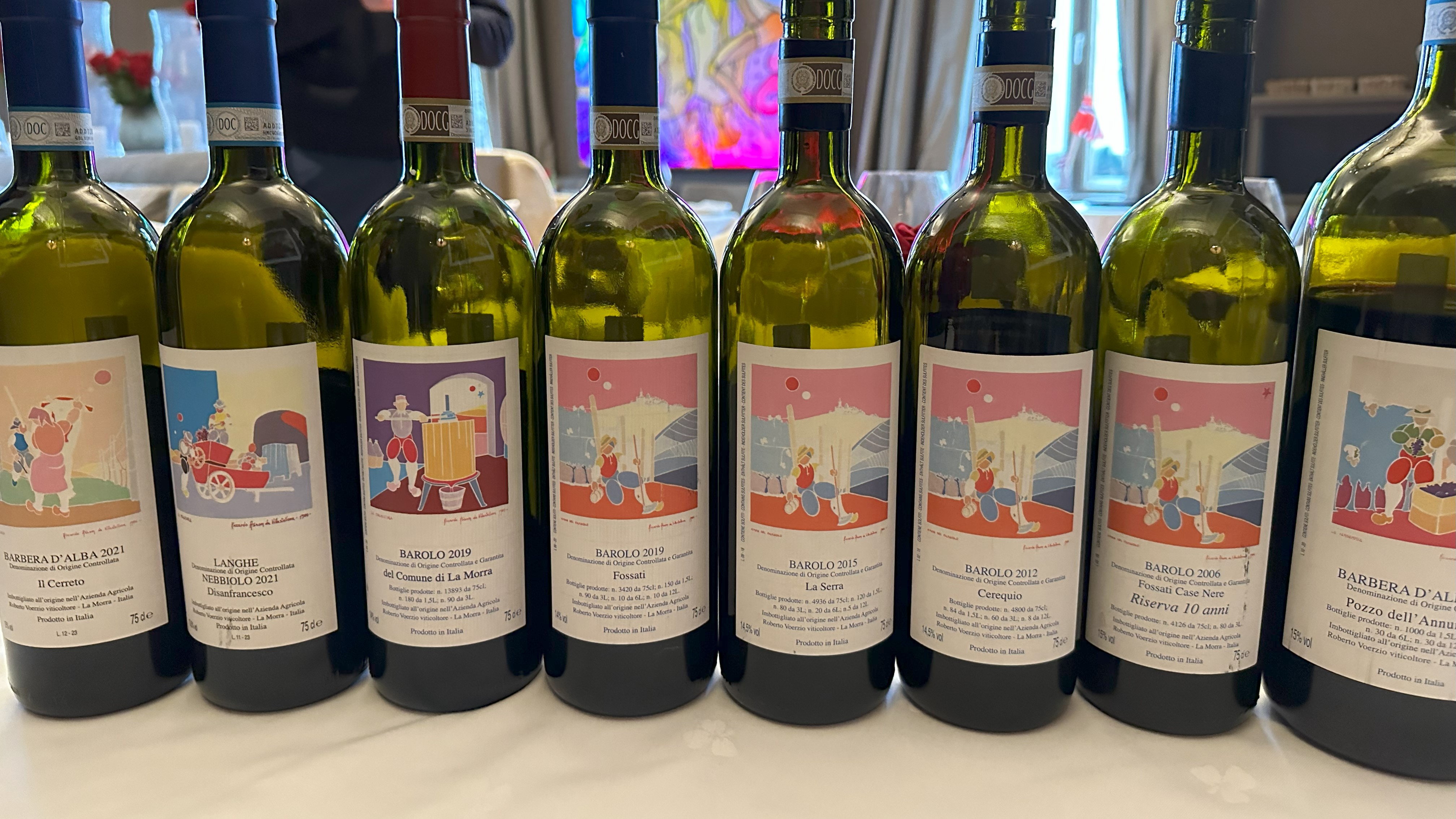
There’s not much that hasn’t already been said about Roberto Voerzio. But if I were to try and describe Roberto with one word, the word that comes to mind is “profound”. Yes, he’s a winemaker. Or, more aptly, a winegrower. But he’s so much more. He’s a farmer. A father. A grandfather. A wine lover. And it’s obvious he loves what he does. Hearing him talk about wine is like listening to a great piece of art. And I feel lucky to have had that opportunity.
There are many well-known winemakers in Piemonte, but the winemaking style of Roberto really stands out. Many years ago, the “Barolo Boys revolution” brought about a new approach to winemaking. I won’t go into too much detail right now, but the very general gist is: smaller barrels, shorter maceration, green harvest, and cleaner workspaces. Now, why am I bringing this up right now? Well, it’s mostly to talk about green harvest.
Don’t know what green harvest is? Not to worry, I’ll explain. When a winegrower does green harvest, it means that they are removing grape clusters from the vine. They do this to give the remaining grape clusters even more nutrients. The mindset here is quality over quantity. But imagine you’re a poor farmer, scraping by, and your daughter comes home and starts cutting away grapes that could be used to make wine. Let’s just say it was quite an adjustment.
Today, green harvest is a common practice across the board. And after a little detour, we’re about to get to the point. Because Roberto Voerzio has taken the concept of green harvest to the extreme. He cuts away more grapes than any other farmer (that I know of). Now, you could potentially get at least 1,800g per vine, probably even more. But for his Pozzo, he leaves only about 300g of grapes per vine. 300grams! It’s definitely one of the more extreme examples, but Roberto’s wines are some of the most concentrated wines I’ve encountered in Langhe.
Roberto Voerzio Barbera Il Cerreto 2021
Beautiful nose. Very aromatic. Very concentrated with aromas of dark red fruit. Also quite concentrated in the mouth. Almost felt like I was eating frutti di bosco. In the best way. Long finish.
Roberto Voerzio Langhe Nebbiolo 2021
Not as aromatic as the Il Cerreto, and has aromas of more mature red fruit. Quite fresh. Smooth tannins.
Roberto Voerzio Barolo del Comune di La Morra 2019
The Barolo del Comune di La Morra is made with grapes from 4 different vineyards: Case Nere, La Serra, Fossati and Cerequio. It was a bit closed on the nose at first but opened up very well in the glass. Fruity with smooth tannins.
Roberto Voerzio Barolo Fossati 2019
A beautifully elegant wine. Aromatic and intense. Tannins are quite robust. This might be my favorite wine from this tasting. A very impressive wine.
Roberto Voerzio Barbera La Serra 2015
A super aromatic wine with a beautiful nose. Intense and dense. Tannins are a bit “sharp” at first, but disappear and leave you with a round, elegant wine.
Before we dive into Barolo 2019, I want to just touch on something quickly. One can go on an on about rainfall, temperature, weather conditions, natural disasters and more, but in the end, you can’t judge a wine before you have it in a glass in front of you. I am not saying that weather isn’t important. And it definitely affects the wine. I am just saying that because vintage is defined as “warm” or “cold” or “dry”, doesn’t mean that all wines in that vintage reflect the general characteristics that go with that classification. If you catch my drift?
Anyways, a lot of good things have been said about Barolo 2019, and the vintage 2019, and I find I tend to agree. I’ve tried a few 2019’s, and my immediate thoughts are: concentrated, intense, aromatic. Now, that’s not to say that every Barolo 2019 is intense, or aromatic. But looking over my notes, those are words that pop up frequently. 2019 will most likely be remembered as a “classic” vintage, but the temperatures were quite high, which is probably what contributed to the fairly high concentration in the wines. I’m no expert, so feel free to refer to Masnaghetti or Berry Bro’s for a more detailed vintage report.
Now, moving on to the reason you’re here: Barolo 2019 tasting notes! PS: they are in alphabetical order
Tasting Notes
Bartolo Mascarello Barolo 2019 Beautiful, clean, crisp nose. Complex, delicious. My notes literally say “Mouth is amazing. Full of tastes”. Smooth, but big at the same time. Round tannins. Quite high in acidity, so it has a good aging potential!
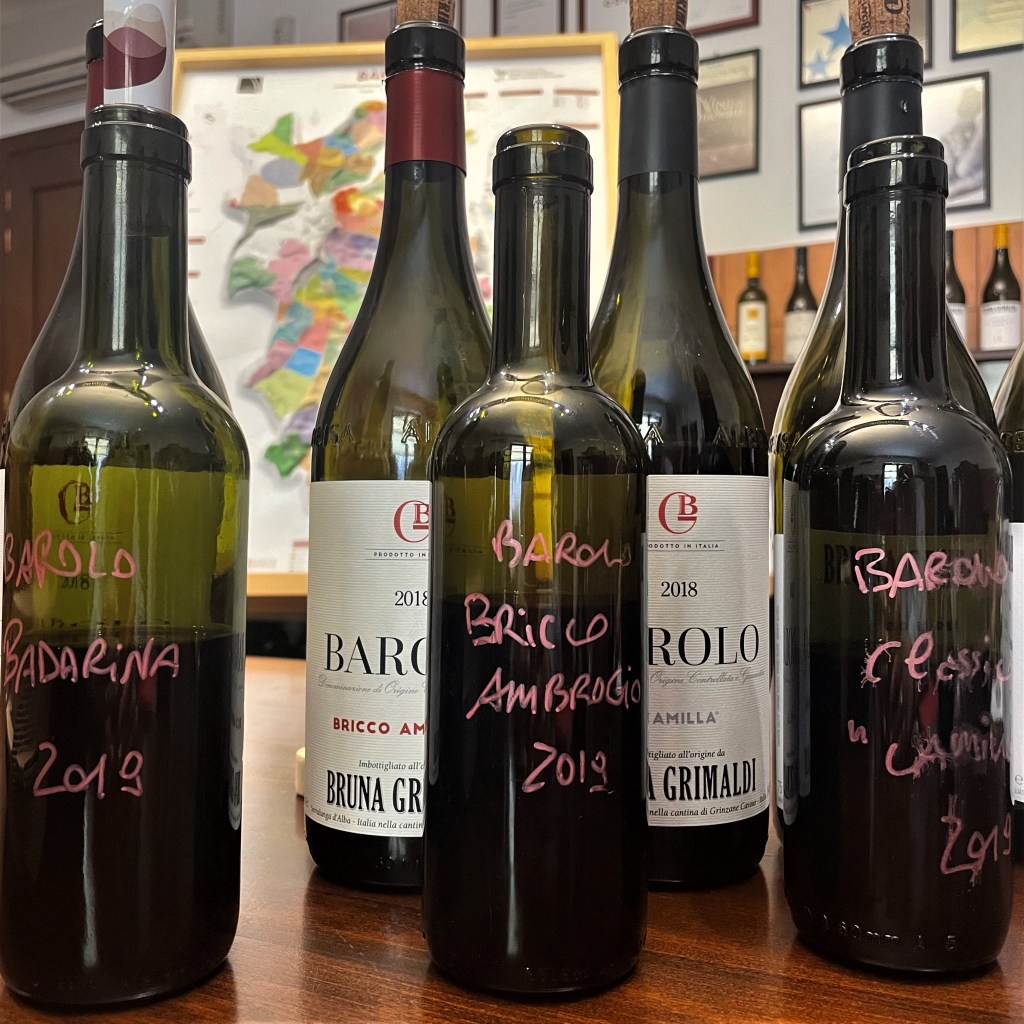
Bruna Grimaldi Barolo Camilla 2019 Beautiful nose. Aromas of dark fruit, with some spice notes. Very different from the 2019. More tension, bigger tannins.
Bruna Grimaldi Barolo bricco Ambrogio 2019 Vegetal, herbal. A bit closed on the nose, needs some time to open up. More tension in this one as well, compared to the 2018.
Bruna Grimaldi Barolo Badarina 2019 Beautiful nose, less vegetal than the Bricco Amborgio. Balsamic, herbal and fruity. I even caught a glimpse of some chocolate. A super wine!
Cavallotto Barolo 2019 Floral notes, with a hint of spices. Clean and crisp. Round in the mouth, with a long aftertaste. An approachable, balanced Barolo.
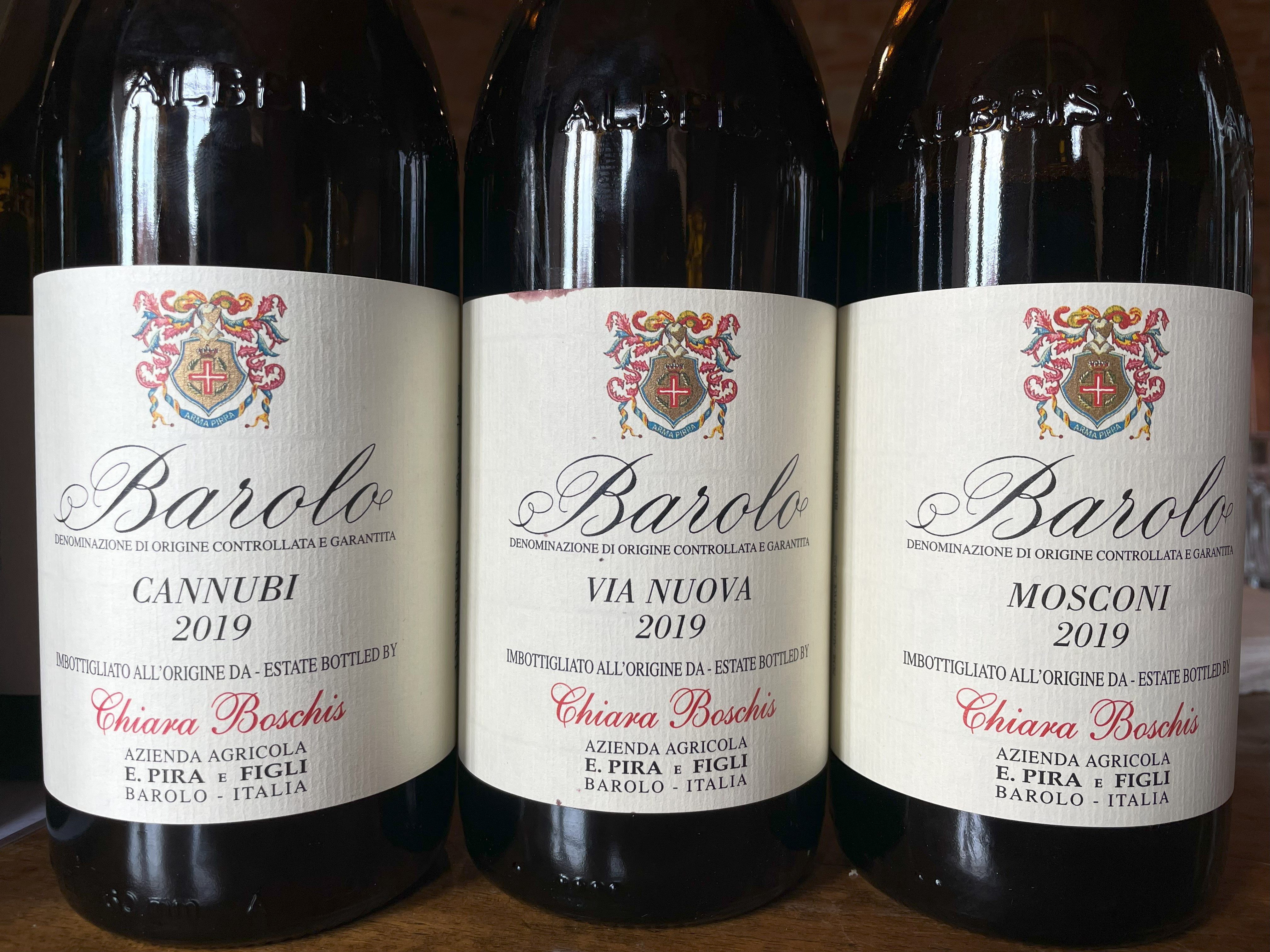
Chiara Boschis Barolo Cannubi 2019 The Cannubi is often a favorite of mine, and the 19 is no different. It’s such a beautiful wine. Aromas of red fruits, maybe a hint of strawberry? The 19 is intense, but the tannins are round. Good body with a long finish. And I think maybe I detect a hint of herbs?
Chiara Boschis Barolo Mosconi 2019 The Mosconi is slightly more masculine. The fruit is darker, and there is a hint of balsamic. The nose is intense. Although the tannins are more intense, they are still round. This is a wine with good body and a long finish.
Chiara Boschis Barolo Via Nuova 2019 The Via Nuova is even more masculine than the Mosconi. The fruit is not as dark in this wine, but there is a stronger hint of balsamic. A very intense wine. The tannins are also more intense, but not overpowering.
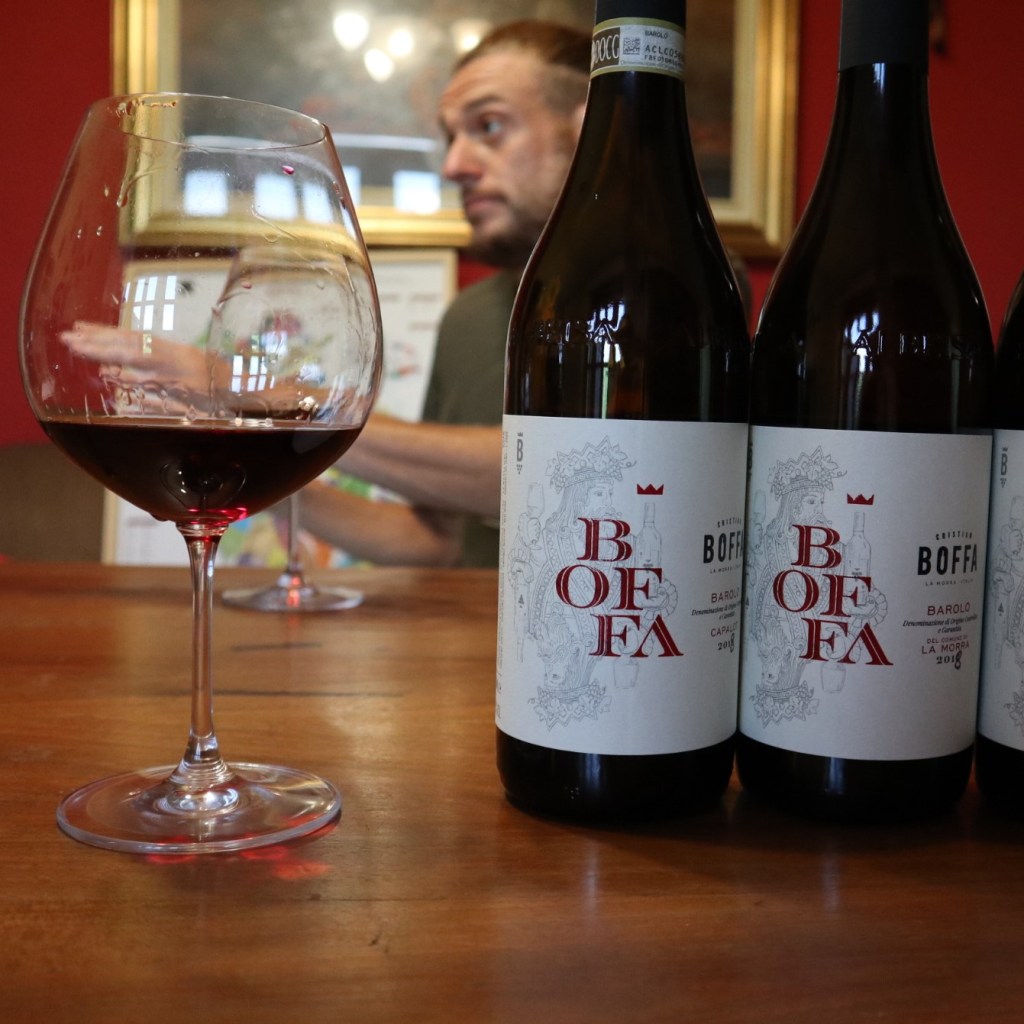
Cristian Boffa Barolo del Comune di la Morra 2019 An aromatic and intense wine, with a beautiful nose. Floral aromas, as well as red fruit, cherry. A mineral and crisp nose. Quite easy to drink, very approachable tannins, with a long finish.
Cristian Boffa Barolo Capalot 2019 More aggressive tannins in the Capalot, compared to the Comune di La Morra, but not overpowering. A beautiful, intense nose. Quite complex. Has good aging potential!
Elio Altare Barolo Arborina 2019 Beautiful nose, has that typical La Morra feel to it. Floral and fruity. Good tannins, with a little bit of oomph.
Luigi Pira Barolo Serralunga 2019 Their classic Barolo contain grapes from multiple vineyards including Marenca, Margheria, Sorano and Rivete. It’s aged in big barrel for 24 months. Beautiful, typical Barolo nose. Floral with hints of leather and balsamic. Big tannins, but still very fruity. A good bodied wine with a long finish.
Luigi Pira Barolo Margheria 2019 The Margheria is quite a bit more aromatic than the Serralunga. Crisp with aromas red fruit and hints of herbs and spices. Very crisp in the mouth. An elegant wine with quite approachable tannins.
Luigi Pira Barolo Marenca 2019 The Marenca spends 12 months tonneaux and 12 months in big barrels. The nose is similar to the Margheria. Maybe a bit more balsamic. The grapes come from a steep hill. The bunches are smaller, more concentrated. This is a bit more punchy, with bigger tannins.
Luigi Pira Barolo Vignarionda 2019 Now on the to grand finale: Vignarionda! The Vignarionda has a bit more masculine nose with aromas of tobacco and herbs. Powerful, but elegant. Tannins are big but not punchy.
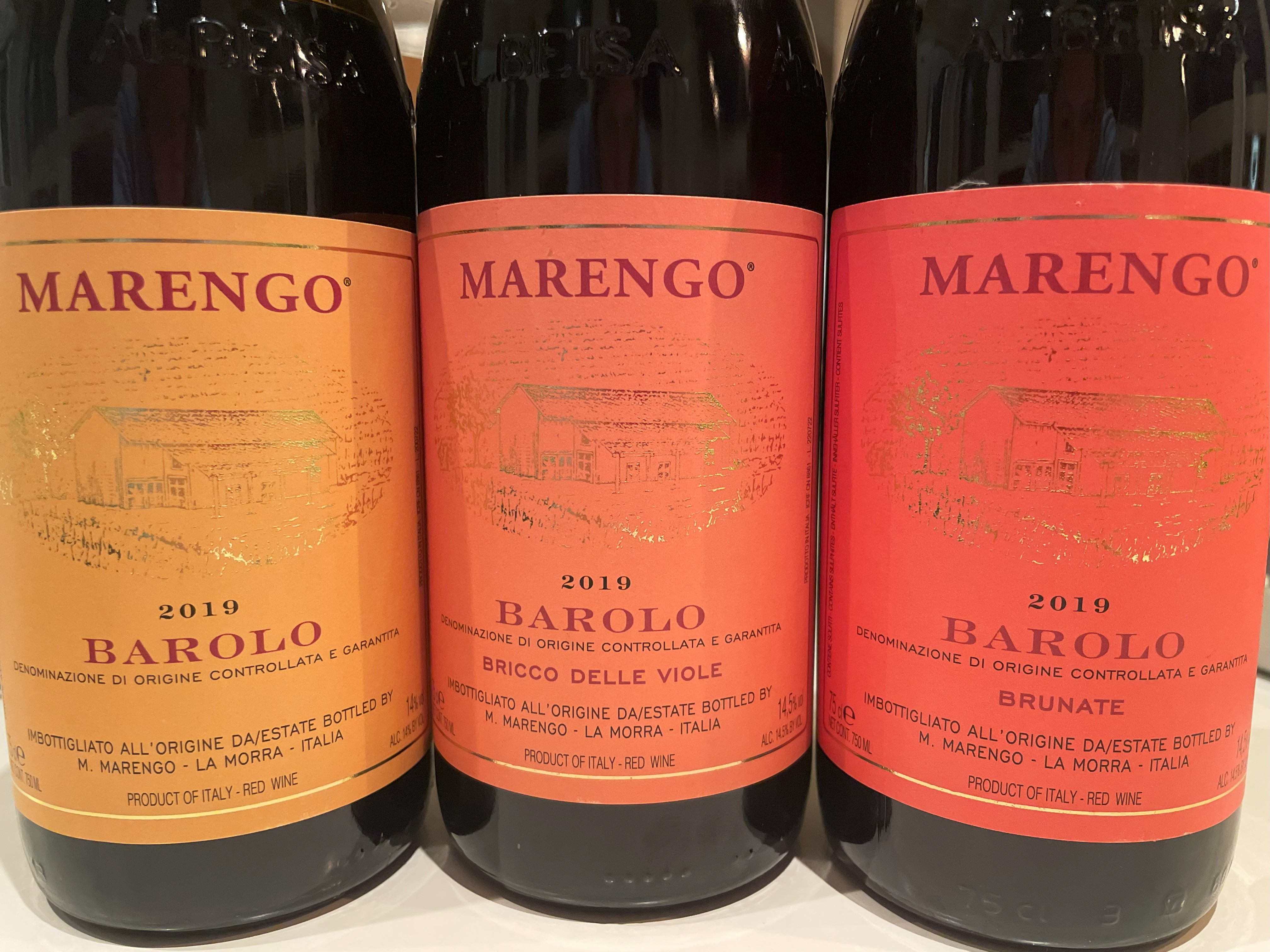
Marengo Barolo 2019 The classic Barolo has an intense nose with aromas of red fruit, flowers, tobacco and a hint of spices. The tannins are smooth. Round in the mouth, with good balance and quite long finish.
Marengo Barolo Bricco Delle Viole 2019 Beautiful nose on the Bricco Delle Viole. More explosive than intense. A bit more floral and fruity than the classic Barolo. Bigger tannins, but still smooth. A balanced, beautiful wine.
Marengo Barolo Brunate 2019 The Brunate was, not surprisingly, a bit more complex than the other two. Beautiful nose with aromas of red fruit and spices, with a hint of floral notes. Bigger tannins, more structure, yet smooth. Good balance with a long finish.
Most of you are probably already quite familiar, but let’s talk about Barolo. I mean, what is Barolo? I honestly don’t really know where to start but I guess I could start with the basics. Barolo is a wine made in the Barolo area, and it’s made with the Nebbiolo grape. There are strict rules with regards to the location and the vinification process of the grapes, and unless you follow those rules, you can’t call it a Barolo. I’ll just touch on some of the rules really quickly:
The grapes have to come from inside the Barolo area, which includes 11 villages
The wine has to age for a minimum of 18 months in oak
The wine should age for 36 months in total, the rest of the aging taking place in the bottle
Barolo – where to start?
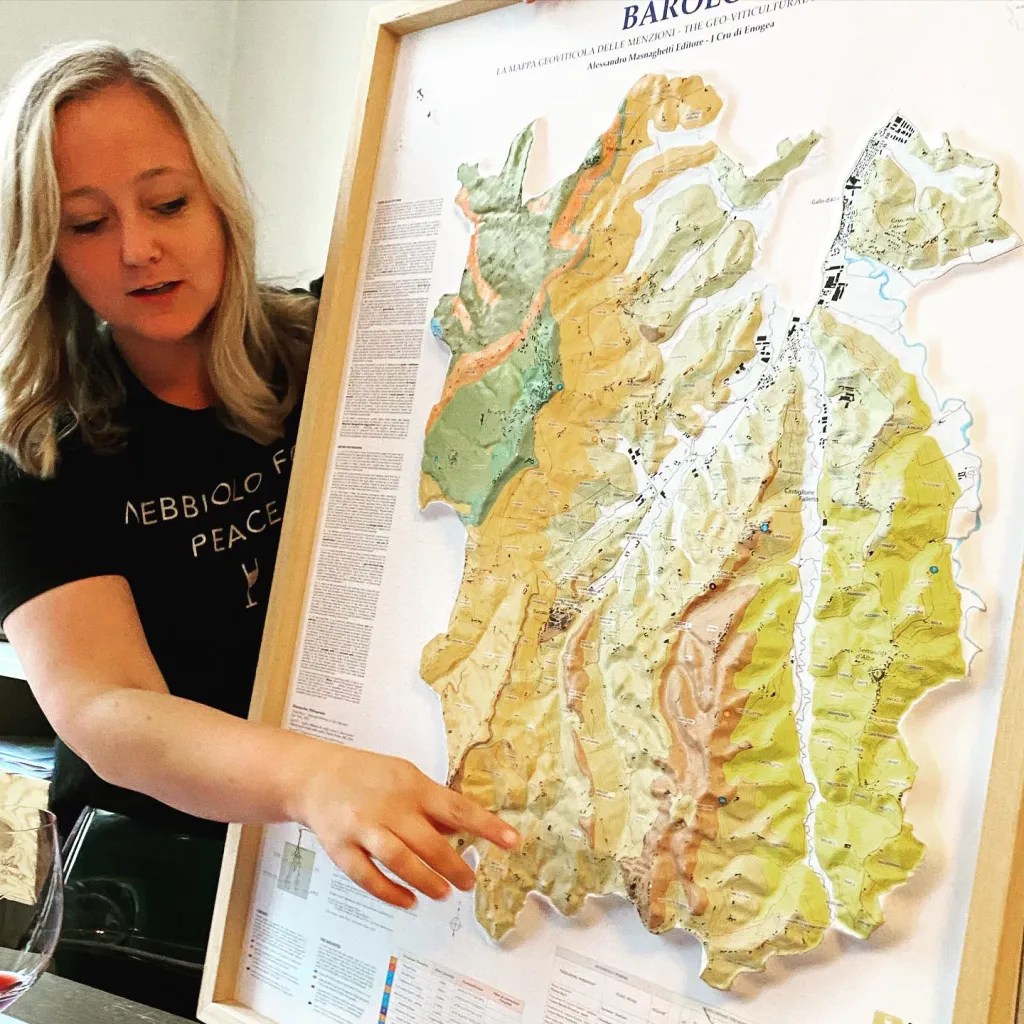
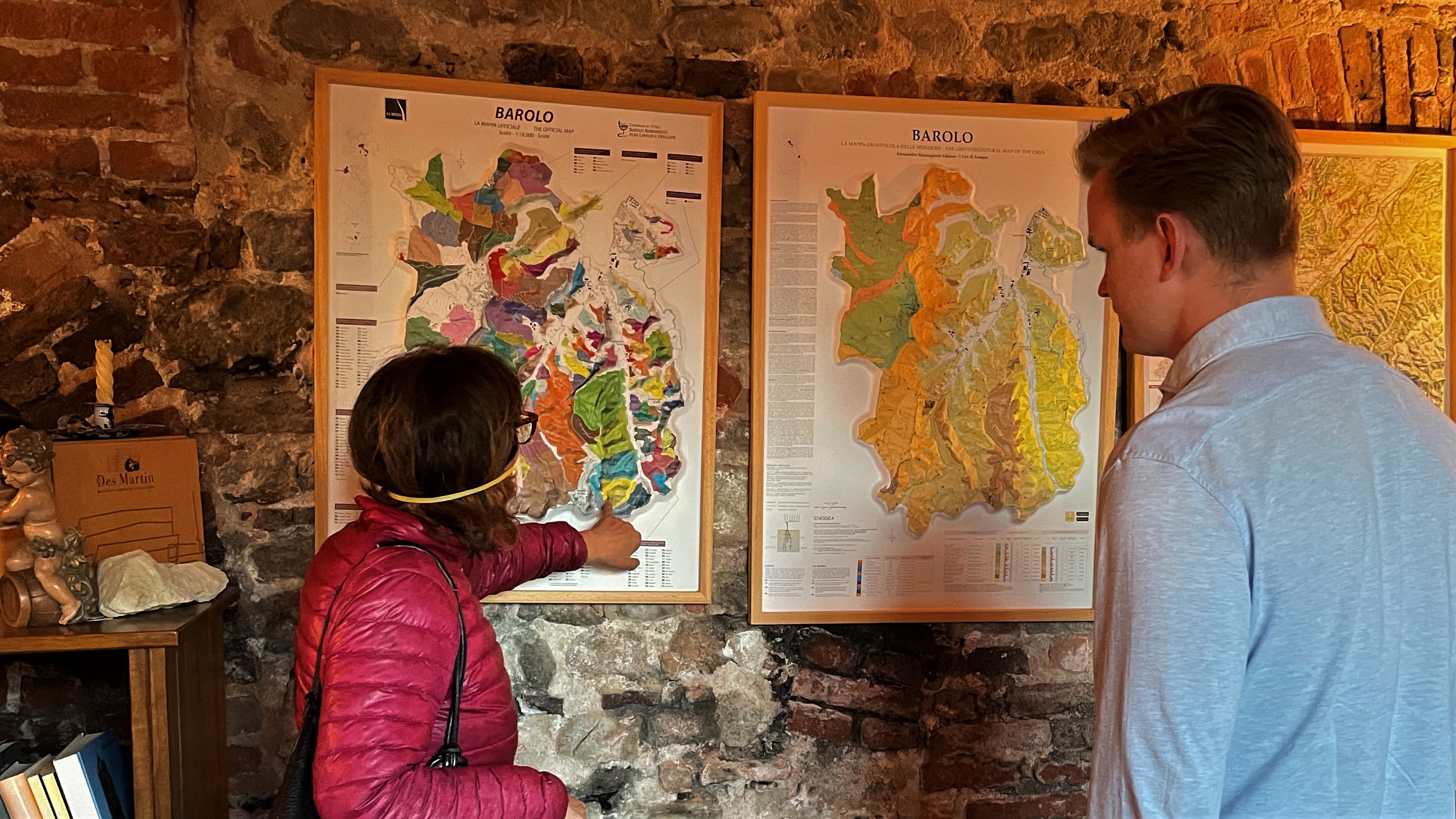
Now, like I mentioned before, there are 11 villages in which you can make Barolo. Some are more “famous” than others, like the Barolo village. But one of the most important things when it comes to Barolo is the terroir. The terroir varies quite dramatically across the Barolo area, in the different villages. So much so that it’s common to make Barolo’s with grapes harvested from very specific vineyards, and there are called single vineyard or cru Barolo’s. One of the most important educators on this topic is Alessandro Masnaghetti, aka Map Man Masna. I think terroir should have it’s own article, so I won’t go into too much detail here, but basically, the soil, the altitude, the climate and the biodiversity in each village plays a huge role in how the wine tastes. And I swear it’s evident in the different wines. Don’t believe me? Try it for yourself and see!
Where to start?
Ok, let’s talk about Barolo and how to start exploring the different kinds. One way, is to start at the top (literally) and work your way down. In the north you’ll find the village of Verduno. Burlotto is one of the first winemwakers that come to mind here, but his wines are nearly impossible to find these days. But don’t worry! Diego Morra also makes a Barolo Monvigliero, as well as a classic Barolo, so you could start there. Next up on this mini tour of Barolo: La Morra. The Cristian Boffa Barolo del Comune di La Morra is a safe bet. Another favorite is the Brunate from Marengo. And let’s not forget about Arborina. Nadia Curto, Giovanni Corino and Elio Altare come to mind. There are obviously many more wines I could suggest, but the article would be 7 pages long with a 100 links…
Moving right along to Castiglione Falletto, one of the wines that immediately come to mind is the Barolo from Cavallotto. Alfio and Giuseppe make really good wines, from their Pinner to their top cru Barolo. In certain vintages, I’d dare to say that their Langhe Nebbiolo resembles a “baby Barolo”. Just a friendly tip… From Barolo there’s the Francesco Borgogno Castellero. You could try to get your hands on a Chiara Boschis Cannubi, but those are a bit harder to come by.
We’ve made it all the way to Serralunga, at least for those of you who kept reading. If you haven’t already, you have to try the Barolo from Daniele Grasso. I could give a lengthy explanation why, but this is already a long article, so you’ll just have to take my word for it. Serralunga, similar to other towns in the Barolo area, is quite known for one vineyard in particular: Vignarionda. I’d give the one from Luigi Pira a try. But Vignarionda can be quite punchy, and is on the more expensive side, so another option is the Barolo del Comune di Serralunga. It will be a bit more approachable and won’t leave as big a dent in your wallet.
Last, but not least: Monforte d’Alba. There are some important Cru’s in Monforte as well, but my mind immediately goes to the Gianfranco Alessandria Barolo San Giovanni. Their classic Barolo is also a Monforte Barolo, so that’s another option. A more unknown cru within the borders of Monforte is Perno. You might know Perno because of Repubblica di Perno, one of my favorite restaurants. Right across the street you’ll find a brand new winemaker named Paolo Giordano. He makes a Perno Barolo, and it’s definitely worth a try.
Disclaimer: I know I didn’t touch on all 11 villages here, but I tried to include some of the most important ones. The thing to note is that I didn’t forget them! Maybe that’s a topic for the next article?
Summer came and went, and I realized (a little begrudgingly) that it’s time to find wines for fall. Fall in Norway typically means lamb, or different types of “stew”. You have the very traditional “Fårikål”, which is lamb cooked in sourcrout. It’s not my favorite, but it has been named Norway’s National Dish, which means a fair amount of Norwegian genuinely enjoy it! Lamb is in general a favorite in the fall. There’s rack of lamb, shank of lamb, lamb filet; really lamb in any capacity. Just remember: at some point lamb become sheep…
Wine with lamb
Anyway, when it comes to pairing wine with lamb, I’d go for a Barbera or Nebbiolo. It all depends on how the lamb is prepared and what side dishes it’s served with. If you’re serving the Norwegian National Dish, Fårikål, Barbera is the way to go. Might I suggest the one from Francesco Borgogno or the one from Mauro Veglio. If you’re going rack of lamb or lamb shank, I’d try a Nebbiolo. Now, here you have quite a few options. A good Langhe Nebbiolo is always a winner. One of my recent favorites is the Emilio Vada Cua Rusa. You could also opt for a Nebbiolo d’Alba, for example the Valmaggiore from Marengo. For those who are not familiar with the differences between a Langhe Nebbiolo and a Nebbiolo d’Alba, here is a super quick explanation: a Nebbiolo d’Alba has to spend at least 12 months in oak barrels, whereas a Langhe Nebbiolo does not. Most Langhe Nebbiolo don’t see any oak at all. I say most, because there are always exceptions. Anyway, more on that another day.
Barolo – where to start?
If you want something more complex with your rack of lamb, you could always go for a Barolo. Maybe it’s a special occasion? Maybe you just got promoted, or maybe you’re celebrating your 40th birthday? Or maybe it’s a Tuesday and you want a Barolo just because. There are tons of Barolo’s to choose from, but that’s a topic for another time. In the meantime, try the Cristian Boffa Barolo del Comune di La Morra or the Fratelli Revello Barolo. And watch out for the 2019’s being released in Norway this week! If the one’s I’ve tried are representative of the vintage, it’s looking very promising!
Mushroom season
It’s mushroom season. At least for some types of mushroom. My go to mushroom wine pairing is Pelaverga. And it’s usually the one from Burlotto or the one from Diego Morra, There is something about that white pepper nose and fresh acidity that makes it pair very well with mushrooms. If you’re making a very cheesy, buttery, rich risotto, perhaps a Barbera would be better. And if the mushrooms are simply a side to a steak, Nebbiolo might be the way to go.
Don’t want red wines for fall?
If you’ve made it all the way here, you’ve gotten quite a few red wine suggestions. But some dishes pair well with Champagne as well. So if you’re having Fårikål, you could opt for a Champagne instead of a Barbera. I mean, when is Champagne ever a bad idea? The J. Charpentier is still a favorite! Oudiette is another great Champagne. And although champagne with lamb stewed in sourcrout might sound like a very strange pairing, I swear it works.
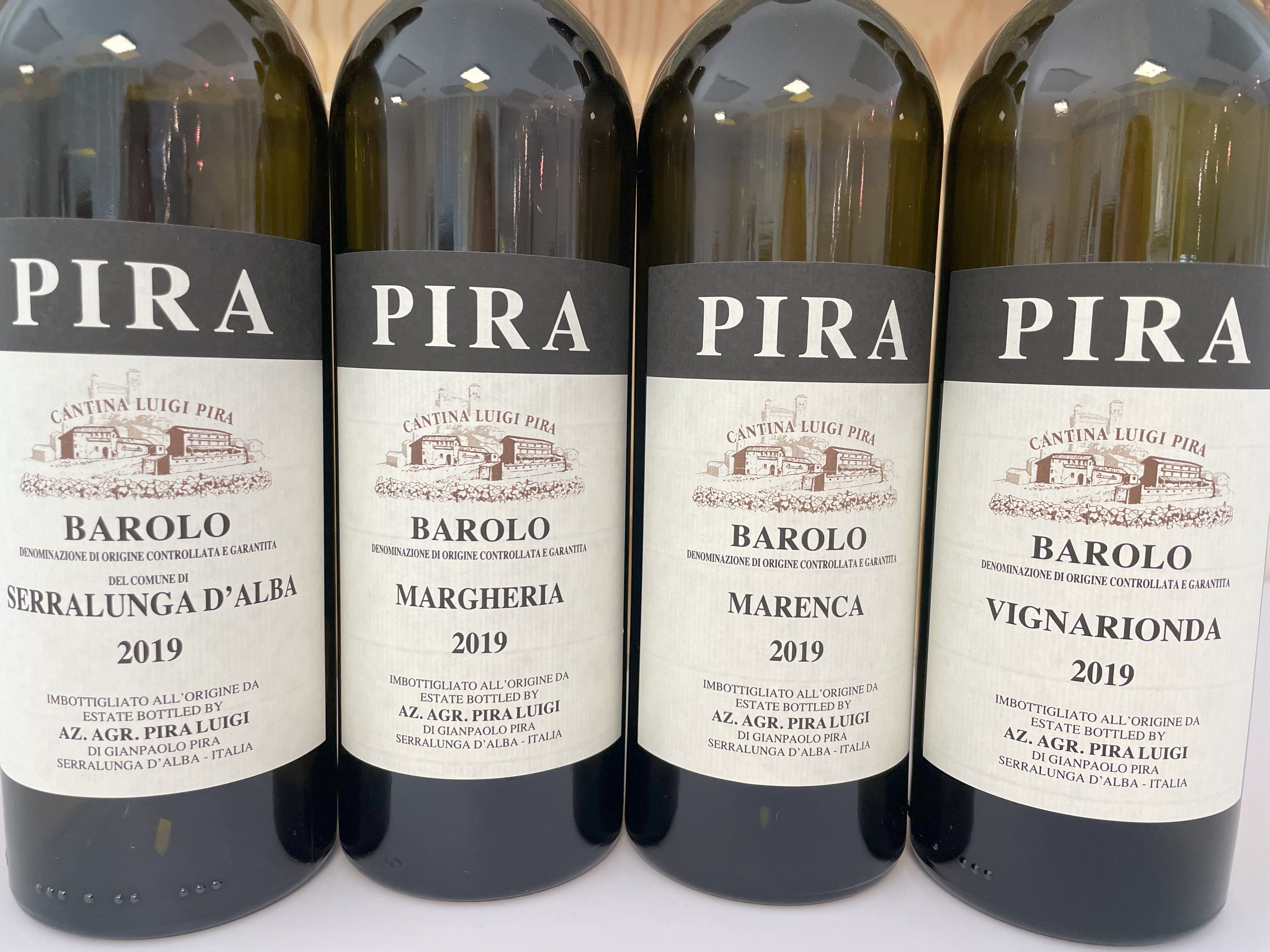
I tasted the Luigi Pira Barolo 2019 ’s over Easter, and while they have been available worldwide for a while, the new vintage of Barolo normally doesn’t hit the Norwegian market until the fall. But let’s not get into the intricate world of Vinmonopolet now.
For those of you who are not familiar with Luigi Pira, let me just do a quick introduction. The winery was founded in the 1950’s by Luigi Pira. Today, it’s his son Gianpaolo who runs the show, with his wife Tiziana and their two daughters. It’s been a pleasure to see this winery grow and evolve, and in my opinion the wines just keep getting better and better.
Anyway, here are my tasting notes:
Luigi Pira Dolcetto 2022
The grapes for the dolcetto come from north facing vineyards right by the winery. Really good dolcetto nose. Intense and aromatic. Fruity in the mouth, mostly dark red berries, like blackcurrant. Integrated tannins. Yum!
Luigi Pira Barbera d’Alba Superiore 2021
The Barbera spends 12 months in big barrels. A very fruity and elegant wine, with a hint of spices. Balanced with good acidity and a medium body.
Luigi Pira Barolo Serralunga 2019
Their classic Barolo contain grapes from multiple vineyards including Marenca, Margheria, Sorano and Rivete. It’s aged in big barrel for 24 months. Beautiful, typical Barolo nose. Floral with hints of leather and balsamic. Big tannins, but still very fruity. A good bodied wine with a long finish.
Luigi Pira Barolo Margheria 2019
The Margheria is quite a bit more aromatic than the Serralunga. Crisp with aromas red fruit and hints of herbs and spices. Very crisp in the mouth. An elegant wine with quite approachable tannins.
Luigi Pira Barolo Marenca 2019
The Marenca spends 12 months tonneaux and 12 months in big barrels. The nose is similar to the Margheria. Maybe a bit more balsamic. The grapes come from a steep hill. The bunches are smaller, more concentrated. This is a bit more punchy, with bigger tannins.
Luigi Pira Barolo Vignarionda 2019
Now on the to grand finale: Vignarionda! The Vignarionda has a bit more masculine nose with aromas of tobacco and herbs. Powerful, but elegant. Tannins are big but not punchy.
It’s 8:59 am, and I am standing outside the big wooden door of Chiara’s winery. I am there to taste the Chiara Boschis Barolo 2019. As soon as the clock strikes 9:00, I ring the doorbell. The door opens, but Chiara is nowhere to be found. Not surprisingly, she is in the vineyard. For those of you who know Chiara, you know that she definitely prefers being in the vineyard to being in the tasting room. That’s not to say she doesn’t like showing her wines to wine lovers, or working in the cellar. She just prefers working in the vineyard.
While I wait for Chiara to return from the vineyard, I smile, as I think back to what she said during one of our live streams during the pandemic. “The wine comes from the grape.” The wine comes from the grape. So simple. And so true. Wine is indeed made from grapes. And in many ways, the wine is made in the vineyard. That’s one of the reasons why Chiara’s wines are so fantastic. She spends an incredible amount of time working with the vines, doing everything she can before the harvest, giving the grapes the best shot possible at becoming excellent wines. I’ve often thought her wines remind me a little bit of her: beautiful, energetic, bold. And although the wines reflect the vintages, the quality is consistent. Every year.
The door bursts open, and Chiara comes running in. And before we know it, we’re sitting down with the 2019 Barolo’s in front of us! Every visit with Chiara is incredibly educational and informative. Her knowledge of wine and winemaking is second to none, and you are guaranteed to learn something new every time you chat with her! And I always love to hear about her new projects. I am especially excited about this new one (stay tuned)!
Chiara Boschis Barolo 2019
We’ve finally reached the “tasting note” portion. For comparison, I’ve attached my tasting notes on the 2018’s below. I think the 18’s were a bit more feminine and approachable, compared to the 19’s. This reflects the difference in the vintages, and as always the quality is consistent.
Chiara Boschis Barolo Cannubi 2019
The Cannubi is often a favorite of mine, and the 19 is no different. It’s such a beautiful wine. Aromas of red fruits, maybe a hint of strawberry? The 19 is intense, but the tannins are round. Good body with a long finish. And I think maybe I detect a hint of herbs?
Chiara Boschis Barolo Mosconi 2019
The Mosconi is slightly more masculine. The fruit is darker, and there is a hint of balsamic. The nose is intense. Although the tannins are more intense, they are still round. This is a wine with good body and a long finish.
Chiara Boschis Barolo Via Nuova 2019
The Via Nuova is even more masculine than the Mosconi. The fruit is not as dark in this wine, but there is a stronger hint of balsamic. A very intense wine. The tannins are also more intense, but not overpowering.
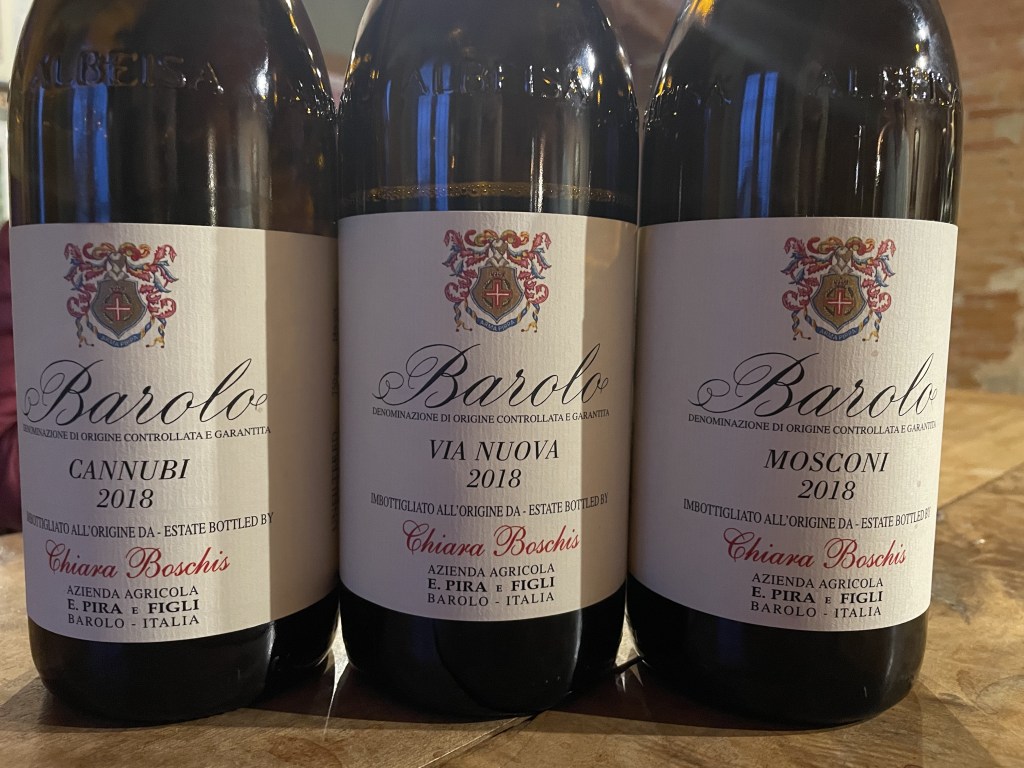
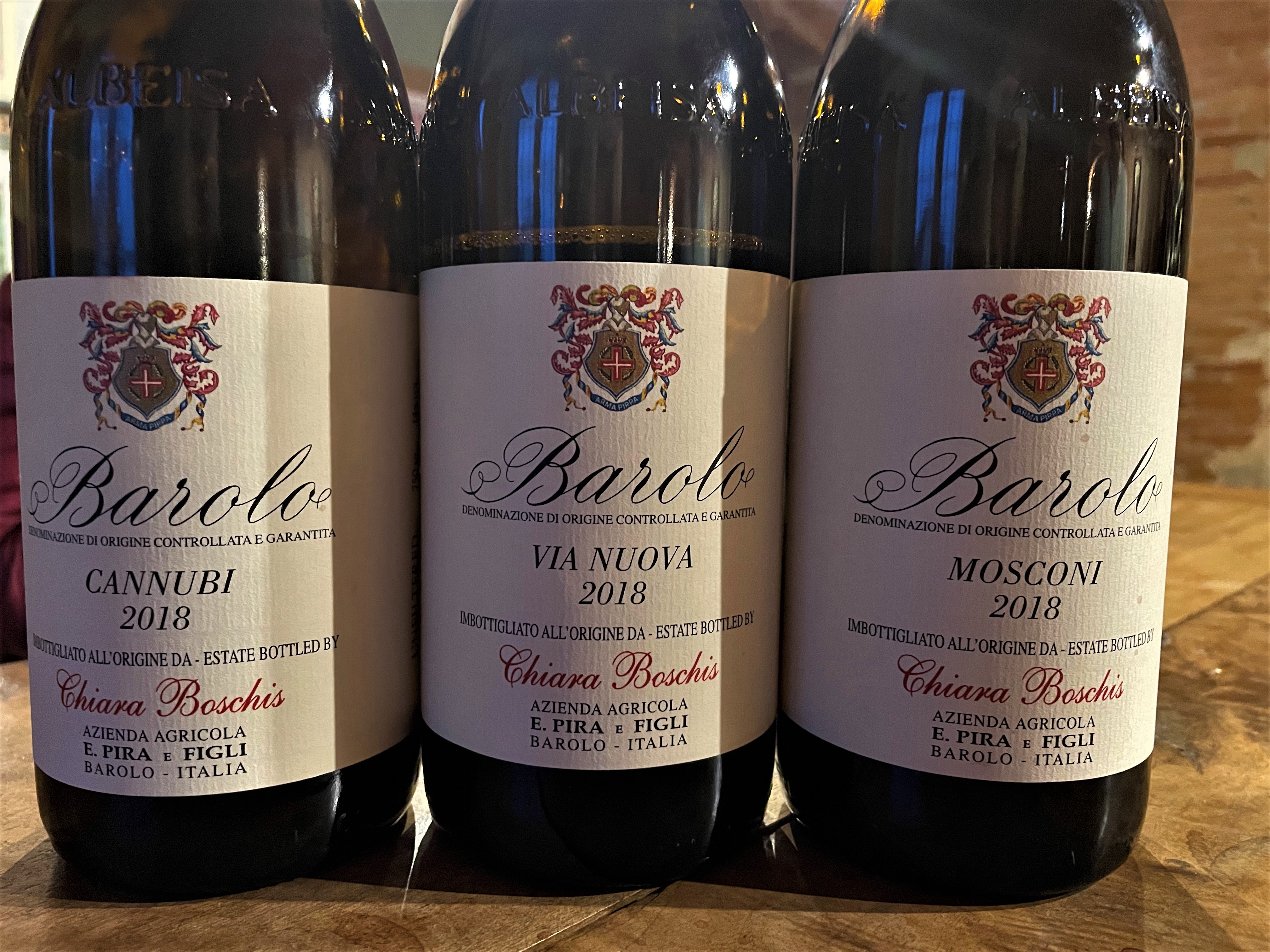
Chiara Boschis’ 2018 Barolo’s
Chiara Boschis Barolo Cannubi 2018
I kid you not, my notes actually say “holy shit”. What a nose! Crisp, mineral, complex, rich, beautiful, feminine. There are aromas of tar and roses. Good depth and long finish. Chiara herself describes the Cannubi as “a kind wine”. And I can’t argue with that.
Chiara Boschis Barolo Via Nuova 2018
The Via Nuova is a bit more austere. A fruity and balanced wine. I agree with Chiara that the 2018 Barolo’s are more Burgundian than other recent vintages.
Chiara Boschis Barolo Mosconi 2018
I guess the word I’d use about Mosconi is “more”. More complex nose, more masculine, more spices, more structure. There are also hints of orange, apricot, peach and white pepper in this wine.
Before I dive into the actual topic of this article, Marengo Barolo 2019, I need to make one thing clear. I do not consider myself a wine critic. If we go by Wikipedia’s definition of the word, I guess I technically could be called a wine critic. But I’d rather consider myself a wine lover, on a mission to help people drink good wines. I try to tell stories. About the winemakers. About the wines. Yes, I do write tasting notes. But when I do, I try to accompany those notes with some background information and perhaps a few anecdotes. I do this to try and give you the bigger picture. Not just my subjective opinions about the wines.
Which brings me to another point. If I taste a wine that I don’t like, I don’t write about it. If, for whatever reason, I don’t like a wine, I leave it alone. And there could be many reasons why I don’t like a wine. Maybe it was a bad bottle. Maybe there was something wrong with the wine. Or maybe I just didn’t like it. It wasn’t for me. It could also be that the wine was bad. Because there are wines out there that are bad. But who am I to tell the world that? Now, I understand that it’s a wine critics job to critique wine. But when I was little I learned that “if you don’t have something nice to say, don’t say anything at all.” This is especially true if what you say can affect someone’s life. Someone’s livelihood.
Some friends of mine recently received a particularly bad review of some of their wines. I won’t spend much time on that, but when I read that review I knew I had to taste those wines for myself to see they really were as bad as they were made out to be. And spoiler alert, they absolutely were not! My friends, Jenny and Marco, make excellent wines, and the 2019 Barolo’s are no different. I was also happy to see that Jancis Robinsons agrees with me, in her Financial Times article.
Jenny and Marco Marengo
Jenny and Marco Marengo are warm and generous people, who are very passionate about their wines. Together with their son, Stefano, the three of them work enthusiastically together in the pursuit of excellent winemaking. Marco really is a nerd, in the modern, positive, definition of the word. The same way Bill Gates is often referred to as a nerd, an expert and enthusiast, and obsessed with intellectual pursuit of winemaking.
And without further ado, here are my tasting notes on the Marengo Barolo 2019:
Marengo Barolo 2019
The classic Barolo has an intense nose with aromas of red fruit, flowers, tobacco and a hint of spices. The tannins are smooth. Round in the mouth, with good balance and quite long finish.
Marengo Barolo Bricco Delle Viole 2019
Beautiful nose on the Bricco Delle Viole. More explosive than intense. A bit more floral and fruity than the classic Barolo. Bigger tannins, but still smooth. A balanced, beautiful wine.
Marengo Barolo Brunate 2019
The Brunate was, not surprisingly, a bit more complex than the other two. Beautiful nose with aromas of red fruit and spices, with a hint of floral notes. Bigger tannins, more structure, yet smooth. Good balance with a long finish.
Barolo 2018 – delicious or disappointing? That is the question. But we’ll dig into that a little later. First, let’s look at some facts. As a stark contrast to 2017, which was very dry, 2018 was quite rainy. There were 62 days of rain during the growing season, just like 2014, which was considered one of the rainiest years of all time. But a few things distinguish 2014 from 2018, including the temperature. The temperature was on average higher in 2018 compared to 2014, especially towards the end of the growing season.
So what does all this mean? Well, first of all, too much rain leads to a lot of work in the vineyards. All that humidity creates perfect conditions for downy mildew, a fungus growing on the grapes. The winmakers combat this by spraying copper sulfate, but they basically have to spray after every rainfall. If you have half a hectare, that’s probably not too big a deal, but when you have three, five, or 14, it’s a lot of work.
The heavy rain combined with the high temperatures, also means quite a lot of growth in the vineyards. Which in turn meant they had to be vigilant about managing their vineyards. I think that’s really the key in any vintage: work in the vineyard. Fabio from Burlotto prefers to call himself a “winegrower” and not a “winemaker”, because he first and foremost considers himself a farmer. And when you pay a lot of attention in the vineyards, “it’s difficult to have a bad vintage.”[i] And I agree. In my experience, a good winemaker will make good wines in every vintage. And so in some vintages, like 2018, my advice would be to chose the winemaker and not the wine, if that makes sense.
Langhe July 2018
Barolo 2018 – many different opinions
I am not the first to share some thoughts on Barolo 2018. There have been split “reviews” on this vintage, both from the winemakers and from the wine reviewers. Some are on the more dramatic side, to the point of almost condemning the vintage. Others bear a more hopeful tone, highlighting that despite the difficulties of the vintage, the resulting wines are actually of higher quality than excepted.
Galloni said it’s “the most erratic, frustratingly inconsistent Barolo vintage” he has ever encountered. [ii]
Masnaghetti, a great source of information when it comes to Langhe, and the godfather of the Barolo maps, wrote this in his Barolo 2018 Vintage report: “In the history of Barolo, and not merely of Barolo, the vintages which presented themselves at their origin as problematical have been anything but rare. But, in a hypothetical classification of all the vintages, very few would be able to rival 2018.”[iii] But although the season was difficult, he thinks the wines will be “classified in the future as of good level.”
Joshua Dunning, the talent behind Word On The Grapevine, called the vintage a “tangram”. If you had to google that word, don’t worry, I did too. A tangram is “a Chinese puzzle made by cutting a square of thin material into five triangles, a square, and a rhomboid which are capable of being recombined in many different figures”. [iv] And I think it’s a fairly spot on description. He goes on to say that “challenges notwithstanding, the finished wines are an altogether more positive picture than their contributory climatic components might suggest.”[v]
Davy Żyw from Berry Bro’s and Rudd dared to say that the Barolo 2018 has “a Pinot Noir-style personality.”[vi] The same comparison was made by Fabio Alessandria when I visited him November 2021. Davy Żyw made some good points in his Barolo 2018 Vintage Report, including that the “best wines of the ’18 vintage showcase the strength of this multifaceted and extraordinary terroir, elegantly choreographed and infused by an equal sense of calm and place.”
Now, some of you might be waiting for Piemontegirl’s opinion on Barolo 2018. I have to start by saying that I believe there is not such thing as a bad vintage. However, I do believe there are bad wines. I think there is a difference between the two. What is it that they say? The proof is in the pudding? Well, in this case, the wine… There are so many really good 2018 Barolo’s out there. Floral. Fruity. Balanced. Elegant. Crisp. Wow. Beautiful. Incredible. These are only some of the words I used to describe Barolo 2018. And so yes, the growing season was difficult. And yes, overall this vintage might lack some structure compared to 2017, 2016 and 2015. But there are plenty of good Barolo’s out there. You just have to find them.
Here are some of my favorites:
Barolo 2018 Tasting Notes
Bruna Grimaldi Barolo Bricco Ambrogio 2018
A classic nose, floral and fruity. Silky tannins. A very approachable Barolo.
Bruna Grimaldi Barolo Badarina 2018
A slightly vegetal and austere wine. Aromas of red fruit, leather and balsamic. Good structure.
Burlotto Barolo 2018
Masculine nose with aromas of leather and tobacco, but still fruity and quite approachable. A gentle and elegant wine.
Burlotto Barolo Acclivi 2018
The Acclivi is a bit deeper than the Classico. So elegant in the mouth with a very gentle structure. Fruity and crisp, with a long finish.
Burlotto Barolo Monvigliero 2018
Incredible nose with aromas of white pepper and red fruit, with a hint of spice. It was actually a bit spicy in the mouth as well. A very distinctive wine with a lot of personality.
Burlotto Barolo Cannubi 2018
With the Cannubi, the word elegance springs to mind. Elegant nose, elegant tannins, elegant structure. If I were to pick a wine to demonstrate how a Barolo should smell, this one would be a perfect example.
Chiara Boschis Barolo Cannubi 2018
I kid you not, my notes actually say “holy shit”. What a nose! Crisp, mineral, complex, rich, beautiful, feminine. There are aromas of tar and roses. Good depth and long finish. Chiara herself describes the Cannubi as “a kind wine”. And I can’t argue with that.
Chiara Boschis Barolo Via Nuova 2018
The Via Nuova is a bit more austere. A fruity and balanced wine. I agree with Chiara that the 2018 Barolo’s are more Burgundian than other recent vintages.
Chiara Boschis Barolo Mosconi 2018
I guess the word I’d use about Mosconi is “more”. More complex nose, more masculine, more spices, more structure. There are also hints of orange, apricot, peach and white pepper in this wine.
Cristian Boffa Barolo 2018
A delicate and balanced Barolo, with aromas of red fruit and strawberry. Long finish, with round, sweet tannins. A very good Barolo!
Diego Morra Barolo Zinzasco 2018
Beautiful nose with aromas of fruit, flowers and white pepper. Round tannins and good body. A wine with quite a lot of depth.
Diego Morra Barolo Monvigliero 2018
Floral aromas with hints of white pepper. A very good wine with good structure. Might need some time to open up fully.
Fratelli Revello Barolo Gattera 2018
The Revello Gattera has aromas of red fruit, liquorice and roses. It’s an elegant wine with soft tannins.
Marengo Barolo Bricco Delle Viole 2018
Wow! What an incredible nose. So floral and fruity, yet complex. Smooth tannins. Easy to drink.
Marengo Barolo Brunate 2018
Tried this straight from the tank, before it went into the bottle. A beautiful wine. Complex nose with aromas of leather, tobacco and a hint of chocolate. Good balance and structure. Long finish. balance.
Marengo Barolo Riserva 2018
“Very young, but so good.” Enough said. Or maybe not, but that’s all my notes said…
Nadia Curto Barolo La Foia 2018
Amazing nose with aromas of roses, red fruit and a hint of tar? Good body with round, smooth tannins.
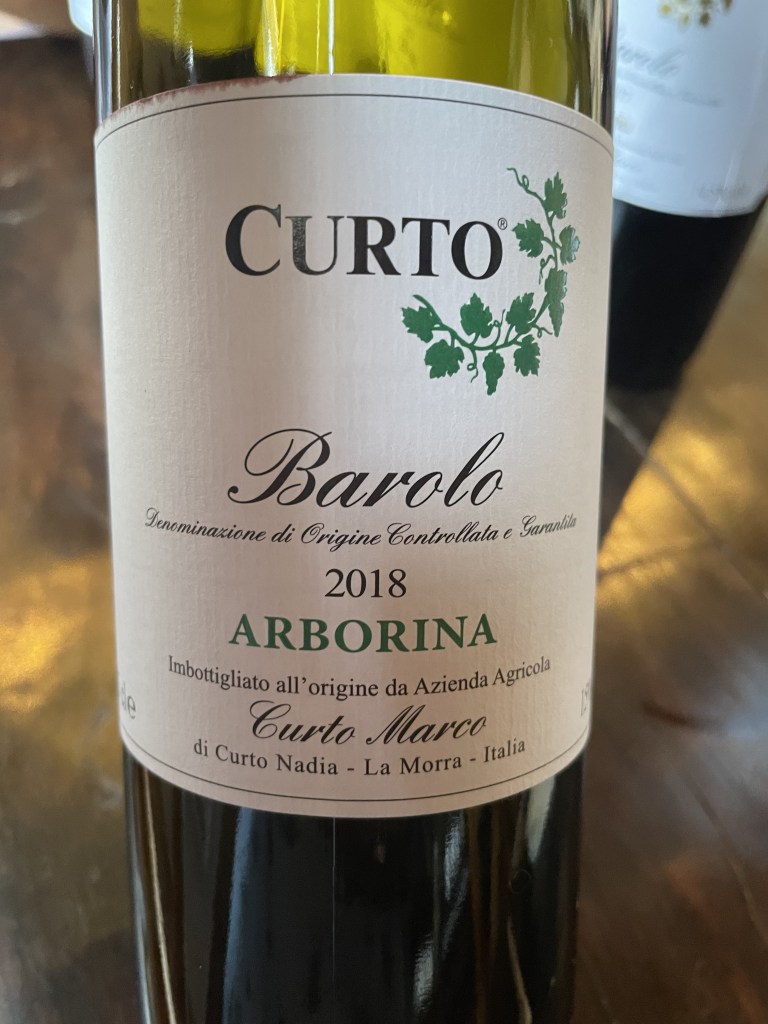
Nadia Curto Barolo Arborina 2018
The Arborina might be a bit more complex than the La Foia. More leather, tobacco and spice aromas. More powerful, more intense. This might be due to the south exposure and long extraction.
Paolo Giordano Barolo 2018
I was really impressed by this wine. Good structure, but still easy to drink. Round, well integrated tannins. And it really opened up in the glass.
Roberto Voerzio Barolo Del Comune de La Morra 2018
A complex wine with a good nose. Aromas of spices and a hint of mint. Delicious. Good grip in the tannins. A long finish.
Roberto Voerzio Barolo Brunate 2018
I’ve tasted this both from tank and from bottle. The tank sample had an incredible nose. Concentrated with aromas of dark fruit. Elegant. Classic. Then, when I tasted from the bottle the nose was quite closed. But it had that wonderful combination of a feminine nose and complex body. Tannins were a but dry, but the aftertaste was incredible. Long finish.
Roberto Voerzio Barolo Fossati 2018
I also tasted this from both tank and bottle. When I tasted from the tank the wine was quite masculine with aromas of tobacco, some herbs and quite harsh tannins. Then, when tasted from the bottle, the nose was still quite masculine, but the harsh tannins were gone and the wine was quite feminine. With a long, good finish.
Roberto Voerzio Barolo La Serra 2018
A wine with an interesting nose. Red fruit, spices and a hint of licorice? Smooth tannins, good body and good deoth. Easy to drink. Integrated tannins.
Roberto Voerzio Barolo Cerequio 2018
Stunning! I really liked this wine. Aromas of red fruit and tobacco. A bit austere maybe. But WOW what a delicious wine. A good example of how maybe the nose and taste don’t always “go together”.
The first time I tried Chiara Boschis’ 2018 Barolo’s, they came straight from the tank. It was bottling day at the winery, and the 2018 Barolo’s were making their way from tank to bottle. The wines were obviously a bit stressed, but I remember thinking that the 2018 vintage was something to look forward to! And I was right.
I know there have been mixed messages about the 2018 vintage, but I will say what I always say: there is no such thing as a bad vintage. And Chiara Boschis’ 2018 Barolo’s are proof. Seriously, they are stunning.
But before we dig into the 2018 Barolo’s, I’d like to share my notes on her other wines as well. I myself am a huge fan of Dolcetto, and don’t think the wine gets nearly enough attention! And guess what, Chiara thinks “there might be a return of Dolcetto”.
Chiara Boschis Dolcetto 2021
One of my absolute favorite things about Dolcetto is it’s aroma. And the one from Chiara Boschis is no exception! Beautiful nose; so fruity. But the wine isn’t just fruity. It also has some structure. She makes one of the more complex Dolcetto’s in Langhe. A true treat.
Chiara Boschis Barbera 2020
A stunning Barbera. 2020: bad year for human kind, good year for wine. A bit of an austere nose with aromas of red fruits. Good structure and great potential for aging.
Chiara Boschis Langhe Nebbiolo 2020
Typical Nebbiolo nose with aromas of red fruit and rose petals. A very fruity and fresh Nebbiolo.
Chiara Boschis’ 2018 Barolo’s
… and a surprise treat at the end!
Chiara Boschis’ 2018 Barolo’s
Chiara Boschis Barolo Cannubi 2018
I kid you not, my notes actually say “holy shit”. What a nose! Crisp, mineral, complex, rich, beautiful, feminine. There are aromas of tar and roses. Good depth and long finish. Chiara herself describes the Cannubi as “a kind wine”. And I can’t argue with that.
Chiara Boschis Barolo Via Nuova 2018
The Via Nuova is a bit more austere. A fruity and balanced wine. I agree with Chiara that the 2018 Barolo’s are more Burgundian than other recent vintages.
Chiara Boschis Barolo Mosconi 2018
I guess the word I’d use about Mosconi is “more”. More complex nose, more masculine, more spices, more structure. There are also hints of orange, apricot, peach and white pepper in this wine.
Chiara Boschis Barolo Via Nuova 2010
The Chiara Boschis Barolo Via Nuova 2010 is still so fresh! It’s basically a baby. Floral and feminine with almost no tertiary aromas. Still has good structure. You can keep this for quite a while, if you’re still lucky enough to have a bottle or two.



 PIEMONTEGIRL