Chiara Boschis’ 2018 Barolo’s

The first time I tried Chiara Boschis’ 2018 Barolo’s, they came straight from the tank. It was bottling day at the winery, and the 2018 Barolo’s were making their way from tank to bottle. The wines were obviously a bit stressed, but I remember thinking that the 2018 vintage was something to look forward to! And I was right.
I know there have been mixed messages about the 2018 vintage, but I will say what I always say: there is no such thing as a bad vintage. And Chiara Boschis’ 2018 Barolo’s are proof. Seriously, they are stunning.

But before we dig into the 2018 Barolo’s, I’d like to share my notes on her other wines as well. I myself am a huge fan of Dolcetto, and don’t think the wine gets nearly enough attention! And guess what, Chiara thinks “there might be a return of Dolcetto”.

Chiara Boschis Dolcetto 2021

One of my absolute favorite things about Dolcetto is it’s aroma. And the one from Chiara Boschis is no exception! Beautiful nose; so fruity. But the wine isn’t just fruity. It also has some structure. She makes one of the more complex Dolcetto’s in Langhe. A true treat.

Chiara Boschis Barbera 2020

A stunning Barbera. 2020: bad year for human kind, good year for wine. A bit of an austere nose with aromas of red fruits. Good structure and great potential for aging.

Chiara Boschis Langhe Nebbiolo 2020

Typical Nebbiolo nose with aromas of red fruit and rose petals. A very fruity and fresh Nebbiolo.

Chiara Boschis’ 2018 Barolo’s

… and a surprise treat at the end!
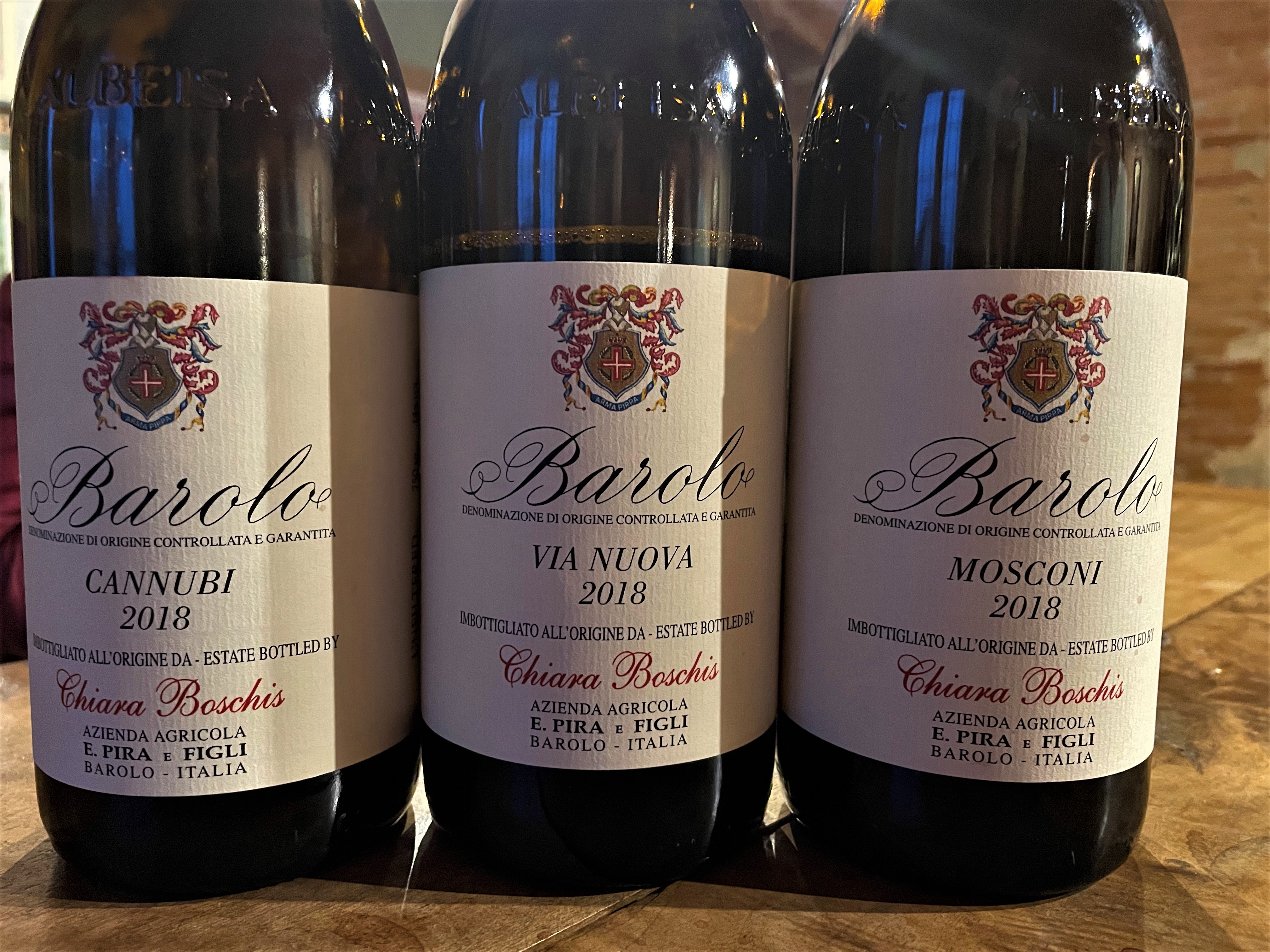
Chiara Boschis’ 2018 Barolo’s

Chiara Boschis Barolo Cannubi 2018

I kid you not, my notes actually say “holy shit”.  What a nose! Crisp, mineral, complex, rich, beautiful, feminine. There are aromas of tar and roses. Good depth and long finish. Chiara herself describes the Cannubi as “a kind wine”. And I can’t argue with that.

Chiara Boschis Barolo Via Nuova 2018

The Via Nuova is a bit more austere. A fruity and balanced wine. I agree with Chiara that the 2018 Barolo’s are more Burgundian than other recent vintages.

Chiara Boschis Barolo Mosconi 2018

I guess the word I’d use about Mosconi is “more”. More complex nose, more masculine, more spices, more structure. There are also hints of orange, apricot, peach and white pepper in this wine.

Chiara Boschis Barolo Via Nuova 2010

The Chiara Boschis Barolo Via Nuova 2010 is still so fresh! It’s basically a baby. Floral and feminine with almost no tertiary aromas. Still has good structure. You can keep this for quite a while, if you’re still lucky enough to have a bottle or two.
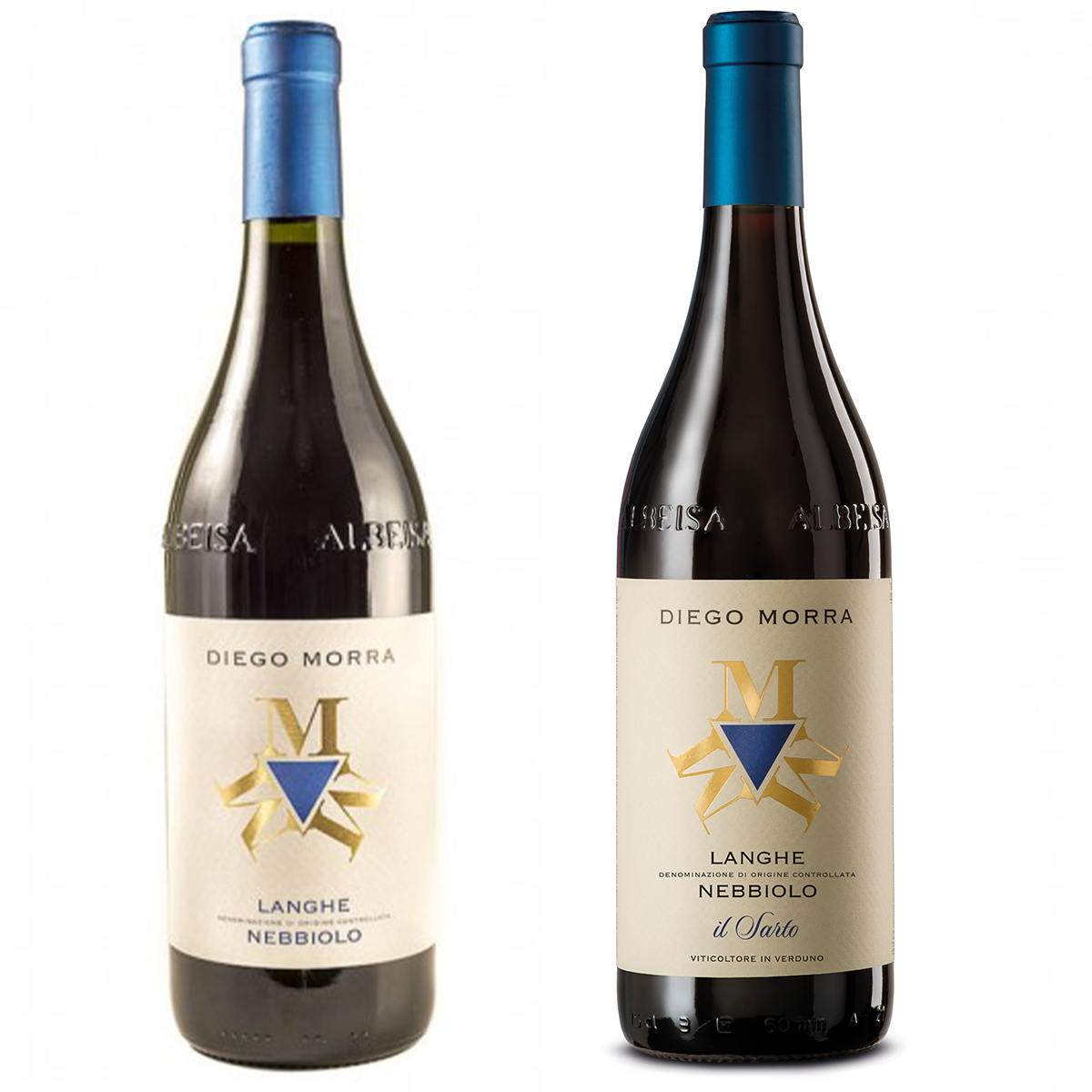
Diego Morra Il Sarto 2019

Diego Morra Langhe Nebbiolo Il Sarto 2019

The Diego Morra Langhe Nebbiolo Il Sarto 2019 is a new and improved Langhe Nebbiolo from Diego Morra. Diego Morra’s family has been in the wine and hazelnut business since the mid 1900’s, but it’s not until recently Diego started to bottle the wine under his own label.

The Il Sarto sews together vineyards from two different towns which have different microclimate, exposure and terroir. One is the vineyard in the municipality of Roddi, with an altitude of about 200 meters and south exposure, and the other is from municipality of La Morra, the Castagni and Serra dei Turchi vineyards. At an altitude of about 380 meters with north-east exposure these vineyards are more fresh than the vineyard in Roddi.

Why the name Il Sarto

“Il Sarto” translates to “the tailor”. The choice of the name derives from two different reasons:

First, a tailor, with attention and craftsmanship, chooses and sews together the pieces of cloth that they consider best, giving harmony to the dress as a whole, in the same way this Nebbiolo sews together different vineyards, combining terroir from La Morra and Roddi.

Second, the tailor also represents the union of Diego Morra and Francesca. Francesca has origins in the north of Piedmont, in the area of Biella, which since the 1800 has been famous for the art of weaving, for fine fabrics that are sold all over the world. So the name “Il Sarto” also recalls the tradition of Francesca’s origins.

To sum up, Il Sarto represents two traditions sewn together: high quality wine and high quality tailoring.

Vinification

After a careful destemming, the spontaneous fermentation takes place in 8-10 days under constant temperature control (max.28-30°C), followed by short but frequent remounts and racking for about 10-12 days.  The wine-making process, the malolactic fermentation and large part of the aging process (which finishes with a period in wood) takes place in stainless steel containers during  a 12-16 month period.

Diego Morra Langhe Nebbiolo Il Sarto 2019 Tasting Notes:

The Diego Morra Il Sarto 2019 is quite explosive, similar to other 2019’s. Aromas of red berries, cherry and some pepper on the nose. Very fruity in the mouth, with round and approachable tannins. Very balanced with a long finish. Absolutely delicious!

Diego Morra Langhe Nebbiolo Il Sarto 2019

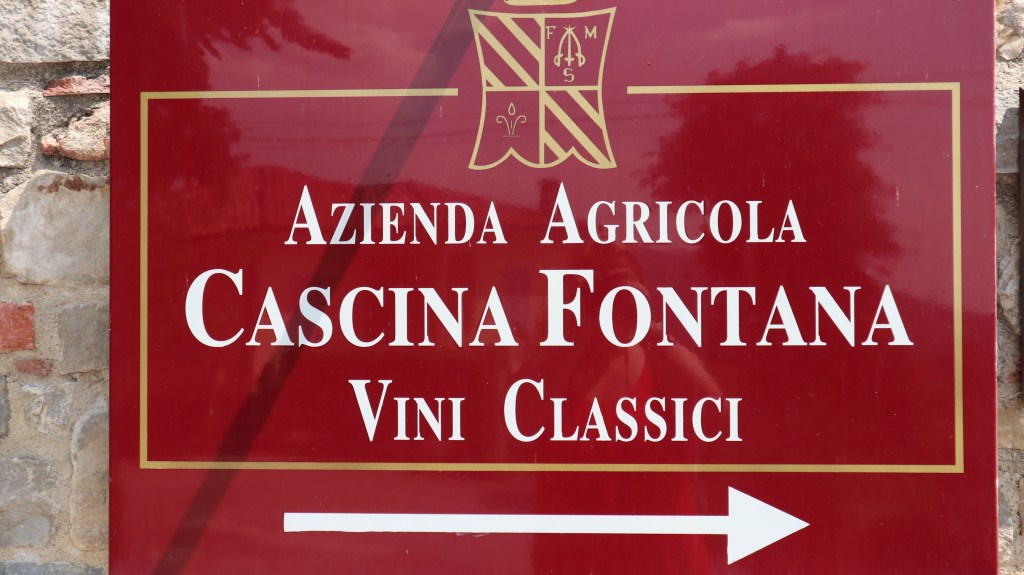
Cascina Fontana Dolcetto

Cascina Fontana

I bet you didn’t know that the Cascina Fontana Dolcetto holds a special place in Mario’s heart! Personally, I think Dolcetto is quite underrated. We don’t give it enough attention. And, as it turns out, the Dolcetto grape is not the easiest to deal with. But that doesn’t stop Mario! During my last visit we spent quite a bit of time talking about Dolcetto. Turns out it’s one of Mario’s favorite to grow. Even if it can be a pain in the a**!

Winemaking

The Cascina Fontana Dolcetto is aged in stainless steel tanks. The grapes come from a vineyard in Sinio, which is outside the DOCG area. The vineyard has soil composed of limestone with some clay. Something that is very important to Mario is the fact that the wine must reflect the vintage. He said this when talking about the 2014 vintage, but it also applies to any other vintage. As you can see below, the Dolcetto has quite different expressions in the separate vintages and I like all of them!

Cascina Fontana Dolcetto Tasting Notes

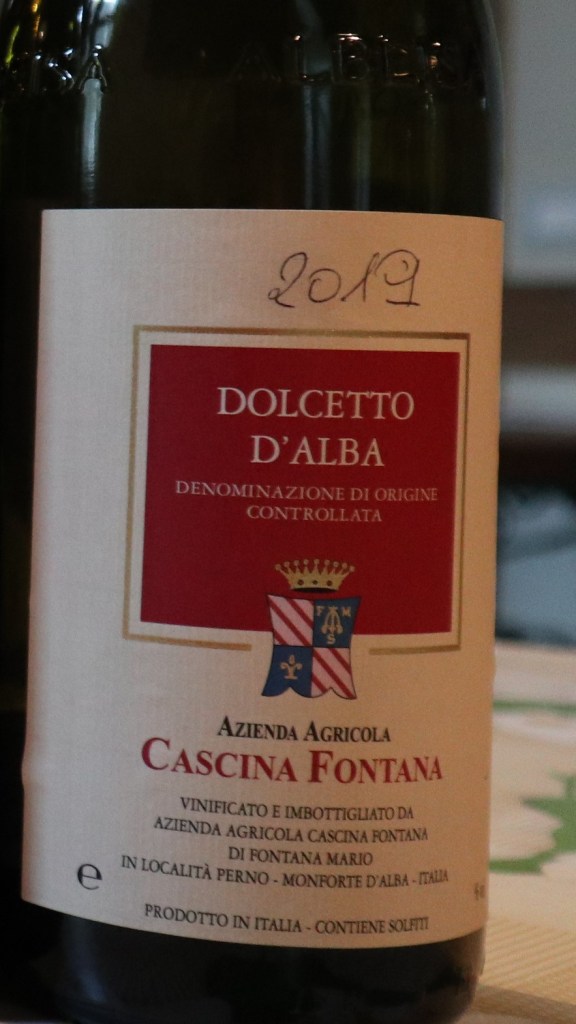
Cascina Fontana Dolcetto 2019

Dolcetto 2019 

In the words of Mario Fontana: “2019 is a great vintage.” You have this perfect Dolcetto nose, good structure and wonderful freshness. I think the 2019 Dolcetto’s are elegant and rich, with more power than 2018.

Dolcetto 2018

As Nicola from Trediberri once said, the 2018 vintage is skinny just like Miley Cyrus. The 2018 Dolcetto is light and fruity – a very drinkable Dolcetto. Lacks the structure you find in 2017 and 2019, but structure isn’t always something you strive for in a Dolcetto.

Dolcetto 2017

Compared to 2019, 207 was a warm vintage, and so the alcohol is a little higher. The 2017 has 13.5% alcohol, but because Mario is such a wonderful winemaker, you cannot taste it!

Cascina Fontana Barolo 2016

You can find tasting notes on the Cascina Fontana 2016 Barolo’s here.

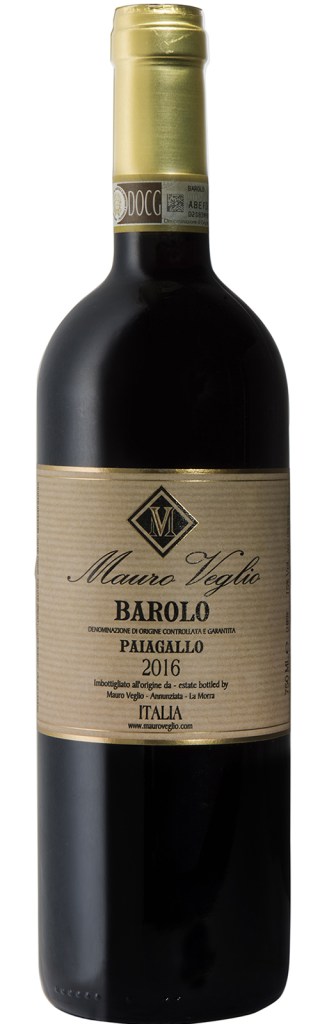
Mauro Veglio Paiagallo 2016

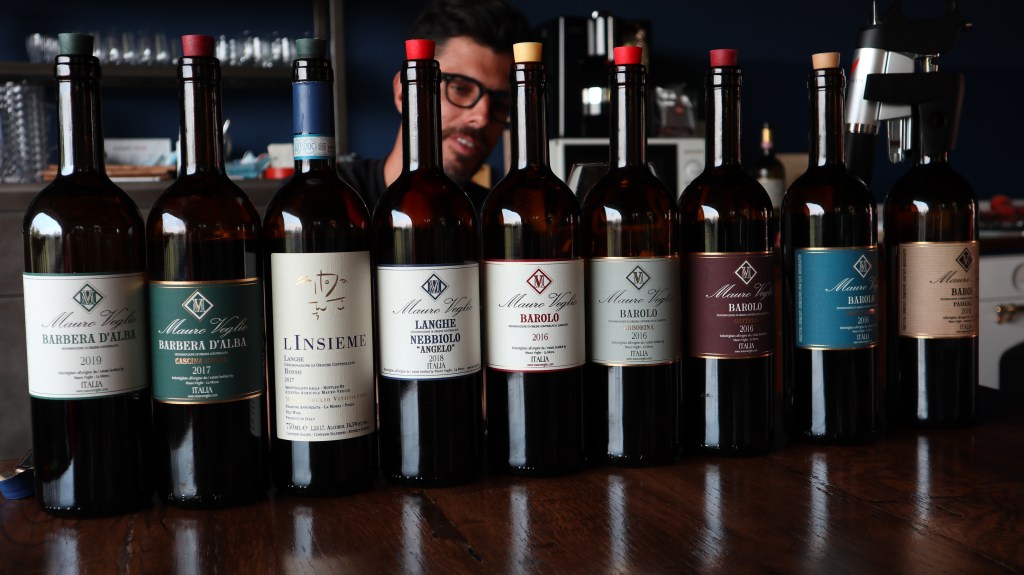
I have the pleasure of introducing, for the first time, Mauro Veglio Paiagallo 2016! But before I dig into the Paiagallo 2016, some back story might be in order. A few years ago, Mauro Veglio and Alessandro Veglio joined forces, and now make wine under the same name: Mauro Veglio. Along with his talent, Alessandro also brought Paiagallo, and Mauro Veglio was able to add another wine to their portfolio!

Paiagallo

Paiagallo, an important MGA, is located on the eastern slopes of Barolo. The soil is composed of Sandstone and Marl (silt and clay). This cru has a surface of 12.35 hectares, neighboring the vineyards Terlo and Via Nuova.

Winemaking

With the Paiagallo, Veglio decided to do things a little differently. The Paiagallo spends about 20-25 days on the skins, which is a little longer than the other Barolo’s. In addition, they only do a couple of pump overs, giving the wine rounder and softer tannins. The longer maceration and gentle pump over results in a delicate extraction.  Another big difference is the use of big barrels.  

Mauro Veglio Paiagallo 2016

Mauro Veglio Paiagallo 2016

Mauro Veglio Paiagallo 2016 has a very elegant nose of red berries, mainly strawberry and raspberry. The wine is powerful but elegant. Remarkably soft tannins!

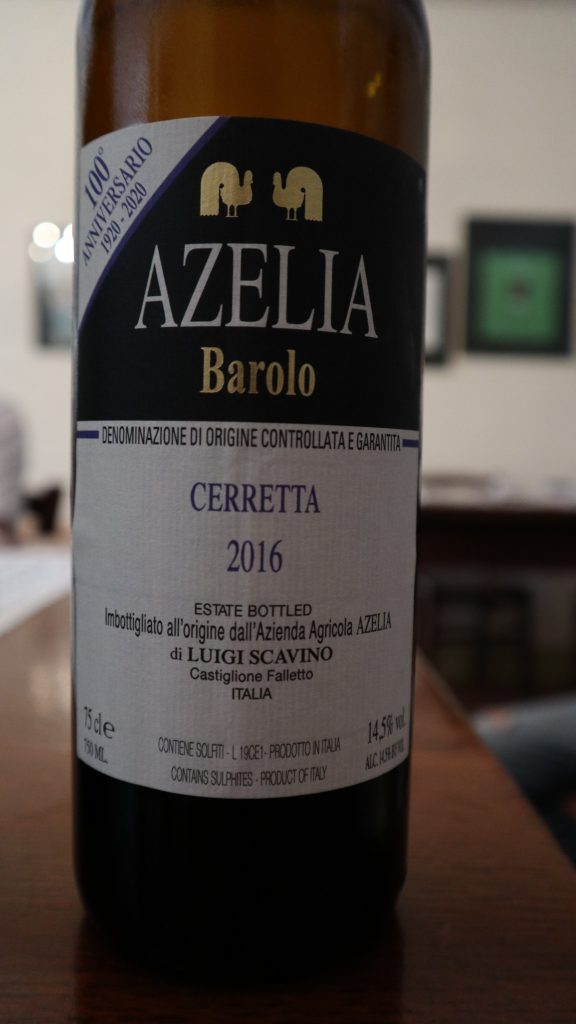
Azelia Barolo Cerretta 2016

Azelia Barolo Cerretta 2016

The 30 year wait is over for the Scavino family! The Azelia Barolo Cerretta 2016 is finally ready for the world. Just in time for the Centenary celebration of the Azelia winery! What’s important to note is that the Cerretta vineyard has been in the family for about 30 years, but the age of the vines kept Luigi from making the Cerretta Cru Barolo.

The vines, about 30 years old, face South/South-West in the Serralunga Vineyard. After about 55-60 days with submerged cap, the wine moves into big barrels and stay there for 30 months.

Azelia

The story of Azelia starts in 1920 when Cavalier Lorenzo Scavino started to vinify the grapes from the family owned vienyards. This would be the start of an incredible journey for the Scavino family.

When it comes to the “style” of winemaking, Azelia adopted a method in the cellar that represents a fusion between modern and traditional; a method I like to call Contemporary Traditionalist. But, as I’ve mentioned before, who really cares as long as the wines are good? As Luigi says, “It’s always a matter of balance.”

Azelia Barolo Cerretta 2016

Azelia Barolo Cerretta 2016

The Cerretta 2016 has an explosive nose: black fruit, spices, tobacco, chocolate. The tannins are big but sweet, typical of a 2016 Barolo from Serralunga. I would put this aside for 10+ years at least and drink some Nebbiolo while you wait.

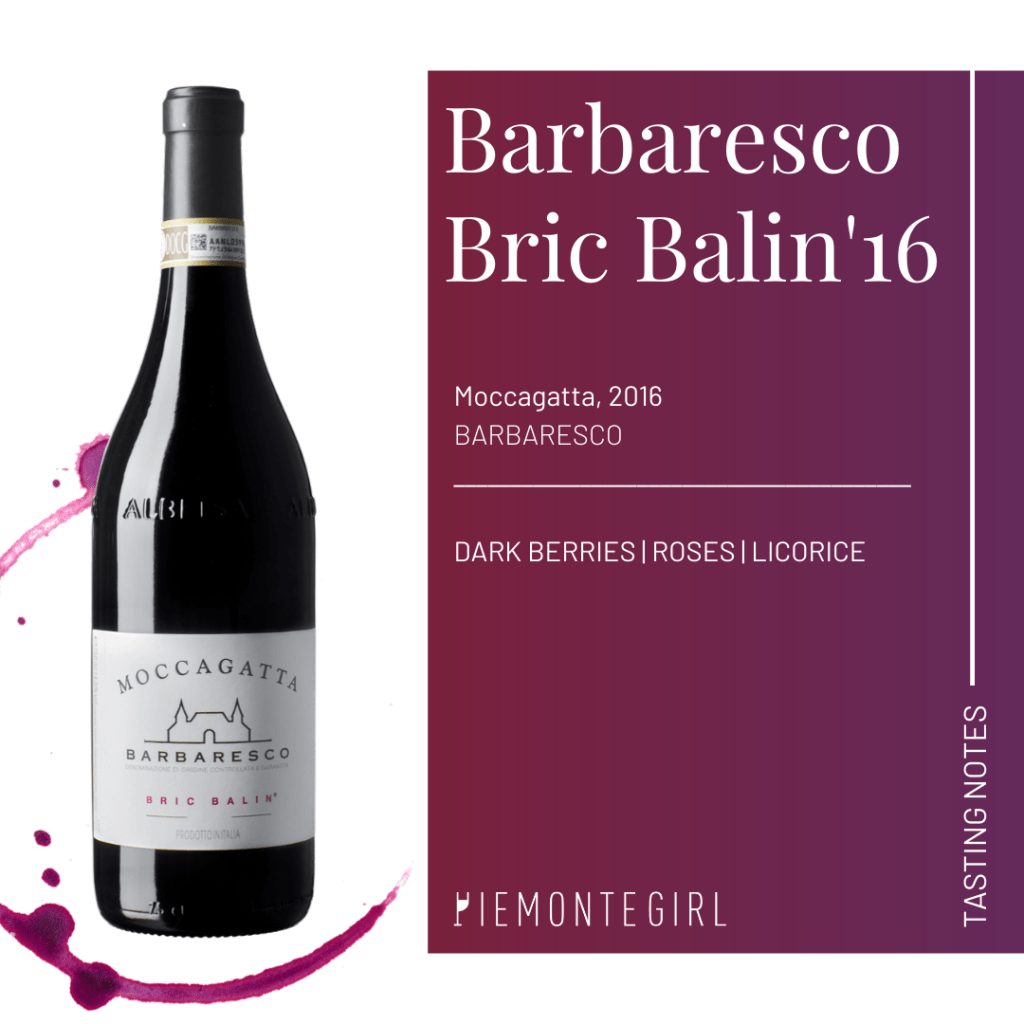
Moccagatta Bric Balin’16

Moccagatta

Disclaimer: I have not visited Moccagatta before. And honestly, haven’t tried many of their wines. However, a few weeks ago my friend served me the Bric Balin 2016 blind and it blew me away! Which then led to my new interest in the Moccagatta wines.

Barbaresco

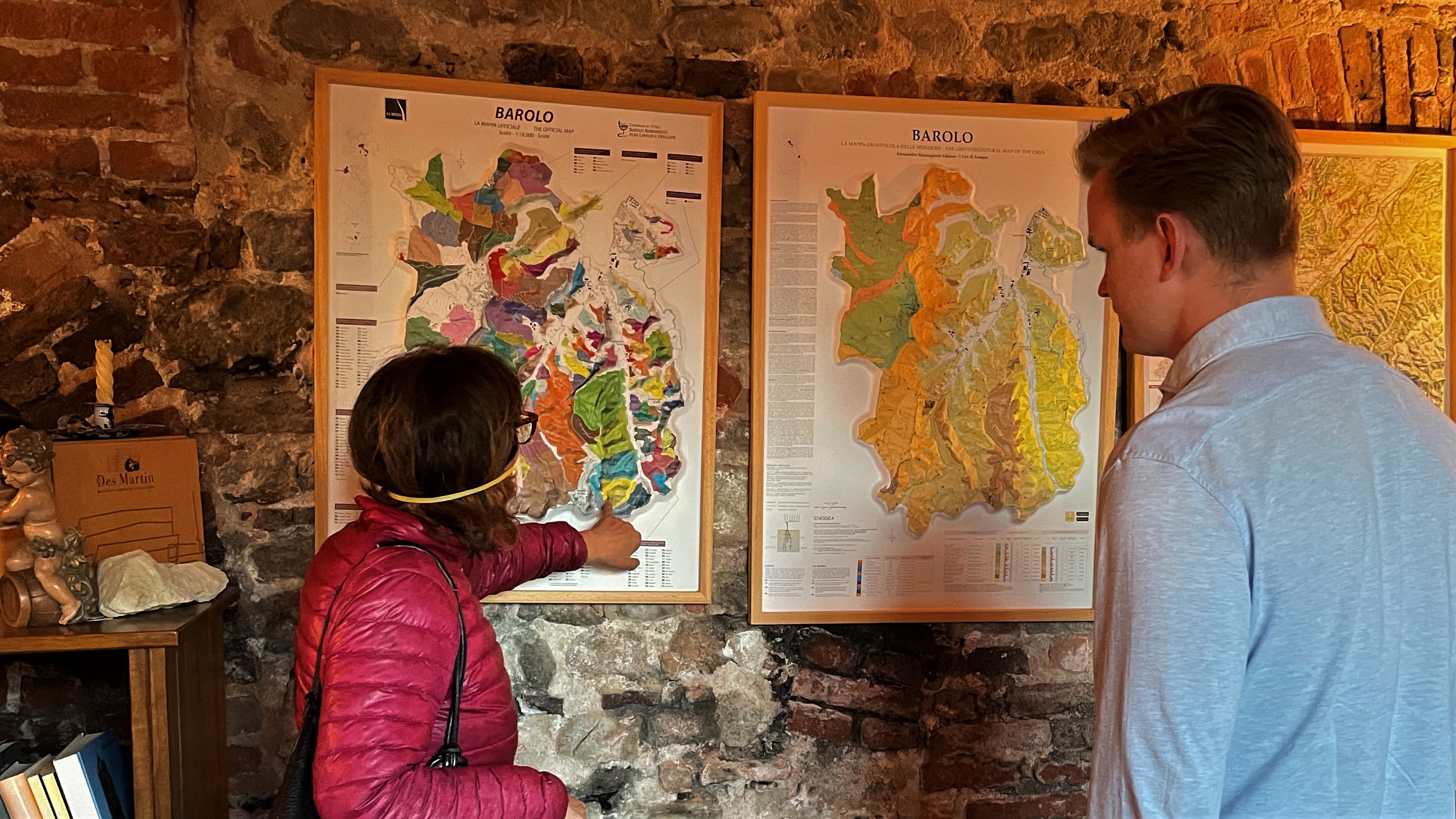
Nebbiolo for Barolo or Nebbiolo for Barbaresco? The grape may be the same, but the end results are quite different. Why? Climate has a lot to do with it. So does soil. The “Map Man” makes great 3d maps of the different areas, that show you how different the soil, altitude & exposition are in the different cities of Piemonte.

Even though I tend to stay within the confounds of Barolo, I do try to venture out and try wines from all over Piemonte (and the world). And Barberasco is not exactly very far away from Barolo. Although I have not tried all wines from Barbaresco, I normally prefer the wines from Barolo. But the Moccagatta Barbaresco Bric Balin 2016 really impressed me.

Moccagatta Bric Balin 2016

2016 produced some really big wines. Often compared to 2010, wines from 2016 will benefit from staying in the cellar for quite a few years.

The tannins are big, but they disappear fairly quickly and you’re left with beautiful fruit flavors. The wine lasts long in the mouth and it’s hard to put the glass down. If you drink it now, having some food with a glass will go a long way. Some air might also be beneficial to the drinking experience.

Moccagatta Tasting Notes