Unknown's avatar

About Piemontegirl

I am a wine lover currently located in Boston. I drink wine mostly from Piemonte and Burgundy. Two summers in a row I have worked at Vietti in Piemonte.

Barolo 2019

Barolo 2019

Before we dive into Barolo 2019, I want to just touch on something quickly. One can go on an on  about rainfall, temperature, weather conditions, natural disasters and more, but in the end, you can’t judge a wine before you have it in a glass in front of you. I am not saying that weather isn’t important. And it definitely affects the wine. I am just saying that because vintage is defined as “warm” or  “cold” or “dry”, doesn’t mean that all wines in that vintage reflect the general characteristics that go with that classification. If you catch my drift?

Anyways, a lot of good things have been said about Barolo 2019, and the vintage 2019, and I find I tend to agree. I’ve tried a few 2019’s, and my immediate thoughts are: concentrated, intense, aromatic. Now, that’s not to say that every Barolo 2019 is intense, or aromatic. But looking over my notes, those are words that pop up frequently. 2019 will most likely be remembered as a “classic” vintage, but the temperatures were quite high, which is probably what contributed to the fairly high concentration in the wines. I’m no expert, so feel free to refer to Masnaghetti or Berry Bro’s for a more detailed vintage report.

Now, moving on to the reason you’re here: Barolo 2019 tasting notes!
PS: they are in alphabetical order
Chiara Boschis Barolo 2019

Tasting Notes

Bartolo Mascarello Barolo 2019
Beautiful, clean, crisp nose. Complex, delicious. My notes literally say “Mouth is amazing. Full of tastes”. Smooth, but big at the same time. Round tannins. Quite high in acidity, so it has a good aging potential!

Bruna Grimaldi Barolo Camilla 2019
Beautiful nose. Aromas of dark fruit, with some spice notes. Very different from the 2019. More tension, bigger tannins.

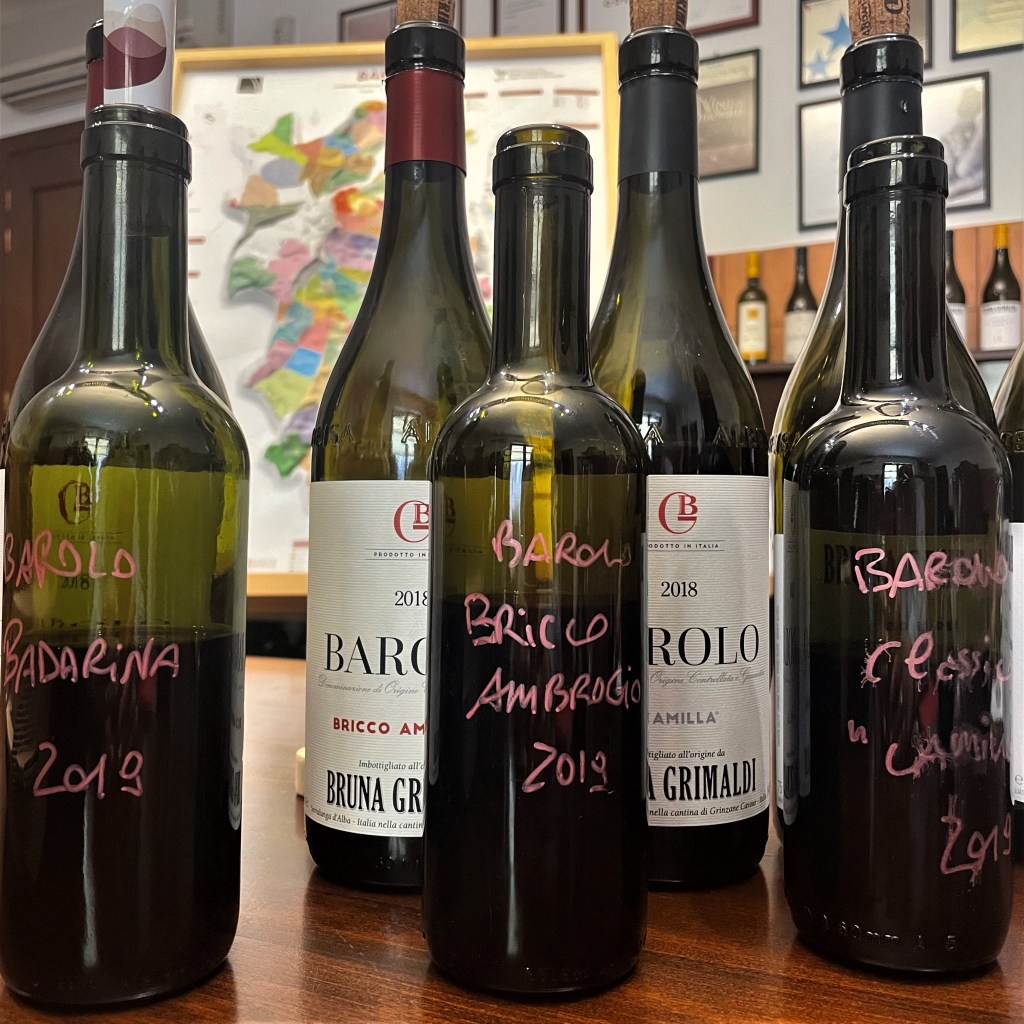
Bruna Grimaldi Barolo bricco Ambrogio 2019
Vegetal, herbal. A bit closed on the nose, needs some time to open up. More tension in this one as well, compared to the 2018.

Bruna Grimaldi Barolo Badarina 2019
Beautiful nose, less vegetal than the Bricco Amborgio. Balsamic, herbal and fruity. I even caught a glimpse of some chocolate. A super wine!

Cavallotto Barolo 2019
Floral notes, with a hint of spices. Clean and crisp. Round in the mouth, with a long aftertaste. An approachable, balanced Barolo.  

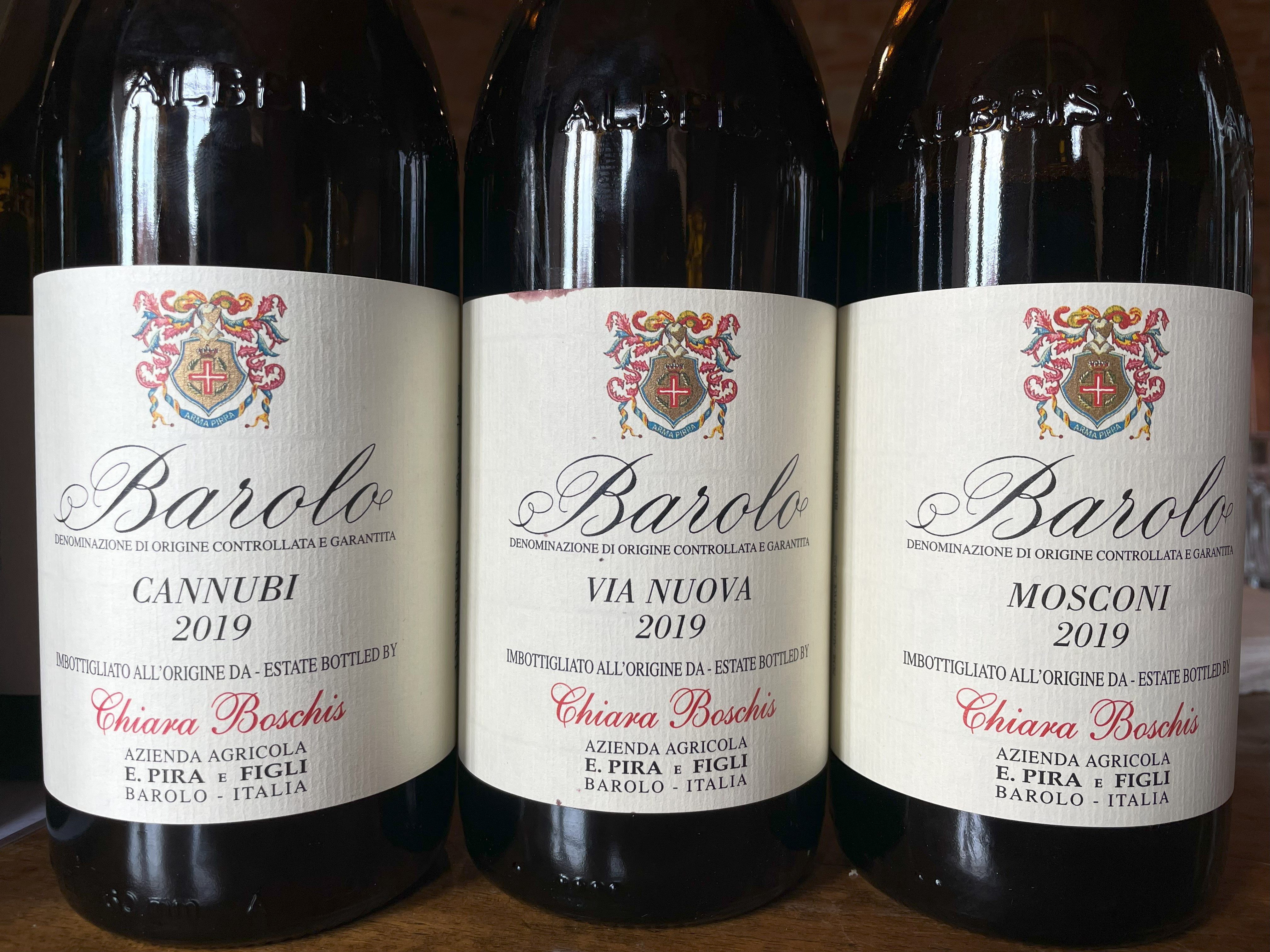
Chiara Boschis Barolo Cannubi 2019
The Cannubi is often a favorite of mine, and the 19 is no different. It’s such a beautiful wine. Aromas of red fruits, maybe a hint of strawberry? The 19 is intense, but the tannins are round. Good body with a long finish. And I think maybe I detect a hint of herbs?

Chiara Boschis Barolo Mosconi 2019
The Mosconi is slightly more masculine. The fruit is darker, and there is a hint of balsamic. The nose is intense. Although the tannins are more intense, they are still round. This is a wine with good body and a long finish.

Chiara Boschis Barolo Via Nuova 2019
The Via Nuova is even more masculine than the Mosconi. The fruit is not as dark in this wine, but there is a stronger hint of balsamic. A very intense wine. The tannins are also more intense, but not overpowering.

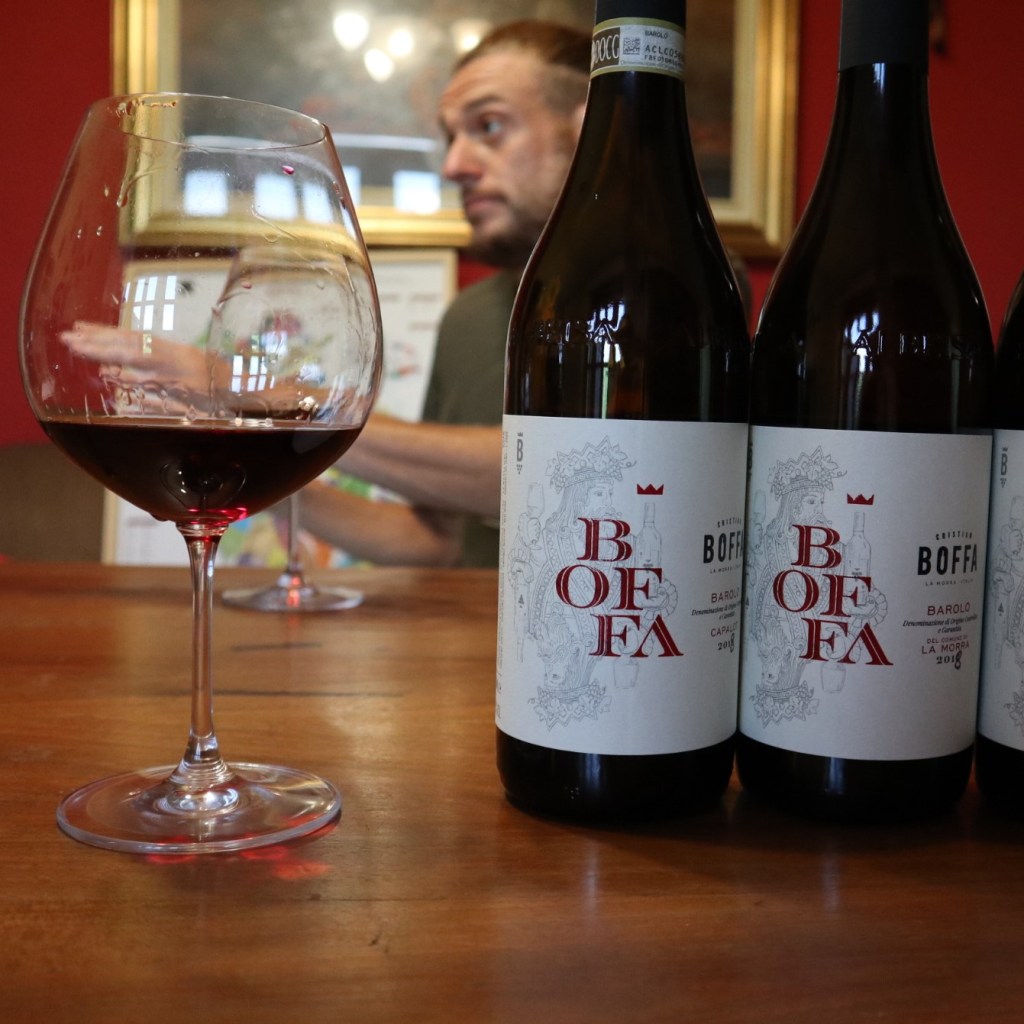
Cristian Boffa Barolo del Comune di la Morra 2019
An aromatic and intense wine, with a beautiful nose. Floral aromas, as well as red fruit, cherry. A mineral and crisp nose. Quite easy to drink, very approachable tannins, with a long finish.  

Cristian Boffa Barolo Capalot 2019
More aggressive tannins in the Capalot, compared to the Comune di La Morra, but not overpowering. A beautiful, intense nose. Quite complex. Has good aging potential!  

Elio Altare Barolo Arborina 2019
Beautiful nose, has that typical La Morra feel to it. Floral and fruity. Good tannins, with a little bit of oomph.

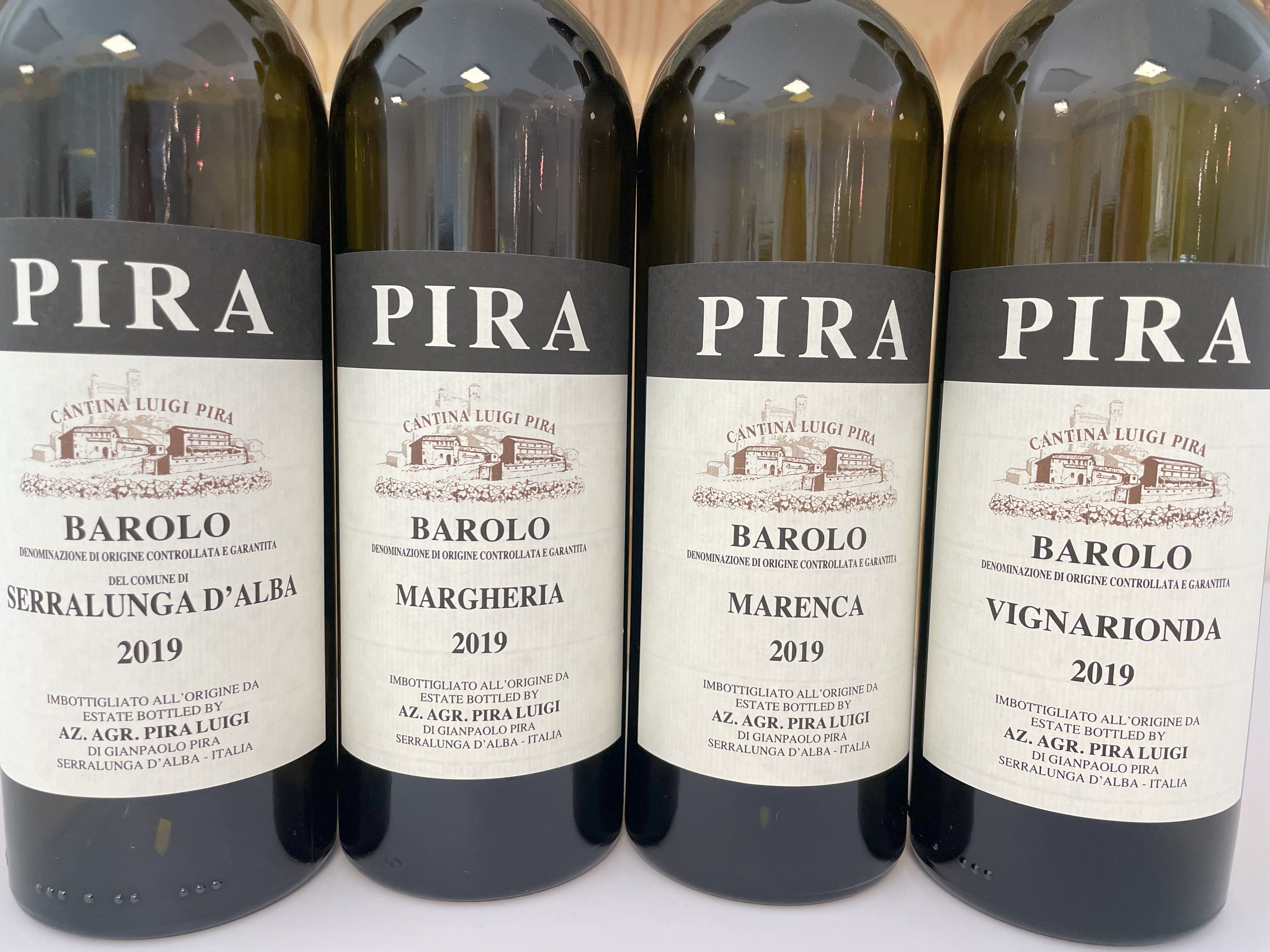
Luigi Pira Barolo Serralunga 2019
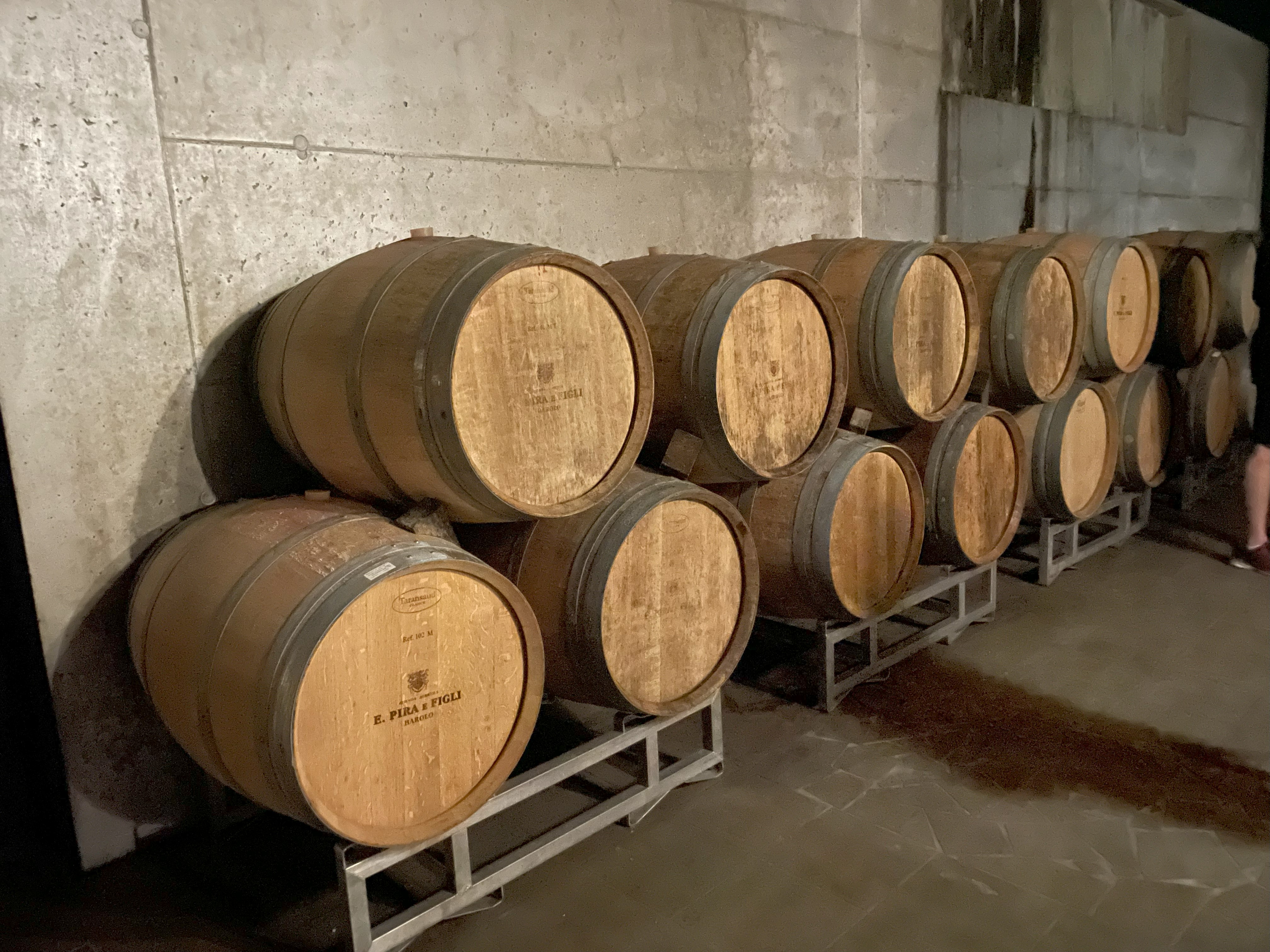
Their classic Barolo contain grapes from multiple vineyards including Marenca, Margheria, Sorano and Rivete. It’s aged in big barrel for 24 months. Beautiful, typical Barolo nose. Floral with hints of leather and balsamic. Big tannins, but still very fruity. A good bodied wine with a long finish.

Luigi Pira Barolo Margheria 2019
The Margheria is quite a bit more aromatic than the Serralunga. Crisp with aromas red fruit and hints of herbs and spices. Very crisp in the mouth. An elegant wine with quite approachable tannins.

Luigi Pira Barolo Marenca 2019
The Marenca spends 12 months tonneaux and 12 months in big barrels. The nose is similar to the Margheria. Maybe a bit more balsamic. The grapes come from a steep hill. The bunches are smaller, more concentrated. This is a bit more punchy, with bigger tannins.

Luigi Pira Barolo Vignarionda 2019
Now on the to grand finale: Vignarionda! The Vignarionda has a bit more masculine nose with aromas of tobacco and herbs. Powerful, but elegant. Tannins are big but not punchy.

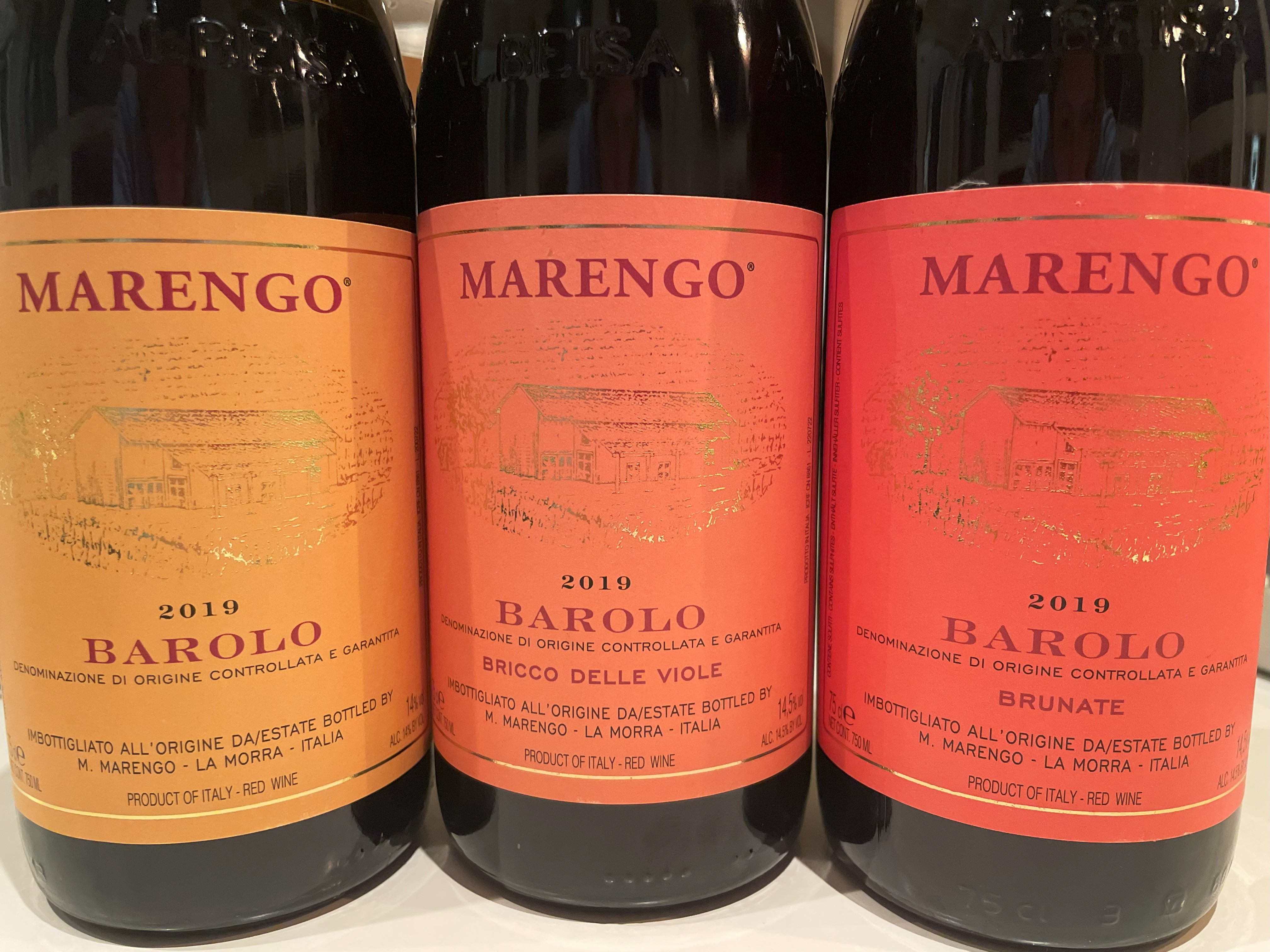
Marengo Barolo 2019
The classic Barolo has an intense nose with aromas of red fruit, flowers, tobacco and a hint of spices. The tannins are smooth. Round in the mouth, with good balance and quite long finish.

Marengo Barolo Bricco Delle Viole 2019
Beautiful nose on the Bricco Delle Viole. More explosive than intense. A bit more floral and fruity than the classic Barolo. Bigger tannins, but still smooth. A balanced, beautiful wine.

Marengo Barolo Brunate 2019
The Brunate was, not surprisingly, a bit more complex than the other two. Beautiful nose with aromas of red fruit and spices, with a hint of floral notes. Bigger tannins, more structure, yet smooth. Good balance with a long finish.
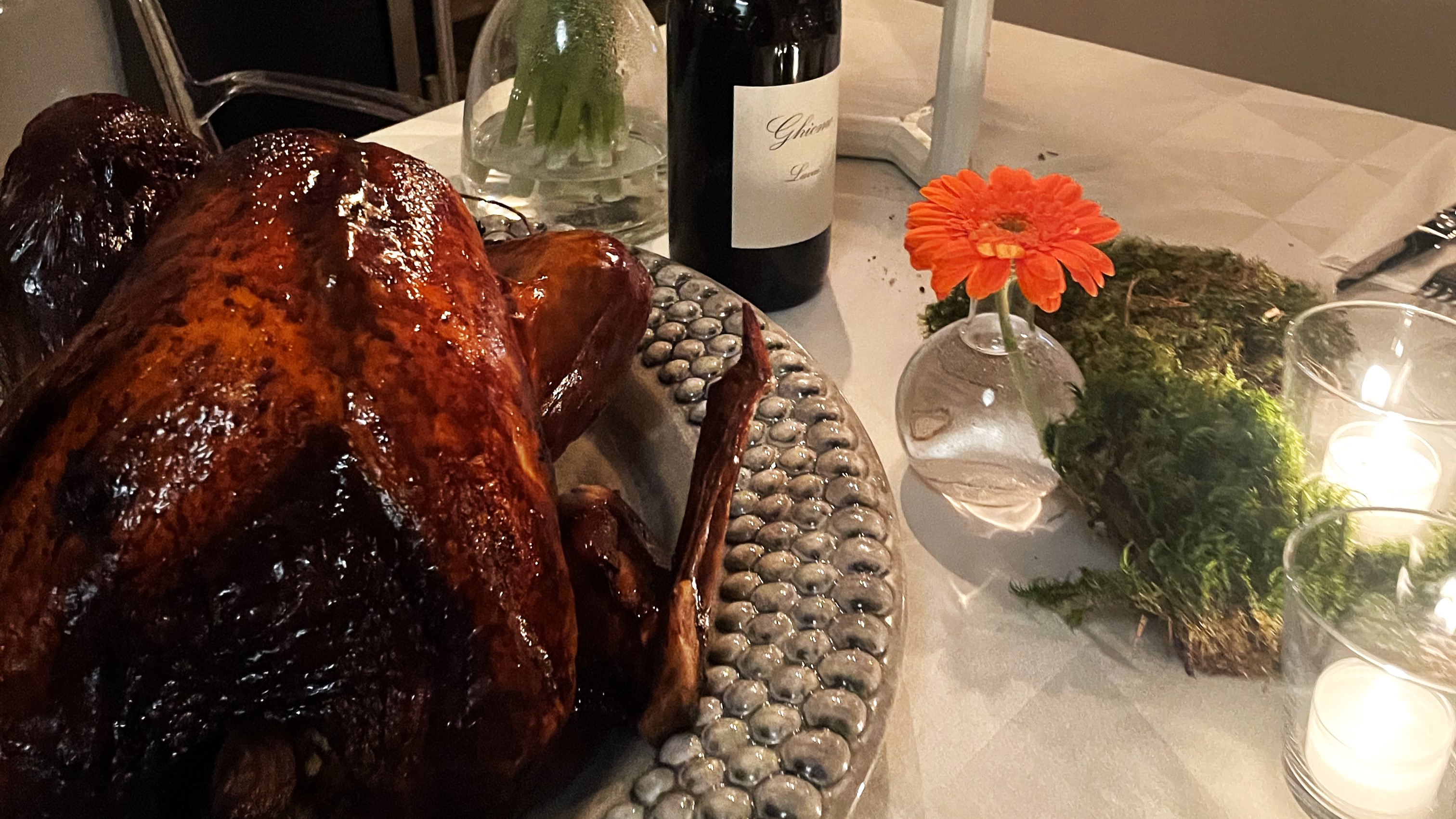
Wines for Thanksgiving

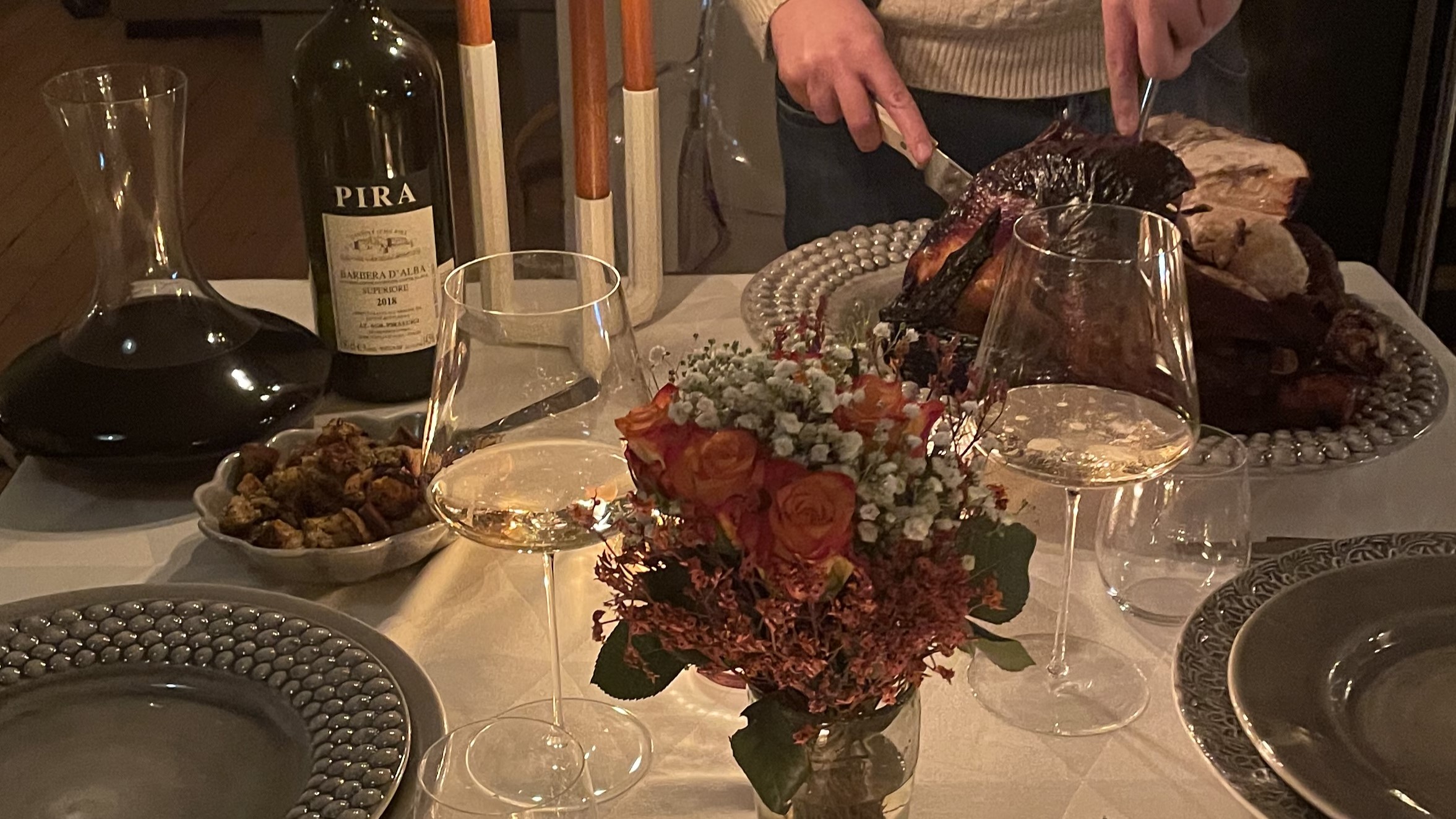
Even though Thanksgiving is mostly an American (and Canadian) holiday, turkey is enjoyed by many. Now, it’s not so easy to find a wine pairing for turkey because of all the different side dishes. But I will do my very best. Over the years we’ve tried a wide variety of wines with turkey, and almost always one wine gets out on top.

The different options

But before I reveal which wine that is, let’s go over the different options. If you google it, a lot of different suggestions pop up: Chardonnay, Riesling, Champagne, Pinot Noir, Barolo. Keep in mind, the recommendations will depend a little bit on who is doing the recommending. This is not surprising, as each country has different tastes, but I thought I should mention it anyways.

Before we get into the different wines, it’s important to know what we are looking for. The wine should have good acidity. Turkey and its accompanying side dishes can be quite fatty, and the acidity will help “combat” that. The wine should also be low in tannin. A wine with high tannin can take too much focus away from the food, and in a Thanksgiving meal there are not that many things to help soften the tannins. Lastly, it should be a wine you enjoy.

White wines for Thanksgiving

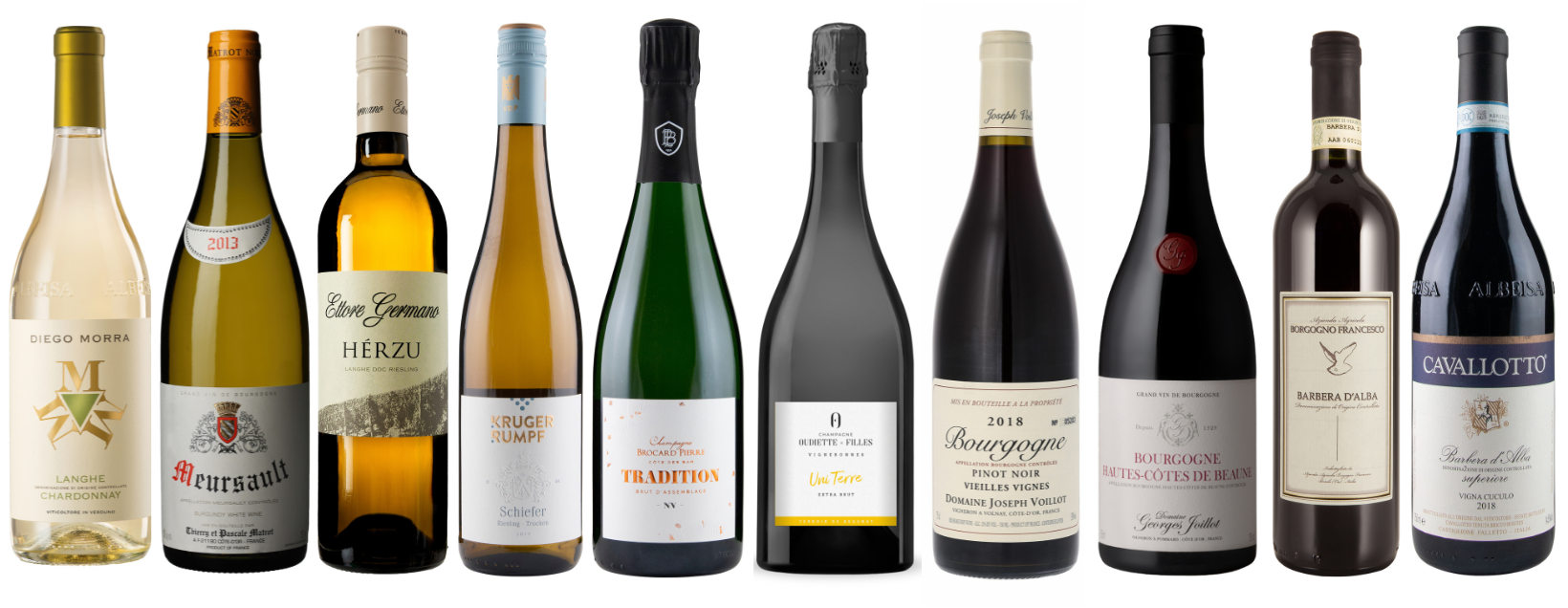
Now, let’s start with Chardonnay. There are so many different expressions of this grape, but in theory, any Chardonnay will do. Whether it’s the creamy, full bodied, toasty wines or the more mineral and crips wines. I tend to prefer the more mineral expressions, so I guess personal taste plays a huge part in selecting the perfect Chardonnay with your turkey! If you’re looking for a more mineral, fresh Chardonnay, try the one from Diego Morra. And if you’re leaning more toward a full bodied, creamy Chardonnay, try the Matrot Mersault. A bit pricier, but hey, it’s a holiday celebration after all!

Staying with the white wines, next up is Riesling. I have to be upfront and say that I generally don’t drink a lot of Riesling. My favorite is actually the Ettore Germano Herzu from Piemonte,so not your stereotypical Riesling at all. But Riseling definitely goes with turkey. The main reason for this is the high acidity. You should try and stay on the drier side, but again, personal taste will play a role in your selection. The Kruger-Rumpf Schiefer Riesling Trocken is an affordable, quite fresh option.

Before we move on to the reds, let’s dive into Champagne. Honestly, I think Champagne goes with everything. I mean, have you ever found a dish that absolutely does not go with Champagne? Unfortunately, it’s definitely one of the more pricier options, but not all of them will break the bank. Try the Pierre Brocard Tradition Brut or the Oudiette x Filles Uni Terre II. There are probably other white or sparkling wines that go with turkey, but it’s time to dive into the red wines. Here’s where it get’s tricky, because quite a few red wines have tannin. And as I mentioned above, we want to avoid a wine with too much tannin. What we want is to find red wines with good acidity. Pinot Noir is a suggestion, and this one from Joseph Voillot might be a good fit. Or this one from Domaine Joillot.

Red wines for Thanksgiving

Now, the moment you’ve all been waiting for: Piemontegirl’s go-to wine for Thanksgiving. And you might be thinking that it’s probably a Barolo. But it’s not. In my opinion, Barolo is generally too tannic, and so my suggestion would be a Barbera! I am honestly surprised that Barbera didn’t appear in a single one of my google search results. Maybe I’m just bad at googling. In any case, I always have Barbera for Thanksgiving! Either the very classic, fresh, steel tank Barbera, like the one from Francesco Borgogno. Or you could opt for the Barbera Superiore, which is aged in oak, like the one from Cavallotto. The options are endless here, and as I’ve mention a few times, personal taste plays a huge role in which wine to choose! But now you’ve got some of my suggestions.

Before I let you go, I have one more suggestions: order your wines NOW. And yes, I said order, especially if you live in Norway, because few to none of the wines for Thanksgiving that I’ve mentioned are on the shelves at Vinmonopolet.

PS: these wines pair just as well with the turkey you have for Christmas 😉

wines for thanksgiving

Let’s talk about Barolo

Let’s talk about Barolo

Most of you are probably already quite familiar, but let’s talk about Barolo. I mean, what is Barolo? I honestly don’t really know where to start but I guess I could start with the basics. Barolo is a wine made in the Barolo area, and it’s made with the Nebbiolo grape. There are strict rules with regards to the location  and the vinification process of the grapes, and unless you follow those rules, you can’t call it a Barolo. I’ll just touch on some of the rules really quickly:

  • The grapes have to come from inside the Barolo area, which includes 11 villages
  • The wine has to age for a minimum of 18 months in oak
  • The wine should age for 36 months in total, the rest of the aging taking place in the bottle

Barolo  – where to start?

Now, like I mentioned before, there are 11 villages in which you can make Barolo. Some are more “famous” than others, like the Barolo village. But one of the most important things when it comes to Barolo is the terroir. The terroir varies quite dramatically across the Barolo area, in the different villages. So much so that it’s common to make Barolo’s with grapes harvested from very specific vineyards, and there are called single vineyard or cru Barolo’s. One of the most important educators on this topic is Alessandro Masnaghetti, aka Map Man Masna. I think terroir should have it’s own article, so I won’t go into too much detail here, but basically, the soil, the altitude, the climate and the biodiversity in each village plays a huge role in how the wine tastes. And I swear it’s evident in the different wines. Don’t believe me? Try it for yourself and see!

Where to start?

Ok, let’s talk about Barolo and how to start exploring the different kinds. One way, is to start at the top (literally) and work your way down. In the north you’ll find the village of Verduno. Burlotto is one of the first winemwakers that come to mind here, but his wines are nearly impossible to find these days. But don’t worry! Diego Morra also makes a Barolo Monvigliero, as well as a classic Barolo, so you could start there. Next up on this mini tour of Barolo: La Morra. The Cristian Boffa Barolo del Comune di La Morra is a safe bet. Another favorite is the Brunate from Marengo. And let’s not forget about Arborina. Nadia Curto, Giovanni Corino and Elio Altare come to mind. There are obviously many more wines I could suggest, but the article would be 7 pages long with a 100 links…

Moving right along to Castiglione Falletto, one of the wines that immediately come to mind is the Barolo from Cavallotto. Alfio and Giuseppe make really good wines, from their Pinner to their top cru Barolo. In certain vintages, I’d dare to say that their Langhe Nebbiolo resembles a “baby Barolo”. Just a friendly tip… From Barolo there’s the Francesco Borgogno Castellero. You could try to get your hands on a Chiara Boschis Cannubi, but those are a bit harder to come by.

We’ve made it all the way to Serralunga, at least for those of you who kept reading. If you haven’t already, you have to try the Barolo from Daniele Grasso. I could give a lengthy explanation why, but this is already a long article, so you’ll just have to take my word for it. Serralunga, similar to other towns in the Barolo area, is quite known for one vineyard in particular: Vignarionda. I’d give the one from Luigi Pira a try. But Vignarionda can be quite punchy, and is on the more expensive side, so another option is the Barolo del Comune di Serralunga. It will be a bit more approachable and won’t leave as big a dent in your wallet.

Last, but not least: Monforte d’Alba. There are some important Cru’s in Monforte as well, but my mind immediately goes to the Gianfranco Alessandria Barolo San Giovanni. Their classic Barolo is also a Monforte Barolo, so that’s another option. A more unknown cru within the borders of Monforte is Perno. You might know Perno because of Repubblica di Perno, one of my favorite restaurants. Right across the street you’ll find a brand new winemaker named Paolo Giordano. He makes a Perno Barolo, and it’s definitely worth a try.

Disclaimer: I know I didn’t touch on all 11 villages here, but I tried to include some of the most important ones. The thing to note is that I didn’t forget them! Maybe that’s a topic for the next article?

Wines for fall

Wines for Fall

Summer came and went, and I realized (a little begrudgingly) that it’s time to find wines for fall. Fall in Norway typically means lamb, or different types of “stew”. You have the very traditional “Fårikål”, which is lamb cooked in sourcrout. It’s not my favorite, but it has been named Norway’s National Dish, which means a fair amount of Norwegian genuinely enjoy it! Lamb is in general a favorite in the fall. There’s rack of lamb, shank of lamb, lamb filet; really lamb in any capacity. Just remember: at some point lamb become sheep…

wines for fall

Wine with lamb

Anyway, when it comes to pairing wine with lamb, I’d go for a Barbera or Nebbiolo. It all depends on how the lamb is prepared and what side dishes it’s served with. If you’re serving the Norwegian National Dish, Fårikål, Barbera is the way to go. Might I suggest the one from Francesco Borgogno or the one from Mauro Veglio. If you’re going rack of lamb or lamb shank, I’d try a Nebbiolo. Now, here you have quite a few options. A good Langhe Nebbiolo is always a winner. One of my recent favorites is the Emilio Vada Cua Rusa. You could also opt for a Nebbiolo d’Alba, for example the Valmaggiore from Marengo. For those who are not familiar with the differences between a Langhe Nebbiolo and a Nebbiolo d’Alba, here is a super quick explanation: a Nebbiolo d’Alba has to spend at least 12 months in oak barrels, whereas a Langhe Nebbiolo does not. Most Langhe Nebbiolo don’t see any oak at all. I say most, because there are always exceptions. Anyway, more on that another day.

Barolo  – where to start?

If you want something more complex with your rack of lamb, you could always go for a Barolo. Maybe it’s a special occasion? Maybe you just got promoted, or maybe you’re celebrating your 40th birthday? Or maybe it’s a Tuesday and you want a Barolo just because. There are tons of Barolo’s to choose from, but that’s a topic for another time. In the meantime, try the Cristian Boffa Barolo del Comune di La Morra or the Fratelli Revello Barolo. And watch out for the 2019’s being released in Norway this week! If the one’s I’ve tried are representative of the vintage, it’s looking very promising!

Mushroom season

It’s mushroom season. At least for some types of mushroom. My go to mushroom wine pairing is Pelaverga. And it’s usually the one from Burlotto or the one from Diego Morra, There is something about that white pepper nose and fresh acidity that makes it pair very well with mushrooms. If you’re making a very cheesy, buttery, rich risotto, perhaps a Barbera would be better. And if the mushrooms are simply a side to a steak, Nebbiolo might be the way to go.

Don’t want red wines for fall?

If you’ve made it all the way here, you’ve gotten quite a few red wine suggestions. But some dishes pair well with Champagne as well. So if you’re having Fårikål, you could opt for a Champagne instead of a Barbera. I mean, when is Champagne ever a bad idea? The J. Charpentier is still a favorite! Oudiette is another great Champagne. And although champagne with lamb stewed in sourcrout might sound like a very strange pairing, I swear it works.

And just like that, you’re prepared for fall!

Luigi Pira Barolo 2019

I tasted the Luigi Pira Barolo 2019 ’s over Easter, and while they have been available worldwide for a while, the new vintage of Barolo normally doesn’t hit the Norwegian market until the fall.  But let’s not get into the intricate world of Vinmonopolet now.

For those of you who are not familiar with Luigi Pira, let me just do a quick introduction. The winery was founded in the 1950’s by Luigi Pira. Today, it’s his son Gianpaolo who runs the show, with his wife Tiziana and their two daughters. It’s been a pleasure to see this winery grow and evolve, and in my opinion the wines just keep getting better and better.

Anyway, here are my tasting notes:

Luigi Pira Dolcetto 2022

The grapes for the dolcetto come from north facing vineyards right by the winery. Really good dolcetto nose. Intense and aromatic. Fruity in the mouth, mostly dark red berries, like blackcurrant. Integrated tannins. Yum!

Luigi Pira Barbera d’Alba Superiore 2021

The Barbera spends 12 months in big barrels. A very fruity and elegant wine, with a hint of spices. Balanced with good acidity and a medium body.

Luigi Pira Barolo 2019

Luigi Pira Barolo Serralunga 2019

Their classic Barolo contain grapes from multiple vineyards including Marenca, Margheria, Sorano and Rivete. It’s aged in big barrel for 24 months. Beautiful, typical Barolo nose. Floral with hints of leather and balsamic. Big tannins, but still very fruity. A good bodied wine with a long finish.

Luigi Pira Barolo Margheria 2019

The Margheria is quite a bit more aromatic than the Serralunga. Crisp with aromas red fruit and hints of herbs and spices. Very crisp in the mouth. An elegant wine with quite approachable tannins.

Luigi Pira Barolo Marenca 2019

The Marenca spends 12 months tonneaux and 12 months in big barrels. The nose is similar to the Margheria. Maybe a bit more balsamic. The grapes come from a steep hill. The bunches are smaller, more concentrated. This is a bit more punchy, with bigger tannins.

Luigi Pira Barolo Vignarionda 2019

Now on the to grand finale: Vignarionda! The Vignarionda has a bit more masculine nose with aromas of tobacco and herbs. Powerful, but elegant. Tannins are big but not punchy.

Chiara Boschis Barolo 2019

Chiara Boschis Barolo 2019

It’s 8:59 am, and I am standing outside the big wooden door of Chiara’s winery. I am there to taste the Chiara Boschis Barolo 2019. As soon as the clock strikes 9:00, I ring the doorbell. The door opens, but Chiara is nowhere to be found. Not surprisingly, she is in the vineyard. For those of you who know Chiara, you know that she definitely prefers being in the vineyard to being in the tasting room. That’s not to say she doesn’t like showing her wines to wine lovers, or working in the cellar. She just prefers working in the vineyard.

While I wait for Chiara to return from the vineyard, I smile, as I think back to what she said during one of our live streams during the pandemic. “The wine comes from the grape.” The wine comes from the grape. So simple. And so true. Wine is indeed made from grapes. And in many ways, the wine is made in the vineyard. That’s one of the reasons why Chiara’s wines are so fantastic. She spends an incredible amount of time working with the vines, doing everything she can before the harvest, giving the grapes the best shot possible at becoming excellent wines. I’ve often thought her wines remind me a little bit of her: beautiful, energetic, bold. And although the wines reflect the vintages, the quality is consistent. Every year.

The door bursts open, and Chiara comes running in. And before we know it, we’re sitting down with the 2019 Barolo’s in front of us! Every visit with Chiara is incredibly educational and informative. Her knowledge of wine and winemaking is second to none, and you are guaranteed to learn something new every time you chat with her! And I always love to hear about her new projects. I am especially excited about this new one (stay tuned)!

Chiara Boschis Barolo 2019

Chiara Boschis Barolo 2019

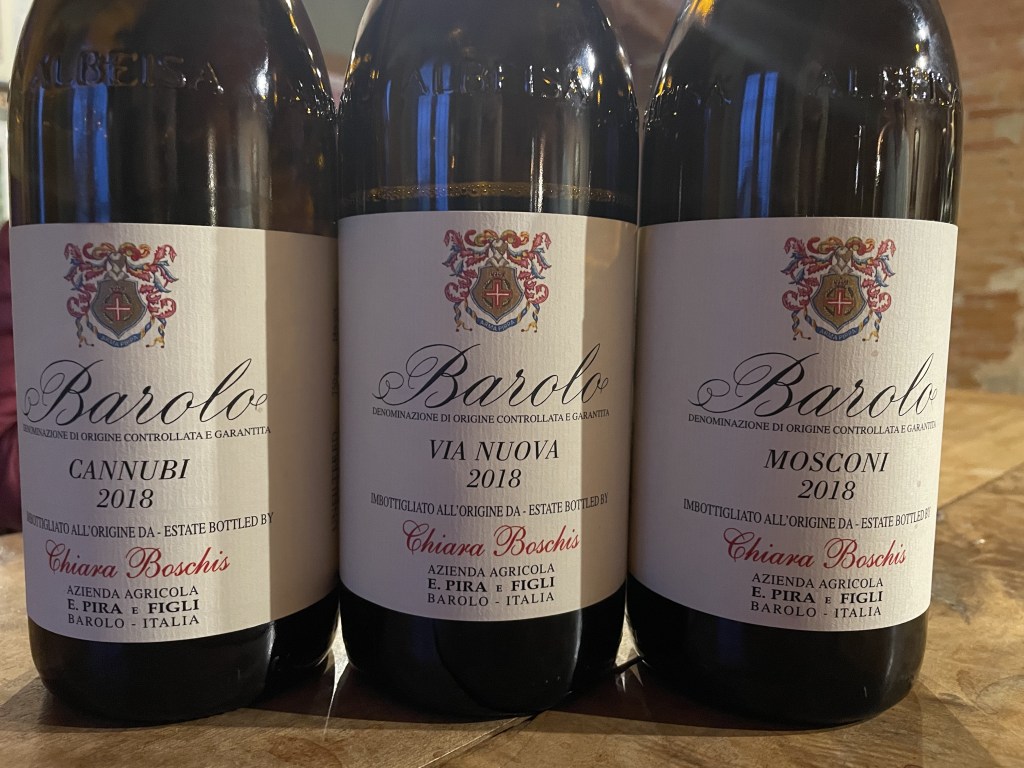
We’ve finally reached the “tasting note” portion. For comparison, I’ve attached my tasting notes on the 2018’s below. I think the 18’s were a bit more feminine and approachable, compared to the 19’s. This reflects the difference in the vintages, and as always the quality is consistent.

Chiara Boschis Barolo Cannubi 2019

The Cannubi is often a favorite of mine, and the 19 is no different. It’s such a beautiful wine. Aromas of red fruits, maybe a hint of strawberry? The 19 is intense, but the tannins are round. Good body with a long finish. And I think maybe I detect a hint of herbs?

Chiara Boschis Barolo Mosconi 2019

The Mosconi is slightly more masculine. The fruit is darker, and there is a hint of balsamic. The nose is intense. Although the tannins are more intense, they are still round. This is a wine with good body and a long finish.

Chiara Boschis Barolo Via Nuova 2019

The Via Nuova is even more masculine than the Mosconi. The fruit is not as dark in this wine, but there is a stronger hint of balsamic. A very intense wine. The tannins are also more intense, but not overpowering.

Chiara Boschis’ 2018 Barolo’s

Chiara Boschis Barolo Cannubi 2018

I kid you not, my notes actually say “holy shit”.  What a nose! Crisp, mineral, complex, rich, beautiful, feminine. There are aromas of tar and roses. Good depth and long finish. Chiara herself describes the Cannubi as “a kind wine”. And I can’t argue with that.

Chiara Boschis Barolo Via Nuova 2018

The Via Nuova is a bit more austere. A fruity and balanced wine. I agree with Chiara that the 2018 Barolo’s are more Burgundian than other recent vintages.

Chiara Boschis Barolo Mosconi 2018

I guess the word I’d use about Mosconi is “more”. More complex nose, more masculine, more spices, more structure. There are also hints of orange, apricot, peach and white pepper in this wine.

Marengo Barolo 2019

Before I dive into the actual topic of this article, Marengo Barolo 2019, I need to make one thing clear. I do not consider myself a wine critic. If we go by Wikipedia’s definition of the word, I guess I technically could be called a wine critic. But I’d rather consider myself a wine lover, on a mission to help people drink good wines. I try to tell stories. About the winemakers. About the wines. Yes, I do write tasting notes. But when I do, I try to accompany those notes with some background information and perhaps a few anecdotes. I do this to try and give you the bigger picture. Not just my subjective opinions about the wines.

Which brings me to another point. If I taste a wine that I don’t like, I don’t write about it. If, for whatever reason, I don’t like a wine, I leave it alone. And there could be many reasons why I don’t like a wine. Maybe it was a bad bottle. Maybe there was something wrong with the wine. Or maybe I just didn’t like it. It wasn’t for me. It could also be that the wine was bad. Because there are wines out there that are bad. But who am I to tell the world that? Now, I understand that it’s a wine critics job to critique wine. But when I was little I learned that “if you don’t have something nice to say, don’t say anything at all.” This is especially true if what you say can affect someone’s life. Someone’s livelihood.

Some friends of mine recently received a particularly bad review of some of their wines. I won’t spend much time on that, but when I read that review I knew I had to taste those wines for myself to see they really were as bad as they were made out to be. And spoiler alert, they absolutely were not! My friends, Jenny and Marco, make excellent wines, and the 2019 Barolo’s are no different. I was also happy to see that Jancis Robinsons agrees with me, in her Financial Times article.

Jenny and Marco Marengo

Jenny and Marco Marengo are warm and generous people, who are very passionate about their wines. Together with their son, Stefano, the three of them work enthusiastically together in the pursuit of excellent winemaking. Marco really is a nerd, in the modern, positive, definition of the word. The same way Bill Gates is often referred to as a nerd, an expert and enthusiast, and obsessed with intellectual pursuit of winemaking.

And without further ado, here are my tasting notes on the Marengo Barolo 2019:

Marengo Barolo 2019

The classic Barolo has an intense nose with aromas of red fruit, flowers, tobacco and a hint of spices. The tannins are smooth. Round in the mouth, with good balance and quite long finish.

Marengo Barolo Bricco Delle Viole 2019

Beautiful nose on the Bricco Delle Viole. More explosive than intense. A bit more floral and fruity than the classic Barolo. Bigger tannins, but still smooth. A balanced, beautiful wine.

Marengo Barolo Brunate 2019

The Brunate was, not surprisingly, a bit more complex than the other two. Beautiful nose with aromas of red fruit and spices, with a hint of floral notes. Bigger tannins, more structure, yet smooth. Good balance with a long finish.
Marengo Barolo 2019

My 72 hour Burgundslipp adventure

© Mathias Harildstad

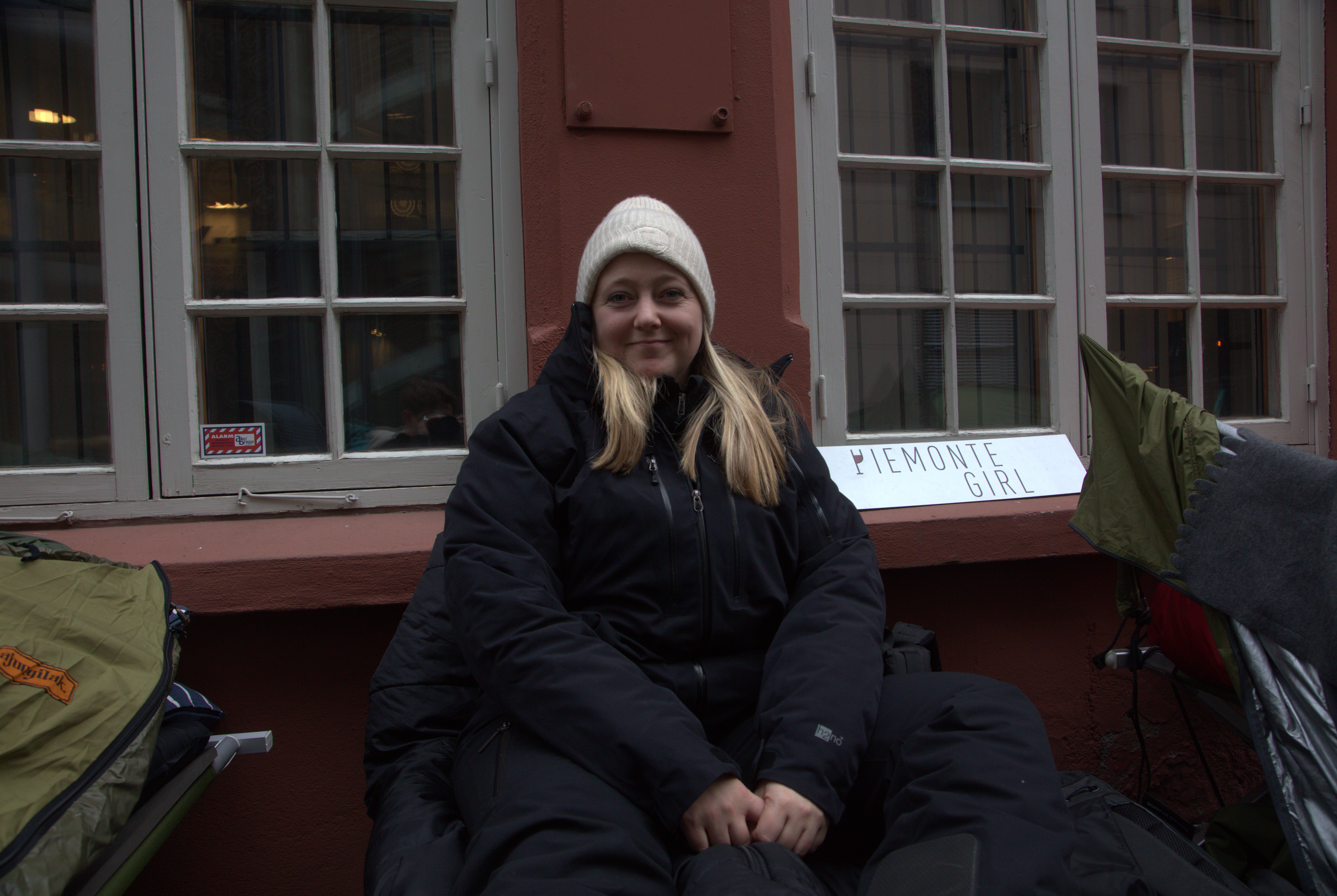
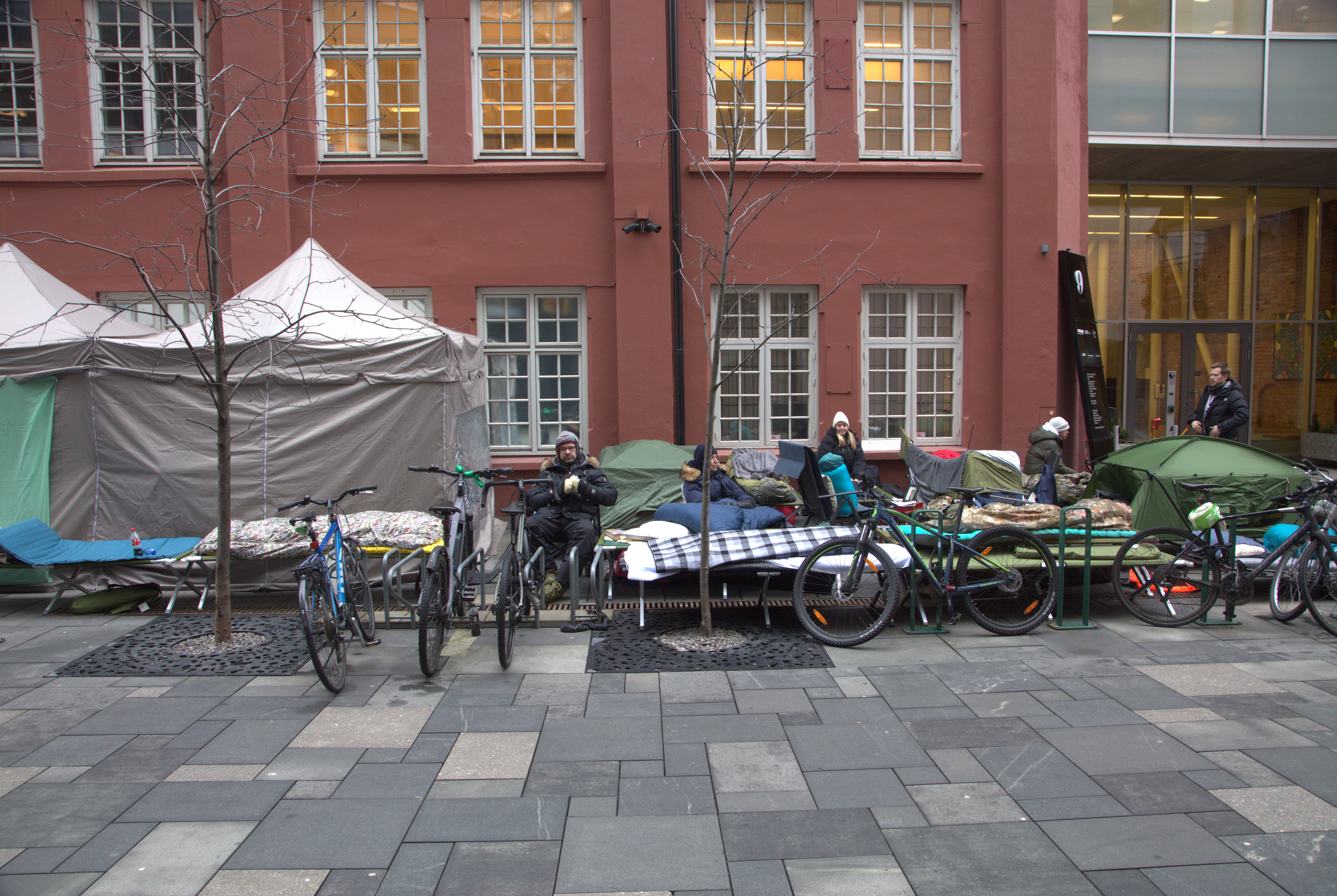
Sunday morning, on the 5th of February, I packed my backpack and headed down to Aker Brygge. And as of 9am that morning, I was officially in the Burgundslipp queue, 73 hours before the doors to Vinmonopolet would open. For those who have no idea what I am talking about, here’s a quick summary: I might have to explain what the Burgundslipp actually is. Which is not an easy task. Because this phenomenon only happens in Norway, and if we’re really being honest, it’s concentrated around Aker Brygge in Oslo. Here are the broad strokes: February 9th, at 10 am, the doors open at Vinmonopolet Aker Brygge. And inside, there are hundreds of rare wines from Burgundy. But they are not only rare; they are quite cheap, relatively speaking. And so once a year, it’s possible to get your hands on rare, expensive wines for a fraction of the price of anywhere else in the world.

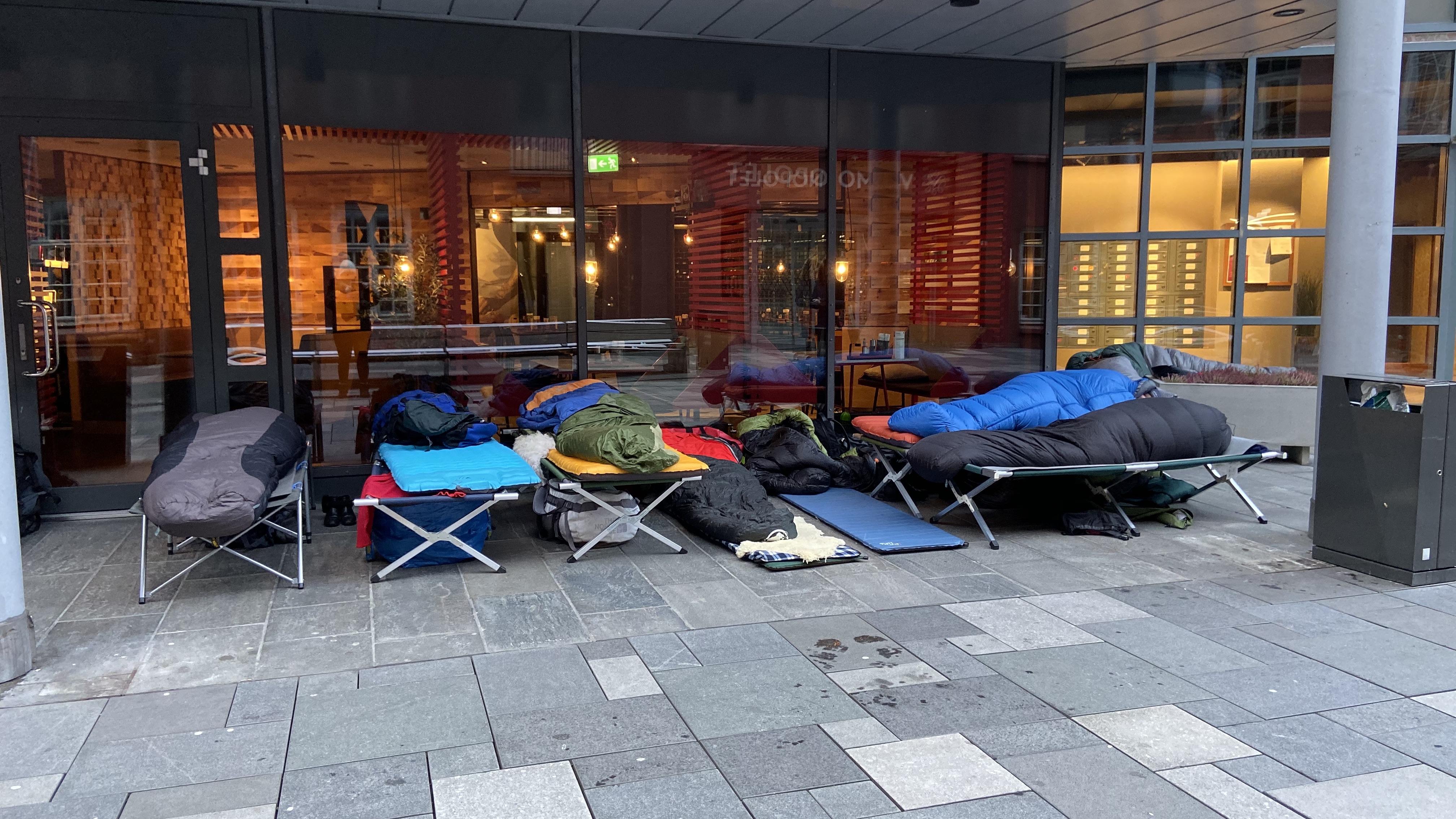
But there’s a catch. You have to get in line. They let people into the store, one at a time, in order of appearance in the queue. And although the wines scattered around on the floor might be attainable for person number 57, it’s the wine behind the counter that’s got people lining up days, or even weeks in advance. And yes, it’s February in Norway. And yes, it’s cold. And yes, they live outside, at Aker Brygge, for days or weeks at a time, waiting for those doors to open. And, yes, it’s quite crazy.

Anyway, back to this year’s Burgundlslipp. It’s Sunday February 5th. I sat there, in my camping chair, waiting for the other members of the queue to wake up. It’s not like I was in a hurry to set up my bed and unpack. I literally had 73 hours to kill. But I wondered then, what would this year’s Burgundslipp be like? And who were the other people in the queue? I had already picked up on things being quite different this year. For instance, the first 10 in the queue were not the “regular” queue veterans. And as time went on, I would come to realize just how different this year’s queue would be.

Fight Club

I get a lot of questions about this Burgundslipp business. And some questions are harder to answer than others. One of the main reasons some questions are hard to answer, is because there are a lot of things I don’t know. The queue operates on a sort of unspoken “fight club” rule, as in we don’t talk about fight club. Or, in this case, the ongoings of the queue. So if you’re here to learn all our secrets, you might be disappointed. You might not get the answers to your questions. There are things that will be left unsaid.

Now, you might think that since I am a part of the queue, I would have all the answers. But I do not. It’s mainly because I don’t ask. Although I am pretty sure that if I did ask, my questions would go unanswered. Or they would give me a false answer. I mean, do we really think a member of the queue is planning on making the world’s best sangria with the DRC Romanee-Conti?

“Why spend 4 weeks in the queue if you don’t have the slightest interest in wine?”

That’s a (translated) quote I offered to Dagbladet. And let’s just let that sink in for a minute. Why would a 20 year old spend weeks out on then street, in the dead of Norwegian winter, in order to get their hands on wines from burgundy, when they don’t seem the slightest bit interest in wine at all?

Previous years, the vast majority of the participants of the queue were other likeminded wine lovers, with a great interest for wine. I recall elaborate conversations about vintages, vineyards, winemakers and wines in previous years, conversations from which I learned a great deal. This year, I found myself being the one imparting knowledge. And we’re talking very basic knowledge. In fact, it seemed many of this year’s top 10 didn’t know which grapes were used in the wines they were waiting to buy.

So where do all these bottles end up? I think we can draw a likely conclusion: they buy the wines, and then turn around and sell them. Now, I am not saying that no one in previous years sold any of the bottles. In fact, I am pretty sure many of them sold some of the more “lucrative” wines. (And by lucrative I mean the wines that have the highest ROI when you turn around and sell them.) However, I am also sure they bought a lot of wine for themselves. And I am certain of this because I know some of them. I know they are interested in wine. I have spoken with them, and listened to them talk, about wine. But this year, it seems an overwhelming majority of the participants were in the queue for the sole purpose of making money. And that made me a bit sad.

© Mathias Harildstad

The end of an era?

Like Merete Bø said to NRK, this might be the beginning of the end. If next year’s Burgundslipp is anything like this year’s, it’s likely the whole concept will be shut down. I mean, why release wines in Norway, when they (allegedly) end up in England, China or Singapore anyway? The winemakers ex cellar price is probably the same whether they sell to Norway, England or Singapore. So why not sell directly to those countries? Alternatively, just sell to HORECA. That way you know the bottles will stay in the country, and fellow wine lovers can enjoy these wines at local wine bars and restaurants.

I am very curious to see how things unfold. And if there is a Burgundslipp next year, I hope to see some of my fellow female wine lovers there. Among the first 50 I could count the women on one hand…

Frequently Asked Questions

How do you go to the bathroom?
Well, there are quite a few bathrooms to choose from at Aker Brygge. And if you have to go at night, there is a 24 hour bathroom we can use.

Can you leave?
Yes, you can. But for how long is regulated by the queue. I personally never strayed far from my spot, and made sure to tell at least one other person in the queue where I was going. I never left Aker Brygge in those 73 hours.

Do the queue participants sell the wines?
I refer to my earlier “fight club” comment. I can not with a 100% certainty answer this question. I never asked them, and they never told me. But sure, I have a strong feeling quite a few of this years’ participant sold the wines. In fact, I am pretty sure most of those wines have left the country.

Are you the only woman?

Pretty much. At least among the ones sleeping multiple nights out on the street. A few women arrive Wednesday night, Thursday morning. But I was the only woman who slept 4 nights in the queue.

What wines did I buy?
Red and white wines from Burgundy.

Barolo 2018

Barolo 2018

Barolo 2018 – let’s take a look at the vintage

Barolo 2018 – delicious or disappointing? That is the question. But we’ll dig  into that a little later. First, let’s look at some facts. As a stark contrast to 2017, which was very dry, 2018 was quite rainy. There were 62 days of rain during the growing season, just like 2014, which was considered one of the rainiest years of all time. But a few things distinguish 2014 from 2018, including the temperature. The temperature was on average higher in 2018 compared to 2014, especially towards the end of the growing season.

So what does all this mean? Well, first of all, too much rain leads to a lot of work in the vineyards. All that humidity creates perfect conditions for downy mildew, a fungus growing on the grapes. The winmakers combat this by spraying copper sulfate, but they basically have to spray after every rainfall. If you have half a hectare, that’s probably not too big a deal, but when you have three, five, or 14, it’s a lot of work.

The heavy rain combined with the high temperatures, also means quite a lot of growth in the vineyards. Which in turn meant they had to be vigilant about managing their vineyards. I think that’s really the key in any vintage: work in the vineyard. Fabio from Burlotto prefers to call himself a “winegrower” and not a “winemaker”, because he first and foremost considers himself a farmer. And when you pay a lot of attention in the vineyards, “it’s difficult to have a bad vintage.”[i] And I agree. In my experience, a good winemaker will make good wines in every vintage. And so in some vintages, like 2018, my advice would be to chose the winemaker and not the wine, if that makes sense.

barolo 2018
Langhe July 2018

Barolo 2018 – many different opinions

I am not the first to share some thoughts on Barolo 2018. There have been split “reviews” on this vintage, both from the winemakers and from the wine reviewers. Some are on the more dramatic side, to the point of almost condemning the vintage. Others bear a more hopeful tone, highlighting that despite the difficulties of the vintage, the resulting wines are actually of higher quality than excepted.

Galloni said it’s “the most erratic, frustratingly inconsistent Barolo vintage” he has ever encountered. [ii]

Masnaghetti, a great source of information when it comes to Langhe, and the godfather of the Barolo maps, wrote this in his Barolo 2018 Vintage report: “In the history of Barolo, and not merely of Barolo, the vintages which presented themselves at their origin as problematical have been anything but rare. But, in a hypothetical classification of all the vintages, very few would be able to rival 2018.”[iii]  But although the season was difficult, he thinks the wines will be “classified in the future as of good level.”

Joshua Dunning, the talent behind Word On The Grapevine, called the vintage a “tangram”. If you had to google that word, don’t worry, I did too. A tangram is “a Chinese puzzle made by cutting a square of thin material into five triangles, a square, and a rhomboid which are capable of being recombined in many different figures”. [iv] And I think it’s a fairly spot on description. He goes on to say that “challenges notwithstanding, the finished wines are an altogether more positive picture than their contributory climatic components might suggest.”[v]

Davy Żyw from Berry Bro’s and Rudd dared to say that the Barolo 2018 has “a Pinot Noir-style personality.”[vi] The same comparison was made by Fabio Alessandria when I visited him November 2021. Davy Żyw made some good points in his Barolo 2018 Vintage Report, including that the “best wines of the ’18 vintage showcase the strength of this multifaceted and extraordinary terroir, elegantly choreographed and infused by an equal sense of calm and place.”

Now, some of you might be waiting for Piemontegirl’s opinion on Barolo 2018. I have to start by saying that I believe there is not such thing as a bad vintage. However, I do believe there are bad wines. I think there is a difference between the two. What is it that they say? The proof is in the pudding? Well, in this case, the wine… There are so many really good 2018 Barolo’s out there. Floral. Fruity. Balanced. Elegant. Crisp. Wow. Beautiful. Incredible. These are only some of the words I used to describe Barolo 2018. And so yes, the growing season was difficult. And yes, overall this vintage might lack some structure compared to 2017, 2016 and 2015. But there are plenty of good Barolo’s out there. You just have to find them.

Here are some of my favorites:

Barolo 2018 Tasting Notes

Bruna Grimaldi Barolo Bricco Ambrogio 2018

A classic nose, floral and fruity. Silky tannins. A very approachable Barolo.

Bruna Grimaldi Barolo Badarina 2018

A slightly vegetal and austere wine. Aromas of red fruit, leather and balsamic. Good structure.

Burlotto Barolo 2018

Masculine nose with aromas of leather and tobacco, but still fruity and quite approachable. A gentle and elegant wine.

Burlotto Barolo Acclivi 2018

The Acclivi is a bit deeper than the Classico. So elegant in the mouth with a very gentle structure. Fruity and crisp, with a long finish.
Burlotto Barolo Monvigliero 2018

Incredible nose with aromas of white pepper and red fruit, with a hint of spice. It was actually a bit spicy in the mouth as well. A very distinctive wine with a lot of personality.

Burlotto Barolo Cannubi 2018

With the Cannubi, the word elegance springs to mind. Elegant nose, elegant tannins, elegant structure. If I were to pick a wine to demonstrate how a Barolo should smell, this one would be a perfect example.

Chiara Boschis Barolo Cannubi 2018

I kid you not, my notes actually say “holy shit”.  What a nose! Crisp, mineral, complex, rich, beautiful, feminine. There are aromas of tar and roses. Good depth and long finish. Chiara herself describes the Cannubi as “a kind wine”. And I can’t argue with that.

Chiara Boschis Barolo Via Nuova 2018

The Via Nuova is a bit more austere. A fruity and balanced wine. I agree with Chiara that the 2018 Barolo’s are more Burgundian than other recent vintages.

Chiara Boschis Barolo Mosconi 2018

I guess the word I’d use about Mosconi is “more”. More complex nose, more masculine, more spices, more structure. There are also hints of orange, apricot, peach and white pepper in this wine.

Cristian Boffa Barolo 2018

A delicate and balanced Barolo, with aromas of red fruit and strawberry. Long finish, with round, sweet tannins. A very good Barolo!

Diego Morra Barolo Zinzasco 2018

Beautiful nose with aromas of fruit, flowers and white pepper. Round tannins and good body. A wine with quite a lot of depth.

Diego Morra Barolo Monvigliero 2018

Floral aromas with hints of white pepper. A very good wine with good structure. Might need some time to open up fully.

Fratelli Revello Barolo Gattera 2018

The Revello Gattera has aromas of red fruit, liquorice and roses. It’s an elegant wine with soft tannins.

Marengo Barolo Bricco Delle Viole 2018

Wow! What an incredible nose. So floral and fruity, yet complex. Smooth tannins. Easy to drink.

Marengo Barolo Brunate 2018

Tried this straight from the tank, before it went into the bottle. A beautiful wine. Complex nose with aromas of leather, tobacco and a hint of chocolate. Good balance and structure. Long finish. balance.

Marengo Barolo Riserva 2018

“Very young, but so good.” Enough said. Or maybe not, but that’s all my notes said…

Nadia Curto Barolo La Foia 2018

Amazing nose with aromas of roses, red fruit and a hint of tar? Good body with round, smooth tannins.

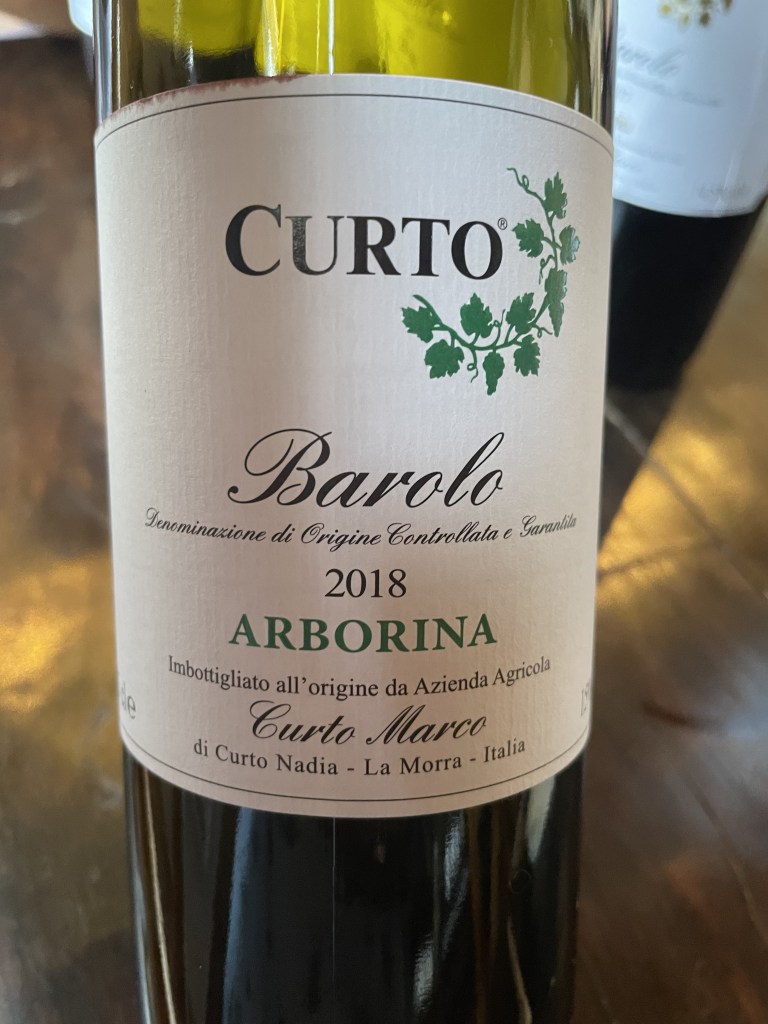
Nadia Curto Barolo Arborina 2018

The Arborina might be a bit more complex than the La Foia. More leather, tobacco and spice aromas. More powerful, more intense. This might be due to the south exposure and long extraction.

Paolo Giordano Barolo 2018

I was really impressed by this wine. Good structure, but still easy to drink. Round, well integrated tannins. And it really opened up in the glass.

Roberto Voerzio Barolo Del Comune de La Morra 2018

A complex wine with a good nose. Aromas of spices and a hint of mint. Delicious. Good grip in the tannins. A long finish.

Roberto Voerzio Barolo Brunate 2018

I’ve tasted this both from tank and from bottle. The tank sample had an incredible nose. Concentrated with aromas of dark fruit. Elegant. Classic. Then, when I tasted from the bottle the nose was quite closed. But it had that wonderful combination of a feminine nose and complex body. Tannins were a but dry, but the aftertaste was incredible. Long finish.

Roberto Voerzio Barolo Fossati 2018

I also tasted this from both tank and bottle. When I tasted from the tank the wine was quite masculine with aromas of tobacco, some herbs and quite harsh tannins. Then, when tasted from the bottle, the nose was still quite masculine, but the harsh tannins were gone and the wine was quite feminine. With a long, good finish.

Roberto Voerzio Barolo La Serra 2018

A wine with an interesting nose. Red fruit, spices and a hint of licorice? Smooth tannins, good body and good deoth. Easy to drink. Integrated tannins.

Roberto Voerzio Barolo Cerequio 2018

Stunning! I really liked this wine. Aromas of red fruit and tobacco. A bit austere maybe. But WOW what a delicious wine. A good example of how maybe the nose and taste don’t always “go together”.

Roberto Voerzio Barolo Rocche dell Annunziata 2018

Floral and feminine on the nose. Fruity, with grippy tannins.

Roberto Voerzio Barolo Sarmassa 2018

Quite aggressive at first sip, but when the grippy tannins disappear you’re left with delicious fruit. Looooong finish. PS: Only magnums.

Stefano Corino Roncaglie 2018

A floral, fruity and crisp Barolo. Smooth tannins. Quite classic.

Vietti Barolo Castiglione 2018

The 2018 is a bit more elegant compared to the 2017. Fruity with beautiful floral notes. A fairly structured wine with good depth.

Vietti Barolo Brunate 2018

The Brunate had a perfect Barolo nose. Complex and structured, but at the same time extremely elegant.

Vietti Barolo Ravera 2018

You can feel that power in the Ravera. Aromas of leather with a hint of balsamic. Complex but balanced.

Vietti Barolo Lazzarito 2018

Minty and herbal with a touch of balsamic. Round in the mouth, with a good finish. Very good.

Vietti Barolo Rocche di Castilgione 2018

A beautiful floral nose, a bit similar to the Brunate. Quite structured, but still elegant with a fresh fruitiness.

[i] https://www.youtube.com/watch?v=Yidzttkqtw0 (58:20)

[ii] https://vinous.com/articles/the-enigma-of-2018-barolo-feb-2022

[iii] https://www.barolomga360.it/en/annata-2018/

[iv] https://www.merriam-webster.com/dictionary/tangram

[v] https://wordonthegrapevine.co.uk/2018-barolo-vintage-report/

[vi] https://www.bbr.com/editorial/2022/barolo/barolo-2018-vintage-report

Burgundslipp 2023

It’s finally that time of year again: Burgundslipp! I don’t think anyone could have predicted that a global pandemic would postpone the Burgundslipp for 2 years. And when it’s finally back on again, something unexpected happened.

But before we get into that, I might have to explain what the Burgundslipp is. Which is not an easy task. Because this phenomenon only happens in Norway, and if we’re really being honest, it’s concentrated around Aker Brygge in Oslo. Here are the broad strokes: February 9th, at 10 am, the doors open at Vinmonopolet Aker Brygge. And inside, there are hundreds of rare wines from Burgundy. But they are not only rare; they are quite cheap, relatively speaking. And so once a year, it’s possible to get your hands on rare, expensive wines for a fraction of the price of anywhere else in the world.

But there’s a catch. You have to get in line. They let people into the store, one at a time, in order of appearance in the queue. And although the wines scattered around on the floor might be attainable for person number 57, it’s the wine behind the counter that’s got people lining up days, or even weeks in advance. And yes, it’s February in Norway. And yes, it’s cold. And yes, they live outside, at Aker Brygge, for days or weeks at a time, waiting for those doors to open. And, yes, it’s quite crazy. I’ve answered some questions about this before, like why do it and do they keep or sell the wine. But for now, let’s get back to this year’s curveball!

Burgundslipp sleeping arrangements

Plot Twist

January 13th, I get a message: “There are 2 people in line. And apparently they have never been in line before.” If we do some quick math, that’s 27 days before the wines hit the deck. A whopping 9 days more than the previous record for number of days spent in the queue. Thursday January 17th I get a new message: “A 3rd one has appeared.” And just like that, the first 3 spots in the queue are taken. By Sunday January 22nd, there are already 6 people in line. And it doesn’t seem like that any of them have been in the queue before (they are not so talkative, so some deductions have been made). And so the 6 spots that are normally occupied by the regulars, are now taken. This is significant, because of the top wines, there are usually only 3 or 6 bottles available. And so if you end up being number 7, like I was last year, you likely won’t get a hold of the most sought after bottles.

Now, I don’t care that I won’t get my hands on the DRC Romanee-Conti, because let’s be honest, that was never the plan. But I am curious to see what happens the next 16 days.

What number will I be in the queue when I finally get there?

What will happen to the kingdom now that the 6 first guys are different from the usual 6 veterans that occupy the firs spots?

Will there be more women at the 2023 Burgundslipp?

How many will there be by 9:59 am Thursday January 9th?

Stay tuned!