Most of you are probably already quite familiar, but let’s talk about Barolo. I mean, what is Barolo? I honestly don’t really know where to start but I guess I could start with the basics. Barolo is a wine made in the Barolo area, and it’s made with the Nebbiolo grape. There are strict rules with regards to the location and the vinification process of the grapes, and unless you follow those rules, you can’t call it a Barolo. I’ll just touch on some of the rules really quickly:
The grapes have to come from inside the Barolo area, which includes 11 villages
The wine has to age for a minimum of 18 months in oak
The wine should age for 36 months in total, the rest of the aging taking place in the bottle
Barolo – where to start?
Now, like I mentioned before, there are 11 villages in which you can make Barolo. Some are more “famous” than others, like the Barolo village. But one of the most important things when it comes to Barolo is the terroir. The terroir varies quite dramatically across the Barolo area, in the different villages. So much so that it’s common to make Barolo’s with grapes harvested from very specific vineyards, and there are called single vineyard or cru Barolo’s. One of the most important educators on this topic is Alessandro Masnaghetti, aka Map Man Masna. I think terroir should have it’s own article, so I won’t go into too much detail here, but basically, the soil, the altitude, the climate and the biodiversity in each village plays a huge role in how the wine tastes. And I swear it’s evident in the different wines. Don’t believe me? Try it for yourself and see!
Where to start?
Ok, let’s talk about Barolo and how to start exploring the different kinds. One way, is to start at the top (literally) and work your way down. In the north you’ll find the village of Verduno. Burlotto is one of the first winemwakers that come to mind here, but his wines are nearly impossible to find these days. But don’t worry! Diego Morra also makes a Barolo Monvigliero, as well as a classic Barolo, so you could start there. Next up on this mini tour of Barolo: La Morra. The Cristian Boffa Barolo del Comune di La Morra is a safe bet. Another favorite is the Brunate from Marengo. And let’s not forget about Arborina. Nadia Curto, Giovanni Corino and Elio Altare come to mind. There are obviously many more wines I could suggest, but the article would be 7 pages long with a 100 links…
Moving right along to Castiglione Falletto, one of the wines that immediately come to mind is the Barolo from Cavallotto. Alfio and Giuseppe make really good wines, from their Pinner to their top cru Barolo. In certain vintages, I’d dare to say that their Langhe Nebbiolo resembles a “baby Barolo”. Just a friendly tip… From Barolo there’s the Francesco Borgogno Castellero. You could try to get your hands on a Chiara Boschis Cannubi, but those are a bit harder to come by.
We’ve made it all the way to Serralunga, at least for those of you who kept reading. If you haven’t already, you have to try the Barolo from Daniele Grasso. I could give a lengthy explanation why, but this is already a long article, so you’ll just have to take my word for it. Serralunga, similar to other towns in the Barolo area, is quite known for one vineyard in particular: Vignarionda. I’d give the one from Luigi Pira a try. But Vignarionda can be quite punchy, and is on the more expensive side, so another option is the Barolo del Comune di Serralunga. It will be a bit more approachable and won’t leave as big a dent in your wallet.
Last, but not least: Monforte d’Alba. There are some important Cru’s in Monforte as well, but my mind immediately goes to the Gianfranco Alessandria Barolo San Giovanni. Their classic Barolo is also a Monforte Barolo, so that’s another option. A more unknown cru within the borders of Monforte is Perno. You might know Perno because of Repubblica di Perno, one of my favorite restaurants. Right across the street you’ll find a brand new winemaker named Paolo Giordano. He makes a Perno Barolo, and it’s definitely worth a try.
Disclaimer: I know I didn’t touch on all 11 villages here, but I tried to include some of the most important ones. The thing to note is that I didn’t forget them! Maybe that’s a topic for the next article?
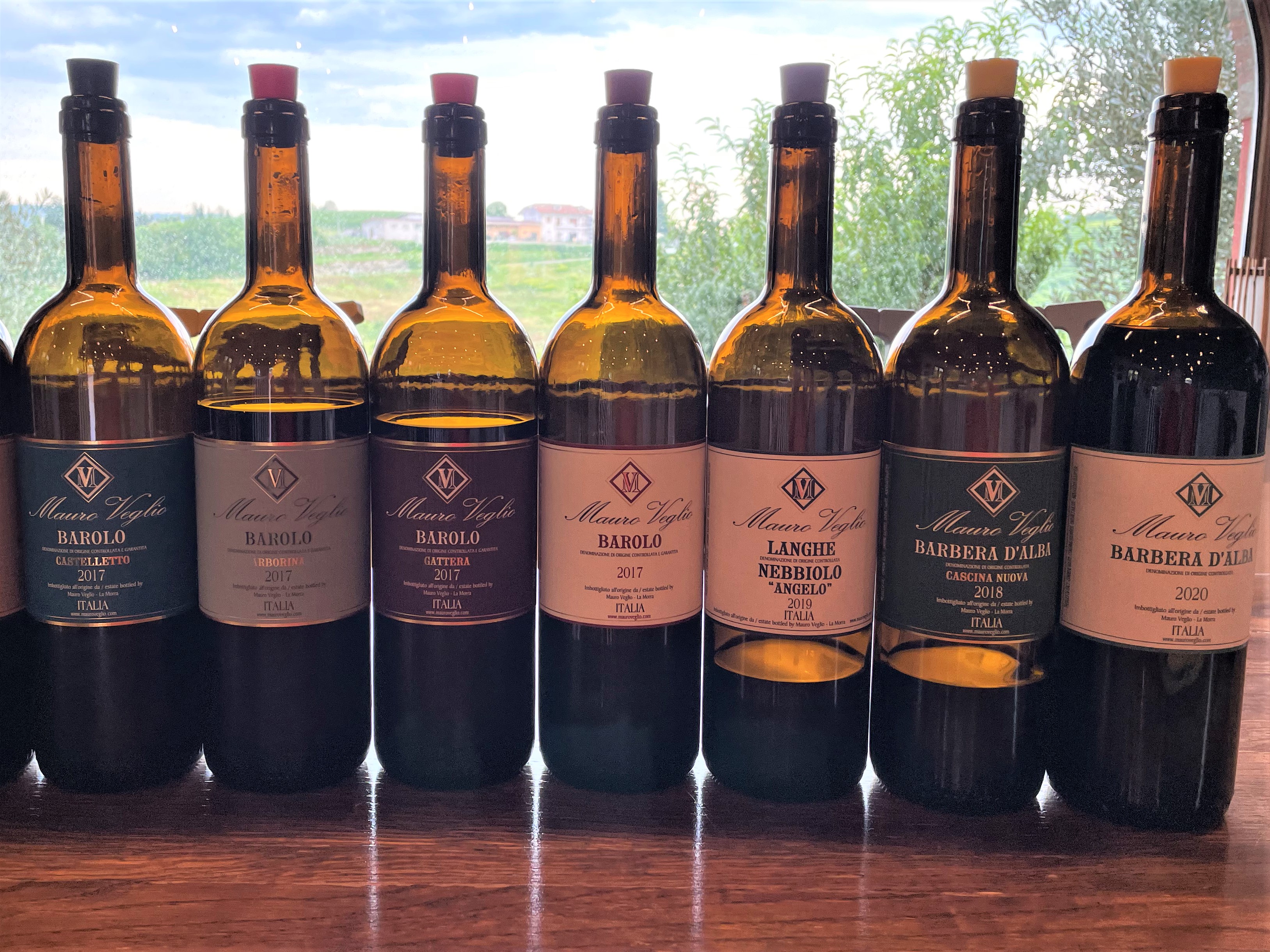
This summer I tasted the most recent release from Veglio. If I had to pick a favorite from the lineup it would be the Barolo Gattera 2017!
Mauro Veglio Barbera 2020
The 2020 Barbera from Mauro Veglio is very fruity with good acidity. It’s very drinkable, light and fruity, despite the 15% alcohol.
Mauro Veglio Barbera Cascina Nuova 2018
The Cascina Nuova is their Barbera Superiore, so it’s no surprise that this wine is more complex. The ageing in wood has given the wine some spice notes as well as good structure. A balanced wine with good acidity.
Mauro Veglio Langhe Nebbiolo 2019
This wine has a beautiful nose, with aromas of fresh red fruit. It’s a bit concentrated in the mouth, but that’s not uncommon for the 2019’s. Good structure, good tannins, good length.
Mauro Veglio Barolo 2017
The grapes in the Classic Barolo are sourced from Arborina, Castellero, and a small part of Gattera. Good nose, with red fruit and some spice notes. Quite fresh and easy to drink.
Mauro Veglio Gattera 2017
I like this wine a lot. A more masculine nose with aromas of tobacco, spices and some herbs. Quite soft tannins for a 2017.
Mauro Veglio Arborina 2017
The Arborina has that beautiful feminine nose. Quite aromatic for a 2017. A bit warm in the mouth, with round tannins.
Mauro Veglio Castelletto 2017
More rustic nose on the Castelletto 2017, maybe even some leather. A more masculine Barolo, which is not surprising since it’s from Monforte. Dark red fruit and cherry aromas. The tannins are a bit more aggressive as well, structured with a good body.
Nadia Curto, like her cousin Silvia Altare, is just bursting with energy! A visit with Nadia is sure to put a smile on your face, and not just because the wines are good!
Nadia Curto’s parents, Marco and Adele,
have been cultivating their 4 hectares of vineyards for over 60 years. In 2000,
Nadia joined the family winery, and have been running it for many years now.
Winemaking
Modernist or Traditionalist? If there is
anyone I know that doesn’t “belong” in any boxes, it’s Nadia Curto. Her
winemaking style is influenced by both her father and her uncle, and she
applies the different methods to different wines. Does it matter what style you
prefer, if your wines are good? I don’t think so.
Fun fact
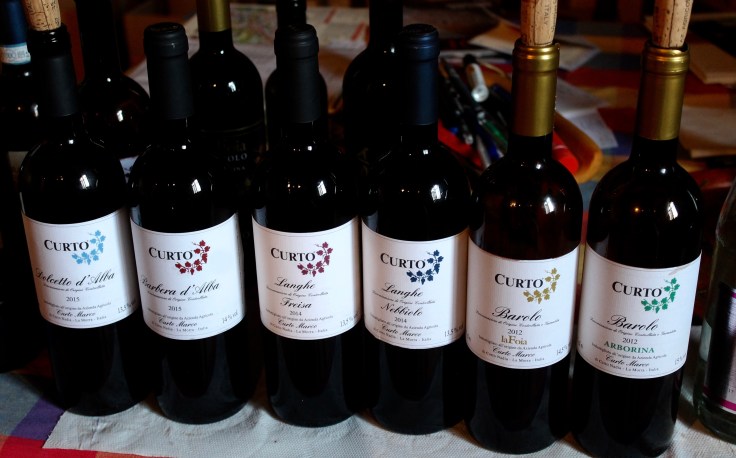
Both the Barolo Arborina and the Barolo La Foia are made with grapes from the Arborina vineyard. However, the winemaking methods are very different. With the Barolo Arborina, Nadia applies her uncle Elio’s method with short maceration and ageing in barrique. The Barolo La Foia undergoes a longer maceration and ages in larger barrels.
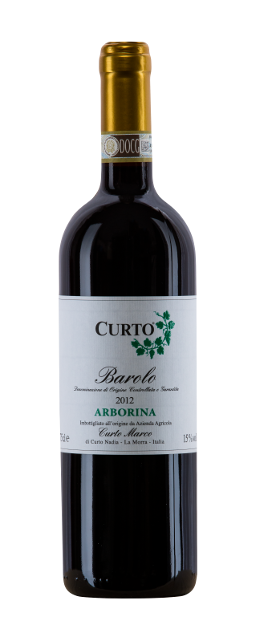
The Barolo Arborina from Nadia Curto is made in the “modern way” with short maceration time and ageing in small barrique. The plants are located in the Arborina vineyard in La Morra, with a south exposure at an altitude of about 270-300 m a.s.l.
BASIC INFORMATION
Product name: Barolo Arborina Grape: 100% Nebbiolo Classification: DOCG Number of bottles produced: 5000 Color: Garnet red Fragrance: Spicy with hint of rose petals, fruity with balsamic notes Taste: Elegant, austere, fruity Food pairing: Braised meats
VINIFICATION (Wine-making)
Method: Fermentation takes place in rotary fermenters Temperature: 30 – 32 degrees Celsius Length: 5 day maceration Ageing: 2 years in Barrique Minimum aging in bottle: 1 year
VINEYARD
Vineyard: Arborina Soil: marna stone with clay and sand Exposure: South
Barolo La Foia
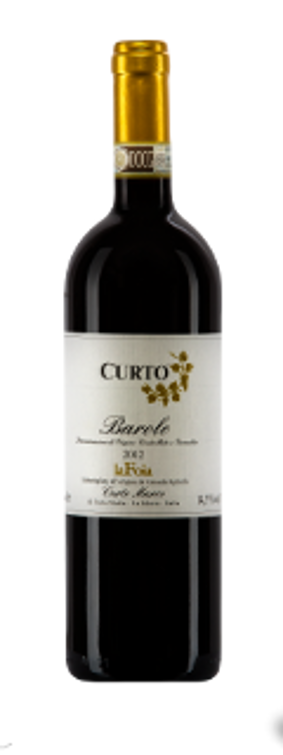
The grapes for this wine is also located in Arborina, but Nadia uses a different method of vinification. With the Barolo La Foia, the wine undergoes long maceration and ages in bigger barrels (30 – 40 HL). The plants are located at an altitude of about 270-300 m a.s.l and have east, south-east exposure.
BASIC INFORMATION
Product name: Barolo La Foia
Grape: 100% Nebbiolo Classification: DOCG Number of bottles produced: 7000 Color: Bright garnet red
Fragrance: Spicy with hint of rose petals, liquorice, leather Taste: Austere, full, elegant Food pairing: Braised meats, aged cheese
VINIFICATION (Wine-making)
Method: Manual
repassing and pressing
Temperature: 30 – 32 degrees Celsius Length: 20 day maceration Ageing: 2 in oak barrels (20 or 30 HL) Minimum aging in bottle: 1 year
VINEYARD
Vineyard: Arborina Soil: marna stone with clay and sand Exposure: South east
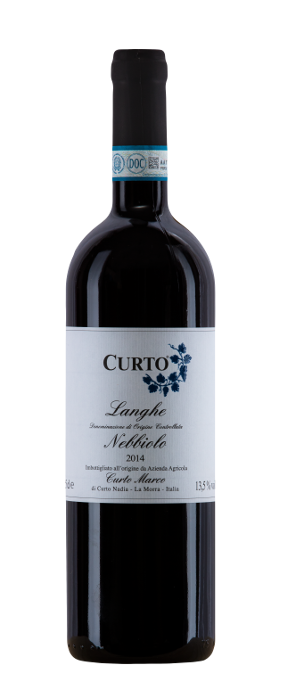
Langhe Nebbiolo
BASIC INFORMATION
Product name: Langhe Nebbiolo Grape: 100% Nebbiolo Classification: DOC Number of bottles produced: 2000 Color: Garnet red Fragrance: Roses, red fruits, spices Taste: Elegant yet structured. Fresh. Food pairing: Pasta, meat, cheese, salami
VINIFICATION (Wine-making)
Method: Manual repassing and pressing Length: 15 day maceration Ageing: Aged in oak for about 1 year
VINEYARD
Vineyard: Arborina Soil: marna stone with clay and sand
Barbera d’Alba
BASIC INFORMATION
Product name: Barbera d’Alba Grape: 100% Barbera Classification: DOC Number of bottles produced: 3000 Color: Deep ruby red Fragrance: Blackcurrant, black cherries, blackberries Taste: Fresh acidity, long finish, red fruits Food pairing: Cheese and cured meats
VINIFICATION (Wine-making)
Method: Fermentation in rotary fermenters Temperature: 30 – 32 degrees Celsius Length: 5 day maceration Ageing: 4 months in wood
VINEYARD
Vineyard: Arborina Soil: marna stone with clay and sand Exposure: South
Dolcetto d’Alba
BASIC INFORMATION
Product name: Dolcetto d’Alba
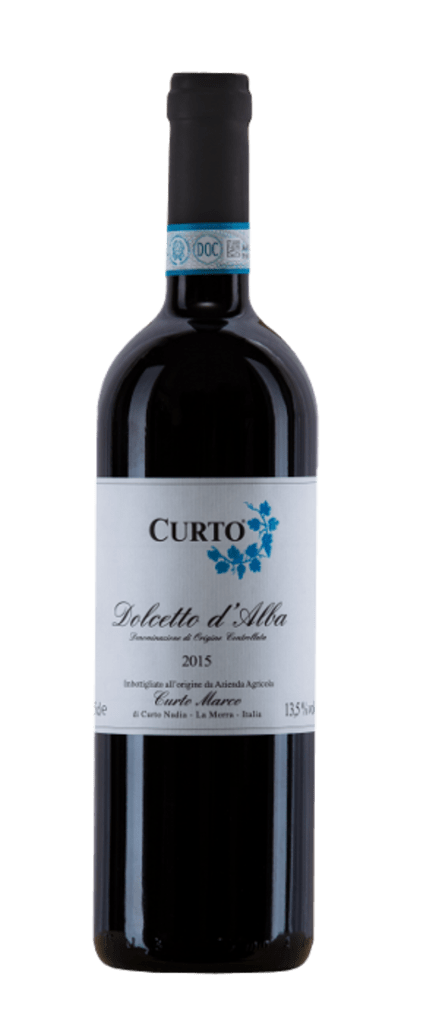
Grape: 100% Dolcetto Classification: DOC Number of bottles produced: 3500 Color: Ruby red with purple tendencies
Fragrance: Violet, cherry, plum, blueberry
Taste: Fruity, easy to drink
Food pairing: Pizza, light dishes, aperitivo
VINIFICATION (Wine-making)
Temperature: About 30 degrees Celsius Length: 4 day maceration Ageing: Stainless steel tanks
VINEYARD
Vineyard: Gattera Exposure: West – Northwest
Langhe Freisa
BASIC INFORMATION
Product name: Langhe Freisa
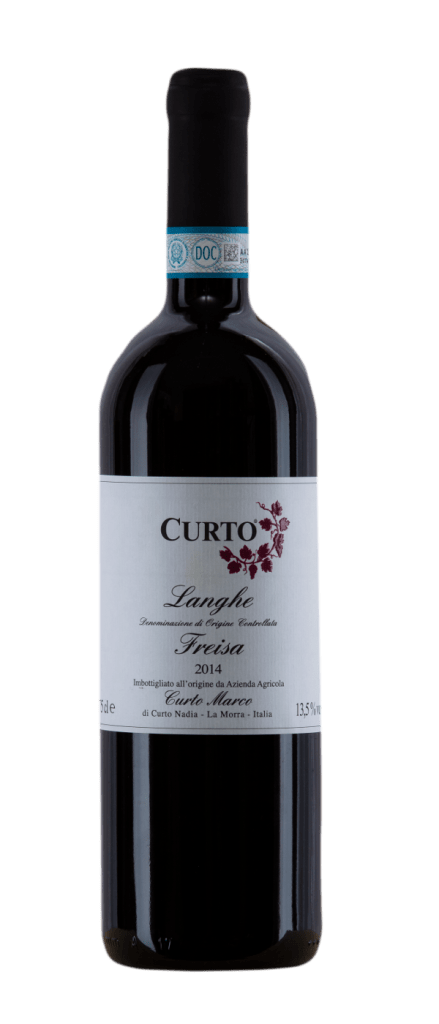
Grape: 100% Freisa Classification: n/a Number of bottles produced: 1000 Color: Ruby red
Fragrance: Vegetable, fruity, spicy
Taste: Rustic wine, rich tannins, good acidity
Food pairing: Fatty foods, cheese, cold cuts
VINIFICATION (Wine-making)
Method: Temperature: Length: 8 day maceration Ageing: Stainless steel tanks
VINEYARD
Vineyard: Arborina Soil: marna stone with clay and sand
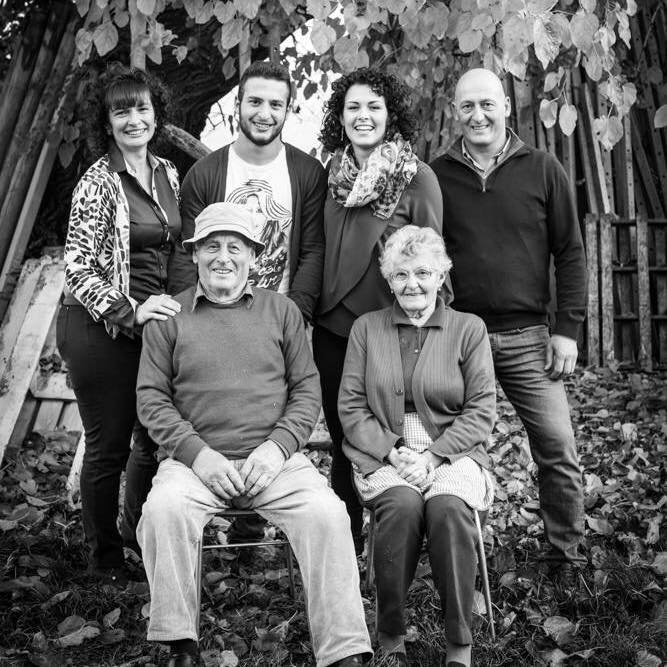
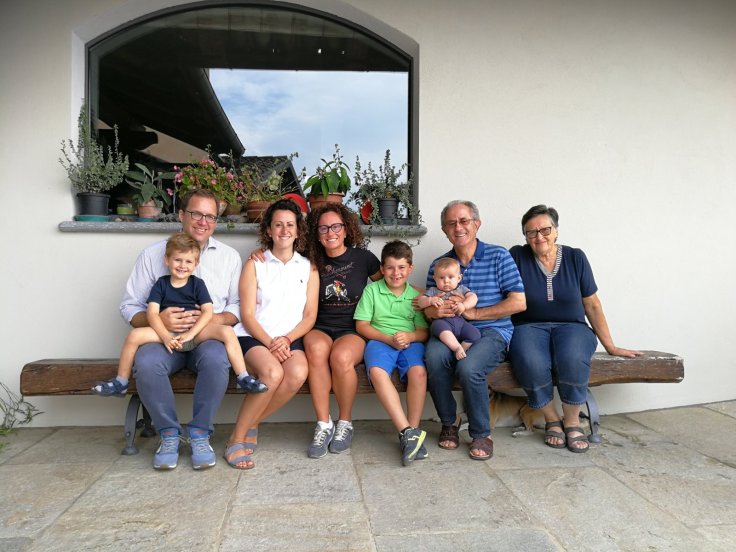
Giovanni Corino started making his own wines in the 1980’s. As many of the other winemakers in the area, his family farmed land and sold the fruit. Today, Giovanni spends more time in his vegetable garden than in the vineyards. Giovanni’s son Giuliano runs the show today, along with his wife Stefania and their two children, Veronica and Andrea.
Kind. That’s the first word that comes to mind when I think of the Corino family. The first time I flew solo in Piemonte, my second winery visit was with Corino. My brother and I had bought some wine at the previous winery, Nadia Curto, and proceeded to by more wine at Corino. At age 19, I didn’t have a rental car, so we were on foot. And Stefania, who gave us the winery tour, offered to drive us back up to La Morra. Believe me, we were eternally grateful. I don’t know if you’ve walked from Annunziata to La Morra, but it’s quite a hill.
On another occasion, I found myself early at a tasting, this time with Andrea Corino. Giovanni and his wife live above the winery, and they saw me standing outside. With my basic Italian skills I managed to explain the situation, and it wasn’t long before I found myself in Giovanni’s kitchen drinking coffee! With my conversational Italian and his Piemontese dialect, conversation was interesting, but we managed. I seldom witness such kindness of strangers, and it’s one of the reasons why I love Piemonte.
The Corino Family: Stefania, Andrea, Veronica, Giuliano, Giovanni and Delfina
Wines & Winemaking
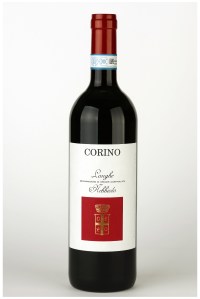
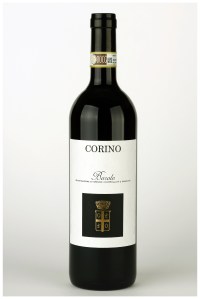
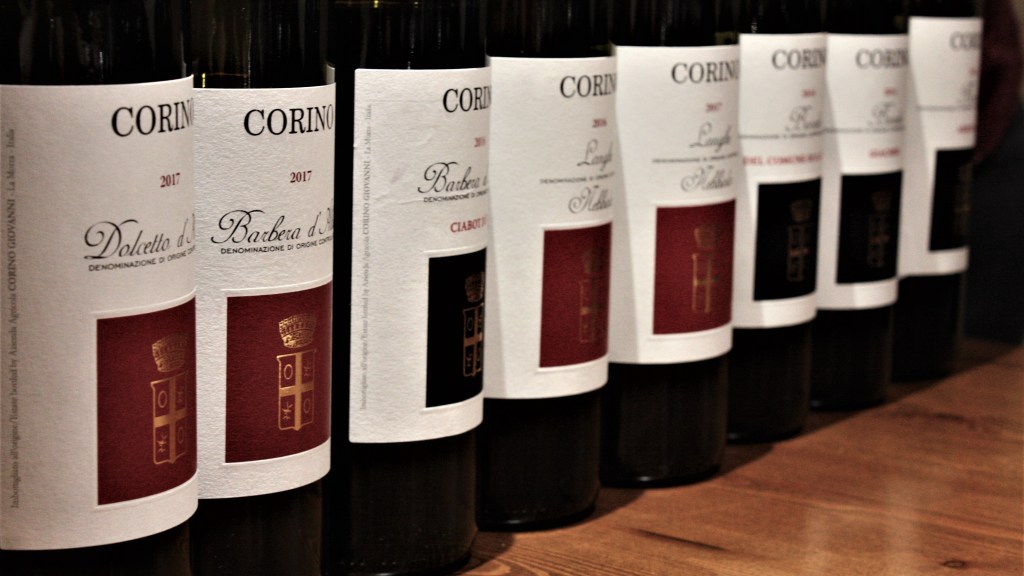
Giovanni Corino follows what some like to call the “modern style” of wine making. With small oak barrels, also called barrique, they make about 50 000 bottles a year. All the vineyards are in La Morra, with barolo vineyards in Arborina, Giachini and Bricco Manescotto. In addition to the Dolcetto, Barbera and Langhe Nebbiolo, they also make a Barbera Ciabot du Re, and a L’Insieme.
They follow similar methods for all their wines. Maceration takes place between 5-7 days in a temperature controlled rotaryfermenter, at about 25 – 30 degrees celcius. The Dolcetto, Barbera and Langhe Nebbiolo spend about 10 months in steel tanks before bottling. The Barolo’s and the Barbera superiore spend time in small oak barrels. The precentage of new and old oak depend on the wine.
Fun fact
Giovanni Corino has one of the best vegetable gardens in La Morra (maybe even Piemonte). He supplies many of the homes, hotels and restaurants with his superior vegetables. I stayed in a B&B once, and the tomatoes provided were grown by Giovanni.
Fun fact II
Andrea Corino did an internship at a winery in New Zealand. It’s fairly common for the younger generation to explore wineries outside their own area.
Giovanni Corino Wines
Wines available in: Norway Belgium Denmark Italy Netherlands Switzerland United Kingdom United States
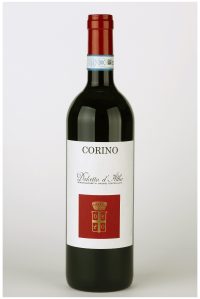
Dolcetto d’Alba
BASIC INFORMATION
Product name: Dolcetto d’Alba Grape: 100% Dolcetto Classification: DOC Number of bottles produced: 7000 Color: dark red, violet Fragrance: dark berries, fruity Taste: light to medium bodied, fresh and fruity Food pairing: something light, like a basic pizza
VINIFICATION (Wine-making)
Temperature: 25 – 30 degrees celcius Length: 5-7 days of maceration Ageing: 8-10 months in steel tank
VINEYARD Soil: Clayey Calcareous Exposure: West Year of plantation/age of plants:
Barbera d’Alba
BASIC INFORMATION
Product name: Barbera d’Alba Grape: 100% Barbera Classification: DOC Number of bottles produced: 12000 Color: ruby red Taste: good acidity, fresh Food pairing: salami, cheese, turkey, ribbe, pinnekjøtt
VINIFICATION (Wine-making)
Temperature: 25-30 degrees celcius Length: 5-7 days of maceration Ageing: 8-10 months in steel tanks
VINEYARD Soil: Clayey and Calcareous Exposure: West & South West Year of plantation/age of plants:
Barbera d’Alba Ciabot dù Re
The vines for the Giovanni Corino Ciabot dù Re are old and the soil porous. After the maceration in rotary fermentor, the wine goes through fermentation in oak barrels (50% new, 50% used). It will spend about 18 months in barrels before bottling.
BASIC INFORMATION
Product name: Barbera d’Alba Ciabot dù Re Grape: 100% Barbera Classification: DOC Number of bottles produced: 2500 Color: ruby red Fragrance: red fruits Taste: powerful yet smooth with good acidity Food pairing: salami, cheese, turkey, ribbe, pinnekjøtt
VINIFICATION (Wine-making)
Method: Sugar fermentation and malolactic fermentation takes place in small oak barrels Temperature: 25-30 degrees celcius Length: 5-7 days maceration Ageing: 18 months in small oak barrels, 50% new and 50% used. Then 3-4 months in steel tanks
VINEYARD Soil: Clayey and Calcareous Exposure: West & South West Year of plantation/age of plants:
Langhe Nebbiolo
BASIC INFORMATION
Product name: Langhe Nebbiolo Grape: 100% Nebbiolo Classification: DOC Number of bottles produced: 10 000 Color: garnet red Fragrance: cherries, liquorice, violets and forest floor Taste: good structure, notes of cherries and liquorice Food pairing: red meat, pasta, pizza
VINIFICATION (Wine-making)
Method: Sugar fermentation and malolactic fermentation in steel tanks Temperature: 25-30 degrees celcius Length: 5-7 days maceration Ageing: 8-10 months in steel tanks
VINEYARD Soil: Clayey and Calcareous Exposure: South & South West Year of plantation/age of plants:
Barolo Del Comune di La Morra
This is the classic Barolo, meaning it’s a blend of multiple plots. Recent changes to the regulations allow for the winemakers to write the Comune of the wine on the label.
BASIC INFORMATION
Product name: Barolo Del Comune di La Morra Grape: 100% Nebbiolo Classification: DOCG Number of bottles produced: 10 000 Color: garnet red Fragrance: red fruits, cherries, liquorice Taste: medium bodied, fruity, Food pairing: red meat
VINIFICATION (Wine-making)
Temperature: 25-30 degrees celcius Length: 5-7 days maceration Ageing: 24 months in small oak barrels Minimum ageing in bottle: 12 months
VINEYARD Soil: Clayey Exposure: South Year of plantation/age of plants:
Barolo Giachini
BASIC INFORMATION
Product name: Barolo Giachini Grape: 100% Nebbiolo Classification: DOCG Number of bottles produced: 6000 & 150 Magnum Color: garnet red Fragrance: red fruits, ripe cherries, tobacco, violets Taste: darker fruits, tobacco, liquorice, long finish Food pairing: red meat
VINIFICATION (Wine-making)
Temperature: 25-30 degrees celcius Length: 5-7 days maceration Ageing: 24 months in small oak barrels, 35% new oak Minimum aging in bottle: 12 months
VINEYARD Soil: Clayey-Calcareous Exposure: South Year of plantation/age of plants:
The 2014 Barolo Arborina is a very pleasant, attractive Barolo. In 2014, the Arborina has good bit of midpalate pliancy that softens some of the typically coarse Arborina tannins. Black cherry and plum fruit are nicely pushed forward in this attractive, medium-bodied Barolo. Sweet tobacco, menthol, leather and dark spice all develop in the glass, but it is really the wine’s harmony that impresses most. All the elements are in the right place. The 2014 is a small-scale, somewhat hushed Arborina, but its balance is impeccable. Drink it over the next decade or so. Drinking window: 2022-2028. 92 points
Antonio Galloni, Vinous (02/18)
BASIC INFORMATION
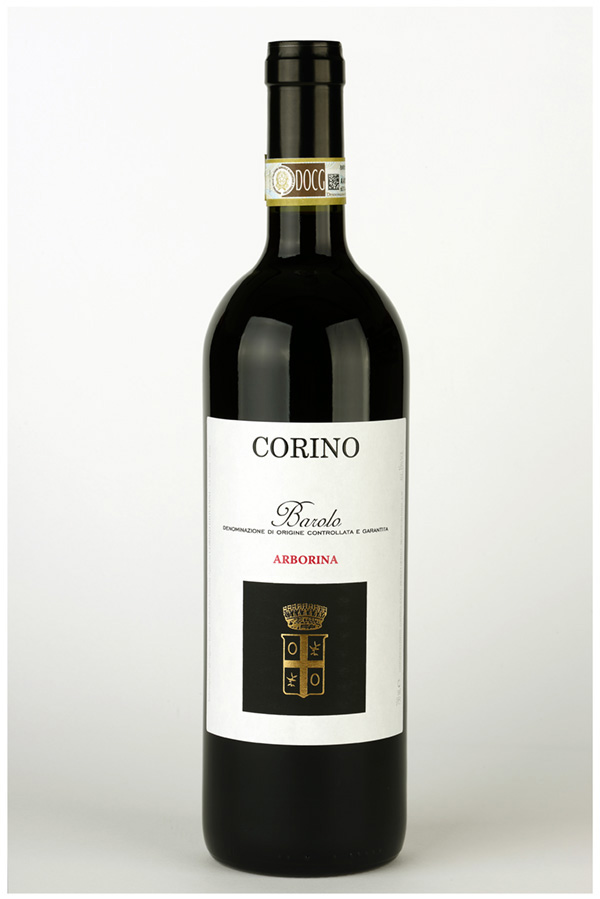
Product name: Barolo Arborina Grape: 100% nebbiolo Classification: DOCG Number of bottles produced: Color: garnet red Fragrance: delicate aromas, red fruits, floral Taste: full body with silky smooth tannins, high acidity, long finish Food pairing: red meat
VINIFICATION (Wine-making)
Temperature: 25 – 30 degrees celcius Length: 5-7 day maceration Ageing: 24 months in small oak barrels, 35% new and 65% used Minimum aging in bottle: 12 months
VINEYARD Soil: clay and sand Exposure: south & southeast Year of plantation/age of plants: Date of harvest: In 2014, October 7th
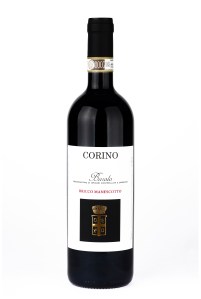
Barolo Bricco Manescotto
BASIC INFORMATION
Product name: Barolo Bricco Manescotto Grape: 100% Nebbiolo Classification: DOCG Number of bottles produced: 2600 and 100 Magnums Color: garnet red Fragrance: red fruits, hint of tobacco Taste: full bodied, red fruits, wet forest floor Food pairing: red meat
VINIFICATION (Wine-making)
Temperature: 25-30 degrees celcius Length: 5-7 days maceration Ageing: 24 months in small oak barrels, 35% new oak Minimum aging in bottle: 12 months
VINEYARD Soil: Clayey, calcareous, sandy Exposure: West Year of plantation/age of plants: Date of harvest:
Giovanni Corino Barolo Riserva
The Barolo Riserva is made only in excellent vintages. The first vintage to be released was 2010, which they released in 2016 (6 years after the harvest). It spends about 30 months in bottle before the release.
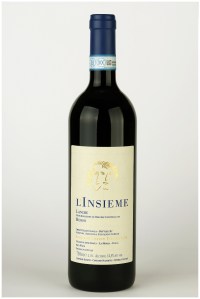
L’Insieme
L’Insieme is group of winegrowers from the Langhe, united by a project, a dream and a goal. Elio Altare is the founder. The project aims to make wines which, under a single brand, tell a story of friendship and collaboration, of hard work, shared passion for the Langhe and its outstanding grapes. The dream is that, from this union, the resultant label will be a symbol of friendship and mutual aid. A wine that is our personal way of thanking the land that gave us our roots and its support.
Our goal is to make L’Insieme wine a practical ethical tool, allowing us to fund projects of high social value as a way of giving back to our local area a part of the good fortune and beauty it has given us. The wine is It is actually a combination obtained from the individual decisions taken by each producer, from traditional grape varieties such as the Nebbiolo, Barbera and Dolcetto, with grapevines introduced only recently to the Langhe area, such as Cabernet Sauvignon, Merlot or Pinot Nero.
BASIC INFORMATION
Product name: L’Insieme Grape: 40% Nebbiolo, 30% Barbera, 15% Merlot, 15% Cabernet Classification: DOC Number of bottles produced: 1000
VINIFICATION (Wine-making)
Method: each grape variety us vinified separately due to different harvest times. But they go through the same process. Temperature: 25 – 30 degrees celcius Length: 5-7 days maceration Ageing: small french oak barrels for 18 months, 40% new and 60% used Minimum aging in bottle: about 12 months
VINEYARD Soil: Clayey and Calcareous Exposure: South & South West
The Corino family from La Morra (or Annunziata if you wan’t to be really specific), cultivate 9 hectares which are all located in La Morra. In the 1980’s Giovanni Corino decided to not only grow grapes to sell, but to actually bottle some wine as well. And so the winery was born. Today the son of Giovanni, Giuliano, is the winemaker. His wife, Stefania, and their 2 children, Andrea and Veronica, all work at the winery as well. It truly is a family business.
Arborina
Among the many Cru’s in Barolo, you’ll find Arborina. The Vineyard is located in Annunziata in La Morra. The soil consists of clay, sand and limestone, and is actually quite poor in nutrients. However, the wines made from this vineyard offer characteristics of extreme elegance, finesse, fruitiness and freshness.
Winemaking
The Corino Barolo Arborina is one of a few Arborina’s in Barolo. After 5-7 days of maceration in a rotor fermenter, the wine moves to steel tanks where it remains until the end of the fermentation. The wine then moves into small oak barrels, 35% new and 65% used, to age for 24 months. You’d think it would be ready, but the wine has to spend a year in the bottle before being released.
Corino Barolo Arborina 2014
2014 was a challenging year in Piemonte, but I think the end results proves that hard work pays off. Although the wines from 2014 might not have the same structure as 2013, the wine certainly doesn’t disappoint. Very approachable, even young, with good fruit and a long finish.
Where to find it?
If you live in Norway, you can buy the Corino Barolo Arborina 2014 at www.vinmonopolet.no.
The Corino wines are also available in other countries, like: United Kingdom Italy Germany United States
Silvia Altare, Queen of the Andals, the Rhoynar and the first Cry, Protector of the grape, Queen of the Langhe, Khaleesi of the Great Grass Sea, Mother of Dragons, The Unburnt, Breaker of Chains and the Lady of the Annunziata
Toni Fadnes
Photo of the Altare Family, from their website
The words that come to mind when thinking of the Altare family are: Insieme & Energy.
And for those of you who are not Game of Throners, when I say that the Altare family is first of their name, I am referring to the “Barolo Revolution” and the introduction of barrique to the area. On top of that, they are known for their extraordinary wines and and incomparable energy.
Winemaking
In 1976, Elio traveled to Burgundy and it was a trip that would change the course of history forever. Elio infamously took his father’s big barrels outside and chopped them up. He wanted to use small barrels instead, barrique, like the french. This act would eventually lead to his disinheritance. But Elio persevered.
Today, the family still use small barrels (barrique) for most of their wines, and steel tanks for the dolcetto d’alba , barbera d’alba and langhe nebbiolo. The oak is used as a tool, and none of their wines have a significant presence of oak flavors. Try putting it in a blind tasting lineup and see for yourself.
With a total of 10 hectares, they make about 70,000 bottles a year.
Fun fact
SEVEN PRODUCERS, SEVEN DIFFERENT STORIES, ONE SINGLE LABEL: L’INSIEME
Silvia’s father, Elio Altare, isthe founder of L’Insieme. And what is L’Insieme? It’s a project between 7 winemakers in Langhe where they donate a percentage of the proceeds to a good cause. Below you will see their own explanation of the project (found on their website).
The project aims to make wines which, under a single brand, tell a story of friendship and collaboration, of hard work, shared passion for the Langhe and its outstanding grapes.
The dream is that, from this union, the resultant label will be a symbol of friendship and mutual aid. A wine that is our personal way of thanking the land that gave us our roots and its support.
Our goal is to make L’Insieme wine a practical ethical tool, allowing us to fund projects of high social value as a way of giving back to our local area a part of the good fortune and beauty it has given us.
Fun fact II
When it comes to blind tasting, we all know Silvia and Elio are very good. They have trained their noses for years. But the one who always seems to surprise us with her incredible ability is Lucia, Elio’s wife. She will sit quietly, while everyone shares their opinions and then all of a sudden she will blow you away with her analysis. A very impressive woman.
The Altare Wines
Wines available in: Norway Sweden Denmark USA UK Italy
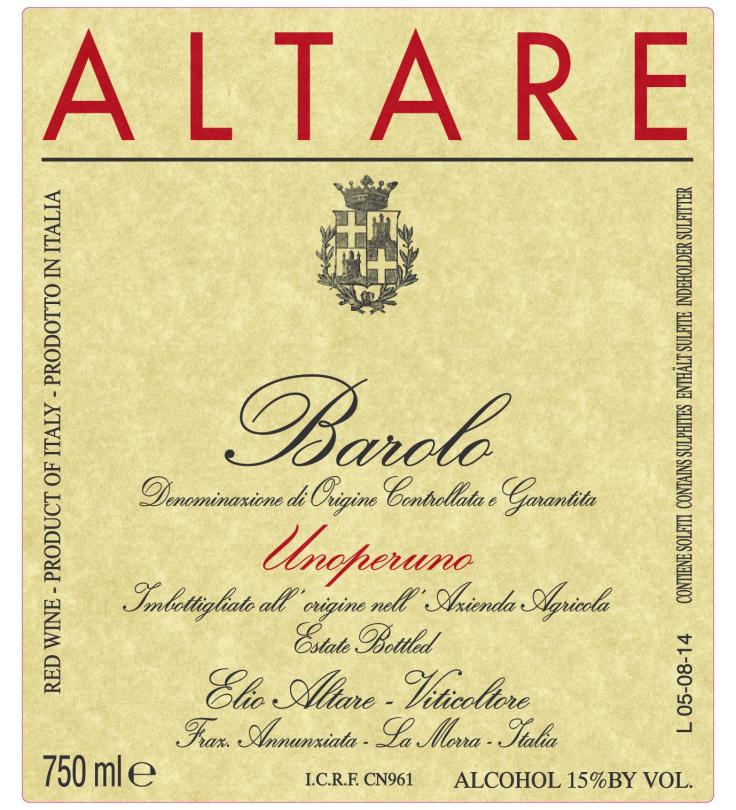
Altare Uno Per Uno
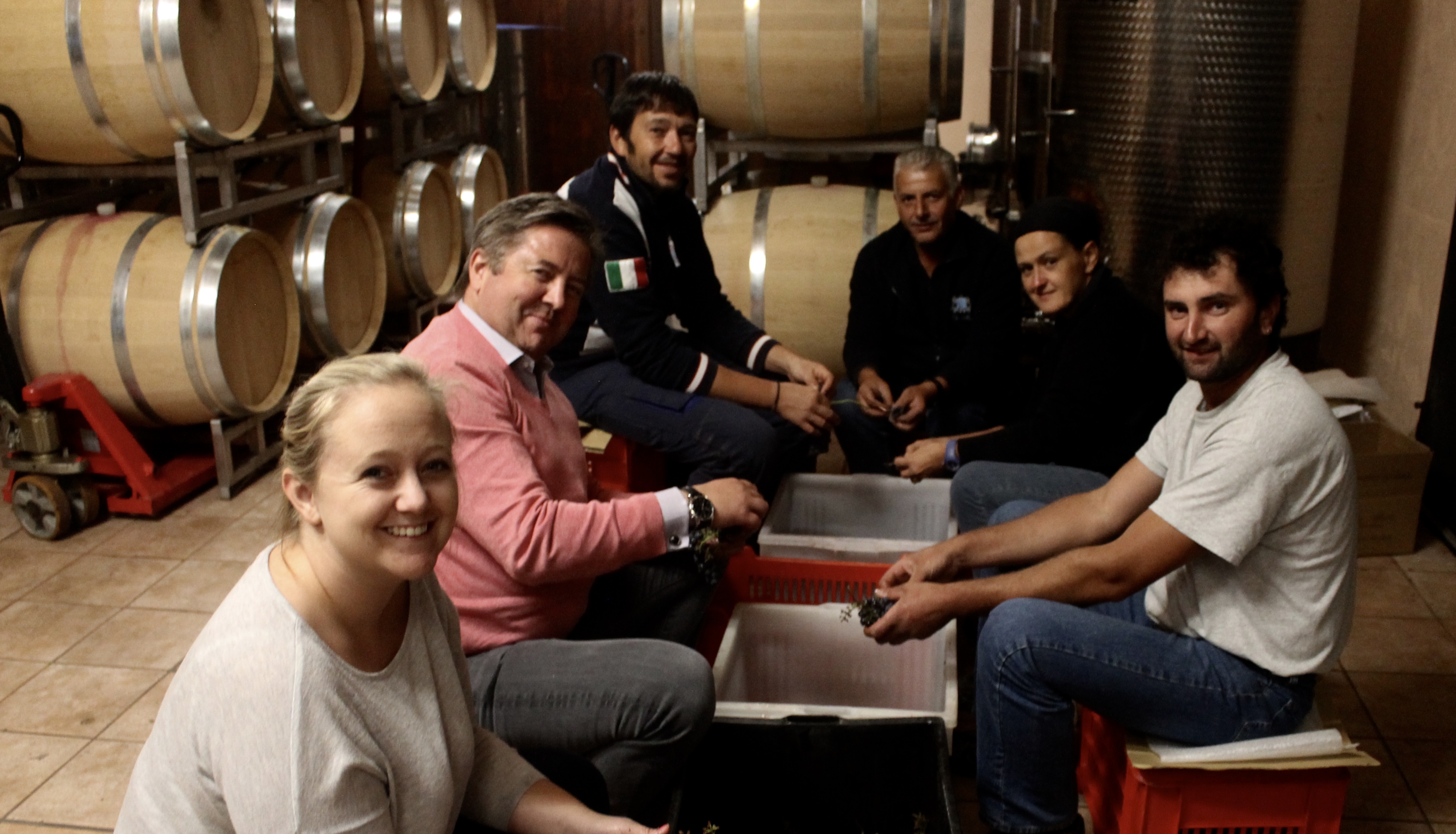
It’s exactly what it says: one by one. The family hand destems the grapes, berry by berry, and the results are magnificent. It’s also why the price might be a little higher. Imagine the work behind this wine. And if you can’t, check out the picture below.
BASIC INFORMATION
Product name: Uno Per Uno Grape: 100% nebbiolo Classification: DOCG Number of bottles produced: 1,500 Color: light ruby red with garnet reflections Fragrance: fresh fruits, rose petals and flowers Taste: warm, elegant, smooth silky tannins Food pairing: red meat, aged cheese
VINIFICATION (Wine-making)
Method: hand-destemming the berries, one by one. Looking for the purity of the fruit of nebbiolo, making sure there are no stems, no leaves and no ugly berries Ageing:
VINEYARD
Soil: marna with clay and sand Exposure: south, south-east Year of plantation: 1948
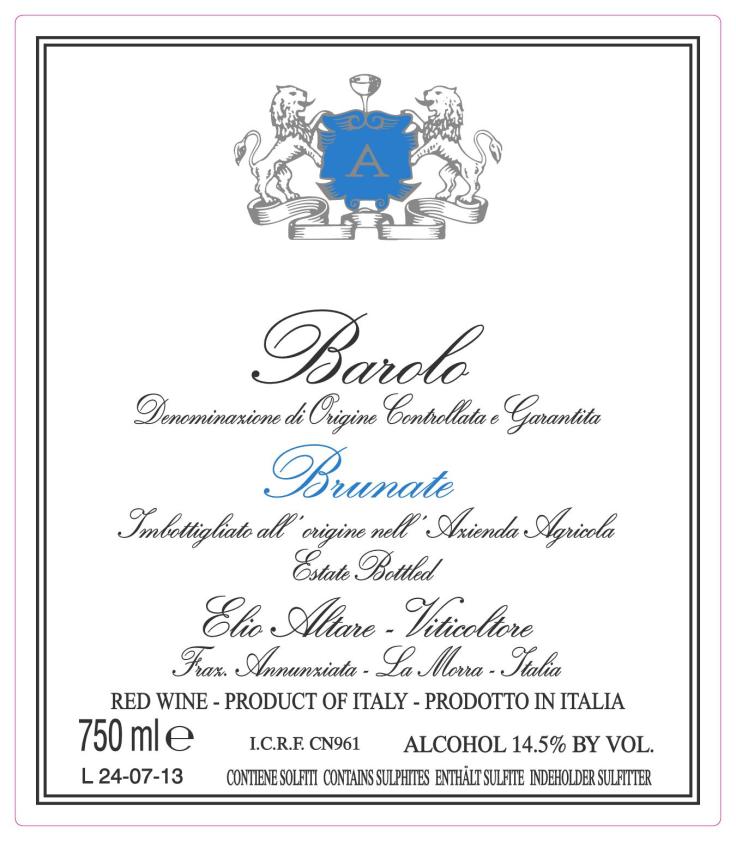
Barolo Brunate
The last vintage of Brunate is 2011. Altare rented the plot and the owners decided to make their own wine.
BASIC INFORMATION
Product name: Brunate Grape: 100% Nebbiolo Classification: DOCG Number of bottles produced: 1,200 – 1,500 Color: intense ruby red with garnet reflections Fragrance: red fruits, floral, light and feminine Taste: warm, elegant, long finish with wild rose and violet Food pairing: red meat, game, aged cheese
VINIFICATION (Wine-making)
Method: maceration on the skins for 4/5 days in rotary fermentors with temperature control Ageing: 24 months in french barrique
VINEYARD
Soil: various Exposure: south, south-east Age of plants: 20 to 90 years old
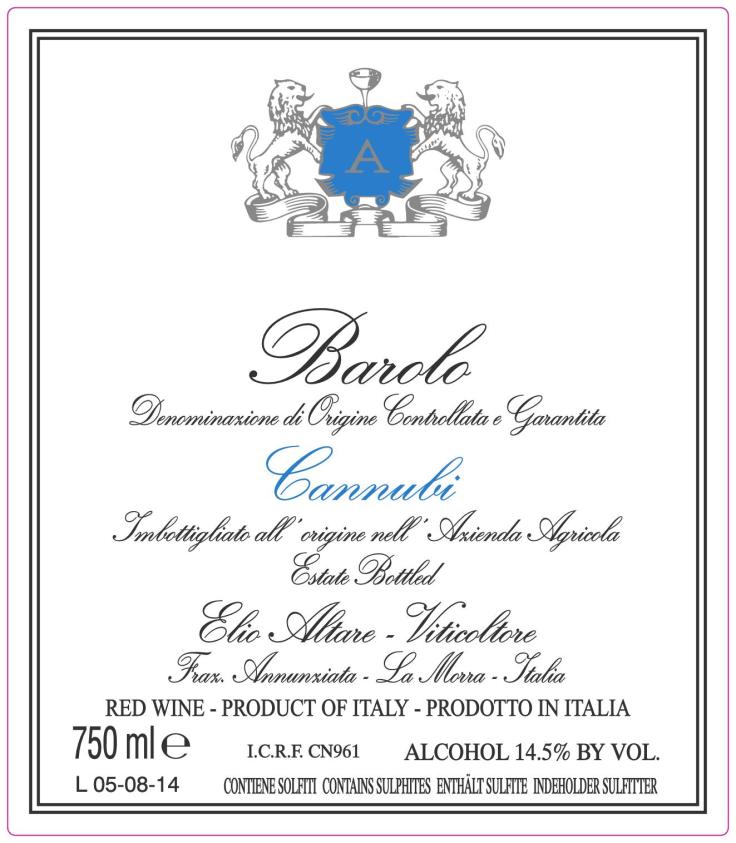
Cannubi
BASIC INFORMATION
Product name: Cannubi Grape: 100% Nebiolo Classification: DOCG Number of bottles produced: 1,500 Color: light ruby red with garnet reflections Fragrance: fresh fruits, rose petals and flowers Taste: elegant, soft silky tannins Food pairing: red meat, aged cheese
VINIFICATION (Wine-making)
Method: maceration on the skins for 4/5 days in rotary fermentors with temperature control Ageing: 24 months in french barrique
VINEYARD
Soil: marna with clay and sand Exposure: south Age of plants: 30 years old
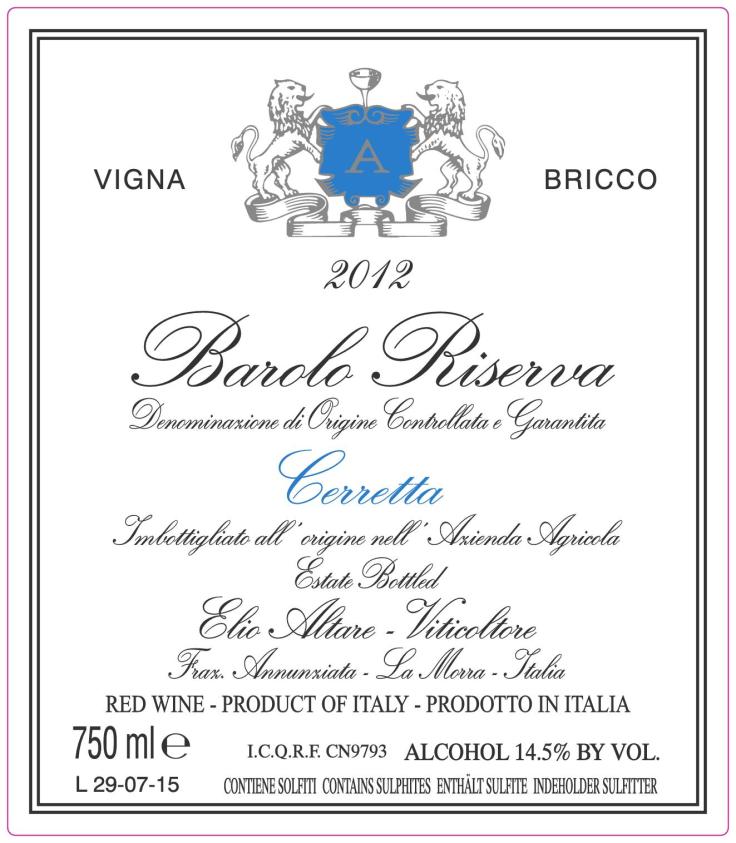
Barolo Ceretta Vigna Bricco Riserva
Altare chooses to release this wine later than the rest of the barolo’s. The extra time can be beneficial for a wine with more masculine characteristics.
BASIC INFORMATION
Product name: Ceretta Vigna Bricco Riserva Grape: 100% Nebbiolo Classification: DOCG Number of bottles produced: 5,000 – 6,000 Color: intense ruby red with garnet reflections Fragrance: mature fruits, spicy, tobacco, darker fruits, licorice Taste: warm and elegant, with mint and spice notes Food pairing: red meat, aged cheese
VINIFICATION (Wine-making)
Method: maceration on the skins for 4/5 days in rotary fermentors with temperature control Ageing: 24 months in french barrique
VINEYARD
Soil: sandstone, limestone and chalk Exposure: south, south-east and south-west Age of plants: 15 years old
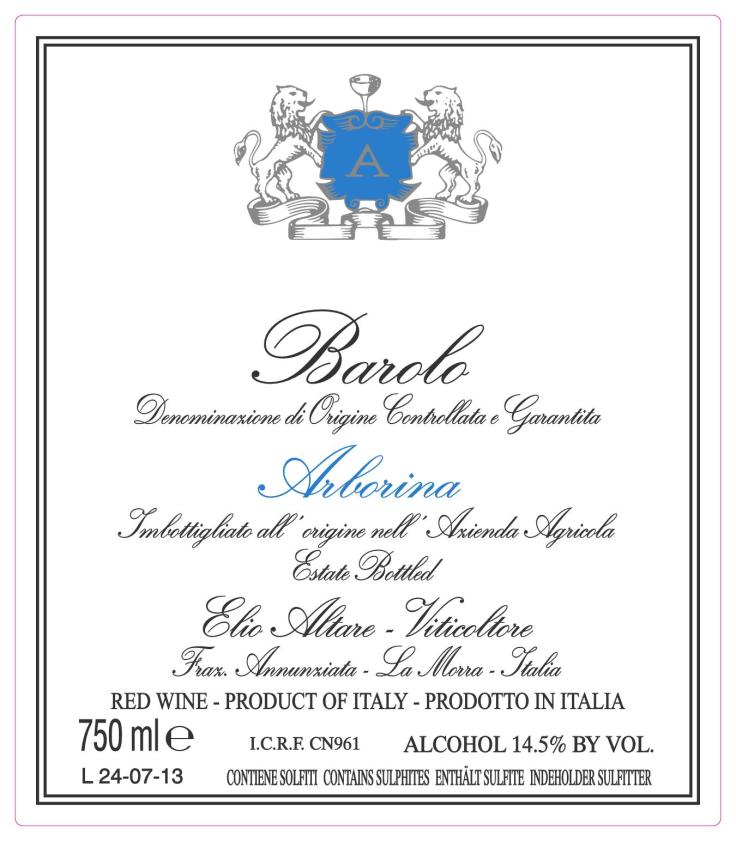
Barolo Arborina
BASIC INFORMATION
Product name: Arborina Grape: 100% Nebbiolo Classification: DOCG Number of bottles produced: 6,000 Color: intense ruby red with garnet reflections Fragrance: rose petals, flowers, light, sweet Taste: elegant, with smooth but intense tannins Food pairing: red meat, game, aged cheese
VINIFICATION (Wine-making)
Method: maceration on the skins for 4/5 days in rotary fermentors with temperature control Ageing: 24 months in french barrique
VINEYARD
Soil: marna stone with clay and sand Exposure: south, south-east Year of plantation: 1948
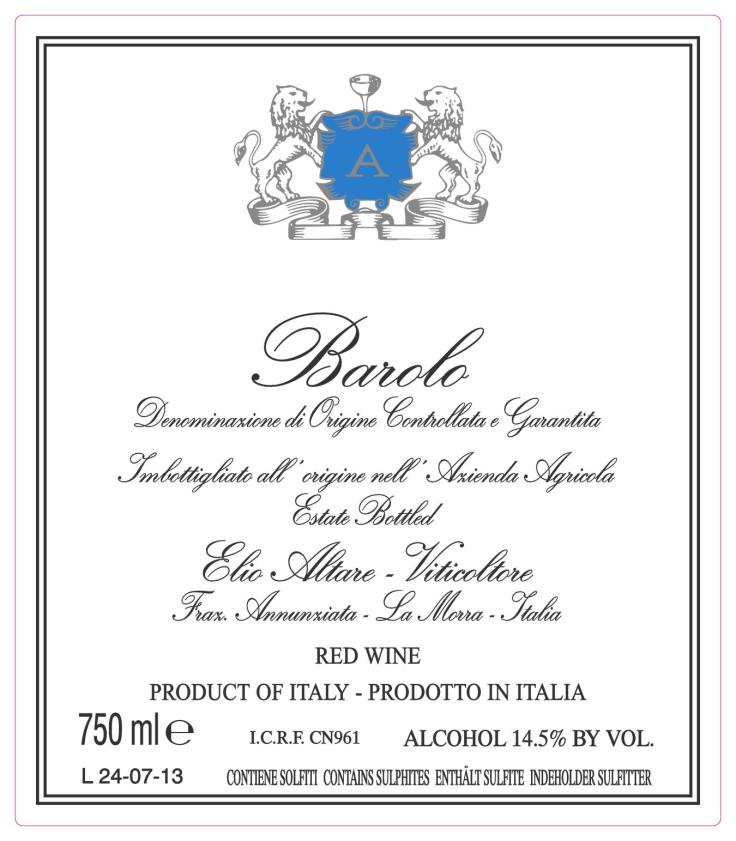
Barolo
BASIC INFORMATION
Product name: Barolo Grape: 100% Nebbiolo Classification: DOCG Number of bottles produced: 10,000 Color: intense ruby red with garnet reflections Fragrance: red fruit, raspberry, redcurrant, wold roses that evolve into licorice and spice notes Taste: elegant, persistent with long finish ans soft tannins Food pairing: red meat, aged cheese
VINIFICATION (Wine-making)
Method: maceration on the skins for 4/5 days in rotary fermentors with temperature control Ageing: 24 months in french barrique
VINEYARD
Soil: various Exposure: south, south-east Age of plants: from 20 to 30 years
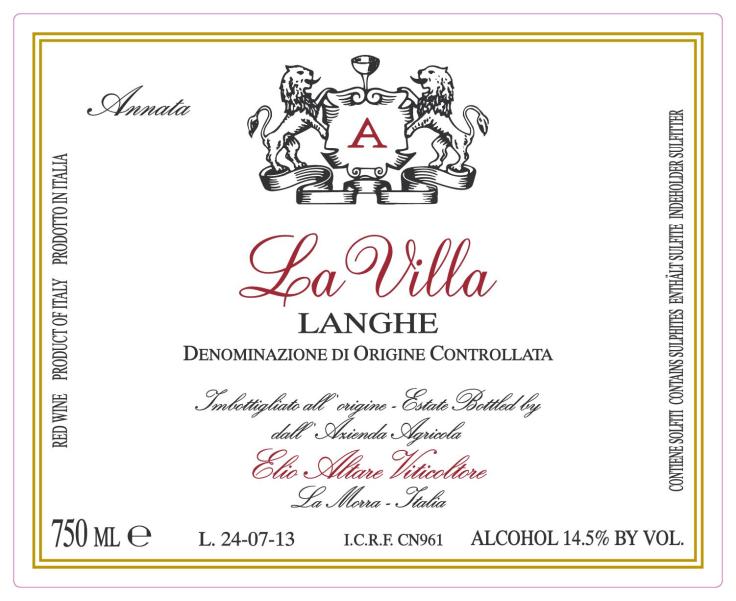
La Villa
La Villa is a blend of nebbiolo and barbera grapes, which gives the best of both worlds; tannins and acidity.
BASIC INFORMATION
Product name: Langhe La Villa Grape: Barbera & Nebbiolo Classification: DOC Number of bottles produced: 2,500 – 3,000 Color: intense ruby red Fragrance: plums, berries, rose petals Taste: fresh, well balanced tannins, pleasant acidity from the barbera Food pairing: pasta, charcuterie, meat
VINIFICATION (Wine-making)
Method: maceration on the skins for 3/4 days in rotary fermentors with temperature control Ageing: new french barrique for 18 months
VINEYARD
Soil: clay and tufa stone Exposure: south-east Year of plantation/age of plants: various
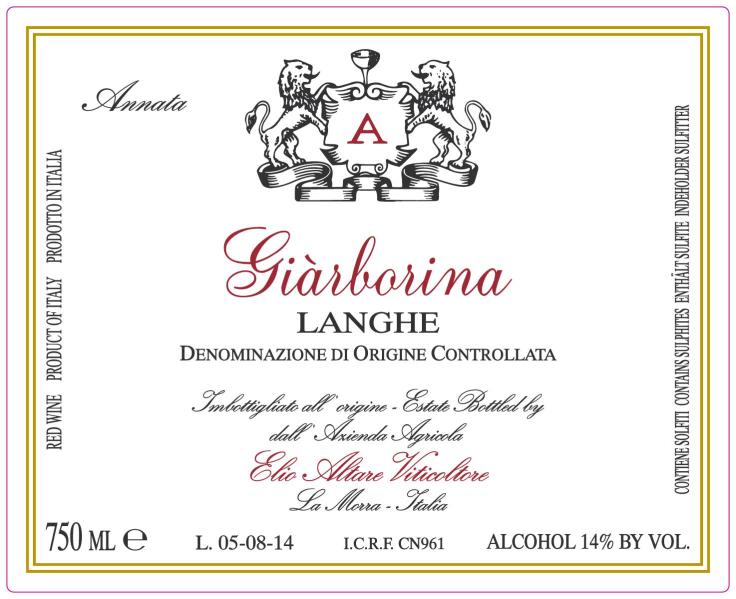
Giarborina
A “baby barolo”, somewhat in the middle of a langhe nebbiolo and a barolo, made with grapes from the Arborina vineyard.
BASIC INFORMATION
Product name: Langhe Giarborina Grape: 100% nebbiolo Classification: DOC Number of bottles produced: 2,000 – 2,500 Color: ruby red with garnet reflections Fragrance: intense balasmic notes, aromas of fruit, rose petals Taste: red fruit, raspberry, persistant Food pairing: red meat, soft to medium aged cheese
VINIFICATION (Wine-making)
Method: maceration on the skins for 3/4 days in rotary fermentors with temperature control Ageing: new french barrique for 18 months
VINEYARD
Soil: clay and sand Exposure: south, south-east Year of plantation: 1948, 1989
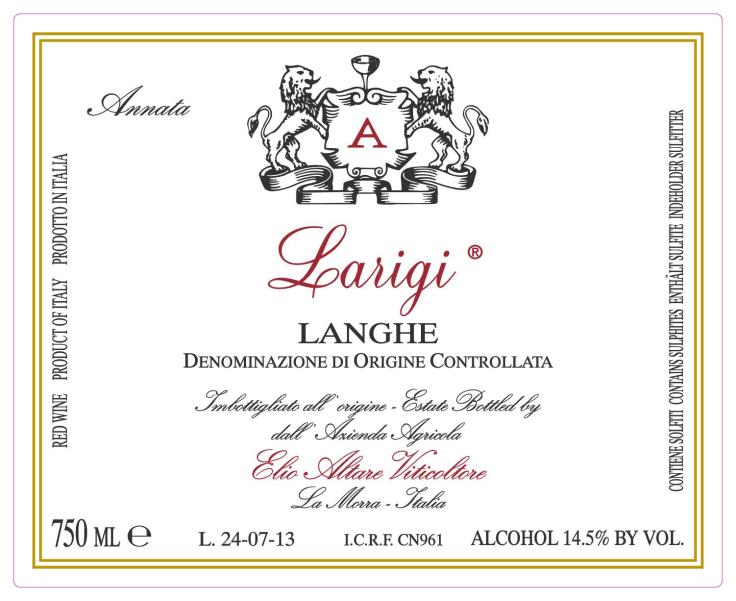
Larigi
Could also be called a “barbera superiore”, but I prefer the name Larigi. The vineyeard is located next to the winery. A “single vineyard” barbera named Larigi.
BASIC INFORMATION
Product name: Larigi Grape: Barbera Classification: DOC Number of bottles produced: 2,500 – 3,000 Color: dense purple red Fragrance: small red fruits, very persistent Taste: warm, soft, intense, silky tannins, pleasant acidity, red berries Food pairing: grilled meat,c heese and salami
VINIFICATION (Wine-making)
Method: maceration on the skins for 3/4 days in rotary fermentors with temperature control Ageing: new french barrique for 18 months
VINEYARD
Soil: clay and sand Exposure: south, south-east Year of plantation/age of plants: 1948
Product name: L’Insieme Grape: various Classification: Number of bottles produced: 1,500 Color: intense ruby red Fragrance: spicy and intense Taste: big structure, taste is much more “international”, spicy and herbal Food pairing: red meat, game, cheese
VINEYARD
Soil: various Exposure: various Age of plants: 10 to 30 years
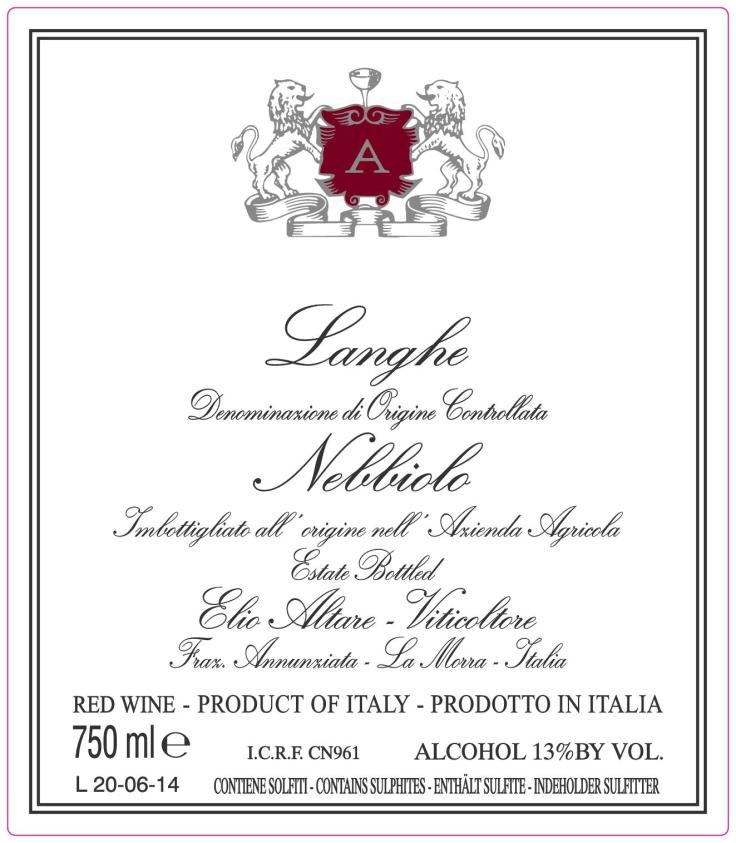
Langhe Nebbiolo
BASIC INFORMATION
Product name: Langhe Nebbiolo Grape: Nebbiolo Classification: DOC Number of bottles produced: 8,000 Color: intense ruby Fragrance: rose petals and red fruits Taste: Tannins, but not dry. Red fruits and good acidity Food pairing: antipasto, pasta, red meat
VINIFICATION (Wine-making)
Method: maceration on the skins for 3/4 days in rotary fermentors with temperature control Ageing: 5 months in aged french barrique
VINEYARD
Soil: calcareous but also sandy Exposure: various, south-east, east Age of plants: 20 to 50 years old
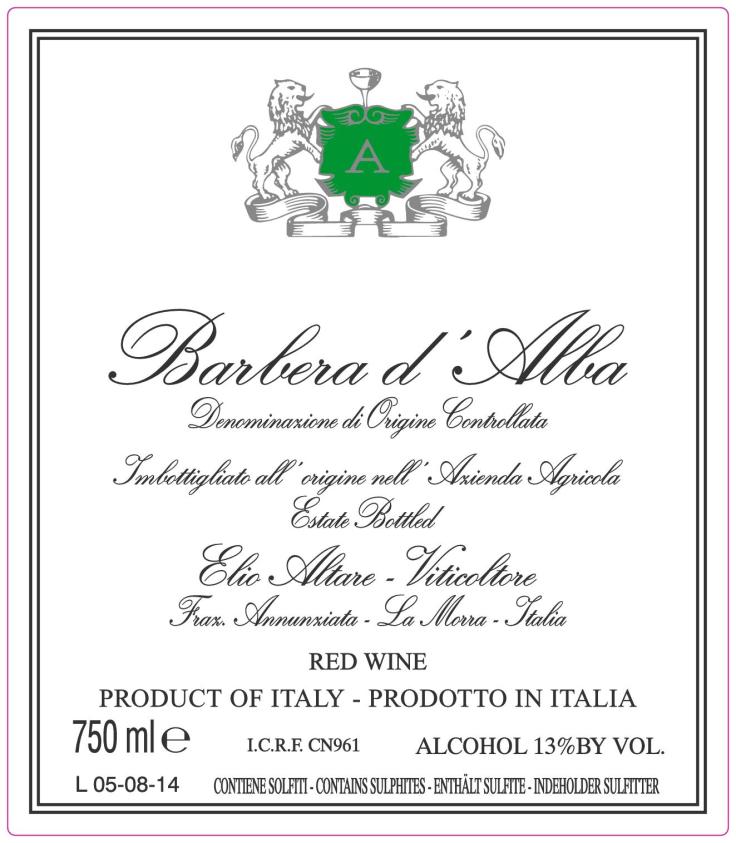
Barbera d’Alba
BASIC INFORMATION
Product name: Barbera d’Alba Grape: Barbera Classification: DOC Number of bottles produced: 15,000 Color: ruby red with violet reflections Fragrance: violets and black cherry Taste: full bodied, good acidity, dark red fruits Food pairing: antipasto, pasta, fatty cheese and salami
VINIFICATION (Wine-making)
Method: maceration on the skins for 3/4 days in rotary fermentors with temperature control Ageing: 5 months in aged french barrique
VINEYARD
Soil: calcareous but also very sandy Exposure: various, east, north-east Age of plants: 10 to 30 years old
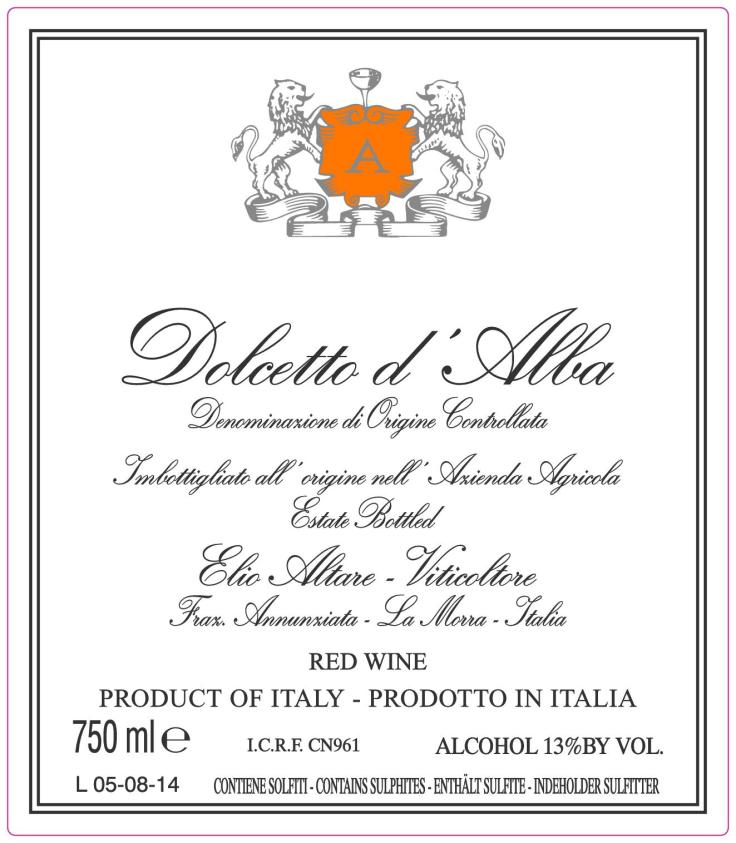
Dolcetto d’Alba
BASIC INFORMATION
Product name: Dolcetto d’Alba Grape: Dolcetto Classification: DOC Number of bottles produced: 18,000 – 20,000 Color: intense violet Fragrance: violet and black cherry Taste: cherries, black cherry, medium-bodied, easy to drink Food pairing: antipasto, pasta, light cheese, pizza, panini
VINIFICATION (Wine-making)
Method: maceration on the skins for approximately 2 to 3 days maximum in rotary fermentors with temperature control Ageing: stainless steal tank for about 10 months
VINEYARD
Soil: calcareous but also very sandy Exposure: various, mostly north and north-east Age of plants: 20 to 40 years old
Altare Winery
Frazione Annunziata 51, 12064 La Morra elioaltare@elioaltare.com +39 0173 50835
Cover photo: Elio Altare Website Labels: Elio Altare Website Other photos: Oda Randmæl Text: Oda Randmæl & Toni Fadnes
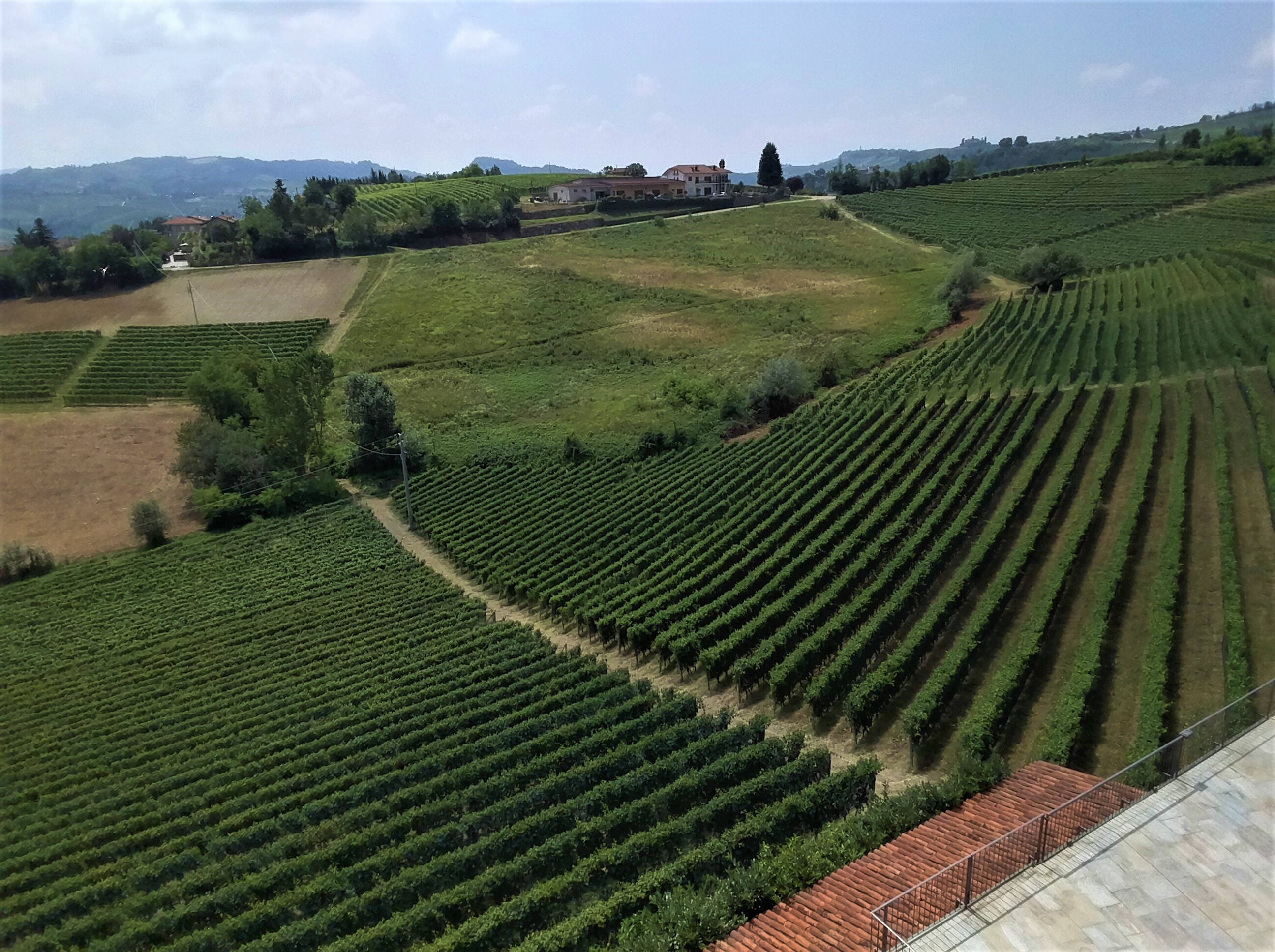
Cru – most of us are familiar with them, right? If not, a cru indicates a certain vineyard. And each cru has specific characteristics based on soil, altitude and exposure. When it comes to different cru, I think Arborina might be one of my favorite! It helps that many of my favorite producers make Barolo Arborina, like Altare and Giovanni Corino.
Arborina is known for it’s elegance and freshness. It is one of the more “feminine” wines, with a intense bouquet of fruits and berries.
Location: Frazione Annunziata
Size: 10.81 hectares
Soil composition: marna stone with clay, limestone and sand
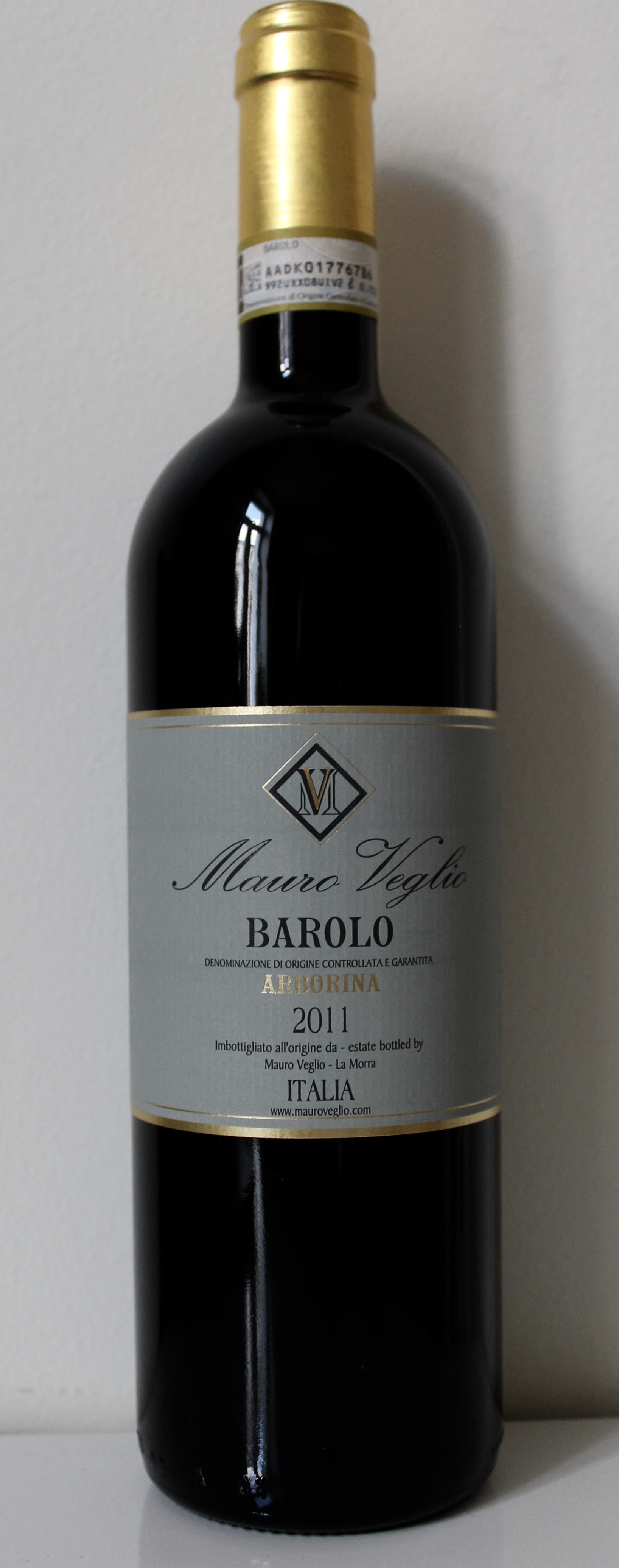
If you follow me on Instagram or Facebook, you know I spend a lot of time with Mauro Veglio and his wife. And you probably also know that I am a huge fan, not just of their wines but of them. And their Barolo Arborina is no exception. 2011 was a good year, especially for my palate. So it’s no surprise I love their Arborina from that year. Barolo’s are heavy, and I struggle with the tannins, and although this wine has tannins, it’s very well balanced!
Wine: Barolo Arborina
Producer: Mauro Veglio
Region/Appellation: Piemonte, Italy
Grape varieties: nebbiolo
Vintage: 2011
Eye: dark ruby color
Nose: strawberries, floral, blackberries, licorice, hint of tobacco
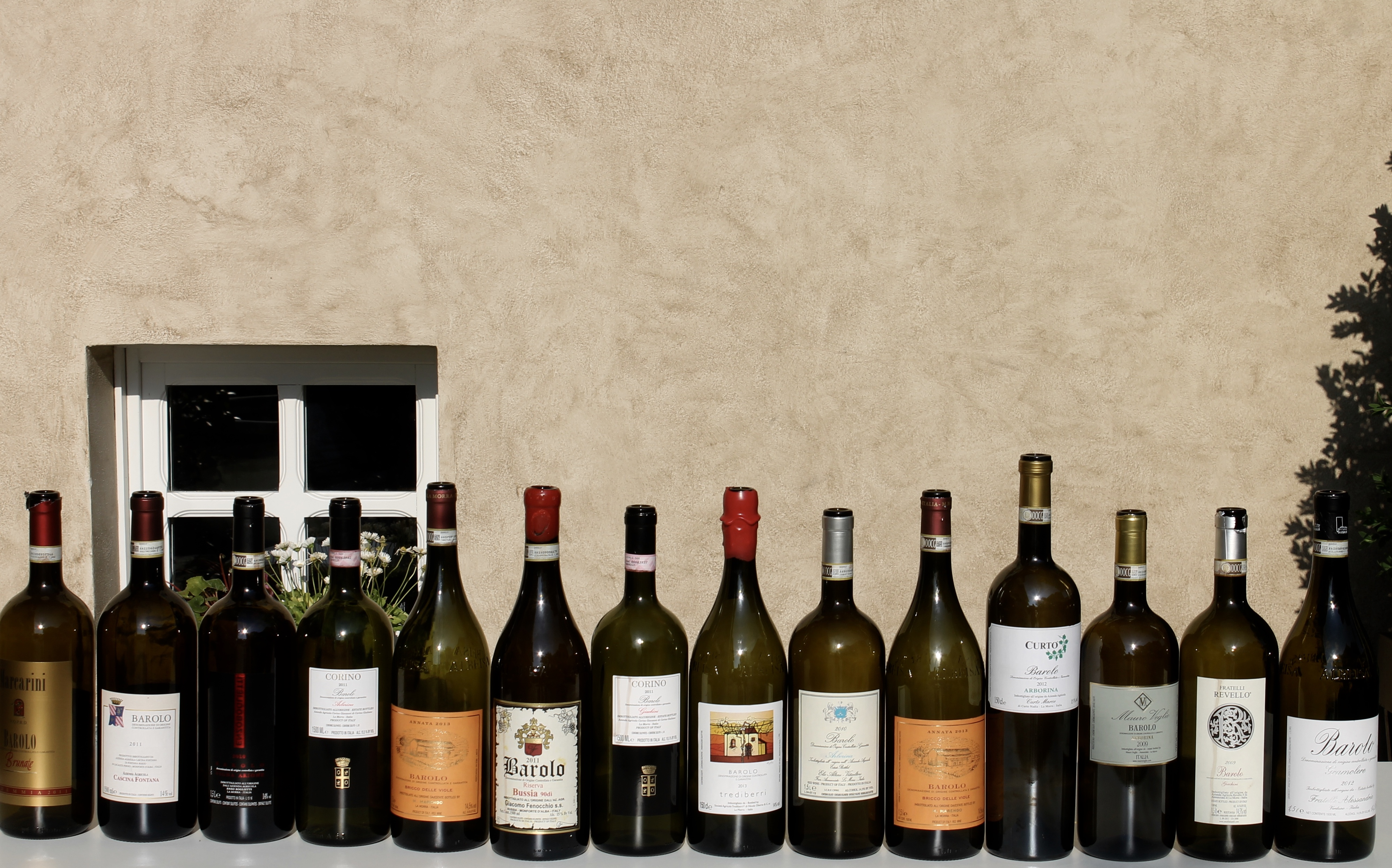
This past week was a little special, because my dad (Signor Tony) turned 50! The wine consumption was slightly higher than usual, as you can see in the foto below, and the wines were incredible. This picture is from the “infamous” Pylsa & Barolo, which was located in Barolo this year. And another special feature this year was the bottles: all magnum!


 PIEMONTEGIRL