On the list of “International Days”, one of the more important ones to celebrate is International Women’s Day. Although many corners of the world have come a long way when it comes to gender equality, we still have a long way to go. And everyone can make an effort here. Gloria Steinem said it best when she said: “The story of women’s struggle for equality belongs to no single feminist nor to any one organization but to the collective efforts of all who care about human rights.”
When women aren’t present, we must ask: “If not, why not?”
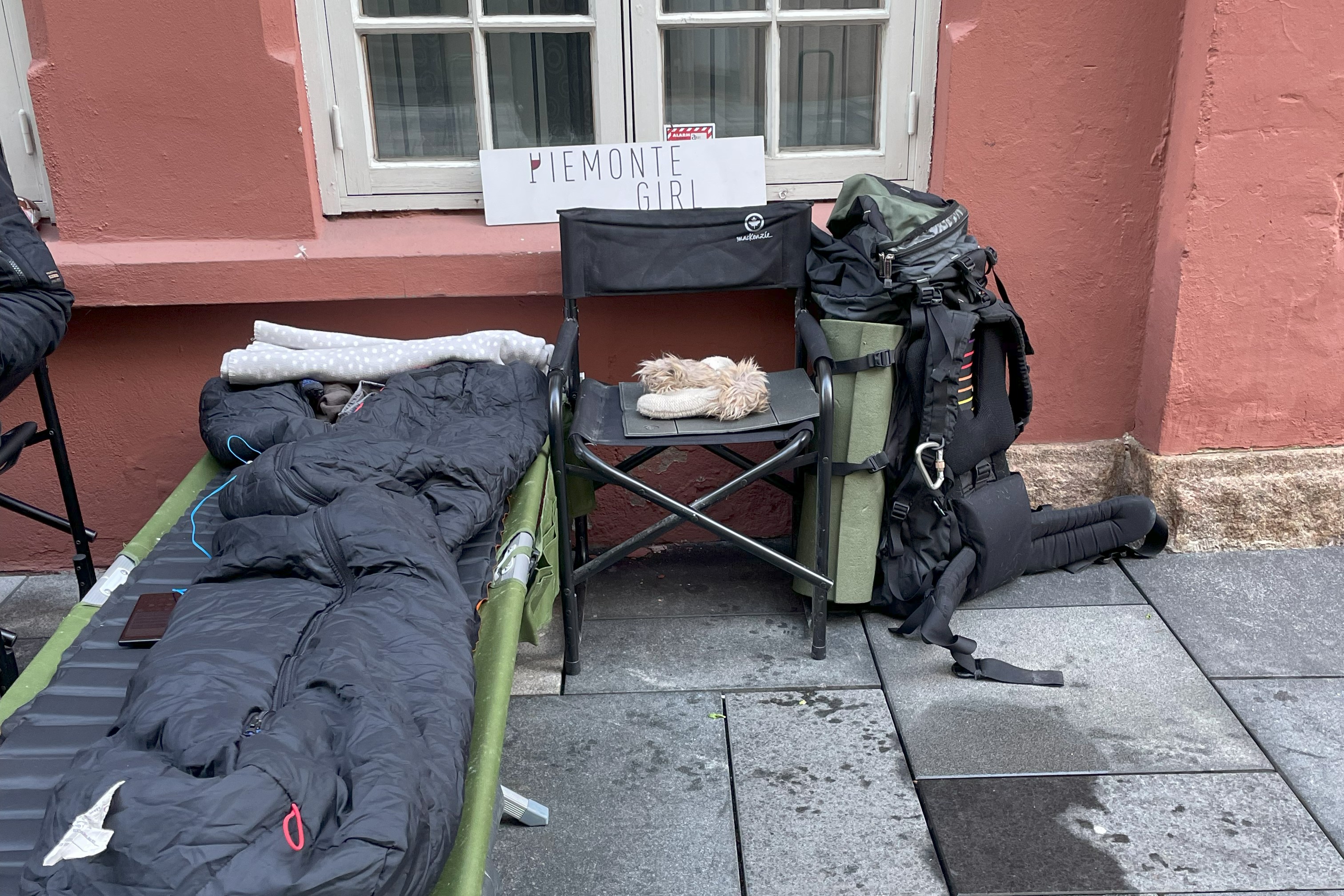
Every february, I spend a few nights camping outside Vinmonopolet at Aker Brygge, for the annual Burgundslipp. I am usually 1 of 2 women, or the only woman. And the other women are usually there with their fathers or boyfriends. As the number of people grow, the number of women does not. It’s been like this all of the five times I’ve participated in this yearly circus. And I’ve always wondered why. Are women less interested in getting their hands on rare wines from burgundy? Or is it the weather? Are women less likely to camp outside in Norway in February? Or is it because they don’t feel safe camping on the streets in a big city? I honestly don’t know.
Regardless of the reason, it’s strange. And a bit sad. But what’s worse, is the number of times I got asked “which number is your boyfriend in the queue?” or “who are you visiting?”. The assumption being that I was not in the queue myself. Even the media covering the release assumed I wasn’t in the queue. A journalist standing in front of me looking around, asked her cameraman who they hadn’t talked to yet, then pointed to two young men right behind me and proceeded to shove past me, as if I wasn’t even there. And not to bring up a separate issue, but why talk to yet another pair of bottle flippers, instead of one of the only women in the queue?
Even when I was inside the store, with my ticket, waiting in line to get my hands on the wines behind the counter, a Vinmonopolet employee questioned my participation. To the man before me, he simply asked “Can I see your ticket?”, whereas when it was my turn, he asked “Do you have a ticket?”, as if I had ended up there by taking a wrong turn or something. What the fuck is that about?
And all these relatively insignificant examples show that we still have a long way to go. Because there are many worse things happening to women today. In some corners of the world, only 40% of girls finish secondary school[i]. Of all the Fortune 500 companies, only 10.4% have a female CEO[ii]. And don’t get me started on how women’s rights are being downright violated in the US these days. And while I can’t single-handedly solve any of these problems, I can do everything in my power to fight for women’s rights and equality for women.
Women in Wine
One way I feel like I can contribute, is to support women in wine. So, in honor of International Women’s Day, I am shining an extra light on female winemakers and women in the world of wine. And thankfully, there are quite a few. But I mean, why shouldn’t there be?! Today there is absolutely no reason why there should be more male winemakers or more men in this business. I know that back in the day it was considered more suitable for men, mostly because the work was very physical. I personally think this is a stupid excuse to keep women from working in a winery, even back then. But today, with the tools and equipment available, it’s an argument that can no longer be used.
And we see it more and more: women in the world of wine. Just the past few years quite a few young female winemakers have turned up on my radar. Lalu, Cadipress, Philine Isabelle, Prandi – and that’s just in Langhe. In addition to the new arrivals, we have to remember all those who came before. Women who have paved the way, and not just winemakers. But women in all aspects of the wine industry! And although we’ve come a long way in many parts of the world, many women still have to fight for their rights every day.
And that’s why it’s important to celerbate International Women’s Day. “Together we can forge gender equality. Collectively we can all #AccelerateAction.”
It started the summer of 2011. I was on vacation with my family and some family friends. A beach vacation type thing, with a whole lot of relaxing and sunbathing. And for those who know me, know that I can’t lay around on a sunbed for very long. So when my dad, who had already started his wine journey, invited us on an outing to meet a winemaker, I didn’t hesitate to say yes.
And so I learned my first ever full Italian phrase, asked for the next ferry to Corniglia, and off we went. I remember approaching the dock in Riomaggiore (we weren’t going to Corniglia…) and seeing this small figure in a straw hat waving at us. This eager man was Elio Altare. He greeted us, and quickly headed toward the little town. We soon found ourselves trailing Elio, who was walking at an incredible pace, through the winding streets of Riomaggiore, sometimes so narrow that my shoulder would brush against the walls. This journey brought us to a truck, which in turn brought us to the top of a hill.
We climbed out, and began the descent toward the ocean. Mind you, I am wearing a short blue dress and beige ballerina shoes, not exactly dressed for the occasion. And while we are tumbling down this steep hill, Elio causally calls out “Watch out for wild boars. They are very dangerous.” while continuing down the hill. We all look at each other, but there’s no time to process this information if we want to keep up with him. But I soon found myself on the cliffs of Cinque Terre, watching Elio tend to his vines while he told us about the magical world of wine.
This probably sounds cheesy, but listening to what has to be the most passionate person I’ve ever met talk about the circle of life on the cliffs of Cinque Terre was a game changer. Wine became so much more than that disgusting red liquid my parents sometimes drank at dinner. He opened up a whole new world, filled with wonderful tastes, interesting people and incredible adventures.
Fast forward 8 years. After a lot of nagging from my friends about how I should do “this” professionally, I started seriously thinking about it. But what was I going to do? Did I want to import? Be a journalist? Event planner? Tour guide? Arrange tastings? I had no idea. So I reached out to some people in the business. And I will forever be grateful to those who took the time to talk with me. I will never forget how Merete Bø spent 40 minutes on the phone with me, answering any and all of my questions. Or Hege Pedersen-Fröjd who took the time to meet with me and give me insight into the import business. And thanks to them I did get a little closer to figuring out what I wanted to do.
February 27th 2019
It’s February 27th, 2019, and I have just submitted the documents to start my own company. I skipped a bunch of stuff here but just imagine 8 years filled with all kinds of wonderful wine moments, from working at a vineyard in La Morra to taking a wine course at college. I had also started a website where I wrote some stuff. I didn’t really know what I wanted to do, I just knew I wanted to work with wine.
So I began organizing wine tastings, arranging trips to Piemonte and inviting winemakers to Norway for promotional events. I was also writing a little bit, and started getting invitations to tastings with importers. It was looking good. But if you take a look at the date, most of you will see what is about to hit me. Hard. Covid. 2020 rolls around, and come March, I have to cancel everything I had planned. And as we all know too well, this would go on for a while. I started digital zoom sessions with winemakers, which kept me busy, but I was basically toast.
Things eventually opened back up, obviously, but to be honest Piemontegirl never really recovered. I got other jobs, which meant I didn’t have the same amount of time to dedicate to it, and so it sort of just exists now. Every now and then I organize a trip or host a tasting, which I love. I pay bills and report the minimal earnings to the government, but I am not sure what the future looks like.
Bright future?
If I am being honest, this business is brutal. For several reasons. If you know, you know. And I don’t know if I have the fight in me.
I won’t dwell on this, mostly because it doesn’t do me any good. Instead, I am going to focus on the poistive. Like the many wonderful people in the business, who are kind, welcoming, including and passionate, like the people at Moestue. And then there are the winemakers of course. The ones who make it possible for all of us to do what we do. I think sometimes we forget about them a little and take them for granted. So here’s a friendly reminder to not.
Piemontegirl tuned 6 this year. I don’t know what the next year, or next 5 years will bring, but I will keep doing the things I love. Drinking wine with good friends. Eating good food. Travelling to Piemonte to learn from winemakers. And I’ll keep telling people about the wonderful world of wine.
There’s not much that hasn’t already been said about Roberto Voerzio. But if I were to try and describe Roberto with one word, the word that comes to mind is “profound”. Yes, he’s a winemaker. Or, more aptly, a winegrower. But he’s so much more. He’s a farmer. A father. A grandfather. A wine lover. And it’s obvious he loves what he does. Hearing him talk about wine is like listening to a great piece of art. And I feel lucky to have had that opportunity.
There are many well-known winemakers in Piemonte, but the winemaking style of Roberto really stands out. Many years ago, the “Barolo Boys revolution” brought about a new approach to winemaking. I won’t go into too much detail right now, but the very general gist is: smaller barrels, shorter maceration, green harvest, and cleaner workspaces. Now, why am I bringing this up right now? Well, it’s mostly to talk about green harvest.
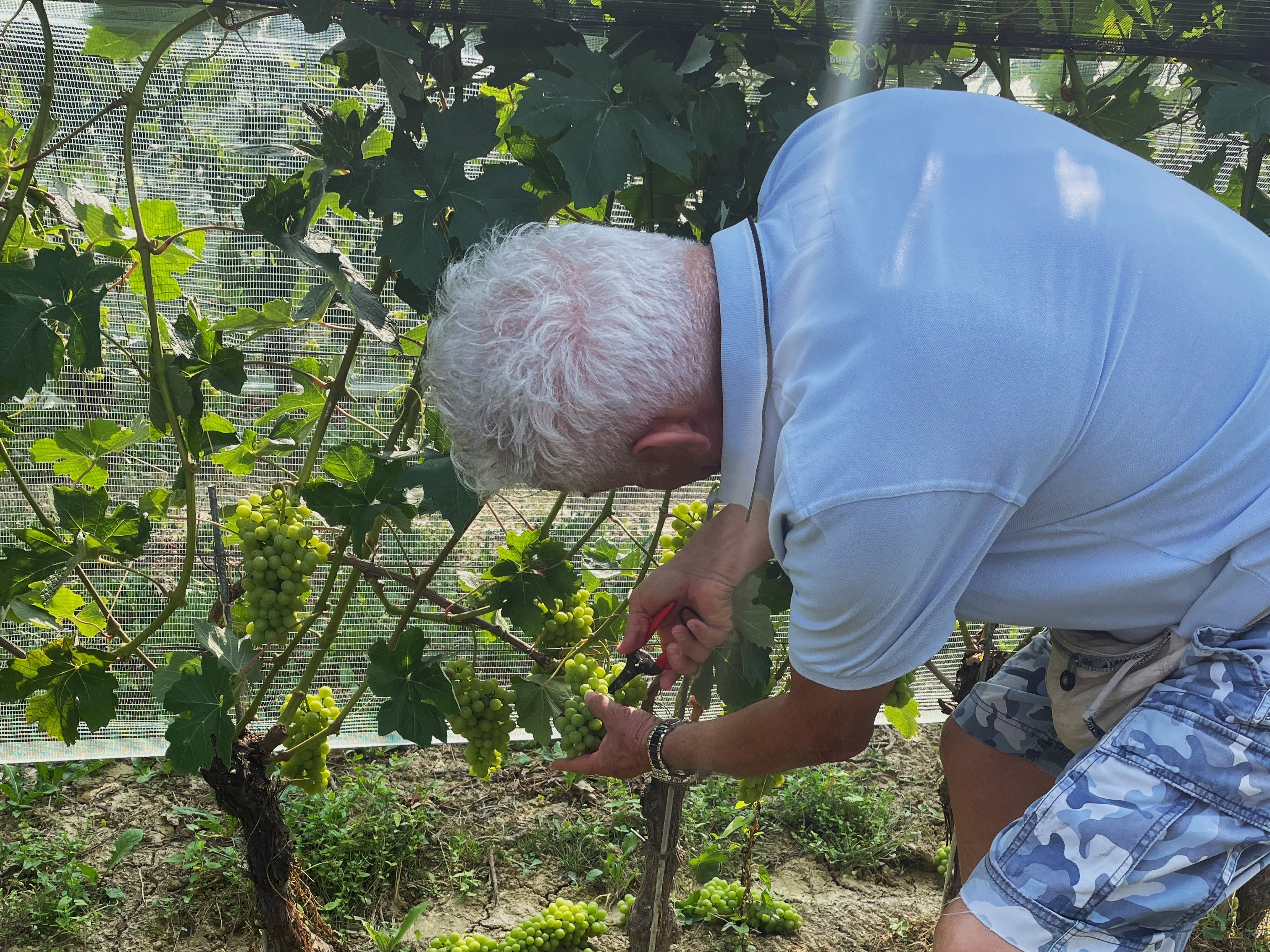
Don’t know what green harvest is? Not to worry, I’ll explain. When a winegrower does green harvest, it means that they are removing grape clusters from the vine. They do this to give the remaining grape clusters even more nutrients. The mindset here is quality over quantity. But imagine you’re a poor farmer, scraping by, and your daughter comes home and starts cutting away grapes that could be used to make wine. Let’s just say it was quite an adjustment.
Today, green harvest is a common practice across the board. And after a little detour, we’re about to get to the point. Because Roberto Voerzio has taken the concept of green harvest to the extreme. He cuts away more grapes than any other farmer (that I know of). Now, you could potentially get at least 1,800g per vine, probably even more. But for his Pozzo, he leaves only about 300g of grapes per vine. 300grams! It’s definitely one of the more extreme examples, but Roberto’s wines are some of the most concentrated wines I’ve encountered in Langhe.
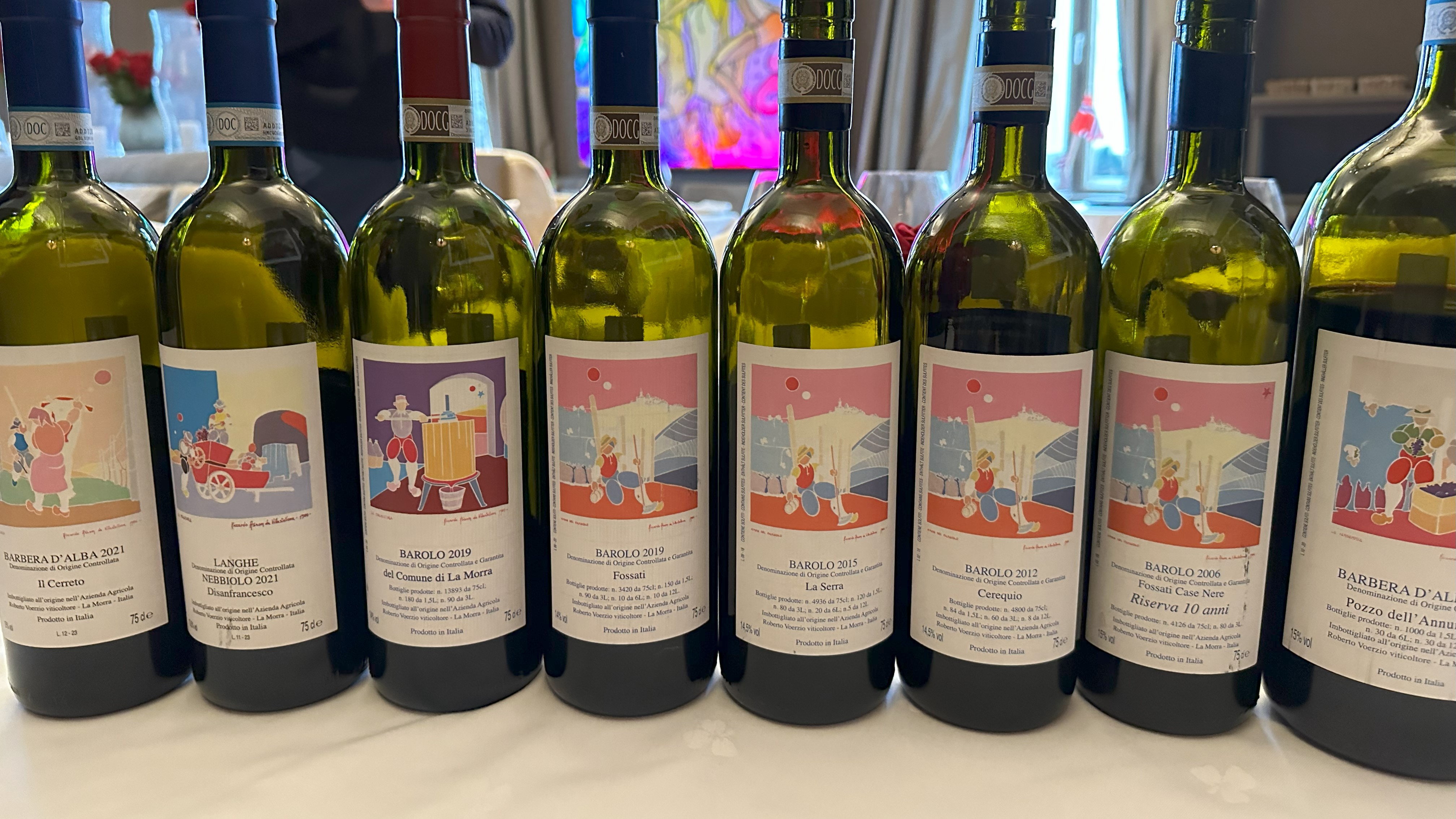
Roberto Voerzio Barbera Il Cerreto 2021
Beautiful nose. Very aromatic. Very concentrated with aromas of dark red fruit. Also quite concentrated in the mouth. Almost felt like I was eating frutti di bosco. In the best way. Long finish.
Roberto Voerzio Langhe Nebbiolo 2021
Not as aromatic as the Il Cerreto, and has aromas of more mature red fruit. Quite fresh. Smooth tannins.
Roberto Voerzio Barolo del Comune di La Morra 2019
The Barolo del Comune di La Morra is made with grapes from 4 different vineyards: Case Nere, La Serra, Fossati and Cerequio. It was a bit closed on the nose at first but opened up very well in the glass. Fruity with smooth tannins.
Roberto Voerzio Barolo Fossati 2019
A beautifully elegant wine. Aromatic and intense. Tannins are quite robust. This might be my favorite wine from this tasting. A very impressive wine.
Roberto Voerzio Barbera La Serra 2015
A super aromatic wine with a beautiful nose. Intense and dense. Tannins are a bit “sharp” at first, but disappear and leave you with a round, elegant wine.
Planning to visit Piemonte? Looking for recommendations, suggestions & tips? Then you’ve come to the right place.
With over a decade of experience in Piemonte, I am prepared to help make your trip extraordinary. I promise to do absolutely everything I can so that you have the experience of a lifetime.
Visit Piemonte
I can help you
Find accommodations
Book winery visits
Book lunches and dinners
Organize activities – biking, hiking, truffle hunt, cooking class, and more
I can fully & honestly say: you really made our trip to Piedmont!!! I can’t thank you enough for the winery recommendation and the wonderful list of restaurants you told us about, including which had wonderful views. We have been to Piedmont many times already but you had the magic list that we actually never would have thought about. Your recommendations ended up being the highlights of trip. Grazie mille and we will gladly be in touch next time for more advice.
SARAH FROM FRANCE
We traveled to Piemonte for our honeymoon and had the most incredible time thanks to Piemontegirl! She helped us plan everything for the trip and it was just perfect. We loved the hotel she recommended along with the restaurants and wineries she helped us book. We highly recommend her if you are planning a trip to the area!
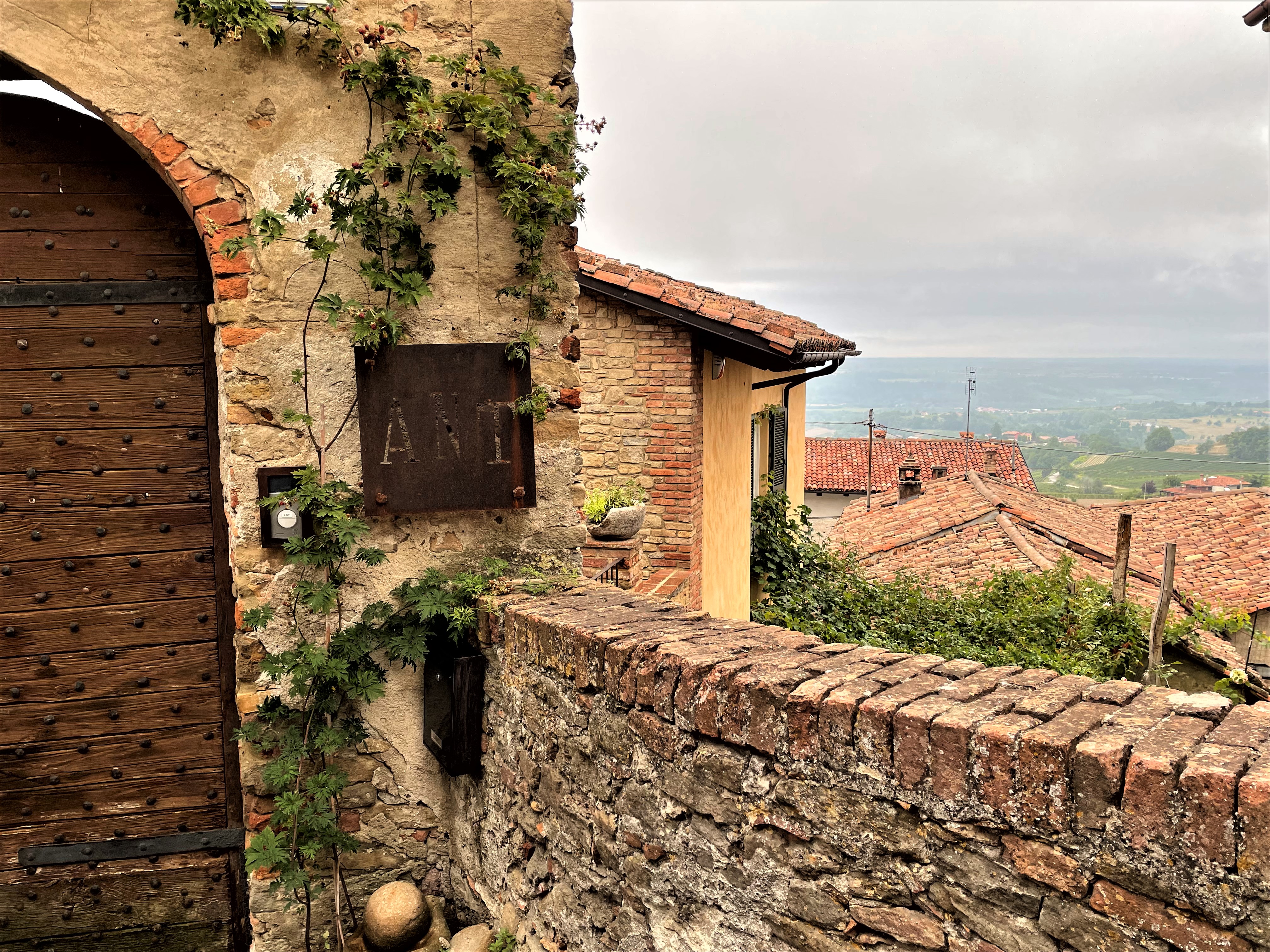
One of the highlights on my trip to Langhe, was the dinner at ANT. Honestly, using the word dinner to describe it doesn’t do it any justice. So let me rephrase: one of the highlights on my trip to Langhe was the incredible culinary experience at ANT. Alex, and the rest of the team at ANT, brought me on a journey that I didn’t even know I needed. And it’s a journey you should take as well.
The Adventure Begins
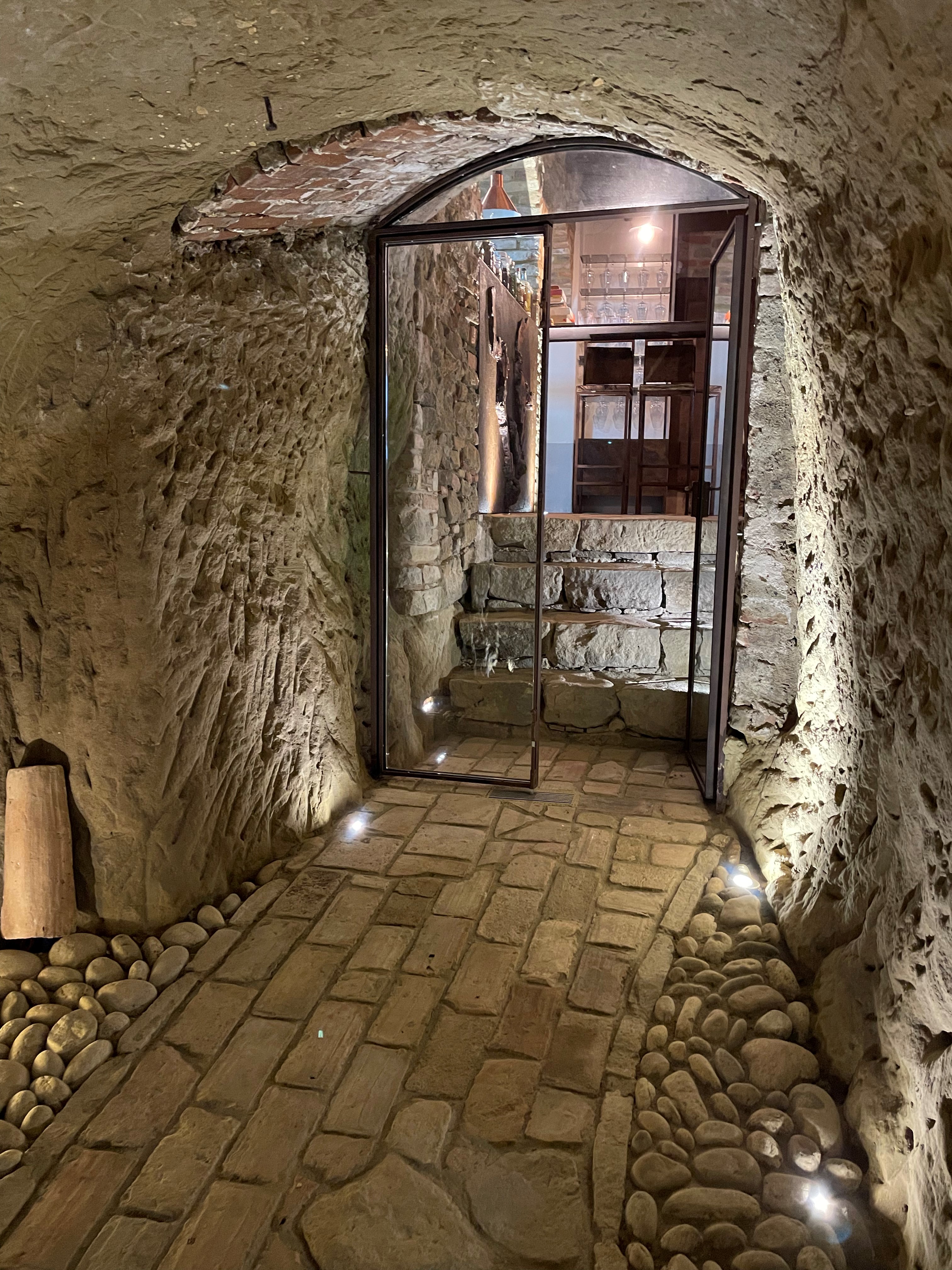
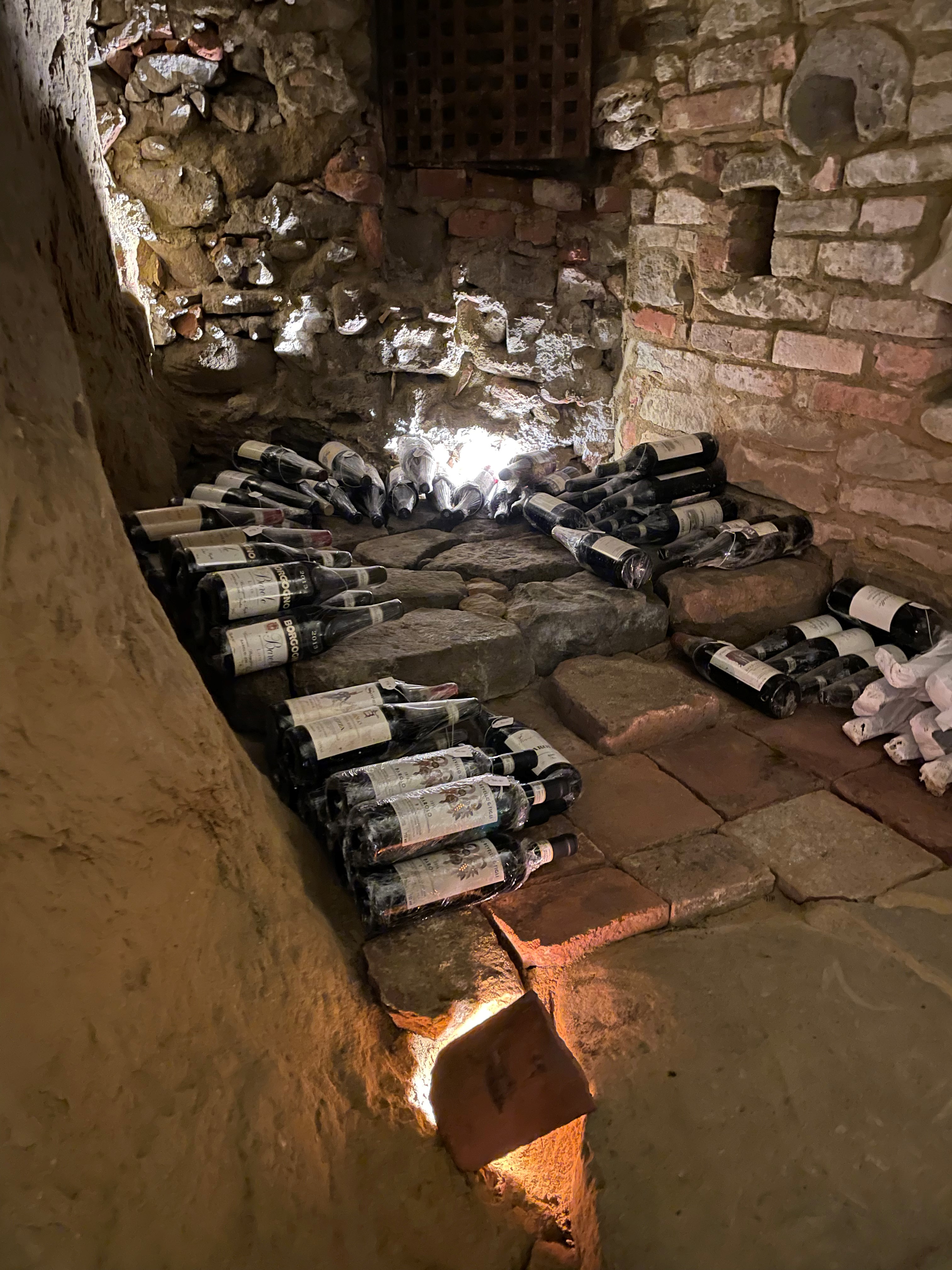
The evening started with a deep dive in their untraditional, mesmerizing wine cellar. ANT does not have a wine list. Instead, you get to pick the wines yourself, from the many options laid out before you. And they are literally laid out – along the pathway, in corners, in the wall. It felt almost like going on a treasure hunt. When you’ve found your bottle(s), you return to your table, and wait for the first dish to arrive.
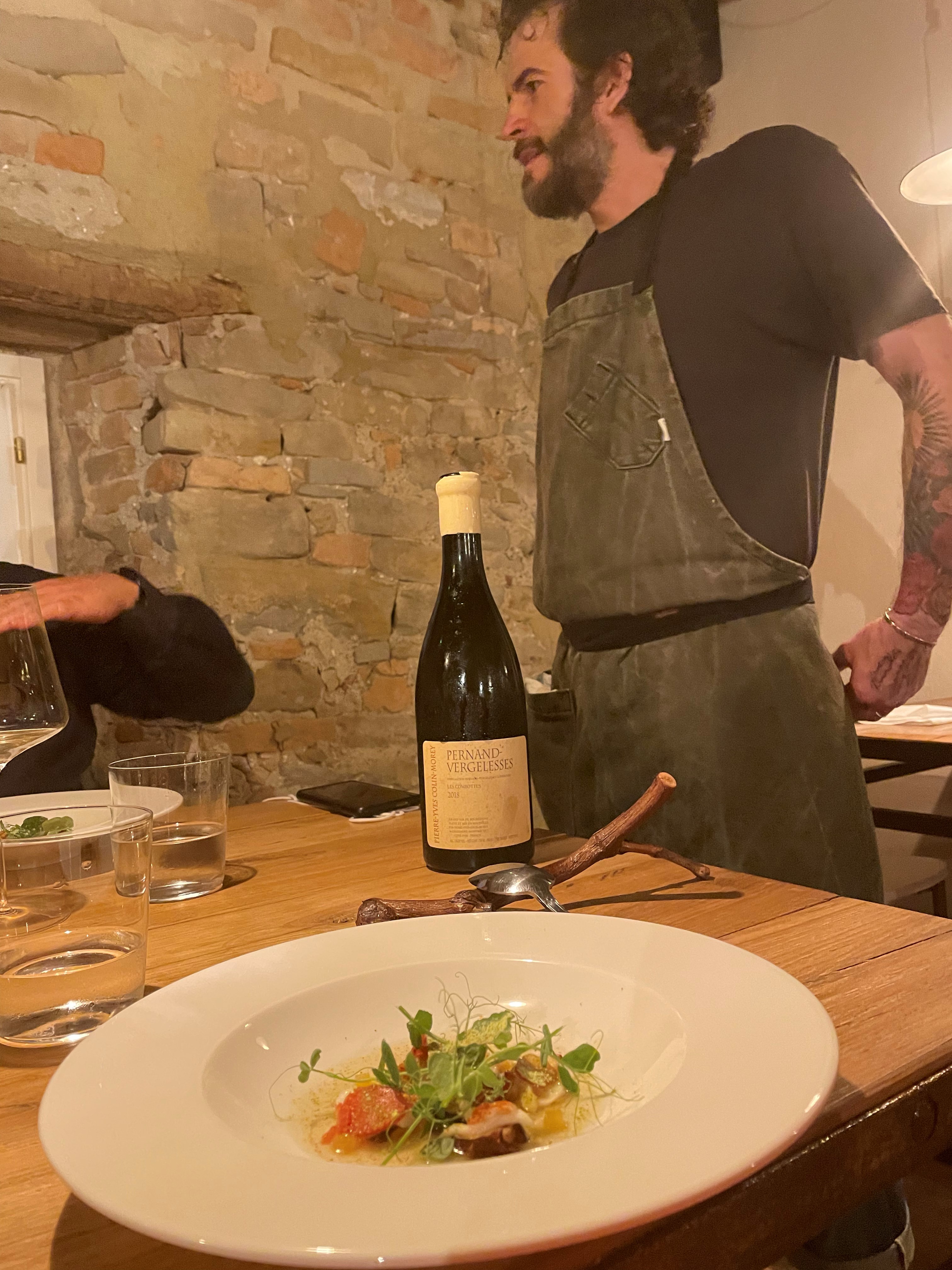
No, I haven’t skipped a step. Just like there is no wine list, there is no menu. So you don’t order. They will just bring you food, one dish after another. Now, here’s where I was quite nervous. Because, believe it or not, I am a picky eater. And to not have the option to pick and choose frankly scared the shit out of me. But I decided to dive in, head first, and just embrace the concept. And I am so glad I did.
The ANT Adventure Continues
The first thing to arrive on the table was a drink, which had been prepared right beside our table. I took one sip, and wasn’t a huge fan. But then the food came. When we asked what it was, Alex told us that they normally don’t tell you what you’re eating until after. Again, my stomach did a summersault, but hey, I had decided to embrace the concept, so I did. Now, back to the drink I didn’t immediately like. With this first dish, which was something fried in a mayo ish sauce, it was a perfect match. And this would be the theme the rest of the evening.
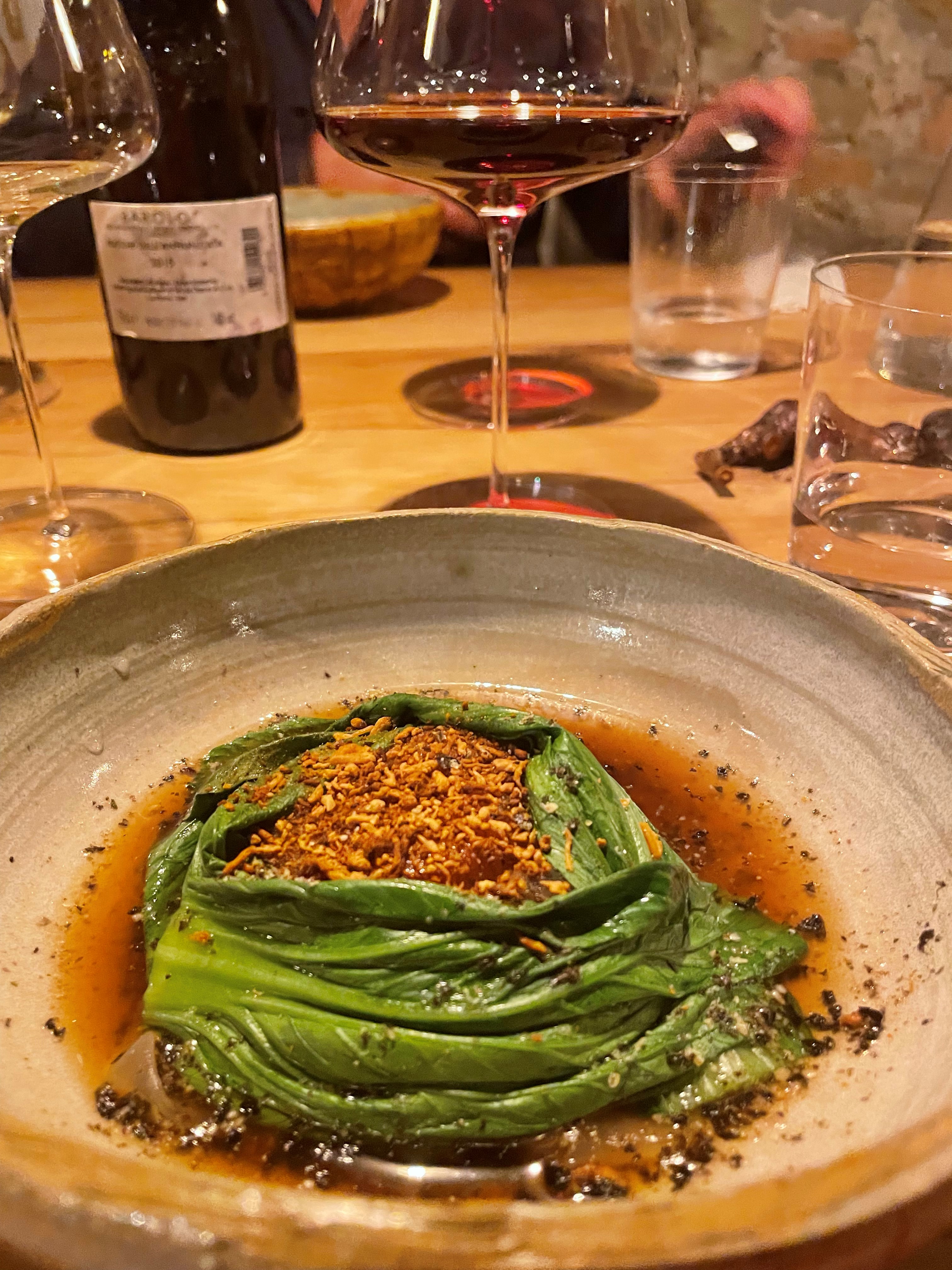
The team at ANT managed to entertain our tastebuds the whole evening, with the most unlikely combinations of ingredients. One dish was a sort of salad with slices of salami, leaves of different sorts, tomato, strawberry, octopus and a clear sauce. Might sound quite odd, but the combination was exquisite. And this comes from someone who does not eat squid.
Throughout the evening I kept having the feeling of “I’m not sure I love it, but at the same time I can’t stop eating it and it’s actually delicious”. Because, again, I am a picky eater, but the food was just so well thought out and prepared, that it didn’t matter that I “normally don’t like this”. It was definitely a night where my tastebuds were challenged and entertained all at the same time. And I will gladly do it again. And again!
The Ingredients
Almost all the ingredients at ANT is locally sourced. It’s also home-made. And they try to not waste any food. The ice cream we had for dessert was made with leftovers from the week before. They even try to use parts of an ingredient that normally would not be used, always keeping it interesting! And the menu changes every week, with no repeats, which means you’ll never eat the same thing twice. Like Alex said, “we cook dishes that feel like the right thing for the time and the moment”.
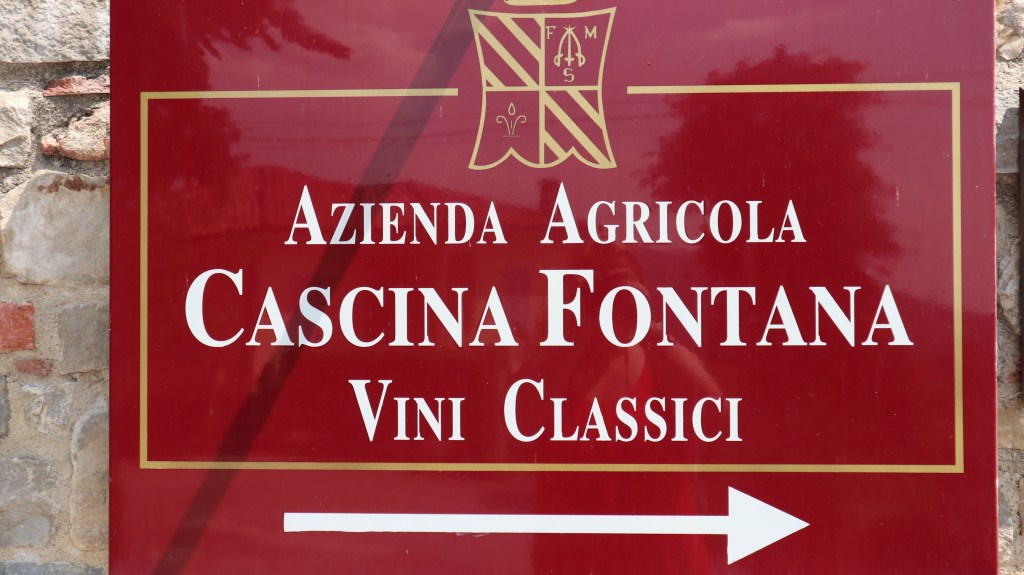
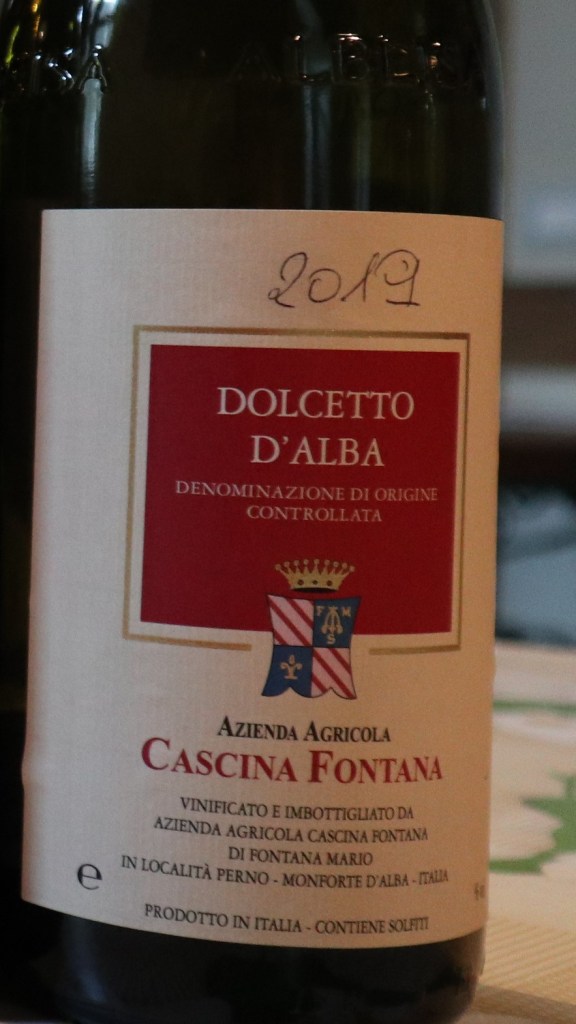
I bet you didn’t know that the Cascina Fontana Dolcetto holds a special place in Mario’s heart! Personally, I think Dolcetto is quite underrated. We don’t give it enough attention. And, as it turns out, the Dolcetto grape is not the easiest to deal with. But that doesn’t stop Mario! During my last visit we spent quite a bit of time talking about Dolcetto. Turns out it’s one of Mario’s favorite to grow. Even if it can be a pain in the a**!
Winemaking
The Cascina Fontana Dolcetto is aged in stainless steel tanks. The grapes come from a vineyard in Sinio, which is outside the DOCG area. The vineyard has soil composed of limestone with some clay. Something that is very important to Mario is the fact that the wine must reflect the vintage. He said this when talking about the 2014 vintage, but it also applies to any other vintage. As you can see below, the Dolcetto has quite different expressions in the separate vintages and I like all of them!
Cascina Fontana Dolcetto Tasting Notes
Dolcetto 2019
In the words of Mario Fontana: “2019 is a great vintage.” You have this perfect Dolcetto nose, good structure and wonderful freshness. I think the 2019 Dolcetto’s are elegant and rich, with more power than 2018.
Dolcetto 2018
As Nicola from Trediberri once said, the 2018 vintage is skinny just like Miley Cyrus. The 2018 Dolcetto is light and fruity – a very drinkable Dolcetto. Lacks the structure you find in 2017 and 2019, but structure isn’t always something you strive for in a Dolcetto.
Dolcetto 2017
Compared to 2019, 207 was a warm vintage, and so the alcohol is a little higher. The 2017 has 13.5% alcohol, but because Mario is such a wonderful winemaker, you cannot taste it!
Cascina Fontana Barolo 2016
You can find tasting notes on the Cascina Fontana 2016 Barolo’s here.
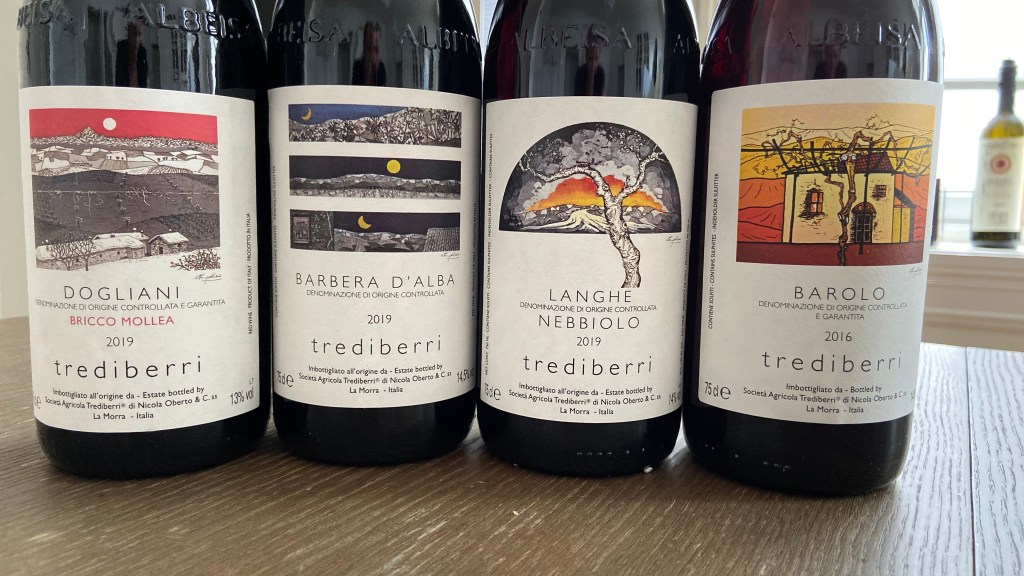
Introducing: Trediberri Bricco Mollea & the new vintages! It’s always exciting when the new vintages are released, and we are all eagerly anticipating the 2016 Barolo’s. But I have to say I am also really excited for the new addition to the Trediberri family – a Dogliani Dolcetto!
The Bricco Mollea vineyard is located in Vicoforte, far south in Langhe. Dolcetto’s from Dogliani tend to be more intense than Dolcetto’s from La Morra, and if you combine the terroir with the 62 year old plants, you get a complex and intense Dolcetto. Note, when I say intense it’s not intense in a bad way. Quite the opposite actually. The Trediberri Bricco Mollea Dolcetto is fruity and rich; a beautiful expression of the grape variety.
Please, every sip you drink, be happy
Nicola
Trediberri Bricco Mollea Dolcetto 2019
The Dolcetto grapes grow in Vicoforte, near Mondovi, in the southern part of Langhe. The vines were planted in 1958, which mean the plants are about 60 years old. It’s a 100% Dolcetto, fermented in concrete.
The first thing I notice is that beautiful Dolcetto nose. And explosion of dark berries. The 2019 vintage seems to be a bit more intense than 2018, and the intensity continues in the mouth. It’s still a fresh and fruity Dolcetto, with a pure expression. A wonderful first edition of this wine.
Barbera d’Alba 2019
Trediberri’s Barbera is 100% Barbera, fermented in concrete tanks. Barbera is known for being lush and bold – it likes hot weather, it likes concentration, it likes being big. But the Trediberri Barbera is more pure. It’s less bold, with a fresh fruitiness. There’s also a very good acidity.
Langhe Nebbiolo 2019
The grapes in the Trediberri Langhe Nebbiolo come from the Berri vineyard, from a vineyard in Alta Langa, and 10% of grapes from Roero to give a hint of perfume.
Consistent with other 2019’s I’ve tasted, the Langhe Nebbiolo has an explosive nose. Very fruity, floral and fresh. Red fruit dominated, but there are notes of roses and tobacco. Firm but elegant tannins that disappear quickly.
Barolo 2016
The Nebbiolo grapes go through a 3 week maceration in concrete tanks. Trediberri Barolo 2016 has a typical Barolo nose: tobacco, tar, roses. It’s a little subtle at first, and needs time to open up. A big wine yet elegant at the same time. As Antonio Galloni said, “This is an especially potent vintage for the straight Barolo, and there is clearly so much going on in the glass; it is a superb wine in the making.”
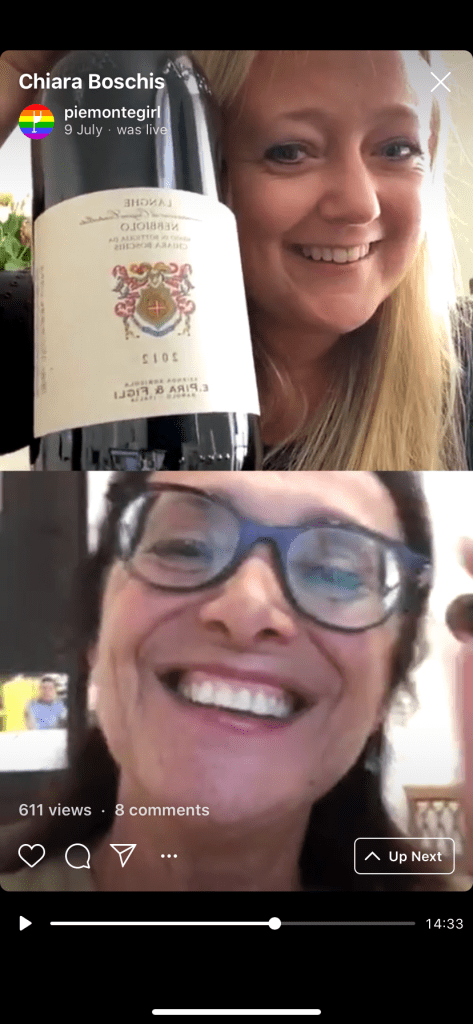
Chiara Boschis has quite a story to tell! After the winemaker from the founding family E. Pira died in an accident and left no heirs, the Boschis family took over the estate in 1981 and continued the winemaking under the name E. Pira. And thus started Chiara’s incredible journey. The winery underwent drastic changes when Chiara took over. The previously traditonal winery became a major player in the Barolo Revolution.
Today, Chiara has 11 hectares split between Barolo, Monforte and Serralunga. She practices sustainable winemaking every step of the way, working hard to take care of the beautiful nature in Langhe. Her brother Giorgio joined the winery along with his daughthers, with Giorgio taking more responsibility in the cellar while Chiara is often found in the vineyards.
Wines
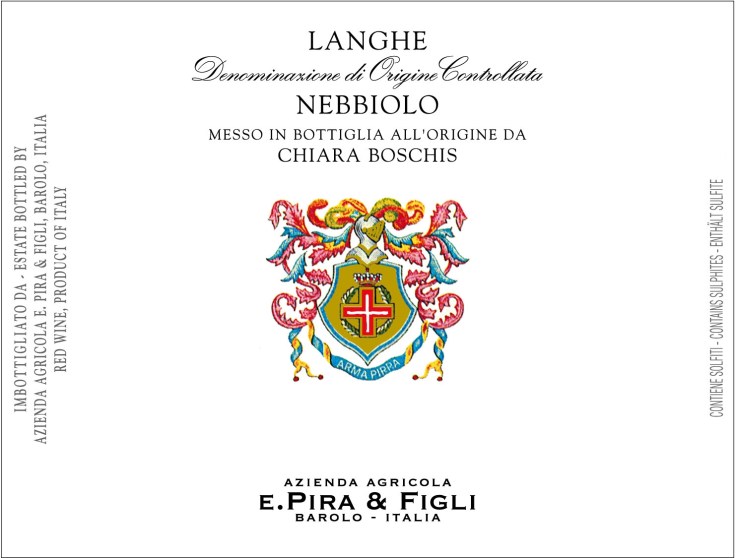
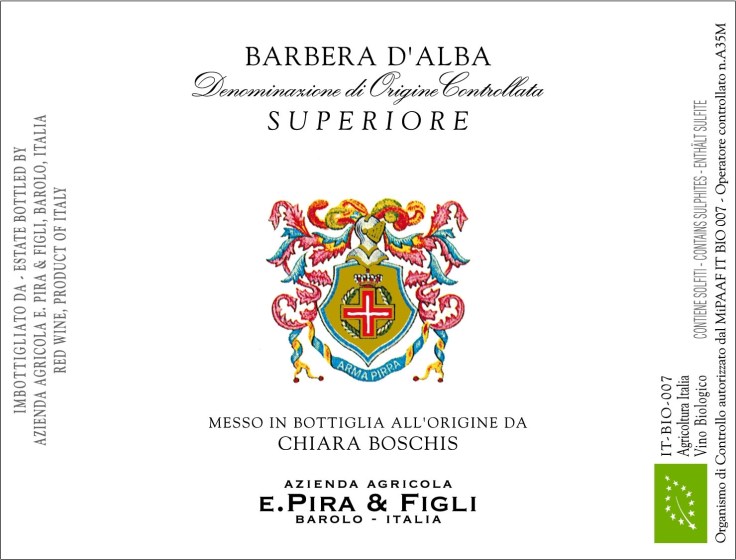
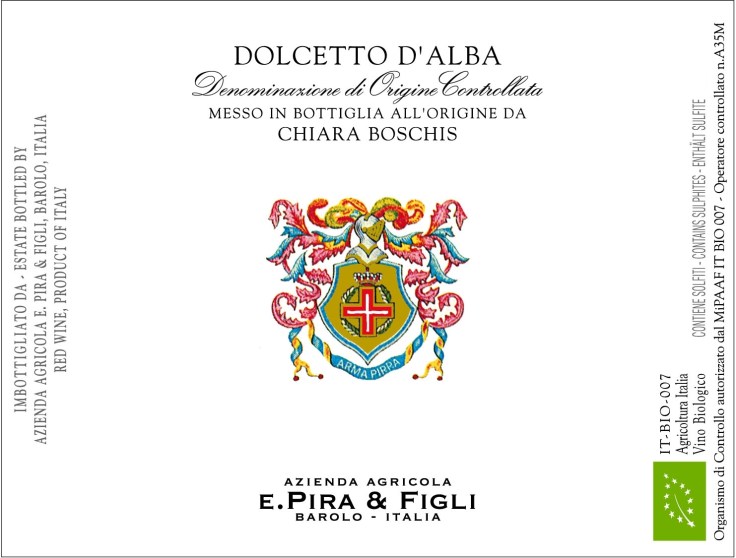
Chiara Boschis makes a Dolcetto d’Alba, Barbera d’Alba Superiore, Langhe Nebbiolo, Barolo Via Nuova, Barolo Mosconi and Barolo Cannubi. Apart from the Dolcetto, all the wines spends some time in small oak barrels. The percentage of new oak varies, but you’ll usually find 1/3 new, 1/3 second passage and 1/3 three passages or more.
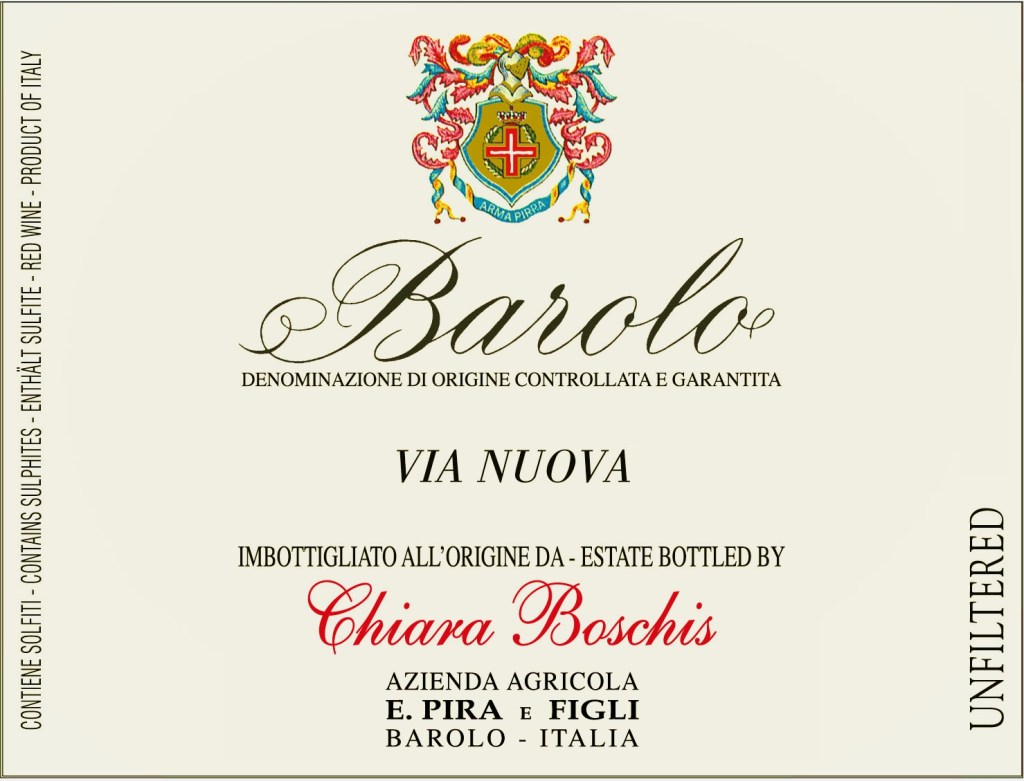
The Barolo Via Nuova used to be made as a Cru. But following a regulation change, Via Nuova was no longer considered a Cru. Instead of adopting the new name, Terlo, Chiara decided to make the wine as a blend, which meant she could keep the name Via Nuova. Via Nuova was the name of a small vineyard near Barolo, and the name comes from the road that connects Novello and Barolo. Today, you can only travel this road by foot, through the vineyards. Today, this wine is made up of grapes from multiple vineyards: Terlo, Liste, Gabutti, Baudana, Ravera and Mosconi.
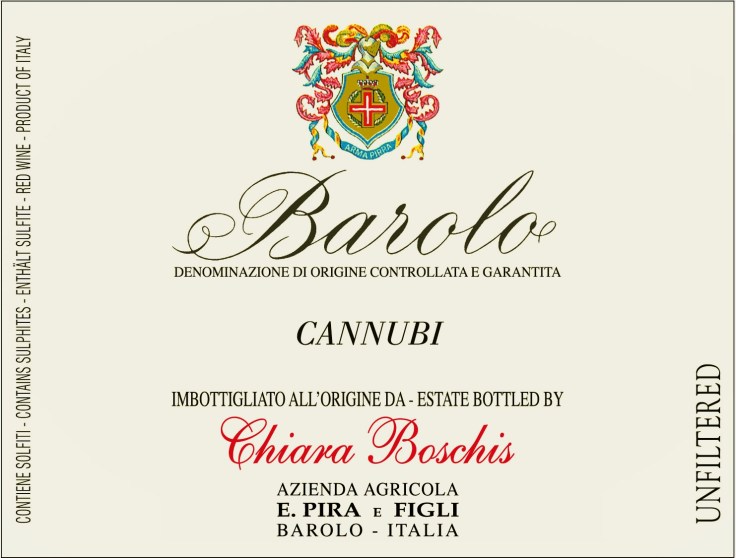
Cannubi is the most famous Cru in Barolo, with a history dating all the way back to the 1970’s. This historical Cru is also known as a Grand Cru of the area, and is easily Chiara’s most recognized wine. And I am all for the Barolo’s, but let’s take a step back and talk about the Barbera d’Alba Superiore.
Some have said that the Barbera Superiore from Chiara Boschis drinks like a Barolo. Others might call this an exaggeration, but considering the way she makes this wine, it might not be far off. The Barbera Superiore spends about 12-16 months in oak, and while that’s nothing compared to the 24 months for a Barolo, it’s a significant amount of time for a Barbera. Combine this with the age of the plants, and you’ve got a more complicated and structure Barbera!
Winemaking
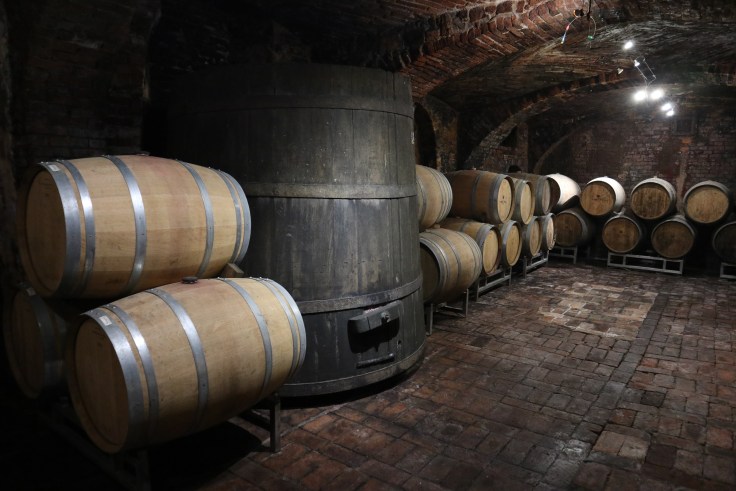
After spending some time with the “Barolo Boys”, Chiara decided to use small barrels instead of big barrels in the winemaking – something that was highly uncommon at that time. It wasn’t the only change she made; along with the introduction of barrique came longer maceration and fermentation times as well as a reduction of grapes per vine in the vineyard, aslo known has Green Harvest.
Today, this might not seem so revolutionary, but these changes were so drastic that at the time, people were quite taken aback. Apparently, some neighbors saw that Chiara was dropping almost half the grapes on the ground and called her father with concerns. But if you know Chiara, that certainly was not going to stand in her way. In fact, her methods paid off! Her very first wine was the 1990 Barolo Cannubi Riserva, which earnetd the “Tre Bicchieri” from Gambero Rosso in Italy.
Fun fact
One of her many projects: Cannubi Bio – 80% of the 26 growers in Cannubi now work organically, and it’s all thanks to the initiative of Chiara Boschis!
Fun fact II
Chiara uses barrique, but doesn’t always like the taste of oak. Therefore, she has reduced the amount of new oak in her winemaking, down to about 1/3.
Where can you find Chiara Boschis?
Chiara Boschis lives in Barolo, but her wines available are available all over the world.
Norway France Germany Italy Netherlands Portugal Slovakia Switzerland United Kingdom USA
*list might not be complete
Barolo Cannubi
Cannubi is the most famous Cru in Barolo, with a history dating all the way back to the 1970’s. This historical Cru is also known as a Grand Cru of the area, and is easily Chiara’s most recognized wine.
BASIC INFORMATION
Product name: Chiara Boschis Barolo Cannubi Grape: Nebbiolo Classification: DOCG Number of bottles produced: About 4800 bottles Color: lively garnet red Fragrance: sweet ripe red fruits, spices, balsamic notes Taste: persistent but elegant tannins, soft but austere Food pairing: braised meat, game, seasoned cheese
VINIFICATION (Wine-making)
Method: Fermentation in stainless steel tanks with frequent pumping over, followed by 24 months in French oak Temperature: Length: Ageing: 24 months in french oak Minimum aging in bottle: 1 year
VINEYARD
Vineyard: Cannubi Soil: Sandy clay Exposure: South
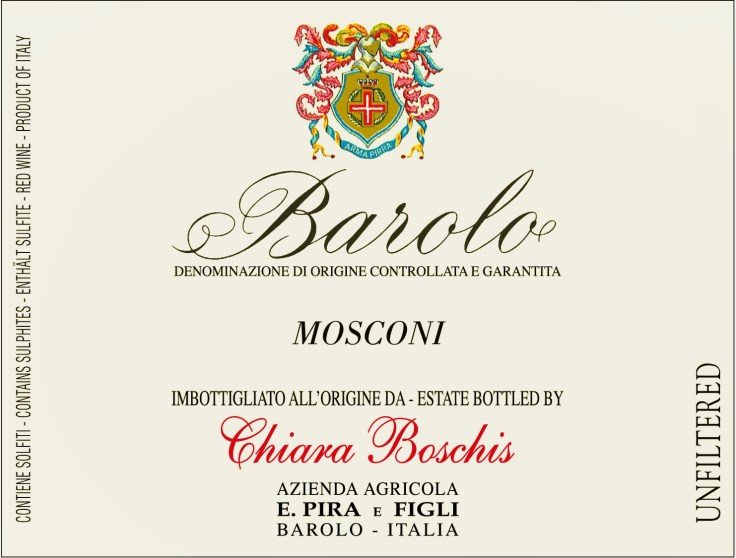
Barolo Mosconi
BASIC INFORMATION
Product name: Barolo Mosconi Grape: Nebbiolo Classification: DOCG Number of bottles produced: About 4800 bottles Color: Intense lively garnet red Fragrance: flowers, ripe fruit, some spice notes Taste: big, structured, typical Monforte style Food pairing: braised meat, game, seasoned cheese
VINIFICATION (Wine-making)
Method: 2 week maceration followed by 24 months in barrique (1/3 new, 1/3 second use, 1/3 three+ uses) Ageing: 24 months in lightly toasted French oak Minimum aging in bottle: 12 months
VINEYARD
Vineyard: Mosconi Soil: Clay, limestone Exposure: South Age of plants: Average age of 50 years
Barolo Via Nuova
Via Nuova was the name of a small vineyard near Barolo, and the name comes from the road that connects Novello and Barolo. Today, you can only travel this road by foot, through the vineyards. This wine is made up of grapes from multiple vinyeards: Terlo, Liste, Gabutti, Baudana, Ravera and Mosconi.
BASIC INFORMATION
Product name: Barolo Via Nuova Grape: Nebbiolo Classification: DOCG Number of bottles produced: Color: Bright garnet red Fragrance: floral and fruity Taste: structured, persistent tannins, fruity Food pairing: braised meat, game, seasoned cheese
VINIFICATION (Wine-making)
Method: Fermentation and maceration on the skin for about 2 weeks, before ageing in lightly toastes barrique Ageing: 24 months in lightly toasted French oak (1/3 new, 1/3 second use, 1/3 three+ uses) Minimum aging in bottle: 12 months
VINEYARD
Vineyard: Terlo, Liste, Gabutti, Baudana, Ravera and Mosconi Soil: Various types. Clay marl Exposure: Various. South, South-East Year of plantation/age of plants: various
Langhe Nebbiolo
BASIC INFORMATION
Product name: Langhe Nebbiolo Grape: Nebbiolo Classification: DOC Number of bottles produced: Color: ruby red, tending to garnet with purple reflections Fragrance: fruity Taste: fruity, velvety Food pairing: pasta, risotto, cold cuts
VINIFICATION (Wine-making)
Method: Fermentation in stainless steel tanks and aged for 14 months in second-passage french oak barrles Ageing: 14 months in second passage French oak Minimum aging in bottle: 2 months
VINEYARD
Vineyard: Various Soil: Various Exposure: Various
Barbera d’Alba Superiore
Chiara Boschis Barbera d’Alba Superiore almost reminds you of a Barolo – heavy yet fruity. And the high acidity is balanced without compromising the fruitiness.
Method: About 1 week maceration, followed by 12-16 months in used French Oak Ageing: 12-16 months in French Oak Minimum aging in bottle: 2-3 months
VINEYARD
Vineyard: Mosconi, Gabutti and Ravera Soil: Calcareous clay soil Exposure: Eastern Age of plants: Mosconi 55 years old, Gabutti 15 years old and Ravera15 years old
Dolcetto d’Alba
BASIC INFORMATION
Product name: Dolcetto d’Alba Grape: Dolcetto Classification: DOC Number of bottles produced: About 4 500 bottles Color: Intense ruby red Fragrance: Floral and fruity Taste: Fresh, fruity, balanced Food pairing: Appetizers, pizza, cheeses, light dishes, aperitivo
VINIFICATION (Wine-making)
Method: Temperature controlled fermentation, aged in stainless steel. Punching down technique is used during the fermentation Temperature: temperature control Ageing: Only stainless steel
VINEYARD
Vineyard: Ravera, Le Coste and Mosconi Soil: Limestone, clay Age of plants: Ravera 15 years old, Le Coste 25 years old, and Mosconi 50 years old
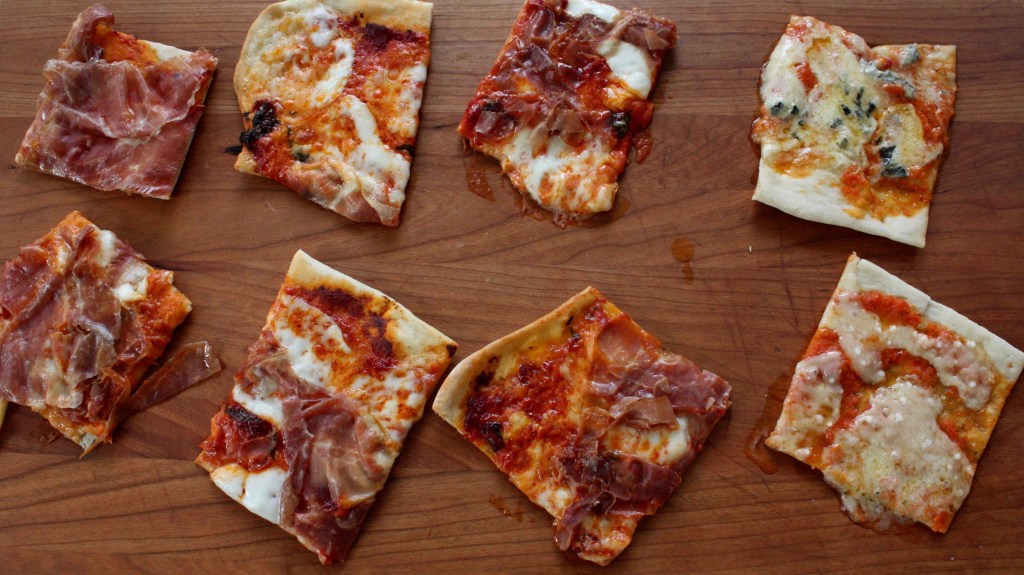
My favorite pizza wine is dolcetto. Obviously depends on the type of pizza, but as a general rule of thumb dolcetto works very well! I’d try the dolcetto from Nadia Curto or the one from Alessandro Veglio!
If your pizza has some meat, like salami or prosiutto, the acidity of a barbera will pair really well. The same goes for extra cheesy pizza, like Quatro Fromaggio. The ones are some of my favorites these days: Diego Morra Barbera d’Alba Ghiomo Barbera Lavai Cigliuti Barbera
Other wines to try
Nadia Curto Freisa is another wine you can pair with pizza. Haven’t heard of Freisa? I’m not surprised. Freisa is a lesser known grape varietal from Piemonte. With the acidity like a barbera and tannins of nebbiolo, it’s a perfect combination! And it pairs well with pizza!
Nebbiolo is also a good alternative, instead of dolcetto or barbera. Try the one from Giovanni Corino or Elio Altare.
Modern Pizza
Tandoori Pizza from Vinoteket
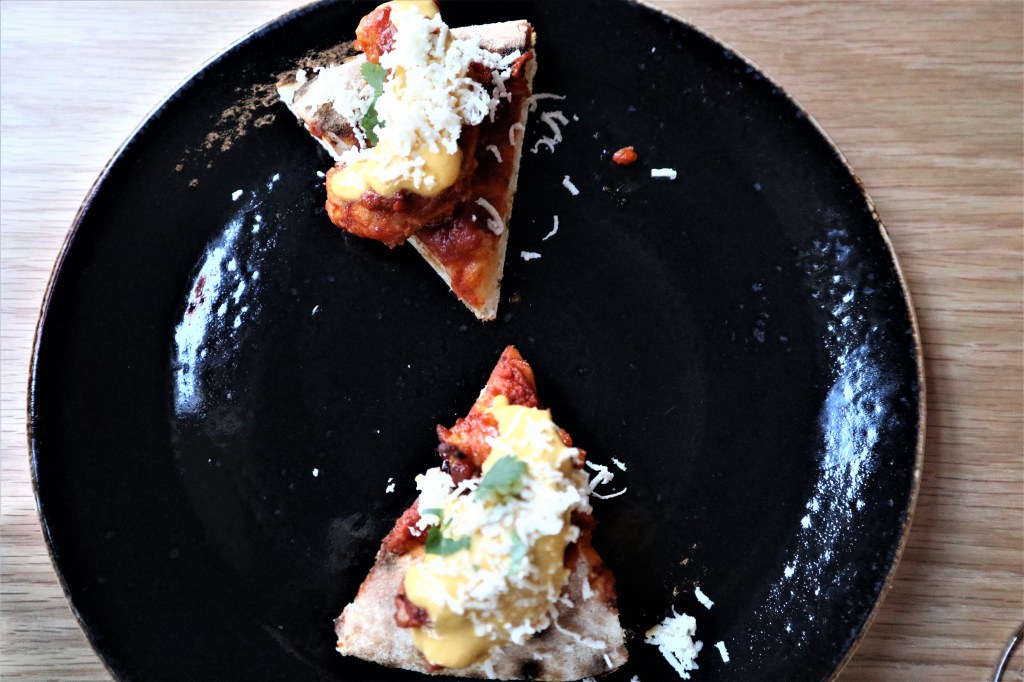
Noawdays you can put anything on a pizza. There’s Pizza Carbonara, pizza with king crab and chicken tandoori. With modern twists like this, wine pairing can be challenging. But, if you try to pair the wine with the topping, you should find something that fits. So, with seafood pizza, try Vietti Arneis or Matrot Chardonnay.
Silvia Altare, Queen of the Andals, the Rhoynar and the first Cry, Protector of the grape, Queen of the Langhe, Khaleesi of the Great Grass Sea, Mother of Dragons, The Unburnt, Breaker of Chains and the Lady of the Annunziata
Toni Fadnes
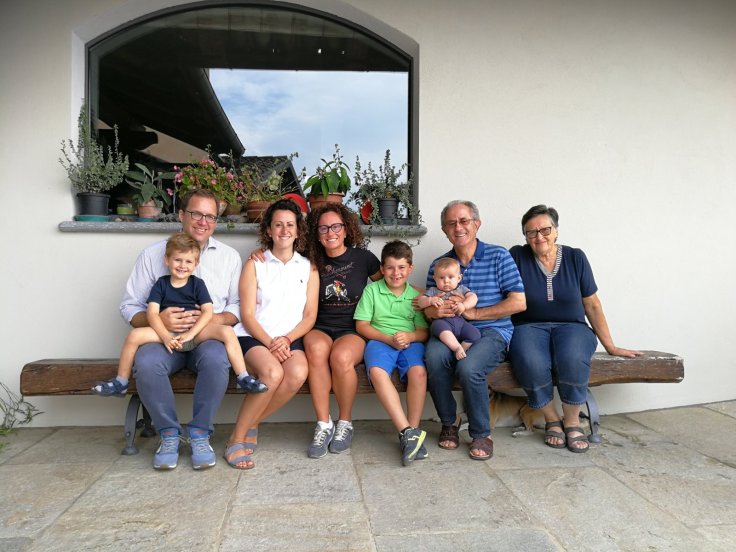
Photo of the Altare Family, from their website
The words that come to mind when thinking of the Altare family are: Insieme & Energy.
And for those of you who are not Game of Throners, when I say that the Altare family is first of their name, I am referring to the “Barolo Revolution” and the introduction of barrique to the area. On top of that, they are known for their extraordinary wines and and incomparable energy.
Winemaking
In 1976, Elio traveled to Burgundy and it was a trip that would change the course of history forever. Elio infamously took his father’s big barrels outside and chopped them up. He wanted to use small barrels instead, barrique, like the french. This act would eventually lead to his disinheritance. But Elio persevered.
Today, the family still use small barrels (barrique) for most of their wines, and steel tanks for the dolcetto d’alba , barbera d’alba and langhe nebbiolo. The oak is used as a tool, and none of their wines have a significant presence of oak flavors. Try putting it in a blind tasting lineup and see for yourself.
With a total of 10 hectares, they make about 70,000 bottles a year.
Fun fact
SEVEN PRODUCERS, SEVEN DIFFERENT STORIES, ONE SINGLE LABEL: L’INSIEME
Silvia’s father, Elio Altare, isthe founder of L’Insieme. And what is L’Insieme? It’s a project between 7 winemakers in Langhe where they donate a percentage of the proceeds to a good cause. Below you will see their own explanation of the project (found on their website).
The project aims to make wines which, under a single brand, tell a story of friendship and collaboration, of hard work, shared passion for the Langhe and its outstanding grapes.
The dream is that, from this union, the resultant label will be a symbol of friendship and mutual aid. A wine that is our personal way of thanking the land that gave us our roots and its support.
Our goal is to make L’Insieme wine a practical ethical tool, allowing us to fund projects of high social value as a way of giving back to our local area a part of the good fortune and beauty it has given us.
Fun fact II
When it comes to blind tasting, we all know Silvia and Elio are very good. They have trained their noses for years. But the one who always seems to surprise us with her incredible ability is Lucia, Elio’s wife. She will sit quietly, while everyone shares their opinions and then all of a sudden she will blow you away with her analysis. A very impressive woman.
The Altare Wines
Wines available in: Norway Sweden Denmark USA UK Italy
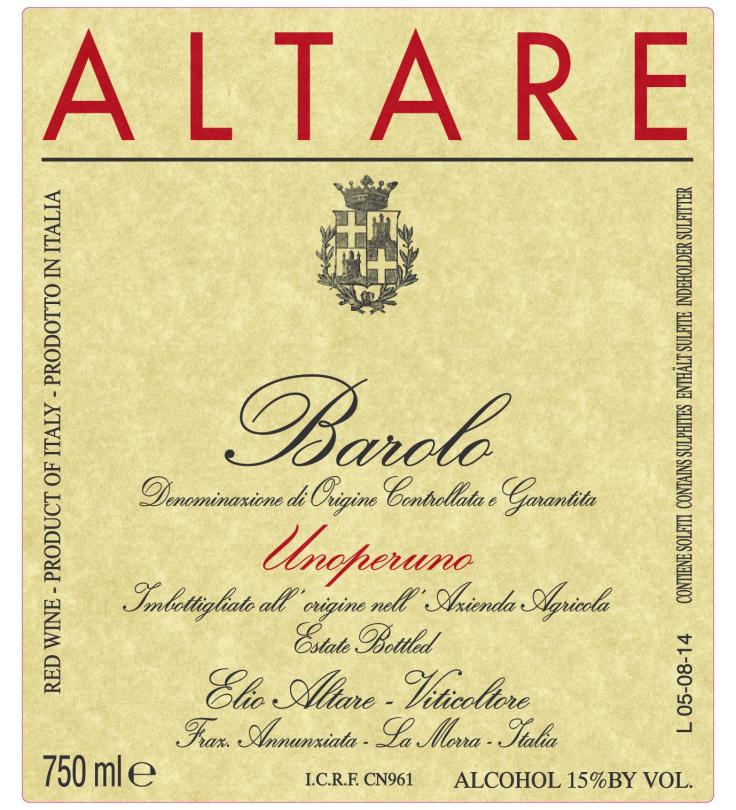
Altare Uno Per Uno
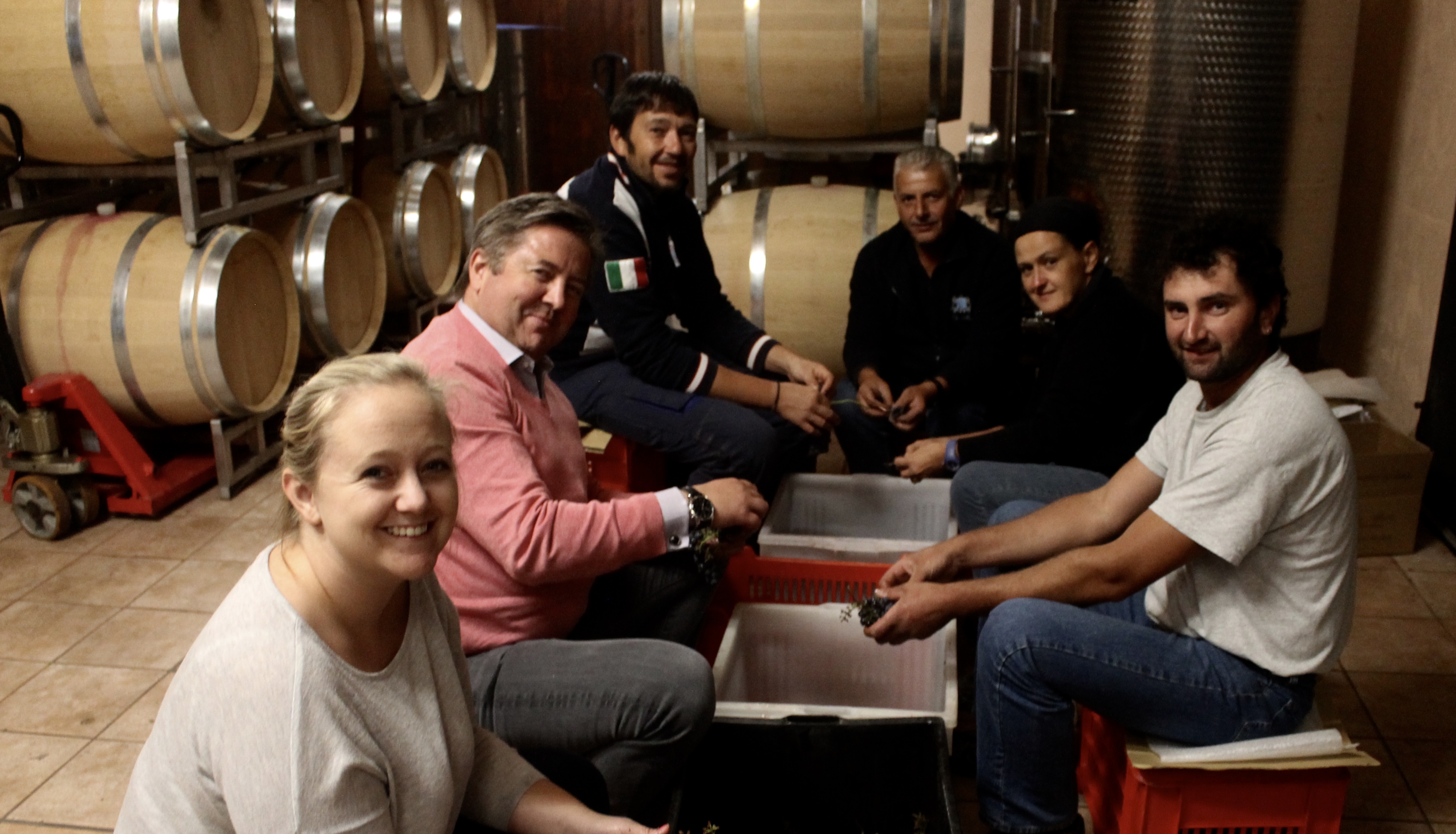
It’s exactly what it says: one by one. The family hand destems the grapes, berry by berry, and the results are magnificent. It’s also why the price might be a little higher. Imagine the work behind this wine. And if you can’t, check out the picture below.
BASIC INFORMATION
Product name: Uno Per Uno Grape: 100% nebbiolo Classification: DOCG Number of bottles produced: 1,500 Color: light ruby red with garnet reflections Fragrance: fresh fruits, rose petals and flowers Taste: warm, elegant, smooth silky tannins Food pairing: red meat, aged cheese
VINIFICATION (Wine-making)
Method: hand-destemming the berries, one by one. Looking for the purity of the fruit of nebbiolo, making sure there are no stems, no leaves and no ugly berries Ageing:
VINEYARD
Soil: marna with clay and sand Exposure: south, south-east Year of plantation: 1948
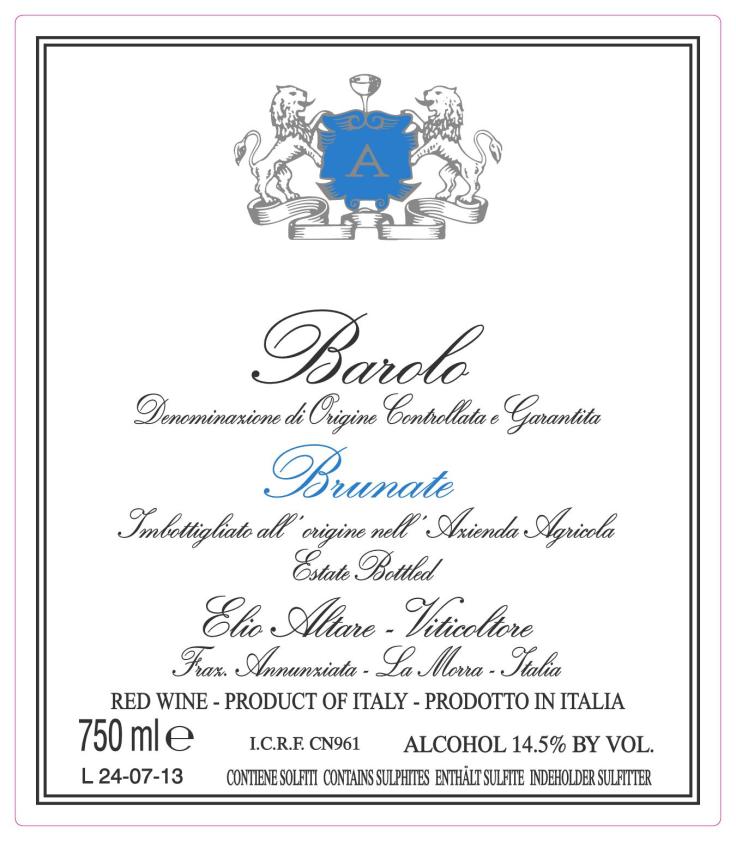
Barolo Brunate
The last vintage of Brunate is 2011. Altare rented the plot and the owners decided to make their own wine.
BASIC INFORMATION
Product name: Brunate Grape: 100% Nebbiolo Classification: DOCG Number of bottles produced: 1,200 – 1,500 Color: intense ruby red with garnet reflections Fragrance: red fruits, floral, light and feminine Taste: warm, elegant, long finish with wild rose and violet Food pairing: red meat, game, aged cheese
VINIFICATION (Wine-making)
Method: maceration on the skins for 4/5 days in rotary fermentors with temperature control Ageing: 24 months in french barrique
VINEYARD
Soil: various Exposure: south, south-east Age of plants: 20 to 90 years old
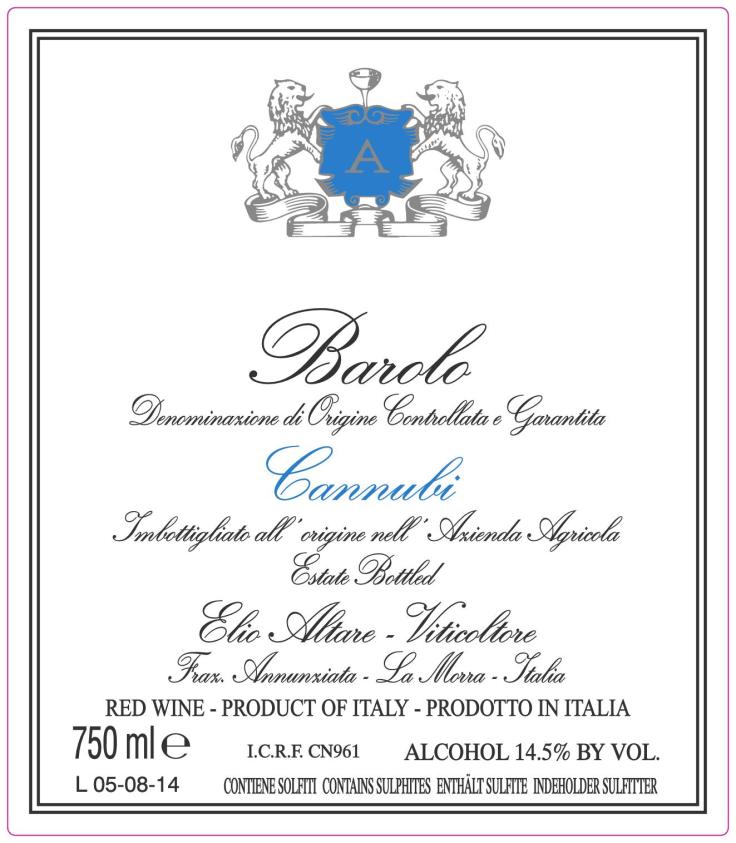
Cannubi
BASIC INFORMATION
Product name: Cannubi Grape: 100% Nebiolo Classification: DOCG Number of bottles produced: 1,500 Color: light ruby red with garnet reflections Fragrance: fresh fruits, rose petals and flowers Taste: elegant, soft silky tannins Food pairing: red meat, aged cheese
VINIFICATION (Wine-making)
Method: maceration on the skins for 4/5 days in rotary fermentors with temperature control Ageing: 24 months in french barrique
VINEYARD
Soil: marna with clay and sand Exposure: south Age of plants: 30 years old
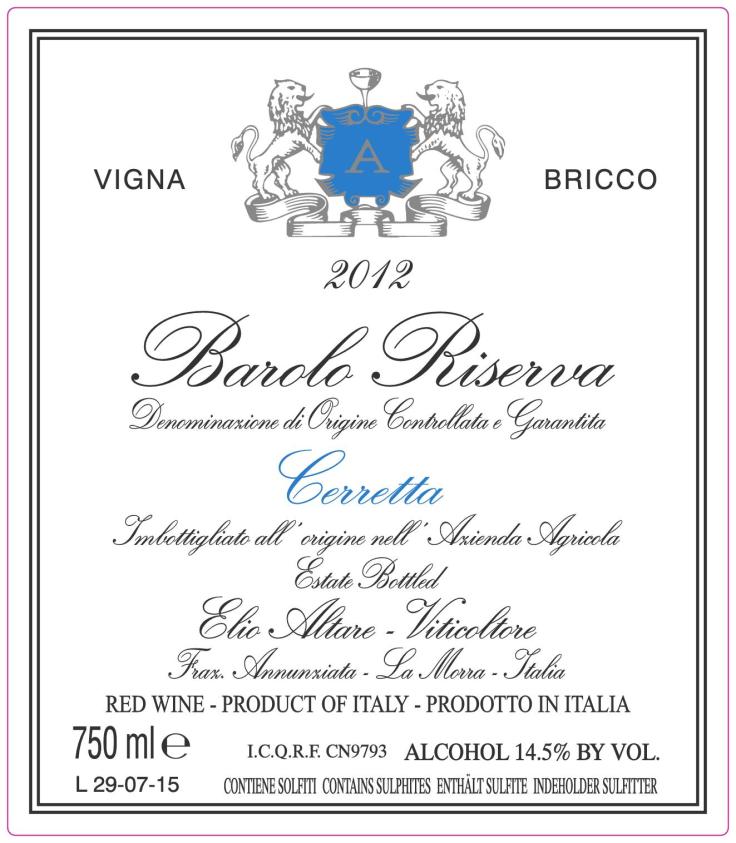
Barolo Ceretta Vigna Bricco Riserva
Altare chooses to release this wine later than the rest of the barolo’s. The extra time can be beneficial for a wine with more masculine characteristics.
BASIC INFORMATION
Product name: Ceretta Vigna Bricco Riserva Grape: 100% Nebbiolo Classification: DOCG Number of bottles produced: 5,000 – 6,000 Color: intense ruby red with garnet reflections Fragrance: mature fruits, spicy, tobacco, darker fruits, licorice Taste: warm and elegant, with mint and spice notes Food pairing: red meat, aged cheese
VINIFICATION (Wine-making)
Method: maceration on the skins for 4/5 days in rotary fermentors with temperature control Ageing: 24 months in french barrique
VINEYARD
Soil: sandstone, limestone and chalk Exposure: south, south-east and south-west Age of plants: 15 years old
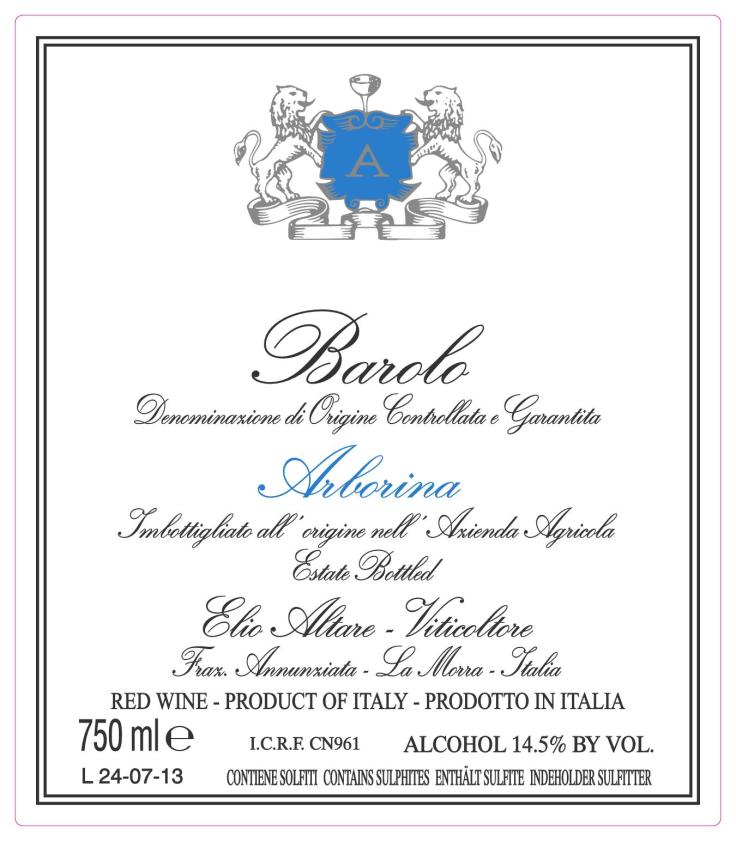
Barolo Arborina
BASIC INFORMATION
Product name: Arborina Grape: 100% Nebbiolo Classification: DOCG Number of bottles produced: 6,000 Color: intense ruby red with garnet reflections Fragrance: rose petals, flowers, light, sweet Taste: elegant, with smooth but intense tannins Food pairing: red meat, game, aged cheese
VINIFICATION (Wine-making)
Method: maceration on the skins for 4/5 days in rotary fermentors with temperature control Ageing: 24 months in french barrique
VINEYARD
Soil: marna stone with clay and sand Exposure: south, south-east Year of plantation: 1948
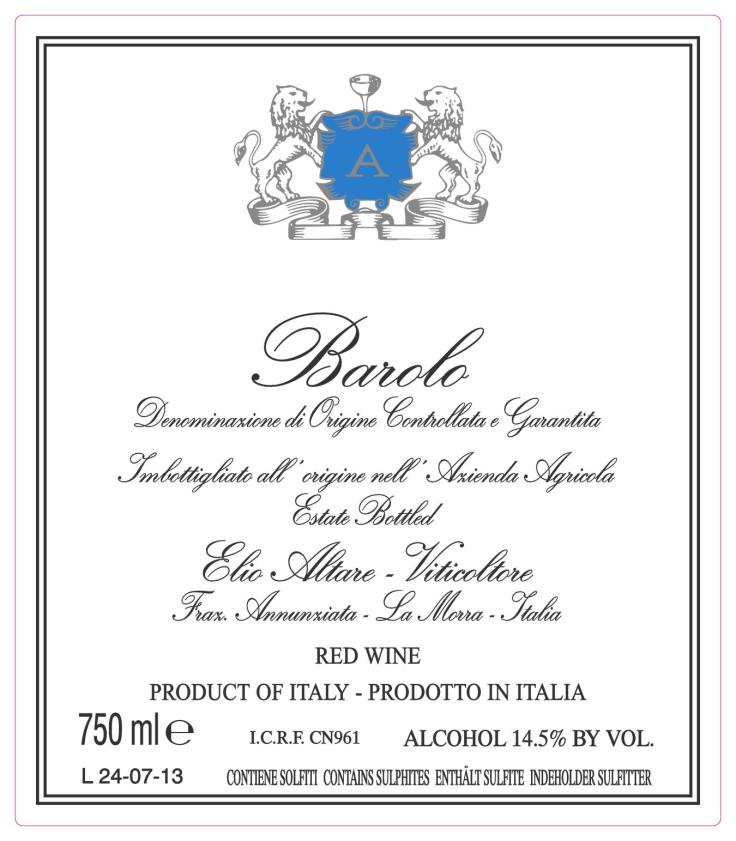
Barolo
BASIC INFORMATION
Product name: Barolo Grape: 100% Nebbiolo Classification: DOCG Number of bottles produced: 10,000 Color: intense ruby red with garnet reflections Fragrance: red fruit, raspberry, redcurrant, wold roses that evolve into licorice and spice notes Taste: elegant, persistent with long finish ans soft tannins Food pairing: red meat, aged cheese
VINIFICATION (Wine-making)
Method: maceration on the skins for 4/5 days in rotary fermentors with temperature control Ageing: 24 months in french barrique
VINEYARD
Soil: various Exposure: south, south-east Age of plants: from 20 to 30 years
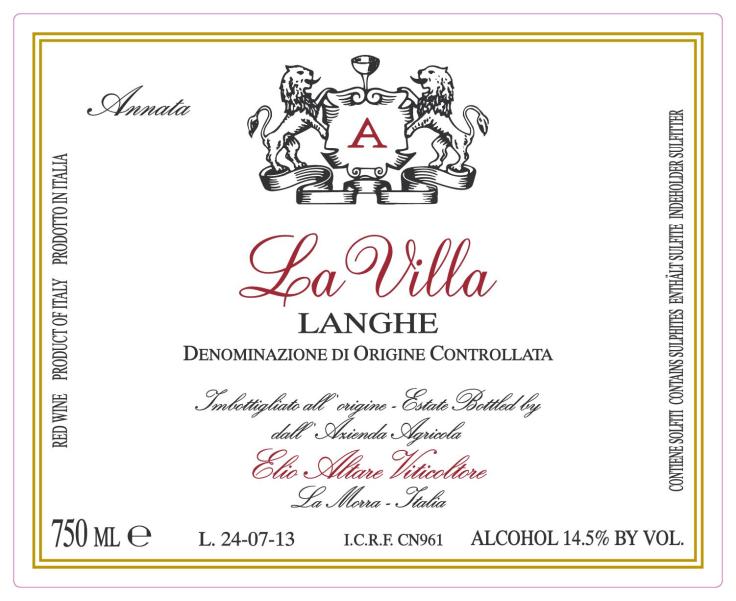
La Villa
La Villa is a blend of nebbiolo and barbera grapes, which gives the best of both worlds; tannins and acidity.
BASIC INFORMATION
Product name: Langhe La Villa Grape: Barbera & Nebbiolo Classification: DOC Number of bottles produced: 2,500 – 3,000 Color: intense ruby red Fragrance: plums, berries, rose petals Taste: fresh, well balanced tannins, pleasant acidity from the barbera Food pairing: pasta, charcuterie, meat
VINIFICATION (Wine-making)
Method: maceration on the skins for 3/4 days in rotary fermentors with temperature control Ageing: new french barrique for 18 months
VINEYARD
Soil: clay and tufa stone Exposure: south-east Year of plantation/age of plants: various
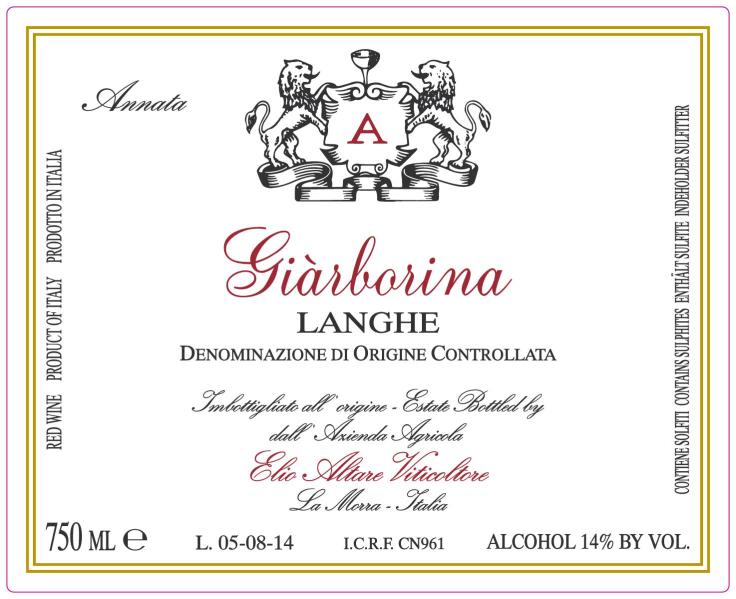
Giarborina
A “baby barolo”, somewhat in the middle of a langhe nebbiolo and a barolo, made with grapes from the Arborina vineyard.
BASIC INFORMATION
Product name: Langhe Giarborina Grape: 100% nebbiolo Classification: DOC Number of bottles produced: 2,000 – 2,500 Color: ruby red with garnet reflections Fragrance: intense balasmic notes, aromas of fruit, rose petals Taste: red fruit, raspberry, persistant Food pairing: red meat, soft to medium aged cheese
VINIFICATION (Wine-making)
Method: maceration on the skins for 3/4 days in rotary fermentors with temperature control Ageing: new french barrique for 18 months
VINEYARD
Soil: clay and sand Exposure: south, south-east Year of plantation: 1948, 1989
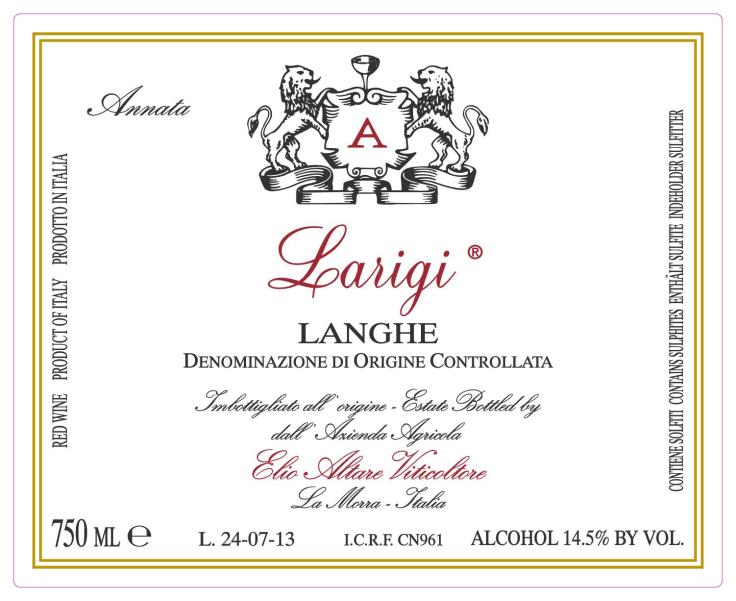
Larigi
Could also be called a “barbera superiore”, but I prefer the name Larigi. The vineyeard is located next to the winery. A “single vineyard” barbera named Larigi.
BASIC INFORMATION
Product name: Larigi Grape: Barbera Classification: DOC Number of bottles produced: 2,500 – 3,000 Color: dense purple red Fragrance: small red fruits, very persistent Taste: warm, soft, intense, silky tannins, pleasant acidity, red berries Food pairing: grilled meat,c heese and salami
VINIFICATION (Wine-making)
Method: maceration on the skins for 3/4 days in rotary fermentors with temperature control Ageing: new french barrique for 18 months
VINEYARD
Soil: clay and sand Exposure: south, south-east Year of plantation/age of plants: 1948
Product name: L’Insieme Grape: various Classification: Number of bottles produced: 1,500 Color: intense ruby red Fragrance: spicy and intense Taste: big structure, taste is much more “international”, spicy and herbal Food pairing: red meat, game, cheese
VINEYARD
Soil: various Exposure: various Age of plants: 10 to 30 years
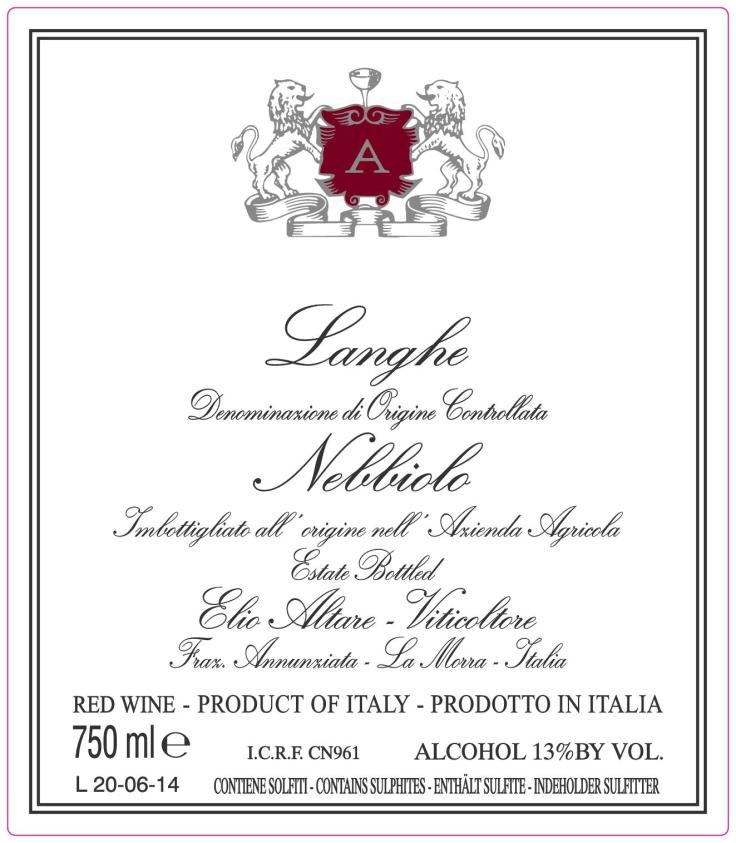
Langhe Nebbiolo
BASIC INFORMATION
Product name: Langhe Nebbiolo Grape: Nebbiolo Classification: DOC Number of bottles produced: 8,000 Color: intense ruby Fragrance: rose petals and red fruits Taste: Tannins, but not dry. Red fruits and good acidity Food pairing: antipasto, pasta, red meat
VINIFICATION (Wine-making)
Method: maceration on the skins for 3/4 days in rotary fermentors with temperature control Ageing: 5 months in aged french barrique
VINEYARD
Soil: calcareous but also sandy Exposure: various, south-east, east Age of plants: 20 to 50 years old
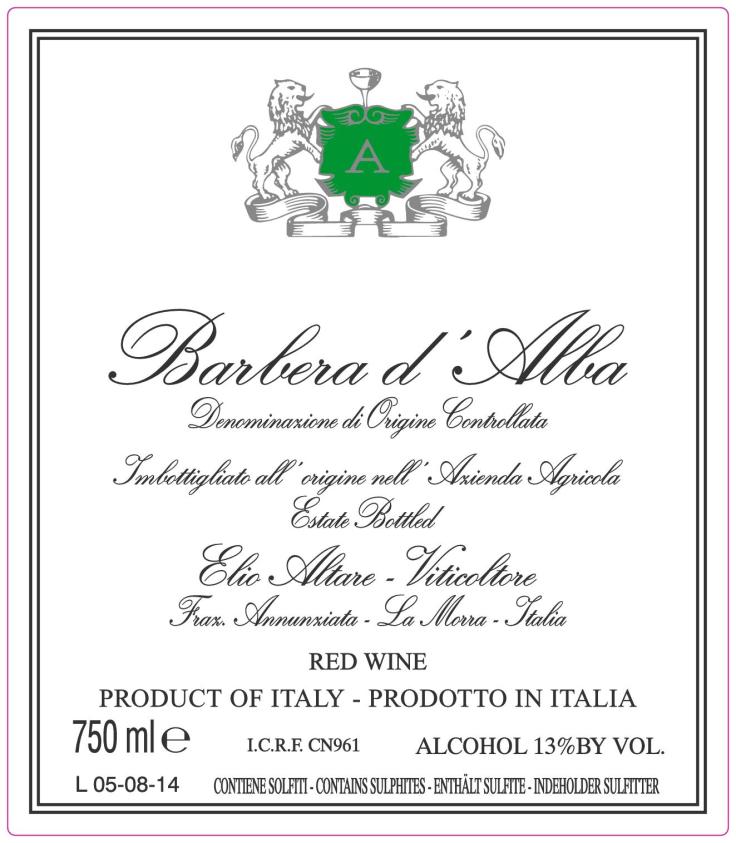
Barbera d’Alba
BASIC INFORMATION
Product name: Barbera d’Alba Grape: Barbera Classification: DOC Number of bottles produced: 15,000 Color: ruby red with violet reflections Fragrance: violets and black cherry Taste: full bodied, good acidity, dark red fruits Food pairing: antipasto, pasta, fatty cheese and salami
VINIFICATION (Wine-making)
Method: maceration on the skins for 3/4 days in rotary fermentors with temperature control Ageing: 5 months in aged french barrique
VINEYARD
Soil: calcareous but also very sandy Exposure: various, east, north-east Age of plants: 10 to 30 years old
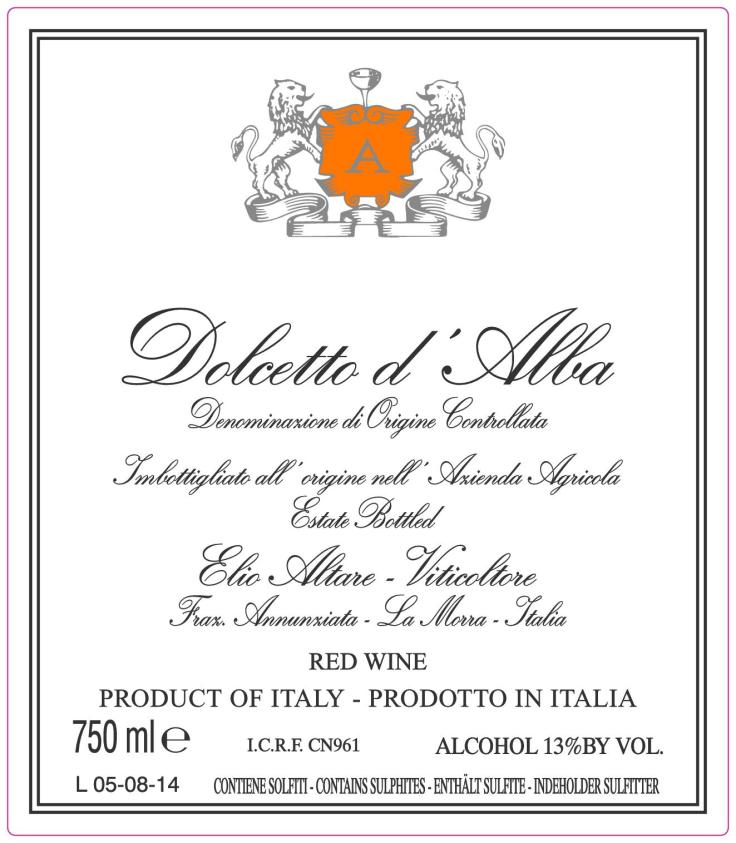
Dolcetto d’Alba
BASIC INFORMATION
Product name: Dolcetto d’Alba Grape: Dolcetto Classification: DOC Number of bottles produced: 18,000 – 20,000 Color: intense violet Fragrance: violet and black cherry Taste: cherries, black cherry, medium-bodied, easy to drink Food pairing: antipasto, pasta, light cheese, pizza, panini
VINIFICATION (Wine-making)
Method: maceration on the skins for approximately 2 to 3 days maximum in rotary fermentors with temperature control Ageing: stainless steal tank for about 10 months
VINEYARD
Soil: calcareous but also very sandy Exposure: various, mostly north and north-east Age of plants: 20 to 40 years old
Altare Winery
Frazione Annunziata 51, 12064 La Morra elioaltare@elioaltare.com +39 0173 50835
Cover photo: Elio Altare Website Labels: Elio Altare Website Other photos: Oda Randmæl Text: Oda Randmæl & Toni Fadnes


 PIEMONTEGIRL