Unknown's avatar

About Piemontegirl

I am a wine lover currently located in Boston. I drink wine mostly from Piemonte and Burgundy. Two summers in a row I have worked at Vietti in Piemonte.

When to travel to Piemonte

In my opinion, March to mid-August is the best time to visit Piemonte. The summer months can be quite hot, but if you have a hotel with a pool it’s quite manageable. Besides, I spend most of my time in a dark wine cellar, so the outside temperature doesn’t really matter.  If Festivals are your thing perhaps September and October better floats your boat.

January

January is the coolest month in Piemonte. Temperatures can drop below 0 degrees Celsius and rarely go above 10 degrees Celsius. It is a vacation month for many Piemontese. Check availability of hotels, restaurants, and winemakers before you plan to go in January.

February

Temperatures still low in February, but slowly starting to climb. Piemonte will be quite calm, but the winemakers are working hard. Wineries will most likely be open, and less busy as February is sort of an off-season.

March

Piemonte starts warming up. Temperatures can rise to about 15 degrees. Some days you can even sit outside and have lunch. Especially if you’re Norwegian.

A highlight in March is the Wine Fair Prowein. Although this event takes place in Germany, it still affects Piemonte because many winemakers will travel there to present their wines.

April

April is the month of Vinitaly. Chances are many of the producers head to Verona for about a week, so winery visits might be difficult those days.

Another happening in April is Easter. And the day after Easter Sunday is Pasquetta. On this day, families come together and celebrate. Long lunches, picnics, barbeque, drinking, dancing & more.

May

May is one of the best months to visit Piemonte. Temperatures reach 20’s, the hills of Langhe are green and it’s time for the event Barbaresco a Tavola! Every year, multiple restaurants in Barbaresco participate in a wine tasting where you  try about 20 different Barbaresco wines blind.

Serralunga stand their ground to, inviting you to their “Wine Festival a Serralunga d’Alba” late in the month.  May is also Barbera month, with both Castagnole Lanze and Nizza Monferrato having barbera festivals.

June

Summertime! Wineries open, flowers blooming and temperatures soaring. Toward the end of the month, there is a big wine event called Hill Barolo La Morra. At this event you get the opportunity to taste the new vintage of Barolo.

July

If you like music festivals & wine, July is the month for you. Collisioni Festival takes place every July in Barolo. Previous performers include Patti Smith, Bob Dylan, Elton John, Neil Young, Steven Tyler, Placebo, Passenger, Mark Knopfler & Lenny Kravitz.

Another music event in Piemonte is the Monforte In Jazz Festival.

August

August 15th, or Ferragosto, means it’s vacation time for the people of Langhe. A lot of wineries will be closed, for a week or two while the hardworking winemakers take some well deserved time off.

At the end of August, there is a very fun event called Mangialonga. It’s a “non competitive enogastronomic hike” and takes place in La Morra.

September

Harvest usually starts mid to late September. For wine enthusiast it might be wise to book the trip at the beginning, but you never know when it will start. Hence chances of winery visits are diminished. 

Weather wise it’s a beautiful time to visit, and there are plenty of other things to do in the area. Like eat and drink. In fact, the first Sunday in September there is Degusta La Morra – an event where the winemakers of La Morra put up booths in the streets and for only £15 you can try as many wines as you like!

Verduno hosts a dinner where Pelaverga is the center of attention. Find out more here.

Bra hold their annual Cheese Festival, simply called “Cheese”, the 3rd weekend of September. Asti their Festival of Festivals (Festival delle Sagre in Italian), celebrating the customs and tradition of country life. And Verduno their “Festa del Verduno Pelaverga” celebrating their native grape Pelaverga. Neive says hello too, with their “Neive Vino e…”

October

Harvest continues into October. The end of the harvest depends on the vintage, so if you want to visit wineries, the later you go, the better chance you have.

If you’re unable to book any winery visits, you can try wines at the Cantina Comunale instead. Every Saturday in October (into November) you can try wines from the winemakers of La Morra.

October = truffles. And truffles = lots of tourists. The Truffle Festival in Alba starts early October and last until late November.

October is also the wettest month, on average, so if you want to avoid rain, maybe postpone your trip to November.

November

Truffle Festival still going strong, and some say the best truffles are found in November.

The first 3 Sundays in November, you can try wines from the winemakers of La Morra at the Cantina Comunale.

December

Things are quieting down in Piemonte. Christmas is approaching, the vines are sleeping and there is not so much to do in the vineyards. Why not celebrate New Years Eve, or Cappdanno, in one of the many amazing restaurants? I assure you they have Champagne!
Kokkenes Dag 2019

Kokkenes Dag – a food festival that collects the best chefs in Norway, making it the place to be for us foodies.

The concept is as follows: each restaurants serves one or two dishes at a reasonable price, giving everyone a chance to taste their talent. Cru brought their A-game with their special, and it was so popular that by the time I went to buy some they were SOLD OUT!

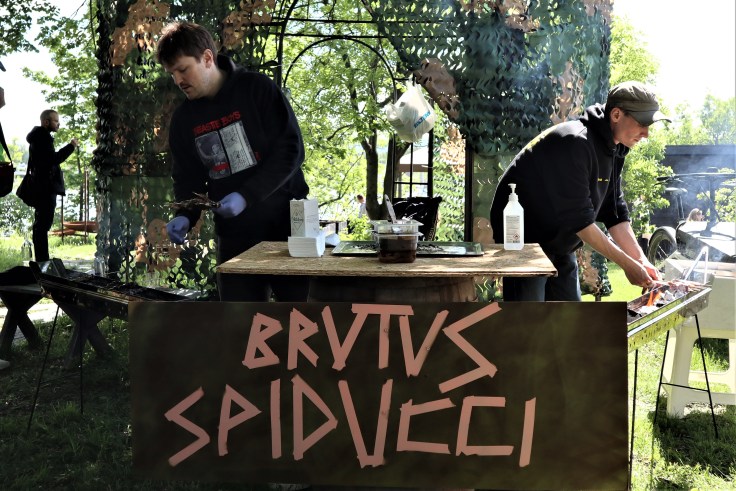
Kokkenes Dag - Brutus

This year’s impressive list of restaurants include:
Credo
Cru
Brutus
Happolati
Fyr
& many more

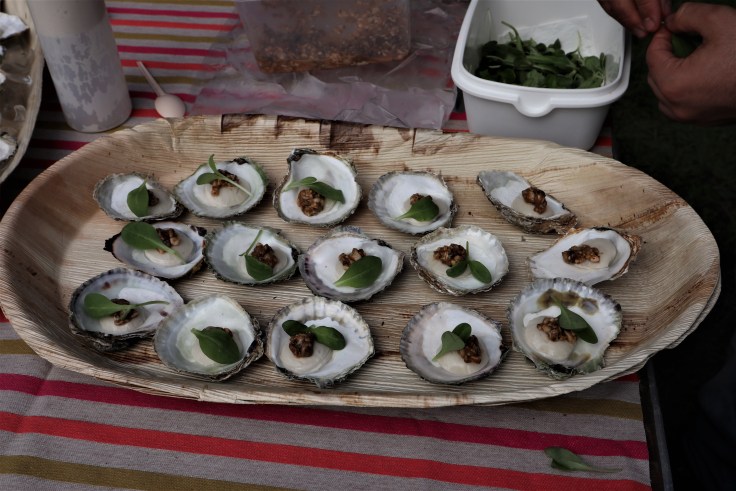
Oysters prepared by Heidi at Kokkenes Dag

I have to be honest – my main goal for the day was to meet Heidi from Credo. She has quickly become a sensation in Norway (and the world) and it is my mission to not only visit her restaurant, but to go with her on one of her sea expeditions. If you want to read more about Credo and Heidi, check out this article from the Financial Times.

Not surprisingly, Heidi from Credo won “Chef of the year”. Happolati brought home “Restaurant of the year”. Maybe it’s time I try it. Add it to the list!

Save the date for next year – June 7th!

To Decant or Not To Decant

What does it mean when we decant a wine? Why do we decant wine? What are some reasons not to?

There are some strong opinions out there, as to whether or not you should decant a wine. So, I asked around to figure out the big question: To Decant or Not To Decant?

What does decanting mean?

When you google “decanting”, you’ll most likely get a result from a dictionary, which says decanting is: gradually pour (wine, port, or another liquid) from one container into another, typically in order to separate out sediment. An article from Wine Spectator also shows up, check it out here.

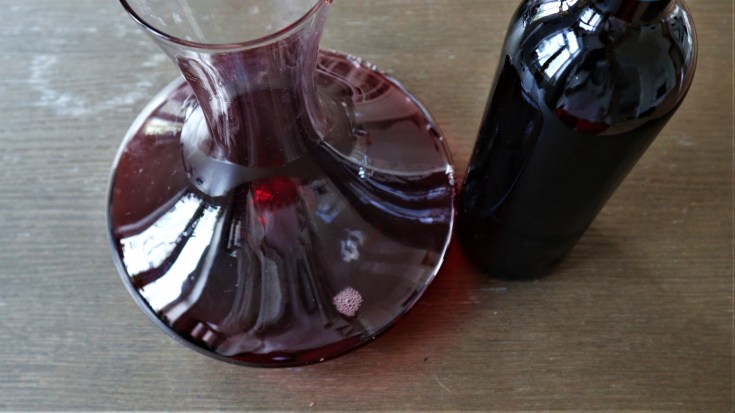
This pretty much sums up what decanting is. When you decant a wine, you pour it out of it’s bottle and into something else, typically a decanter. If you do not have one, you can use something else. I have once used a measuring cup (which I then used to pour the wine back into the bottle) or a vase. Shhh, don’t tell anyone!

Decant - to do or not to do?

Why does one decant a wine?

So, I asked around. Why do you decant a wine? Here are some of the most popular responses:

  • To remove sediment
  • Give the wine air
  • Depends on the wine

Now, some say you should not decant a wine. There can be a few reasons for this. Adding too much air can make the wine fade faster. An old, fragile wine can be damaged by adding too much air. Another popular opinion is that a winemaker would not have released a wine that was not ready to drink.

A nice rule of thumb is to first try the wine, and then decide for yourself whether or not it should be decanted. If the wine feels closed or inexpressive, adding some air can be a good way to open it up.

I do not have very strong feelings on the subject. For me, as with most winemakers, I’d say it depends. Depends on the vintage, the age, the wine making style. Some wines definitely benefit from getting some air. Others, maybe stay away. Refer to the rule of thumb if in doubt: try it first, and then see.

Best Wine List in Oslo

What makes a Wine List good?

What makes a good wine list? Is it the volume? The average price? Types of wines? Amount of countries represented? Range of wines? The format?

The answer here will vary. I think everyone has different expectations when ordering wine in a restaurant. You’ll see a smile on my face when a Rinaldi dolcetto makes an appearance, or when I find lots of good wines from Piemonte. Others may favor different regions, and will rejoice at the sight of a good Riesling or Rioja.

Price is also a factor. How “good” or “bad” is the markup? Do they have a good range of prices? Maybe a cheaper Barbera next to a higher priced Barolo? What are your thoughts?

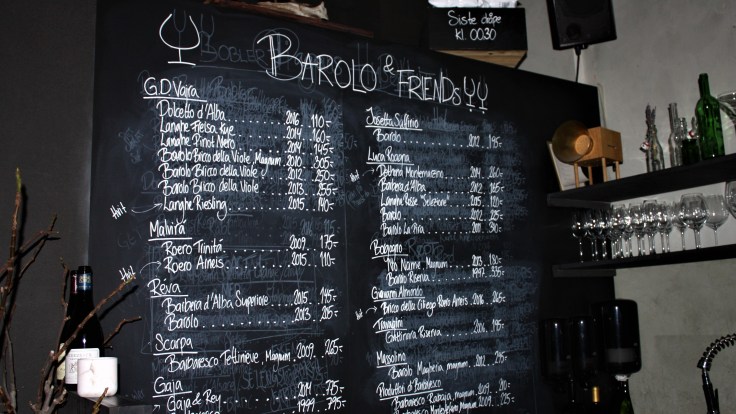
Wine List Territoriet

Some of my favorite Wine Lists

There are many restaurants in Oslo, and there is a lot of good wine to find. Here are some of my favorites.

Beijing Palace

At Beijing Palace you’ll find true “Wine Geeks”, and their wine list reflects this. Who would have thought Burgundy and Dim Sum were a match made in heaven. With an astonishing number of wines, with very little markup, you can drink your way into bliss. The list is Burgundy heavy, but there’s an impressive number of wines from Piemonte. When asked why there’s so little markup, the answer was simple: “Why mark it up so high no one will buy it. We want you to drink and enjoy. And when you buy a wine, we get money to buy more wine. It’s win-win.”

Territoriet

This place is genius. With over 200 wines by the glass, you can try wines from all over the world and not break the bank (or destroy your liver). Yes, the price per glass can be a little pricey, but nowhere else I’ve been do you have this concept. (And if you know of a place, please let me know!) In a small space, with a bar and some tables & chairs you can get some snacks while sipping on a multitude of wines, all in one evening. Great staff, helpful and knowledgeable, with a record player dancing in the corner. Great spot in Oslo! You might also run into a winemaker or two, as they frequently host producers from all over the world!

Cru

Another favorite. Cru has a good selection of wines, and offer quite a few by the glass. The food here is incredible, and the wine list does not disappoint either. The prices can be a bit high, but I think it’s quite in sync with the concept of the whole restaurant. Michelin star worthy food (especially the Cru Special), beautiful interior and wonderful staff. Definitely worth a visit if you’re in Oslo.

Vinoteket

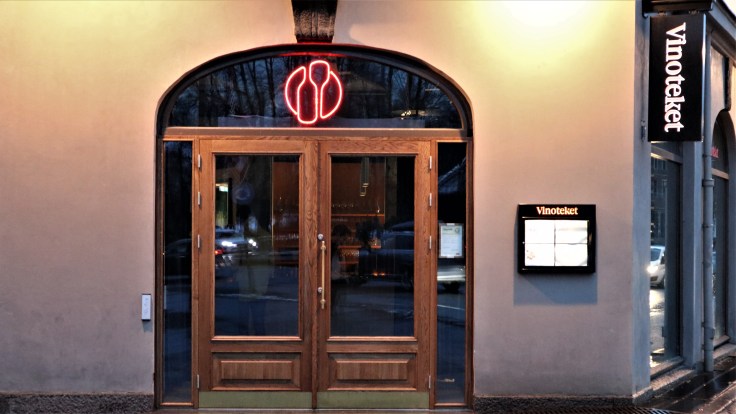
This new gem has become a go-to, with REALLY good pizza and an impressive wine list. Nicely priced, good variety, and quite a few Piemonte favorites. With frequent wine events, this is a new wine hot spot. Gaia Gaja even made an appearance. Vinoteket is one to watch.

Any other good ones?

There are so many other good restaurants in Oslo (and Norway). According to Kapital, Park Hotel Vossevangen has the best wine list in Norway. I’ve never been, but I’ll take their word for it. Park Hotel is definitely on the list of places to visit. Others that made the list are: Arakataka, Kontrast & Restaurant Bro. You can read the full article (in norwegian) here.

Favorites

We all have our favorite wines or winemakers, and here are some of my favorites at the moment.

For Fun

Cascina Fontana Dolcetto 225,-
Looking for a wine to drink on a Tuesday night along with a bowl of pasta? Then this is your guy! And it the summer, chilling it a little may help cool you down in the hot summer months!

Trediberri Barbera 189,-
Trediberri’s first vintage was 2011 and his wines quality has skyrocketed! And at this price, this barbera is fricking steal!

Azelia Dolcetto 2013 179,-
A very interesting dolcetto, with grapes grown outside the Barolo area. This means that some of the best vineyards are actually used for Dolcetto instead of Nebbiolo, giving the grapes the best circumstances, making this Dolcetto extraordinary!

For Summer

Vietti Moscato 199,-
Get a bowl of strawberries and pop open this – it’s like you died and went to heaven. I love moscato, and I don’t even need a dessert. So good!

Trediberri Langhe Rosato 139,-
I am not a huge rose person, but if I had to pick one it’s for sure Trediberri’s Langhe Rosato. Fresh, not super sweet and made with love.

Agrapart Blanc de Blanc 508,-
Champagne is growing on me, and I really like this one. And as for Champagne, this is not super expensive. Blanc de blanc typically suits me best, and Agrapart makes a really good one!

Buy & Drink in 10 years

Marengo Barolo Brunate 599,-
Cavallotto Barolo Bricco Boschis 507,-
Corino Barolo 379,-

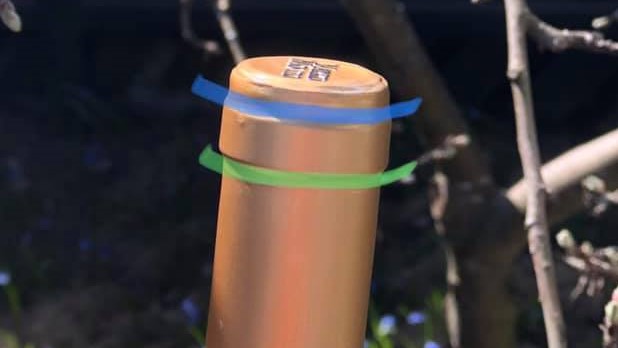
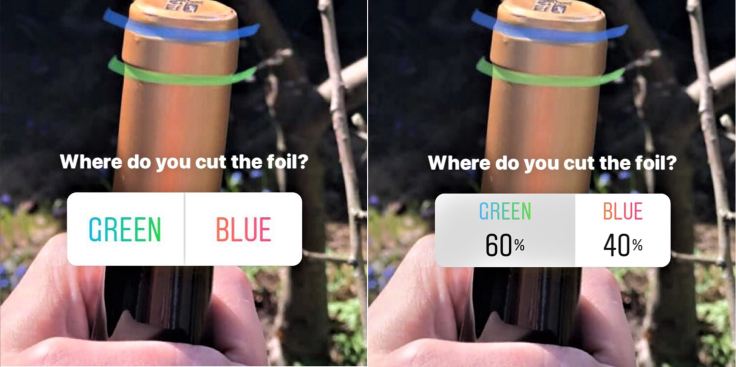
Team Green or Team Blue?

Team Green or Team Blue?

How do you cut the foil?

Does it matter? Is there a right way? Apparently, people have a lot of opinions on the subject. Here are a few of the preferences:
Green
Blue
In between green and blue
Take the whole foil off
Use a foil cutter (and then the type of cutter decides)
Used to be green, now blue (or vice versa)
Don’t care

Does it matter?

Apart from peoples preferences, is there a reason to do it one way or the other? Does one way affect the wine or the pouring of the wine? Some people say that cutting by the blue line will interfere with the wine, because the wine can come in contact with the foil on the way into the glass or the decanter. Others say cutting by the blue line will increase chances of spilling the wine while pouring.

What do the winemakers say?

Without “outing” any winemakers, it was interesting so see to which team they pledged allegiance. And just like my instagram story, they favor green. Here are some of the winemakers that participated in the survey:
Carlotta Rinaldi
Nadia Curto
Giovanni Corino
Alberto Viberti
Alessandro Veglio
Lorenzo Scavino from Azelia

What do the the experts say?

Most of the experts are Team Green. However, they dispute the fact that the foil affects the wine if it comes in contact. It’s more about the look, the ease of removing the foil and the ease of pouring without spilling

Jancis Robinson: Team Green
Wine Folly: Team Green
Dr. Vinny (Wine Spectator): Foil Cutter

Conclusion?

It doesn’t really matter. Most people are Team Green. And some are neither. In the end, do whatever you prefer. And what team am I?

Vinoteket – Pizza Heaven

… and the wine isn’t bad either.

Vinoteket is the place to be these days, both for their incredible pizza and their good wine list. Recently opened at Solli Plass, there never seems to be an empty table. But then again, pizza and wine is a killer combination

The Art of Pizza

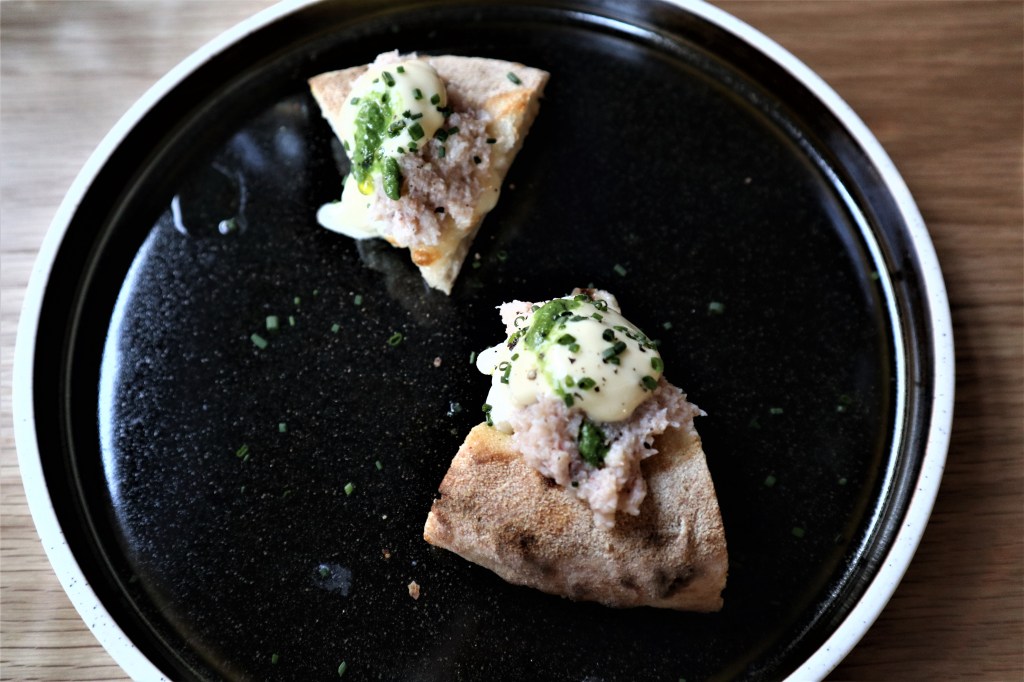
The menu says pizza, but my brain says art. Crab, tandoori, procini, salmon, meatballs – who knew this was pizza material. A little skeptical but intrigued I order the tasting menu. Up first is crab on sourdough. And what arrives at the table is not just a pizza. It’s art.

Most of you know I make pizza every Friday so I feel very well versed in the art of pizza. As it turns out, I’m a complete amateur. The sourdough is thick, yet crispy. And the crab + mozzarella + aioli + chives heaven that they call pizza just blew me away.

I’m already excited for the next one: mushrooms. And guess what? I hate mushrooms. Turns out, if it’s mushroom ragu + panfried cep, spring onion, dill, chestnut-pecorino on hydrolisis dough, mushrooms kind of rock. At this point I am thoroughly impressed.

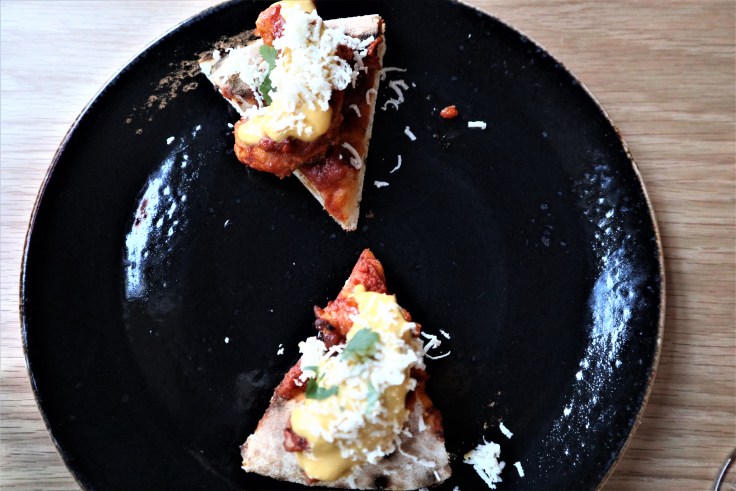
The next two don’t disappoint either. Tandoori, which is sourdough, argentine king prawns, capsicum chutney, paneer & coriander is a little too spicy for me, but delicious. This one did not pair perfectly with my Roche de Bellene Pinot Noir. You can opt for the Vinoteket wine menu as well, where you get a glass of wine better suited for the food. The last pizza was Porchetta: sourdough, porchetta, mozzarella, grilled pumpkin, poached quail egg, pecorino cream and oregano. Might sound a little strange (I mean pumpkin and quail egg??) but it was as delicious & surprising as the other ones.

Vinoteket – the place to be

Now, here’s a tip for those who want to try: I’d get the tasting menu. That way you can try a multitude of amazing pizza combinations. But I am also not sure I could eat one whole pizza with crab. Or mushrooms. Or tandoori shrimp. And let’s face it, you don’t really go to Vinoteket for a mozzarella pizza.

Vinoteket opened not long ago, about mid 2018, so as with any new business there are always some kinks. But overall I am impressed with the food, the wine list, the service and the interior. You should also check out their events. Gaia Gaja held a tasting there in February. At the end of April there is a Bordeaux tasting. Lot’s of fun things happening! I’ll definitely be back!

The Barolo “Boy”

Chiara Boschis – a Barolo “boy”

About 30 years ago there was a revolution in the Langhe area, when the so called “modernists” where born. You may be able to debate how it started, but it can be argued that Elio played a big role when he brought his father’s big barrel outside and turned it into kindling. What followed was a sort of “war” between the modernists and traditionalists.

Chiara Boschis

I’m not sure you’ve heard of the “Barolo Boys“, but they are the main characters in this so called war. And amid all the boys – Elio Altare, Accomasso, Beppe Rinaldi & Roberto Voerzio – you have Chiara Boschis. Chiara assumed responsibility of the winery in 1980, and back then it was uncommon for women to be winemakers. But she persevered and the results are outstanding.

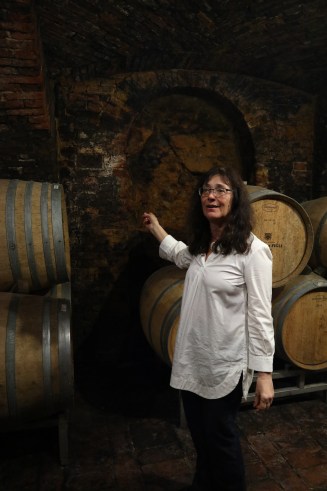
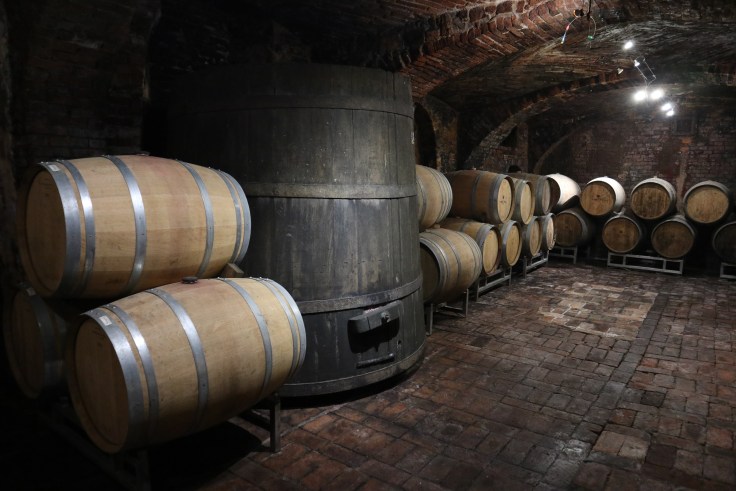
Chiara Boschis Wine Cellar

Chiara is a fiery, feisty, fantastic person with boatloads of passion. And her incredible energy is contagious. Chiara is not just a winemaker, she is a hard core farmer on a mission to save the planet. Global warming or global climate change is a common topic in the area these days.

Extreme weather & temperatures creates all sorts of issues for the vines. This year, there has been almost no rain, and rain is crucial in this period when the buds are appearing on the vines. And if there is frost after the buds have appeared, then there is a whole other set of issues. Just look at Burgundy the past week.

But Chiara, along with many other winemakers in the area, fights with all she’s got. Biodiversity & organic are popular words these days, and for Chiara they are words to live by! She always looks for new ways to aid the land where she grows her wine. She continuously thinks of new ways to improve. Chiara never gives up!

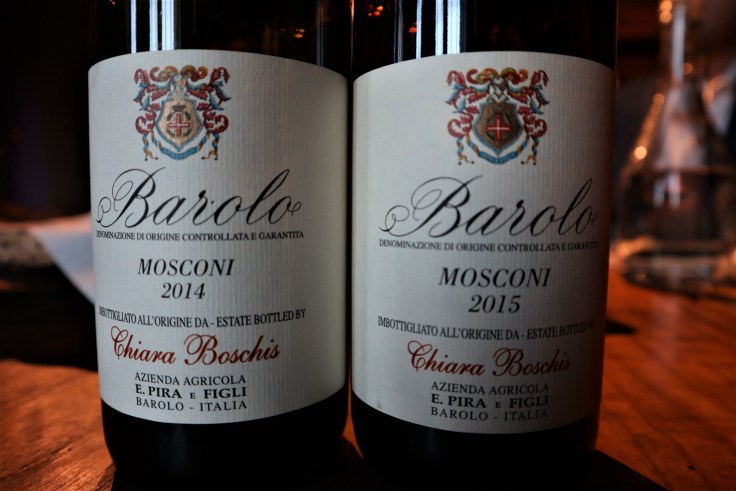
As for the wines, Chiara always strives for perfection. 2014 was a difficult year, so 2015 I think would automatically be a good year (compared to the 2014). As with any agricultural product, the wine reflects the vintage was well as the soil. Chiara Boschis made excellent wines both years, but I think I prefer 2015 over 2014 Mosconi. I look forward to the next vintages, as well as the transformation of the wines in the bottle.

Gaia Gaja @ Vinoteket

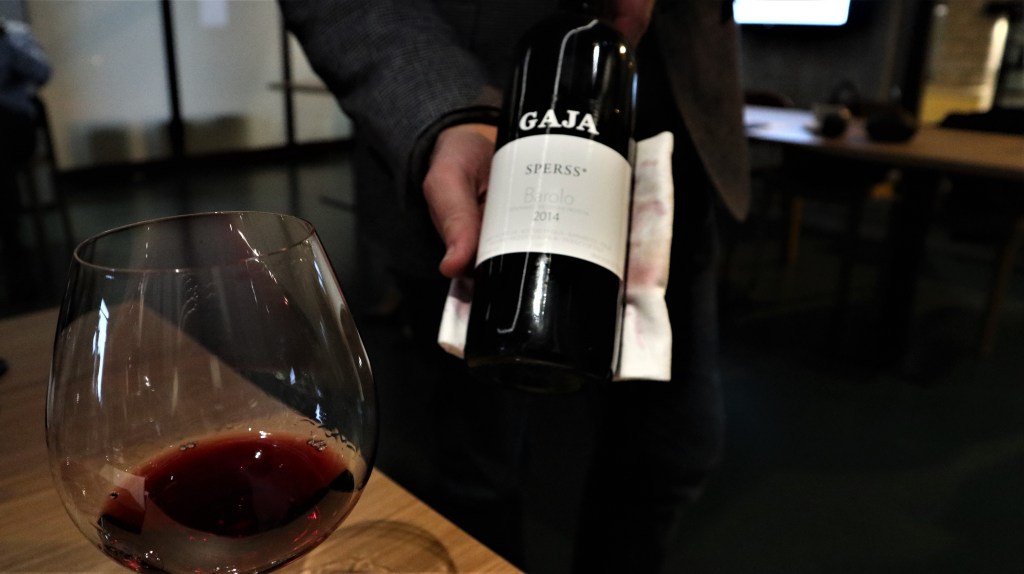
Vinoteket, a hot new meeting place for wine enthusiast, recently hosted Gaia Gaja for a winetasting. Clearly, I was in attendance. Although I have tried quite a few of the wines from Gaja, I have never been to the winery.
All in all we tasted 5 different wines, 3 from Piemonte and 2 from Tuscany (who knew!).

Gaja has recently started a new project in Tuscany, and at the tasting Gaia showed us two of the wines from there. First, the Camarcanda, which is 80% Cabernet Sauvignon and 20% Cabernet Franc. A simple, but structured wine from a flat area with limestone soil.

Bolgheri is a simple beauty

Gaia Gaja

The second wine from Tuscany is the Brunello di Montalcino, the “brown grape” from Montalcino. With 100% sangiovese, a Brunello can be very tannic if made “poorly”. Gaja brought the Brunello from 2014, a difficult vintage, but a vintage that resulted in lower tannins and good acidity.

Wines from Piemonte

From Piemonte, we tried Conteisa, Spress and Sori Tildin. Conteisa, where the grapes are from La Morra, was more elegant and fruity than Sperss, where the grapes are from Serralunga. Both balanced wines with good structure and good acidity. Compared to the wines from Tuscany, Gaia feels like the nebbiolo wines are less persistent, more quiet.

Nebbiolo allows the vintage to be in front

Gaia Gaja

Sori Tildin comes from a vineyard planted veritcally (very unusual) which allows for a higher density of vines. Located on the top of the hill, southfacing on dense soil means the wine is very concentrated. Rich, dark fruits with a hint of mineralism.

Gaja on climate change & biodiversity

Although she spoke a lot about the wines, she also spend a significant amount of time on the topics climate change and biodiversity. Climate change has become an issue in the vineyards, as the weather is even more unpredictable than normal, making the work in the vineyards more and more difficult. A proposed solution to this problem is more biodiversity.

If you look out into the landscape in Piemonte, you’ll see miles and miles of vineyards as far as the eye can see. The problem with this “mono agriculture” is a lack of biodiversity. Despite protests from Angelo Gaja, they decided to hire consultants to help. Bee keeping, different types of herbal essence, leaving the grass growing, planting trees – all of these ideas are meant to encourage biodiversity.

A truly interesting woman, who comes from a winery with an incredible history! If I were to describe Gaia in 3 words:
Passionate
Fierce
Intelligent

My 48 hour Burgund Slipp Adventure

It’s the middle of the night.
It’s cold.
It’s dark.
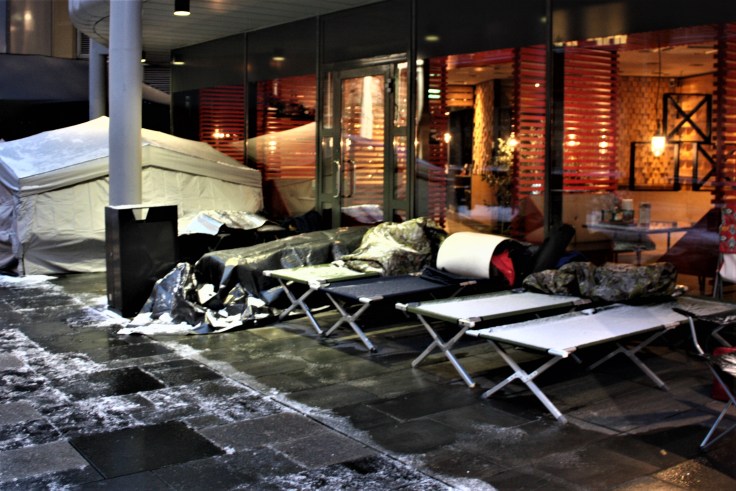
I’m lying on a cot on the street in Oslo, next to 5 men, and I’m thinking to myself: What on earth am I doing?

That is an excellent question. What am I doing?

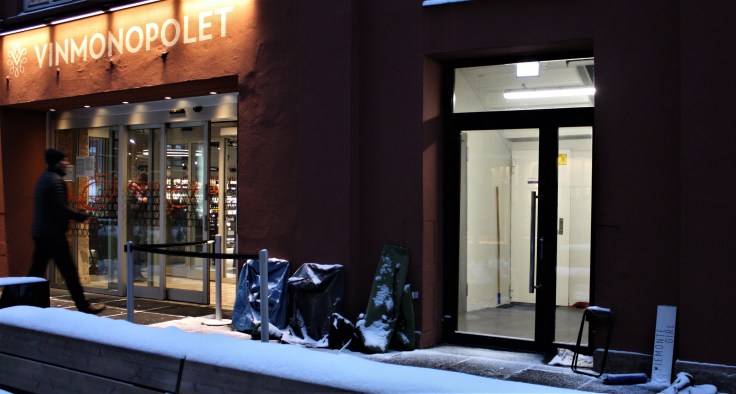
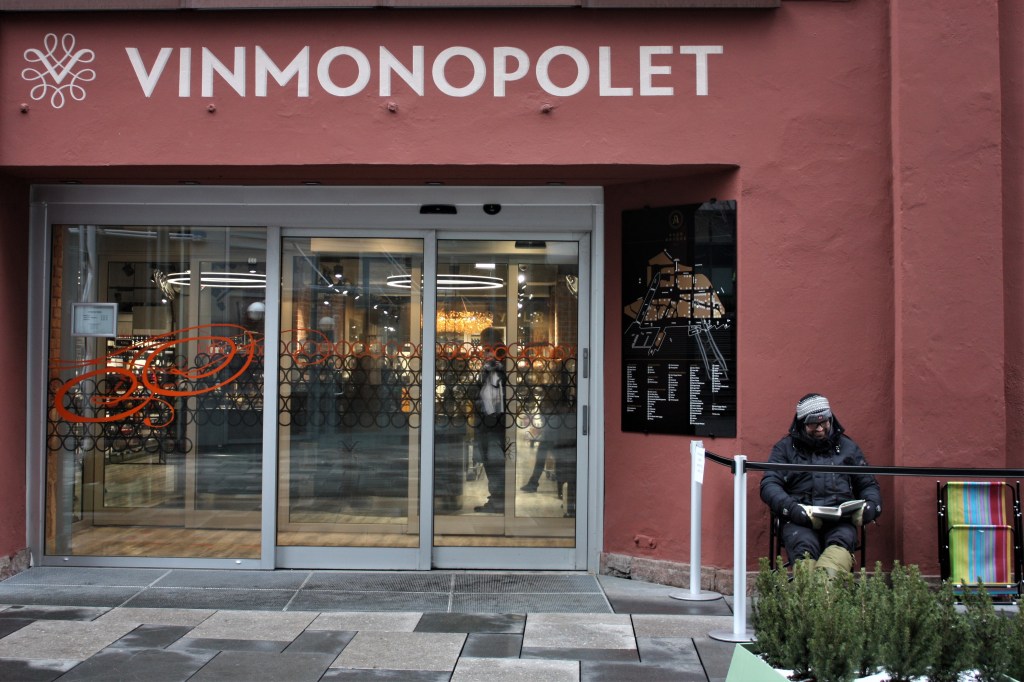
I’ll tell you. I am waiting in line to get my hands on some of the rarest wine in the world. Every year, the Norwegian Vinmonopol releases the new vintage of burgundy wines, and if you want the best, the rarest and most expensive, you need to wait in line.

Now, let me be clear: I am not lying in the cold, dark, Norwegian winter next to 5 strange men to buy the Romanee-Conti from DRC. Partly because I’m too late, as number 16, but mostly because that’s not why I’m here. I’m here to experience a phenomenon native to Norway. The intricate brotherhood of the Burgund Slipp Kingdom.

I don’t think I know how to begin explaining this. I feel like I’ve entered another world where they have their own rules, routines and etiquette’s. Some of the rules are:
– No pictures
– No personal questions
– You’re supposed to put a symbolic placeholder in queue next to the entrance
– The last person in the queue is in a way responsible to inform the next person who arrives which number is next in line.
– You can leave for a while to eat, shower, go to the bathroom but there is a time limit.

These rules and norms are formed by what I call the Brotherhood. The veterans. The, let’s face it, boy’s club, that runs the Burgund Slipp. They have a big tent, where they spend days planning their “shopping list” and strategize for the big day. The list of wines circulates among them, they scribble and take notes, discuss and then do it all over again the next day. Until the big day arrives.

I sit on my cot, under my tarp, hiding from the snow and wind, while trying to absorb all the activities happening around me. I’m on the outside, looking in. At least for now.