Words used to describe Langhe Nebbiolo 2019: structure, powerful, round tannins, explosive nose, fruity, drinkable. I know you can’t put all Nebbiolo in the same basket, but some characteristics apply to many or all. I can also say that the results of 2019 are good. Just keep reading. Or better yet, go out and try some for yourself!
Climate
2019 started with a drought from January to late March, followed by heavy rain in April and May. The weather was quite unstable which led to uneven development of the vines. In addition to this there were two critical events in 2019: a hailstorm and rain forecast during harvest. The hailstorm that occurred on September 5th was quite localized and only affected certain areas. The rain however, affected everyone. Rain during harvest is not good, and so when the forecast predicted rain on October 15th, many growers harvested earlier than they would have liked. Weather is a fickle thing…
Despite all mentioned above, 2019 has proved to be a good vintage so far. Time will tell for Barolo, but the other wines like Langhe Nebbiolo 2019 are showing nicely. There is substantial acidity, and the alcohol is not excessive.
Below are my tasting notes in alphabetical order. Note that there are also some Nebbiolo d’Alba in here.
Alberto Viberti Langhe Nebbiolo
Aroma of cherries and other red fruit. Round tannins providing good structure.
Elio Grasso Gavarini Langhe Nebbiolo
Smells just like a Nebbiolo should smell. Explosive notes with aroma of red fruits and spices. Soft, round tannins, but still a powerful wine. A beautiful wine!
Emilio Vada Nebbiolo
Tasted blind. Beautiful nose. Strawberry and other red fruits. Excellent acidity. Balanced. Good structure. Very fresh and crisp.
Francesco Borgogno Langhe Nebbiolo
Floral and fruity aroma with hints of roses and strawberries. Typical Nebbiolo nose. Persistent in the mouth. Very fresh fruit. Crisp.
Ghiomo Vigna Granda Langhe Nebbiolo
Energetic wine with aroma of flowers and minerals. Soft tannins.
La Vedetta Langhe Nebbiolo
Beautiful nose, just how a Nebbiolo should smell. Very drinkable. Good structure.
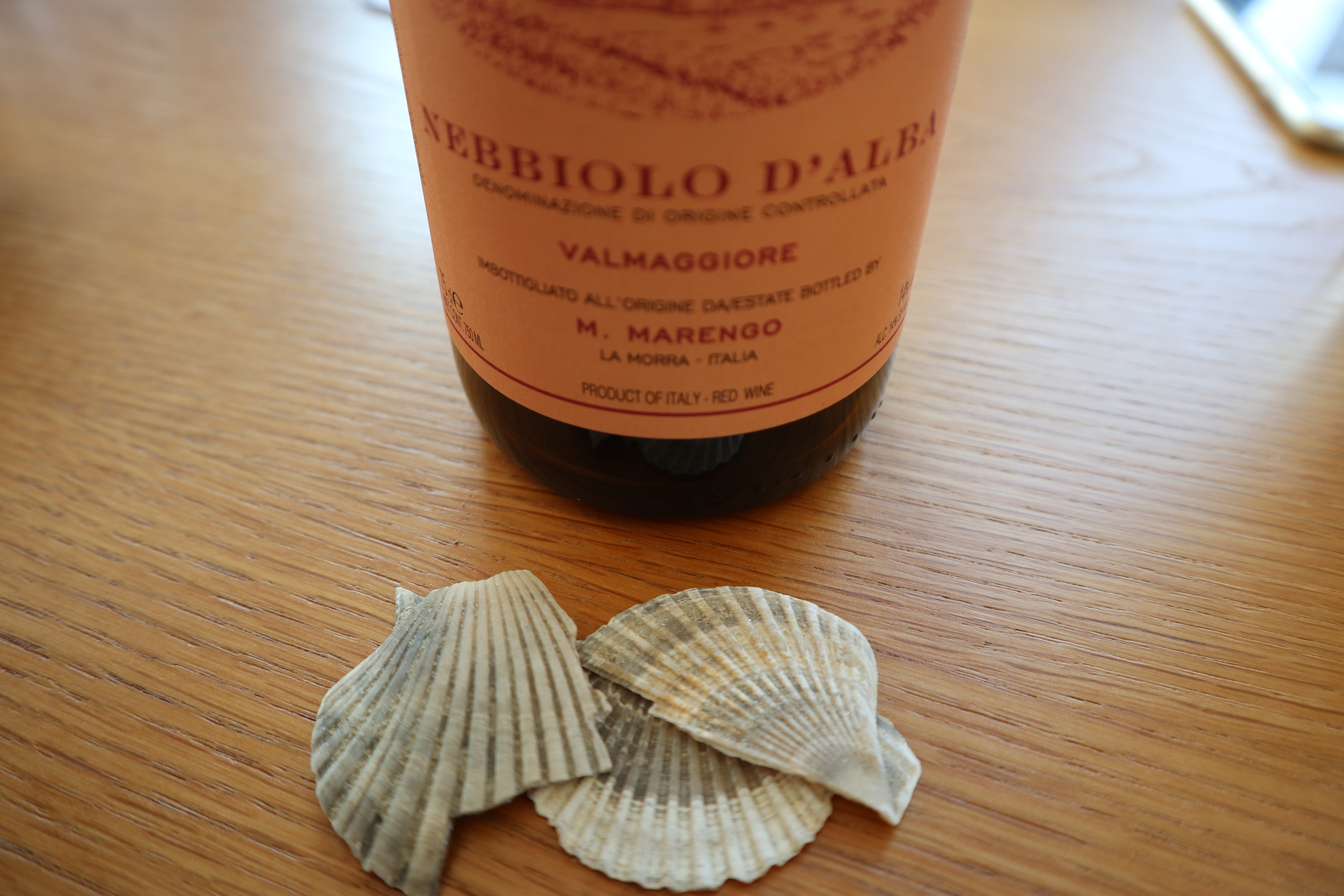
Marengo Nebbiolo d’Alba
Holy shit. Amazing nose with notes of red berries and rose petals. Very drinkable. Smooth tannins. Elegant wine.
Trediberri Langhe Nebbiolo
Explosive nose with aromas of flowers and fruit. Hints of tobacco, roses, red fruits. Firm, but elegant tannins that disappear quickly. A baby Barolo.
Barolo 2016 – the vintage to rule them all? Every vintage is different. Some are hot, some are cold, some are dry and some are wet. And then you have everything in between. Sometimes, you have a vintage where everything kind of lines up. 2016 is such a vintage.
What is the best weather, you might ask. The reason it’s hard to answer this question is the fact that each step of the way, the grapes need different things. You want rain in the growing season, but not too much. During the harvest, the absence of rain is preferred. It needs to be warm, but not too warm, and you also want the nights to be cooler toward the harvest, but not too cool. The grapes are indeed quite high maintenance.
But then you have the “magic” vintages. The weather in 2016 was just about as perfect as can get for the Nebbiolo grapes. The growing season was long, there was an absence of natural disasters like hail, the weather was stable toward the end of the season and the harvest was late.
Barolo 2016
A lot of good Barolos came out of 2016, but what struck me the most is the high quality of the classic blends compared to the Cru Barolos. The classic blends are usually simpler, less complicated and can sometimes be perceived as inferior to the Cru Barolos. But in 2016 the disparity between the two is much smaller. I found the blends to be approachable, elegant, fresh and complex. It might be the year to stock up on the classic blends and give your wallet a break.
Top 5
Among the Barolo 2016s I’ve tasted, a few stood out. The unifying aspect connecting these wines was the “wow” feeling I got when I tried them. They were more than good wines, there was something extraordinary about them.
Azelia Barolo Cerretta 2016 – Now we’re talking! A powerful Barolo with an explosive nose. Notes of chocolate, tobacco, fruit. Big but sweet tannins. Burlotto Barolo 2016 – Holy shit. An incredibly approachable Barolo with elegant tannins. On the nose you’ll find hints of spices, tobacco, some chocolate and violets. Diego e Damiano Barale Barolo 2016 – Smooth and elegant Barolo with notes of leather, roses and red fruit. Excellent structure with round but persistent tannins. Francesco Borgogno Barolo Brunate 2016 – Beautiful nose, just like a Brunate should smell. Elegant wine with a long finish. Hints of tar on the nose. Marengo Barolo Brunate 2016 – Holy tits on toast. Those were my exact notes. A beautiful nose – floral and fruity. Elegant tannins, very smooth. This wine has huge potential.
Note that our tastes may differ, and these are based on my personal preferences. The wines are sorted in alphabetical order.
Barolo 2016 Tasting Notes
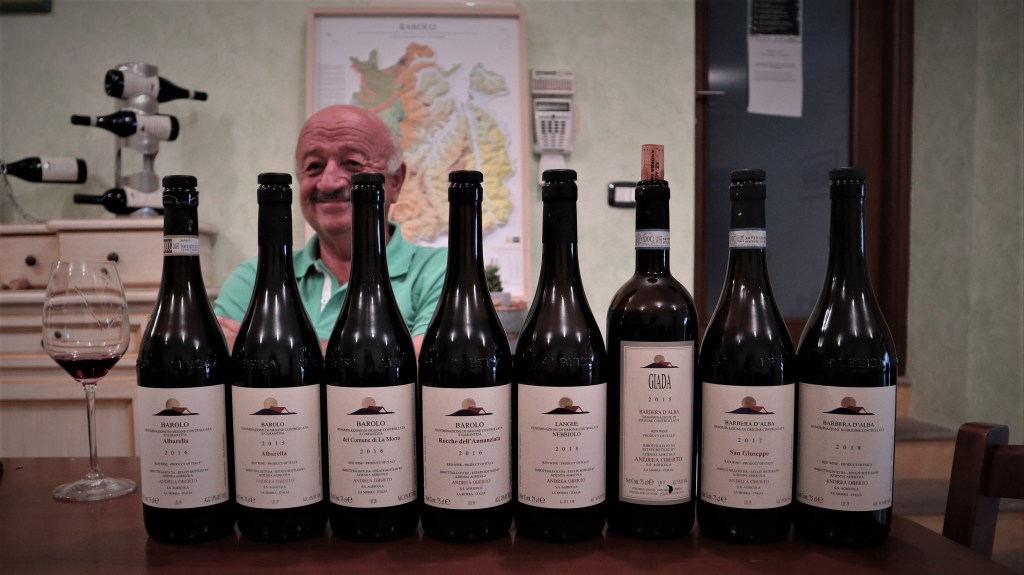
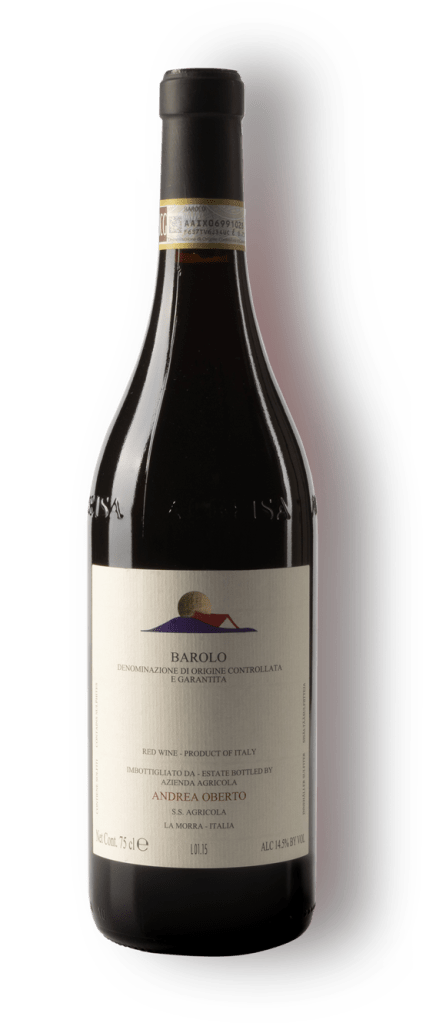
Andrea Oberto Barolo Commune di La Morra A very fresh Barolo with some balsamic notes. Hint of red fruit and tobacco. Tasted blind next to Barolo Rocche dell’Annunziata 2016 and Barolo Arbarella 2015.
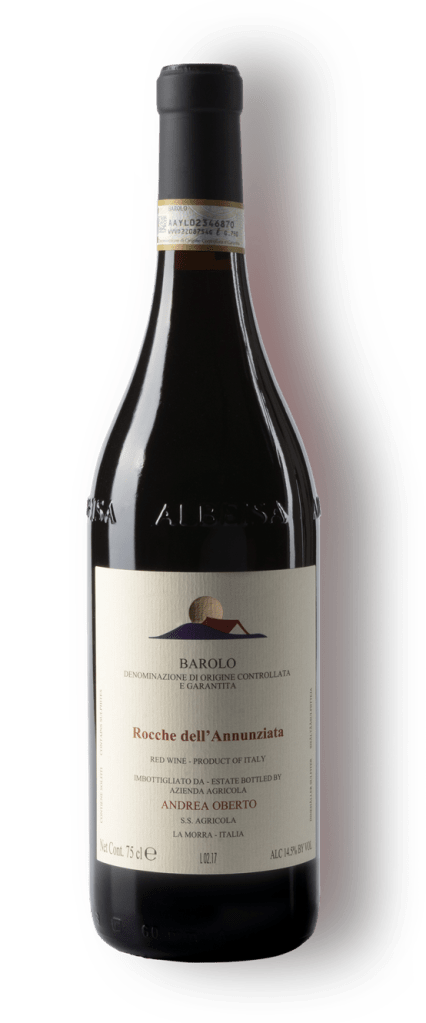
Andrea Oberto Barolo Rocche dell’Annunziata Lovely floral and fruity nose. A big wine with sweet (round) tannins. My favorite Barolo 2016 from Andrea Oberto. Tasted blind next to Barolo 2016 and Barolo Arbarella 2015.
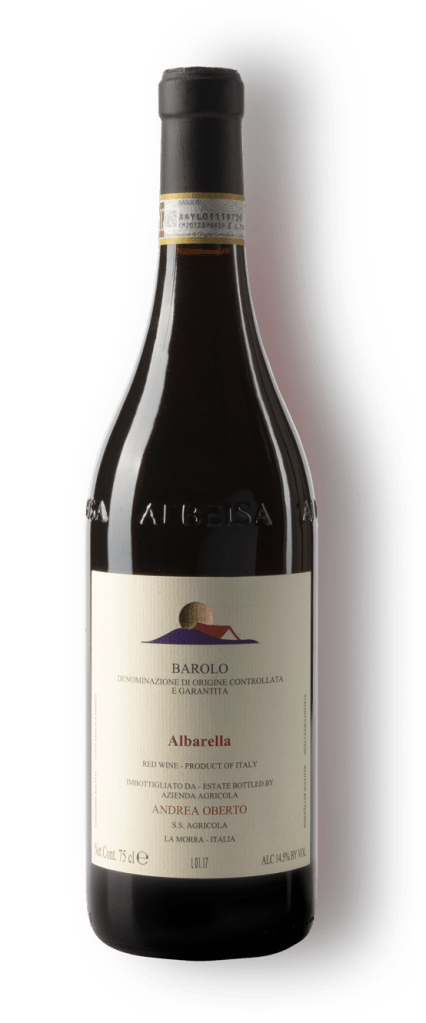
Andrea Oberto Barolo Albarella A very floral and feminine Barolo with hint of licorice. Tasted next to the Barolo Albarella 2015, and although 2015 is a good vintage, 2016 is definitely more expressive and approachable.
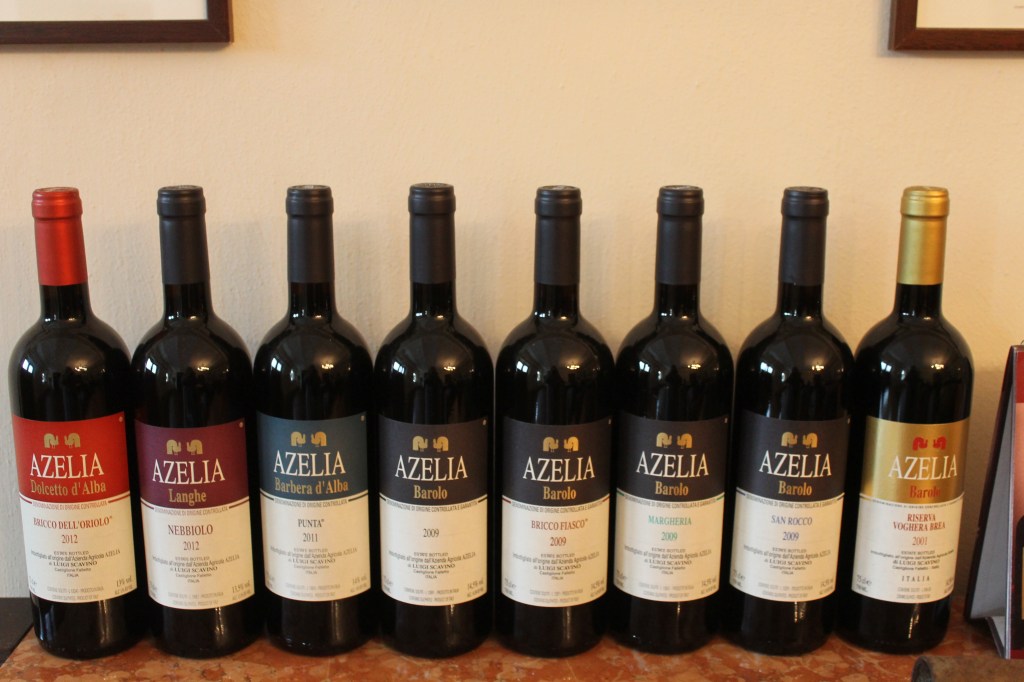
Azelia Barolo Floral and fruity nose, elegant tannins, good structure and long finish. A classic Barolo with grapes from Castiglione and Serralunga, giving the wine a good mix of feminine and masculine characteristics.
Azelia Barolo Margheria A powerful wine! Notes of tobacco, chocolate and spices.
Azelia Barolo San Rocco Another big wine from Azelia. Notes of chocolate and warm dark fruit.
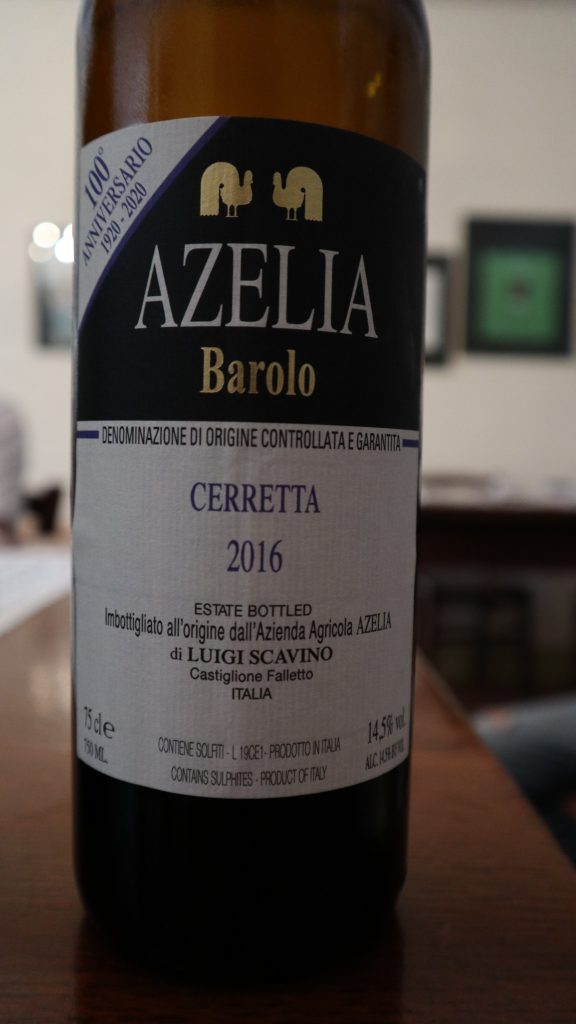
Azelia Barolo Cerretta Now we’re talking! A powerful Barolo with an explosive nose. Notes of chocolate, tobacco, fruit. Big but sweet tannins.
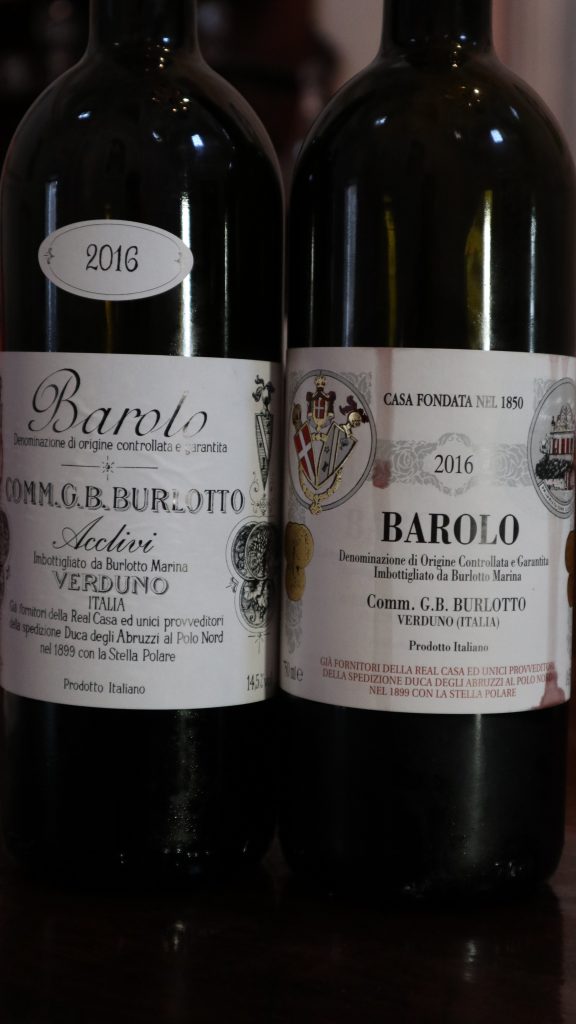
Burlotto Barolo Holy shit. An incredibly approachable Barolo with elegant tannins. On the nose you’ll find hints of spices, tobacco, some chocolate and violets.
Burlotto Barolo Acclivi My first thought: What an extreme difference to the classic. The nose was so much more explosive. Roses, wet forest floor, spices. Smooth tannins. Spicy in the mouth.
Burlotto Barolo Monvigliero Again, so different on the nose. Typical monvigliero notes, almost like perfume. Spicy and floral. Impressive wine that is both powerful and elegant at the same time, with a long finish.
Burlotto Barolo Cannubi Floral, fruity, fresh. Bigger in the mouth than the other three. Big but with sweet tannins, making it relatively approachable now. But this is a wine I would store for a while.
Cascina Fontana Barolo “A wine complete” – Mario. Everything is good – well integrated, good nose, good structure. Elegant with a long finish.
Cascina Fontana Barolo Castiglione More masculine notes compared to the classic Barolo. Bigger in the mouth, but still elegant.
Cavallotto Barolo Beautiful nose with notes of roses, fruit and leather. Very elegant tannins.
Cavallotto Barolo Vignolo Big but approachable. Notes of roses and tobacco. Long finish.
Chiara Boschis Barolo Cannubi Explosive nose, very feminine and fresh. A very elegant Barolo.
Chiara Boschis Barolo Nia Nuova Via Nuova is a lot bigger than Cannubi, more masculine.
Chiara Boschis Barolo Mosconi A big wine with a long finish. Can feel the Monforte tannins. Huge potential!
Diego e Damiano Barale Barolo Smooth and elegant Barolo with notes of leather, roses and red fruit. Excellent structure with round but persistent tannins.
Diego Morra Barolo Zinzasco Balsamic and tobacco on the nose with a hint of chocolate. Big round tannins but they go away quite quickly and then you’re left with beautiful fruit and chocolate.
Ettore Germano Barolo Prapo A powerful yet elegant Barolo with softer tannins.
Ettore Germano Barolo Cerretta More powerful and concentrated. Balsamic nose with hints of concentrated fruit. Powerful tannins, a rustic Barolo.
Francesco Borgogno Barolo Brunate Beautiful nose, just like a Brunate should smell. Elegant wine with a long finish. Hints of tar on the nose.
Fratelli Revello Barolo The Fratelli Revello Barolo 2016 seduces you with aromas of red berries, licorice, tobacco and roses. The wine is powerful yet elegant, with a round fruity feel backed up by a good structure.
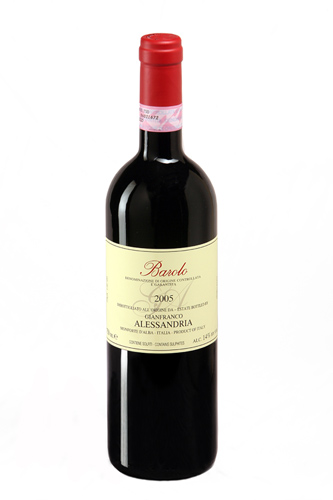
Gianfranco Alessandria Barolo Notes of oak, spices and rose petals. Big tannins, typical of a Monforte Barolo. Very good, long finish.
Gianfranco Alessandria Barolo San Giovanni This Barolo smells just like e a Barolo should smell. Some oak notes in addition to notes of licorice, leather and cherries. Big in the mouth, a typical Monforte Barolo. A tad spicy with a long finish.
Luigi Pira Barolo Marenca A more masculine and austere Barolo, but also quite crisp and fresh. Notes of tobacco, spices and menthol.
Luigi Pira Barolo Vignarionda Beautiful nose with notes of roses, red fruit and chocolate. An explosive wine with a long finish.
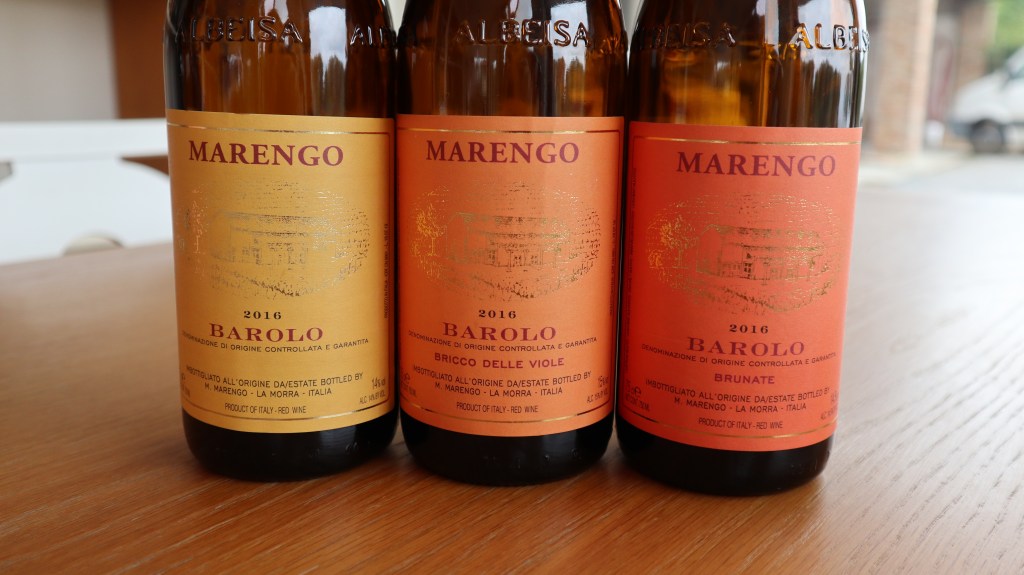
Marengo Barolo Smells just like a Barolo should, with notes of roses, leather and fruit. Smooth tannins that disappear quickly.
Marengo Barolo Bricco Delle Viole A more floral nose compared to the classic, with hints of roses and violets. More tannins than the classic as well.
Marengo Barolo Brunate Holy tits on toast. Those were my exact notes. A beautiful nose – floral and fruity. Elegant tannins, very smooth. This wine has huge potential.
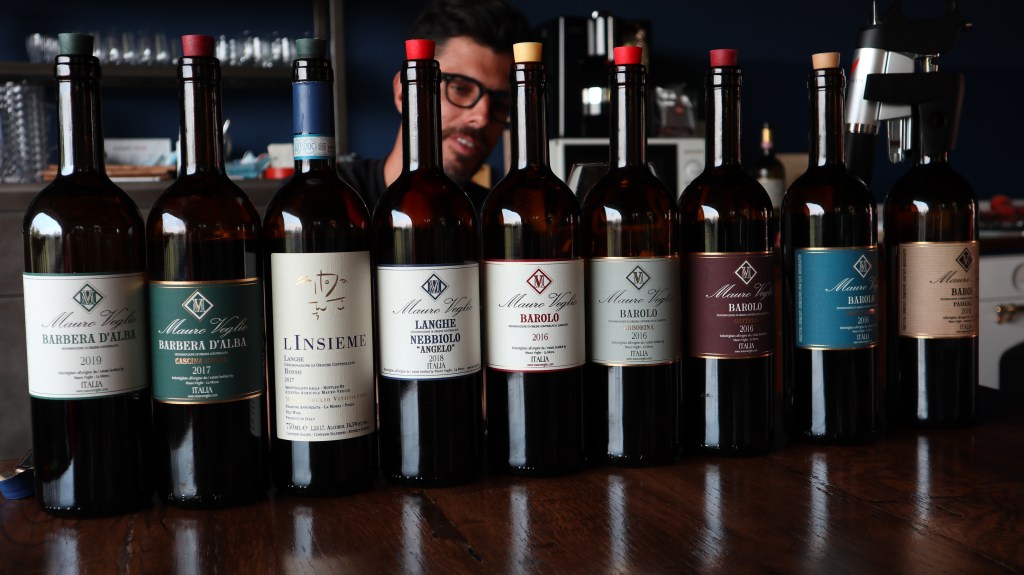
Mauro Veglio Barolo Subtle nose with notes of spices, leather, flowers. Tastes just like a Barolo should taste – elegant and balanced. A big powerful wine, yet elegant, with a long finish.
Mauro Veglio Barolo Arborina Smells like Arborina, a beautifully feminine wine. Notes of rose petals with a hint of leather. An impressive Barolo that’s smooth in the mouth. Arborina tends to be more direct/vertical than Gattera.
Mauro Veglio Barolo Gattera Slightlymore masculine than Arborina. Notes of wet soil, spices, leather on the nose. Bigger tannins, rounder, more complex than the Arborina.
Mauro Veglio Barolo Castelletto Very spicy nose. Notes of tar and forest floor. More tannins and more structure than Arborina and Gattera.
Mauro Veglio Paiagallo Mauro Veglio Barolo Paiagallo 2016 has a very elegant nose of red berries, mainly strawberry and raspberry. The wine is powerful but elegant. Remarkably soft tannins!
Mauro Molino Barolo Bricco Luciani Feminine with smooth tannins. Red berries and floral notes.
Nadia Curto Barolo La Foia More tension than 2015. Fresh and crisp. Big but elegant.
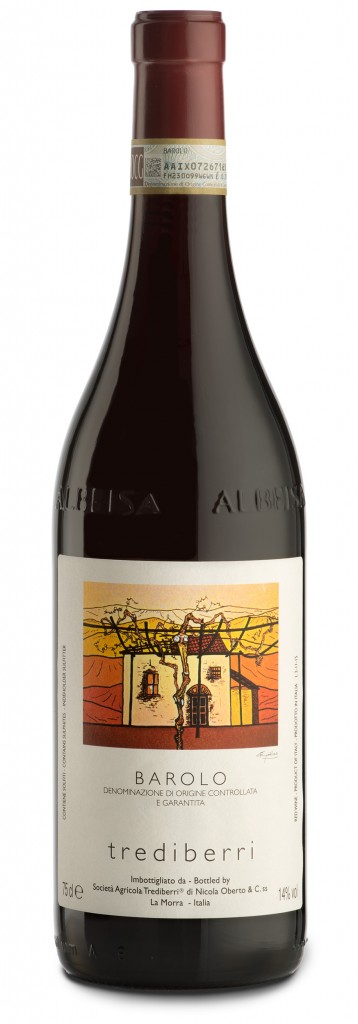
Trediberri Barolo Roses, tobacco and tar. A wonderful, big Barolo. Might need some time in the glass to open up.
Vietti Barolo Perfect Barolo nose! A powerful wine with big tannins but they disappear quickly and you’re left with wonderful fruit.
Vietti Barolo Lazzarito Fresh nose, very fruity and floral with hints of spices and forest floor. Good structure.
Vietti Barolo Ravera Balsamic nose with hints of leather and licorice. Spicy in the mouth with a long finish. This wine needs time
Vietti Barolo Brunate Beautiful nose – floral, elegant, fruity. Powerful but also elegant. Long finish.
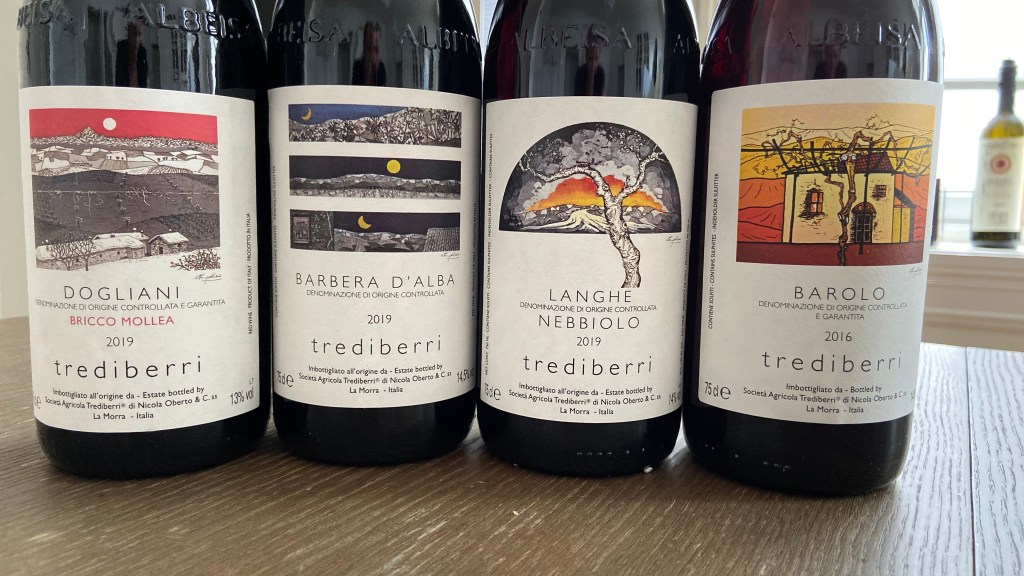
Introducing: Trediberri Bricco Mollea & the new vintages! It’s always exciting when the new vintages are released, and we are all eagerly anticipating the 2016 Barolo’s. But I have to say I am also really excited for the new addition to the Trediberri family – a Dogliani Dolcetto!
The Bricco Mollea vineyard is located in Vicoforte, far south in Langhe. Dolcetto’s from Dogliani tend to be more intense than Dolcetto’s from La Morra, and if you combine the terroir with the 62 year old plants, you get a complex and intense Dolcetto. Note, when I say intense it’s not intense in a bad way. Quite the opposite actually. The Trediberri Bricco Mollea Dolcetto is fruity and rich; a beautiful expression of the grape variety.
Please, every sip you drink, be happy
Nicola
Trediberri Bricco Mollea Dolcetto 2019
The Dolcetto grapes grow in Vicoforte, near Mondovi, in the southern part of Langhe. The vines were planted in 1958, which mean the plants are about 60 years old. It’s a 100% Dolcetto, fermented in concrete.
The first thing I notice is that beautiful Dolcetto nose. And explosion of dark berries. The 2019 vintage seems to be a bit more intense than 2018, and the intensity continues in the mouth. It’s still a fresh and fruity Dolcetto, with a pure expression. A wonderful first edition of this wine.
Barbera d’Alba 2019
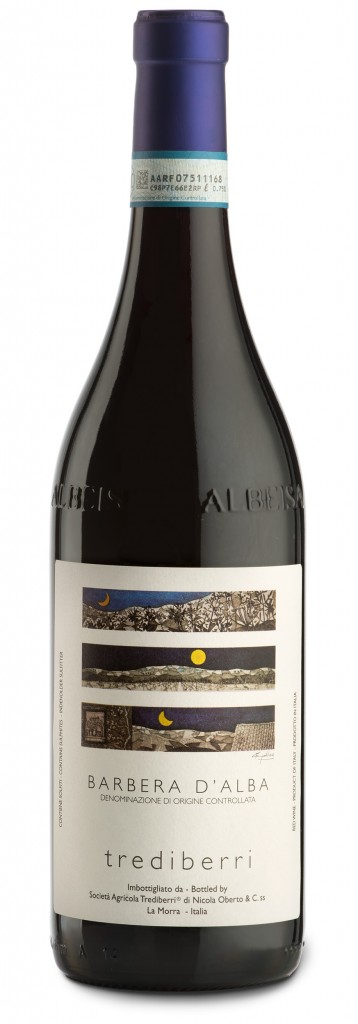
Trediberri’s Barbera is 100% Barbera, fermented in concrete tanks. Barbera is known for being lush and bold – it likes hot weather, it likes concentration, it likes being big. But the Trediberri Barbera is more pure. It’s less bold, with a fresh fruitiness. There’s also a very good acidity.
Langhe Nebbiolo 2019
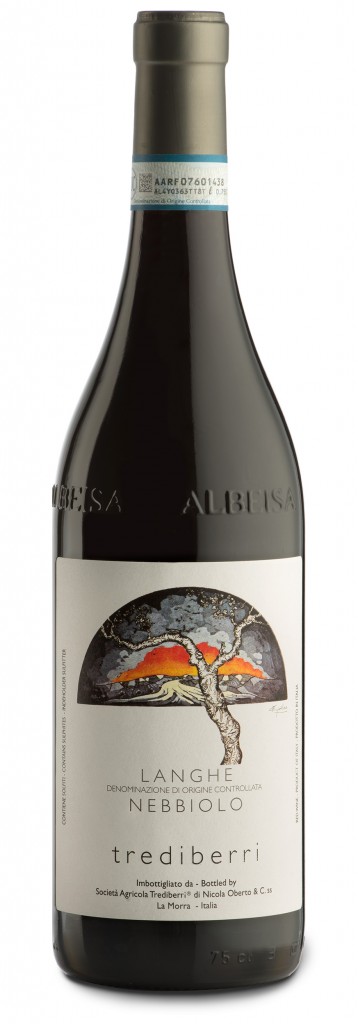
The grapes in the Trediberri Langhe Nebbiolo come from the Berri vineyard, from a vineyard in Alta Langa, and 10% of grapes from Roero to give a hint of perfume.
Consistent with other 2019’s I’ve tasted, the Langhe Nebbiolo has an explosive nose. Very fruity, floral and fresh. Red fruit dominated, but there are notes of roses and tobacco. Firm but elegant tannins that disappear quickly.
Barolo 2016
The Nebbiolo grapes go through a 3 week maceration in concrete tanks. Trediberri Barolo 2016 has a typical Barolo nose: tobacco, tar, roses. It’s a little subtle at first, and needs time to open up. A big wine yet elegant at the same time. As Antonio Galloni said, “This is an especially potent vintage for the straight Barolo, and there is clearly so much going on in the glass; it is a superb wine in the making.”
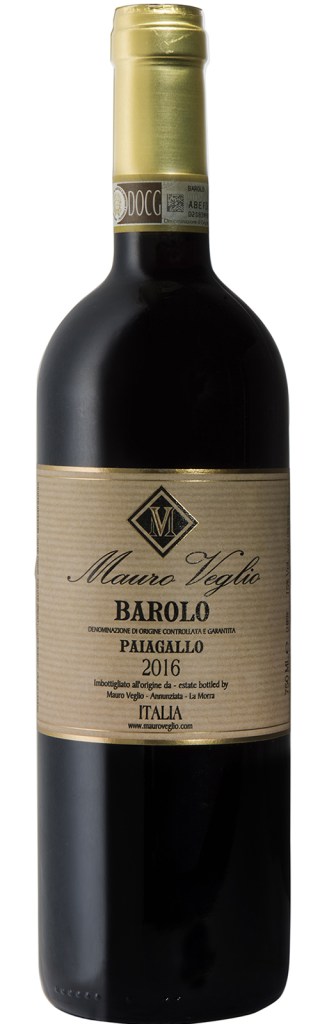
I have the pleasure of introducing, for the first time, Mauro Veglio Paiagallo 2016! But before I dig into the Paiagallo 2016, some back story might be in order. A few years ago, Mauro Veglio and Alessandro Veglio joined forces, and now make wine under the same name: Mauro Veglio. Along with his talent, Alessandro also brought Paiagallo, and Mauro Veglio was able to add another wine to their portfolio!
Paiagallo
Paiagallo, an important MGA, is located on the eastern slopes of Barolo. The soil is composed of Sandstone and Marl (silt and clay). This cru has a surface of 12.35 hectares, neighboring the vineyards Terlo and Via Nuova.
Winemaking
With the Paiagallo, Veglio decided to do things a little differently. The Paiagallo spends about 20-25 days on the skins, which is a little longer than the other Barolo’s. In addition, they only do a couple of pump overs, giving the wine rounder and softer tannins. The longer maceration and gentle pump over results in a delicate extraction. Another big difference is the use of big barrels.
Mauro Veglio Paiagallo 2016
Mauro Veglio Paiagallo 2016 has a very elegant nose of red berries, mainly strawberry and raspberry. The wine is powerful but elegant. Remarkably soft tannins!
Andrea Oberto started out as a truck driver. Back in 1959, when the family bought the farmouse, they cultivated multiple crops in order to make a living. When his father died unexpectedly, Andrea began managing the farm. After a full day of work Andrea Oberto found energy to work the three hectares of vineyard he inherited from his father, and one day he decided to be a farmer full time. The 3 hectares have become 10, and to this day it’s still Andrea who’s running the show!
“93 points for the classic Barolo is more important than the 95 points for Barolo Rocche dell’Annunziata” – Andrea Oberto
During my last visit with Andrea Oberto, Robert Parker had just released his tasting notes of the 2016 Barolo’s. His Barolo’s scored very well, but Andrea was particularly happy with his classic Barolo “93 points for the classic Barolo is more important than the 95 points for Barolo Rocche dell’Annunziata”.
Winemaking
Andrea Oberto practices what I like to call Sustainable Winemaking. He has an immense respect for the land, and wants to focus on quality over quantity. This includes green harvest in the vineyard, in order to achieve the highest quality. He uses small barrels (barrique) for the aging of his wines.
Andrea Oberto Fun fact
Andrea Oberto loves Barbera. He makes 3 different ones, each one with different amounts of oak.
Wines
Wines available in: Switzerland UK USA
NB: Andrea Oberto is not the same as Fabio Oberto.
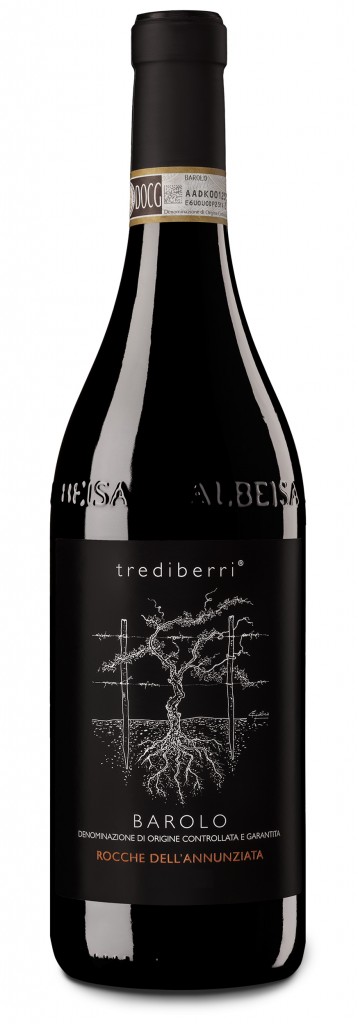
Barolo Rocche dell’Annunziata
BASIC INFORMATION
Product name: Barolo Rocche dell’Annunziata Grape: 100% Nebbiolo Classification: DOCG Number of bottles produced: 3 800 Color: deep ruby red, hints of pale orange Fragrance: floral and spicy Taste: forward tannins, balanced Food pairing: red meat, strong blue cheese
VINIFICATION (Wine-making)
Ageing: 26 months in barrique Minimum aging in bottle: 6 months
Aging: 24 months in barrique Minimum aging in bottle: 6 months
VINEYARD
Soil: clay and limestone Exposure: southeast
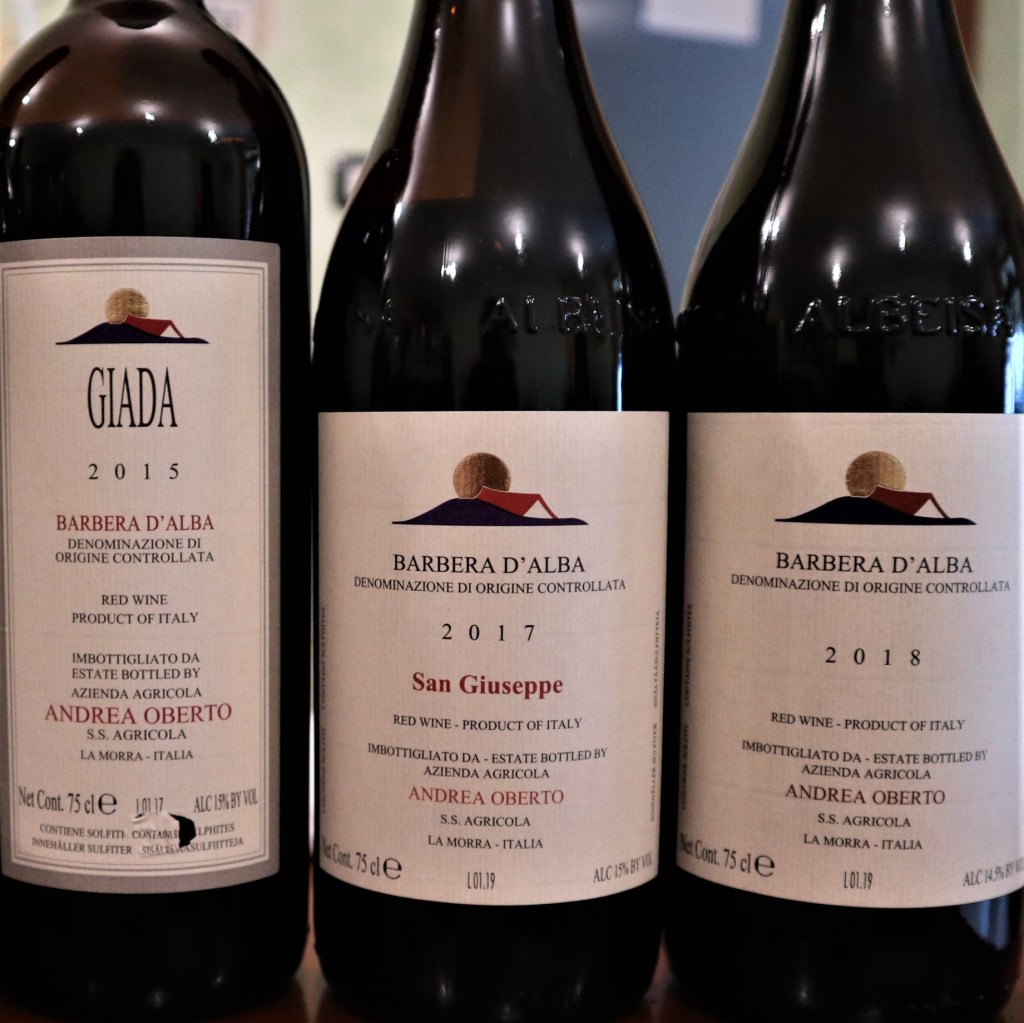
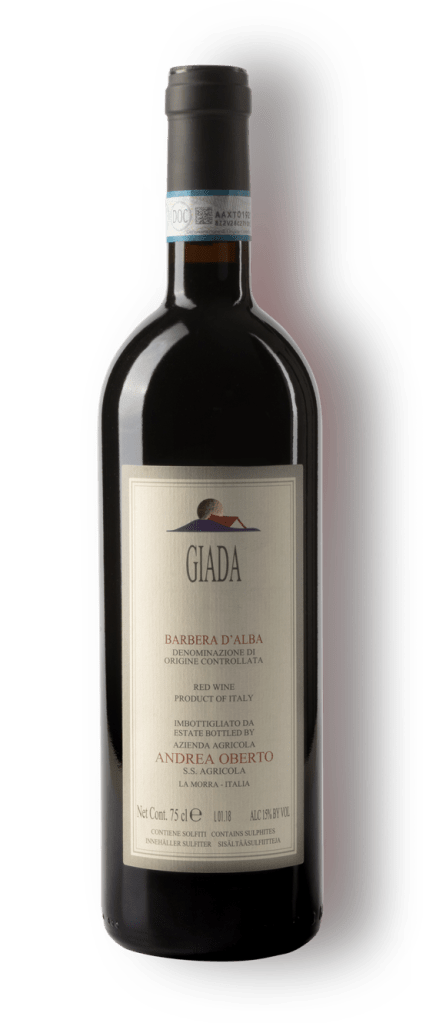
Barbera d’Alba Giada
BASIC INFORMATION
Product name: Giada Grape: 100% Barbera Classification: DOC Number of bottles produced: 5 500 Color: deep purple with ruby edges Fragrance: dried plum, blackberry, espresso bean Taste: good acidity, balanced, dry finish Food pairing: filled pastas, red meat
VINIFICATION (Wine-making)
Aging: 20 months in barrique, new oak Minimum aging in bottle: 6 months in bottle
VINEYARD
Soil: clay and limestone Exposure: southeast
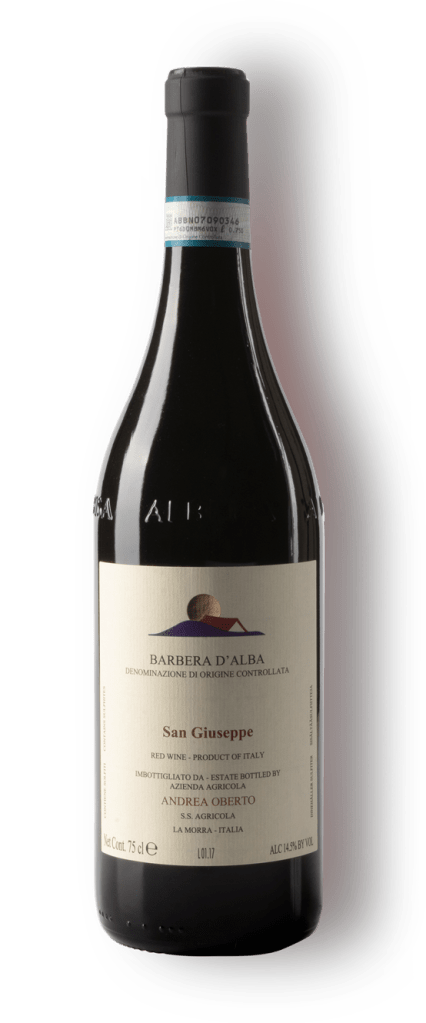
Barbera d’Alba San Giuseppe
BASIC INFORMATION
Product name: San Giusepppe Grape: 100% Barbera Classification: DOC Number of bottles produced: 6 000 Color: deep, brilliant purple Fragrance: generous oak notes, spices, cherries Taste: firm acidity, savory, red fruit Food pairing: appetizers, aged cheese, pasta
VINIFICATION (Wine-making)
Aging: 12 months in second passage barrique Minimum aging in bottle:
VINEYARD
Soil: clay and limestone Exposure: southwest Year of plantation/age of plants: Date of harvest:
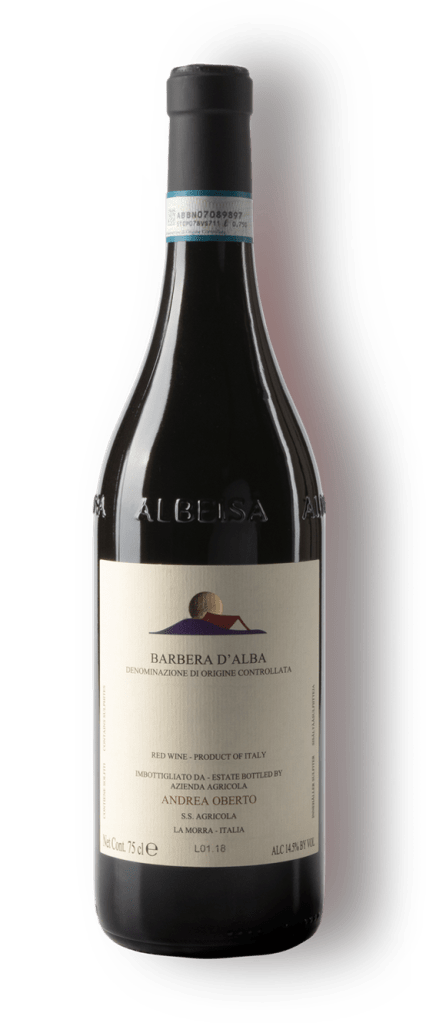
Barbera d’Alba
BASIC INFORMATION
Product name: Barbera d’Alba Grape: 100% Barbera Classification: DOC Number of bottles produced: 24 000 Color: deep ruby red Fragrance: well-integrated oak, ripe berry, fruit preserves Taste: ripe berries Food pairing: appetizers, medium aged cheese
VINIFICATION (Wine-making)
Aging: 4 months in third passage barrique Minimum aging in bottle:
VINEYARD
% of Grape/Cépage: Soil: clay and limestone Exposure: southwest
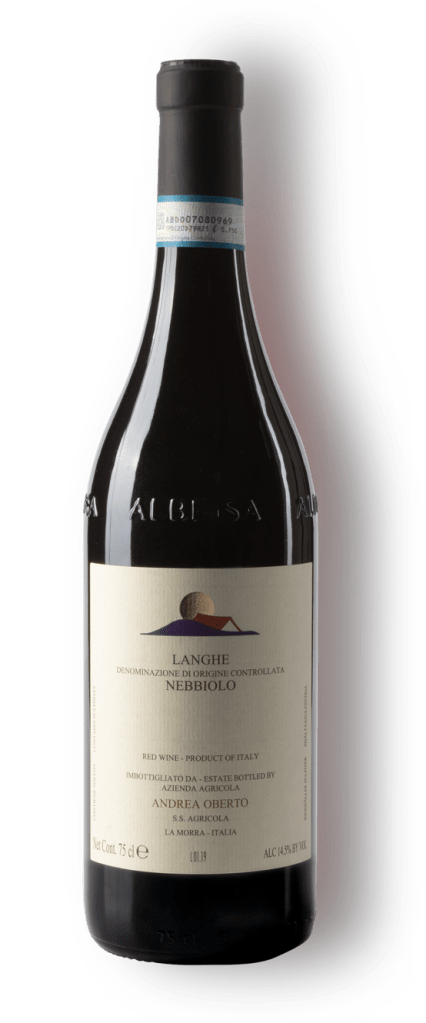
Langhe Nebbiolo
BASIC INFORMATION
Product name: Langhe Nebbiolo Grape: 100% Nebbiolo Classification: DOC Number of bottles produced: 9 500 Color: garnet ruby red Fragrance: fruity, hints of violets Taste: warm and firm, long finish Food pairing: fresh pasta, red meat
VINIFICATION (Wine-making)
Method: Temperature: Length: Aging: 6 months in wood and stainless steel Minimum aging in bottle: 2 months
VINEYARD
Soil: clay and limestone Exposure: southeast Year of plantation/age of plants: Date of harvest:
Dolcetto d’Alba
BASIC INFORMATION
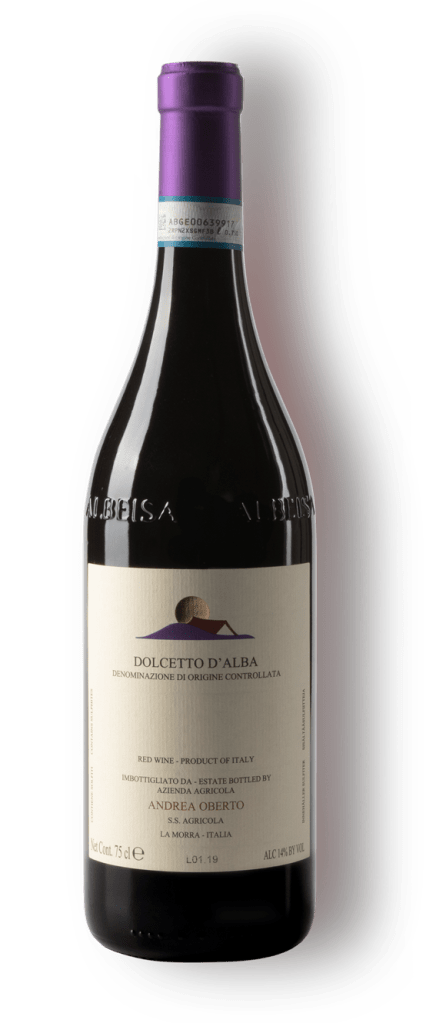
Product name: Dolcetto d’Alba Grape: 100% Dolcetto Classification: DOC Number of bottles produced: 9 500 Color: deep ruby red with violet nuances Fragrance: berries and dark fruit Taste: lively acidity, sweet almond finish Food pairing: appetizers, pasta
The 30 year wait is over for the Scavino family! The Azelia Barolo Cerretta 2016 is finally ready for the world. Just in time for the Centenary celebration of the Azelia winery! What’s important to note is that the Cerretta vineyard has been in the family for about 30 years, but the age of the vines kept Luigi from making the Cerretta Cru Barolo.
The vines, about 30 years old, face South/South-West in the Serralunga Vineyard. After about 55-60 days with submerged cap, the wine moves into big barrels and stay there for 30 months.
The story of Azelia starts in 1920 when Cavalier Lorenzo Scavino started to vinify the grapes from the family owned vienyards. This would be the start of an incredible journey for the Scavino family.
When it comes to the “style” of winemaking, Azelia adopted a method in the cellar that represents a fusion between modern and traditional; a method I like to call Contemporary Traditionalist. But, as I’ve mentioned before, who really cares as long as the wines are good? As Luigi says, “It’s always a matter of balance.”
Azelia Barolo Cerretta 2016
The Cerretta 2016 has an explosive nose: black fruit, spices, tobacco, chocolate. The tannins are big but sweet, typical of a 2016 Barolo from Serralunga. I would put this aside for 10+ years at least and drink some Nebbiolo while you wait.
My first encounted with the Burlotto Barolo 2016 happened to coincide with my first ever tasting in the little church. Covid-19 has changed many things, including how Fabio conducts his tastings. Fortunately, the only difference was the venue. The wines are still top quality, like they were 10-20 years ago (long before Galloni gave the 100 points). And Fabio is the same: kind, funny and honest.
The 2016 vintage has already gotten a lot of good press. This includes the Burlotto Barolo 2016 wines. Cannubi 2016 and Monvigliero 2016 recently recieved 100 points from Wine Advocate. But I have to say, the classic Barolo really blew me away. Literally my first note was “Holy Shit.” And it’s true what Fabio said: “The classico is open for business”.
2016 is a vintage of harmony
Fabio
Langhe Sauvignon 2019
2019 is a vintage with a lot of tension. One the nose of Langhe Sauvignon you get the stereotypical goosberry notes. Normally it’s not my favorite grape, but i quite like the 2019 vintage. High in acidity and salty in the mouth.
Pelaverga 2019
Can we call Pelaverga the unsung hero of Verduno? Maybe that’s taking it too far, but I don’t think Pelaverga get’s the attention it deserves. A perfect wine for a hot summer day. Goes well with food but can also be enjoyed as an aperitivo. The 2019 is almost sweet, leaving a very good feeling in the mouth. Spicy but light at the same time, and only has 13% alcohol.
This might be one of my absolute favorite Barbera’s. It’s not the first time I say this and it probably won’t be the last. The 2018 edition does not disappoint. Highacidity with dark fruits. Good grip, balanced. The Aves 2018 is high in alcohol but you don’t feel it in the mouth. How he does that is beyond me.
Langhe Freisa 2018
Strange nose. Almost like a pinot noir. Strawberry, fruity. Powerful tannins, bold wine.
Burlotto Barolo 2016
Barolo 2016
Holy shit. The Barolo Classico 2016 is so approachable. Spices, tobacco, some chocolate and violets on the nose. The tannins are sweet and the wine is elegant.
The Barolo Classico 2016 is very engaging now
Fabio
Barolo Acclivi 2016
My first thought: What an xtreme difference to the classic. The nose was so much more explosive. Roses, wet forest floor, spices. Smooth tannins. Spicy in the mouth.
Barolo Monvigliero 2016
Again, so different on the nose. Typical monvigliero notes, almost like perfume. Spicy and floral. Impressive wine that is both powerful and elegant at the same time, with a long finish.
Barolo Cannubi 2016
Floral, fruity, fresh. Bigger in the mouth than the other three. Big but with sweet tannins, making it relatively approachable now. But this is a wine I would store for a while.
Sneak Peak on the 2017
The 2017 Barolo’s are slightly more extreme and more concentrated than 2016. 2017 was a warm vintage, but Fabio does not see any sign of overripening in the wine. Overall he was quite happy with 2017 vintage. There is an important structure in the tannins. The wines will likely have a strong body.
You can immediately tell that the Gianfranco Alessandria Barolo 2016 is from Monforte. The “masculine” nose and big tannins give it away. On the nose you’ll also find hints of oak, but in the mouth this “disappears”, leaving you with a beautifully balanced wine. As with a typical Barolo, there are also notes of rose petals, red fruits and spices. The 2016 is an excellent vintage with immense potential!
The grapes in the Gianfranco Alessandria Barolo 2016 come from the same vineyard as the San Giovanni, but some of the plants are younger, about 25-45 years old. They use 100% French oak (20% new, 80% used) for 24 months before bottling.
Antonio Galloni’s thoughts
The 2016 Barolo is bright, floral and beautifully lifted. Crushed flowers, sweet red berry and mint all grace this subtle, nuanced Barolo. Medium in body, with lovely freshness and good depth, the 2016 has so much to offer. This is a very pretty, and refined straight Barolo. The 2016 has the potential to be a real overachiever. I especially like the wine’s inner sweetness and perfume.
Antonio Galloni
Gianfranco Alessandria
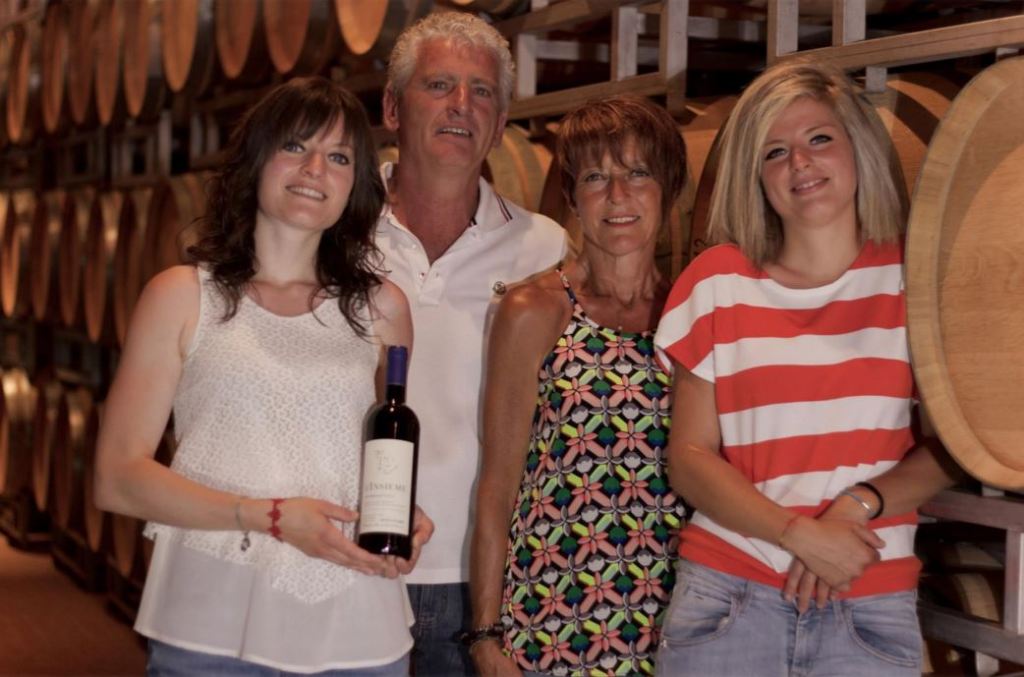
Smile. That’s what first comes to mind when I think of the Gianfranco Alessandria family of four. I have not met any family that smiles as much as and beautifully as they do. Their work is based on natural principles, respecting the time and methods required to obtain a product most correct in its form. They work as natural as possible only using minimal amounts of sulfur and copper sulfate, out of respect for the environment, as well as their own personal health.
You can check out the complete winemaker profile here.
Inimitable. Passionate. Affable. Energetic. Incomparable. Words often used to describe Nicola Oberto, the face of Azienda Agricola Trediberri. And, a lover of fine wine.
I often think of Nicola as a young Bill Gates – smarter
than most, passionate beyond words, with an unprecedented attention to detail,
and an inherent ambition to get better every day. Bill, back in the days, would get so
passionate at exhibitions selling his vision that he would forget to change his
clothes for 3 days. I am not saying that Nicola does not change clothes, but I
am not saying that it is not entirely possible either.
Add multifaceted. Always a smile lurking, the jokes come
regularly, yet probably one of the most serious people you will ever meet. So visionary at times that you’re afraid he is
going to disappear in into the sky, yet fully grounded. With ideas at the forefront of wine making
innovation, but always wholly rooted in the tradition.
Do not take my word for it – visit the Trediberri winery
and vineyards, and you will have an experience for life.
The Trediberri Family
Nicola is quick to put out though, this is not his show
alone, this is a family effort. His
father, Federico, spent 40 years working for Renato Ratti, a renowned winery in
La Morra. You do not perhaps see Anna
Rosa (mother of Nicola and wife of Federico) too often, but there is no
underestimating her. She is guiding the
work in the vineyards as much as anybody.
Finally, you have Stefania, who keeps the checks and balances in the
winery. In addition to making sure there
is always gas in Nicola’s car.
Winemaking
“We love to drink wine, therefore the
greatest recognition for us is a bottle that is quickly finished.”
Want to try to put Trediberri in a box labelled
“Modernist” or “Traditionalist”? Forget about it. Instead, Trediberri follows a
beautiful philosophy: equilibrium. Using cement tanks, stainless steel tanks
and wood barrels, they modify the method each year in order to make the wine as
balanced and as drinkable as possible!
Trediberri Fun fact
Whilst there is absolutely no chance of the industrious Nicola
Oberto ever running out of gas, there is a big chance his car will. We have yet to figure out the underlying logic
behind the fear of a full tank of gas, but it sure makes every trip in his car
an adventure.
Fun fact II
The Trediberri winery of La Morra got its
name from the fact that it pulls together the triumvirate of Nicola Oberto, his
father Federico and their associate Vladimiro Rambaldi. Together they invested. 5 hectars of Berri
vineyards, a hamlet of La Morra, back in 2008.
Hence, Tre – Di – Berri.
Wines
Wines available in: Norway Australia Denmark Germany Hong Kong Italy United Kingdom United States & more
indigenous yeasts, 11 days of alcoholic
fermentation in concrete (3-4 pump-overs per day) + 7 days of skin
post-fermentative maceration (1-2 pump-over a day)
BASIC INFORMATION
Product name: Barolo Rocche dell’Annunziata Grape: 100% Nebbiolo Classification: DOCG Fragrance: delicate, floral, spicy aromas. Cherry, rose and strawberry. Taste: Full bodied, good balance, structured, approachable tannins
VINIFICATION (Wine-making)
Method: indigenous yeasts, 11 days of alcoholic fermentation in concrete (3-4 pump-overs per day) + 7 days of skin post-fermentative maceration (1-2 pump-over a day) Ageing: 23 months in big barrels (slavonian oak)
VINEYARD
Soil: Calcareous blue marl Exposure: Southeast, south Year of plantation: 1951, 1961, 1989, 1999
Barolo
The grapes come
from vineyards located in La Morra, within the hamlets Berri and Capalot. Alcoholic fermentation occurs in concrete and
starts with a specific pied de cuve. It lasts around 2-3 weeks and, after the
first racking, the wine goes straight into wooden casks, where malolactic
fermentation starts. We use 52 and 25 hectoliter barrels, made of Slavonian
oak, crafted by Garbellotto. The wine ages for about 2 years, then it is
blended in steel or concrete and it is bottled in July, 6-7 months before its release.
Length: 2-3 weeks alcoholic fermentation in concrete tanks Ageing: 2 years in large casks Ageing in bottle: 6-7 months
VINEYARD: Berri & Capalot
Langhe Nebbiolo
Grapes come from different vineyards of
Nebbiolo within La Morra (Berri and Torriglione), Levice, Vicoforte and Roero
area.
Alcoholic fermentation happens in concrete
tanks that starts with a specific pied de cuve and lasts around 1-2 weeks with
no temperature control. Each parcel is processed and aged separately until the
cold stabilization. Total ageing is approximately 6 months exclusively in
concrete and stainless steel, with frequent rackings.
The 2015 Azelia Langhe Nebbiolo brings me right back to the tasting room that lies at the beginning of the “Champagnemilå” hill in Castiglione. The old clock ticks away in the background, drowned out by a passioante Lorenzo who is telling me about this wines (for the umpteenth time). Oh how I wish I was back there right now.
I’ll have to make do with drinking Azelia wines in Oslo while practicing Social Distancing.
Azelia
The story of Azelia starts in 1920 when Cavalier Lorenzo Scavino started to vinify the grapes from the family owned vienyards. This would be the start of an incredible journey for the Scavino family. Today, Luigi, Lorella and their son Lorenzo run the show. Lorenzo, who bears the name of his great grandfather, represents the 5th generation of winemakers in the family.
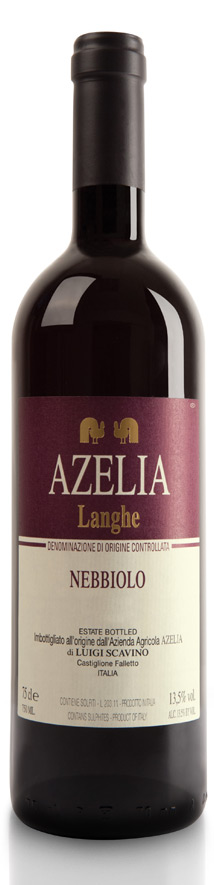
The Azelia Langhe Nebbiolo come from vines with an average age of 20 years. After a short temperature controlled fermentation in rotorfermenters, the wine moves into steel tanks where it stays until its bottled.
Since I don’t have access to the current release of Azelia Langhe Nebbiolo I had to “make do” with the 2015 vintage.
Fruity – the first thing that comes to mind. Digging deeper you’ll find strawberry, red fruit, some tobacco & hint of roses. All those good things that a nebbiolo should smell. And then there’s the tannins. They are there, but they are smooth. 2015 was a warm vintage with very little rain, which often results in “warm” wines, i.e. ripe fruit, hints of toffee, etc. But the Langhe Nebbiolo from Azelia was fresh, full of red fruits and berries! Just the way I like it!
For my Norwegians
I just checked and the Langhe Nebbiolo is sold out at Vinmonopolet… I believe a new shipment is coming in, but while you wait you can try his Barbera or perhaps a Barolo!?
 PIEMONTEGIRL