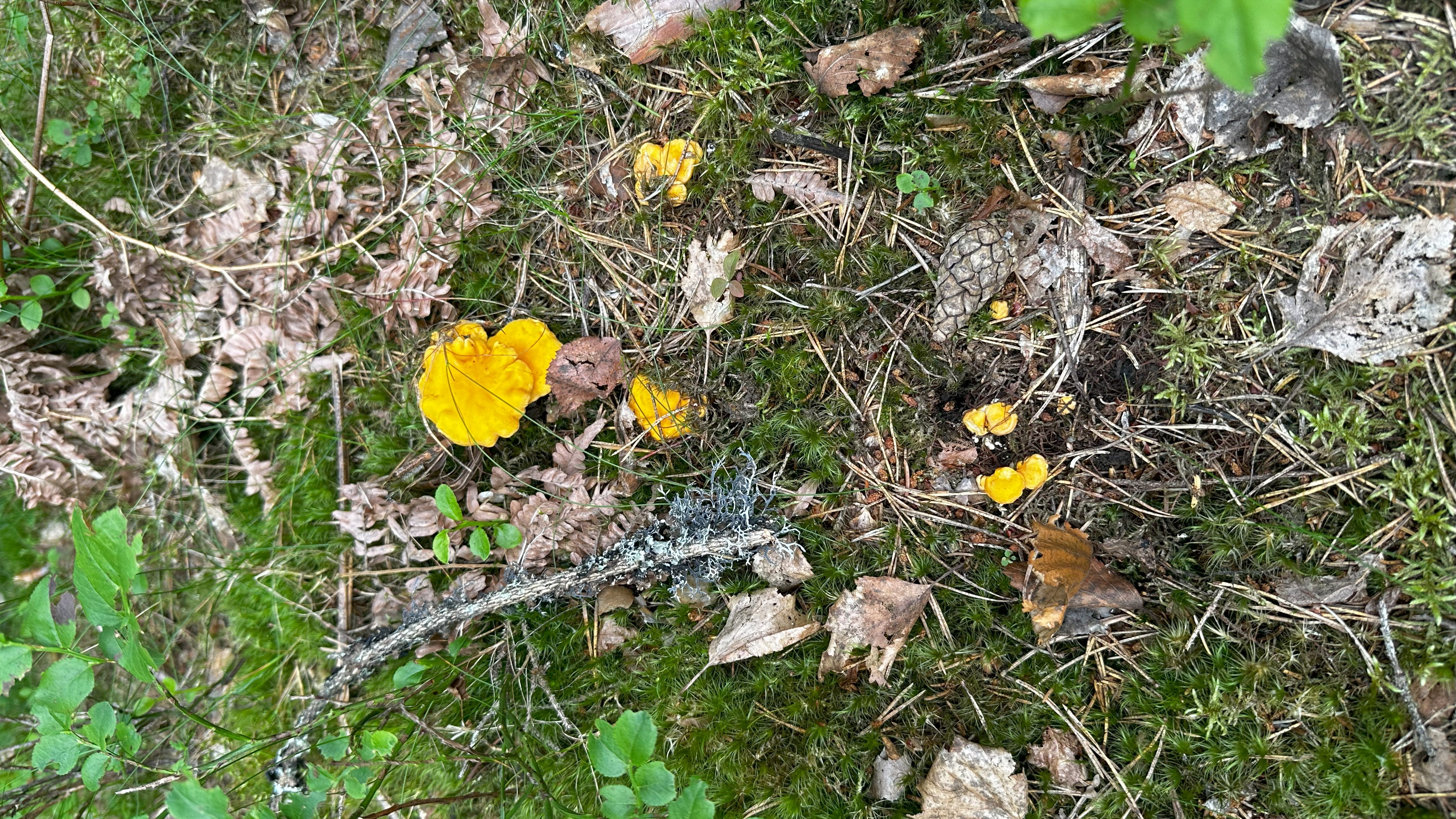
We’re almost halfway through summer already. And I could be sad about it, but instead I am super excited. Do you know why? Because it’s mushroom season! And do you know what that means? Mushroom pasta, mushroom pizza, mushroom risotto, fried mushroom, mushroom consommee etc etc etc! You catch my drift. So, for the next, I don’t know how many weeks, I’ll be in the forest, hunting mushrooms.
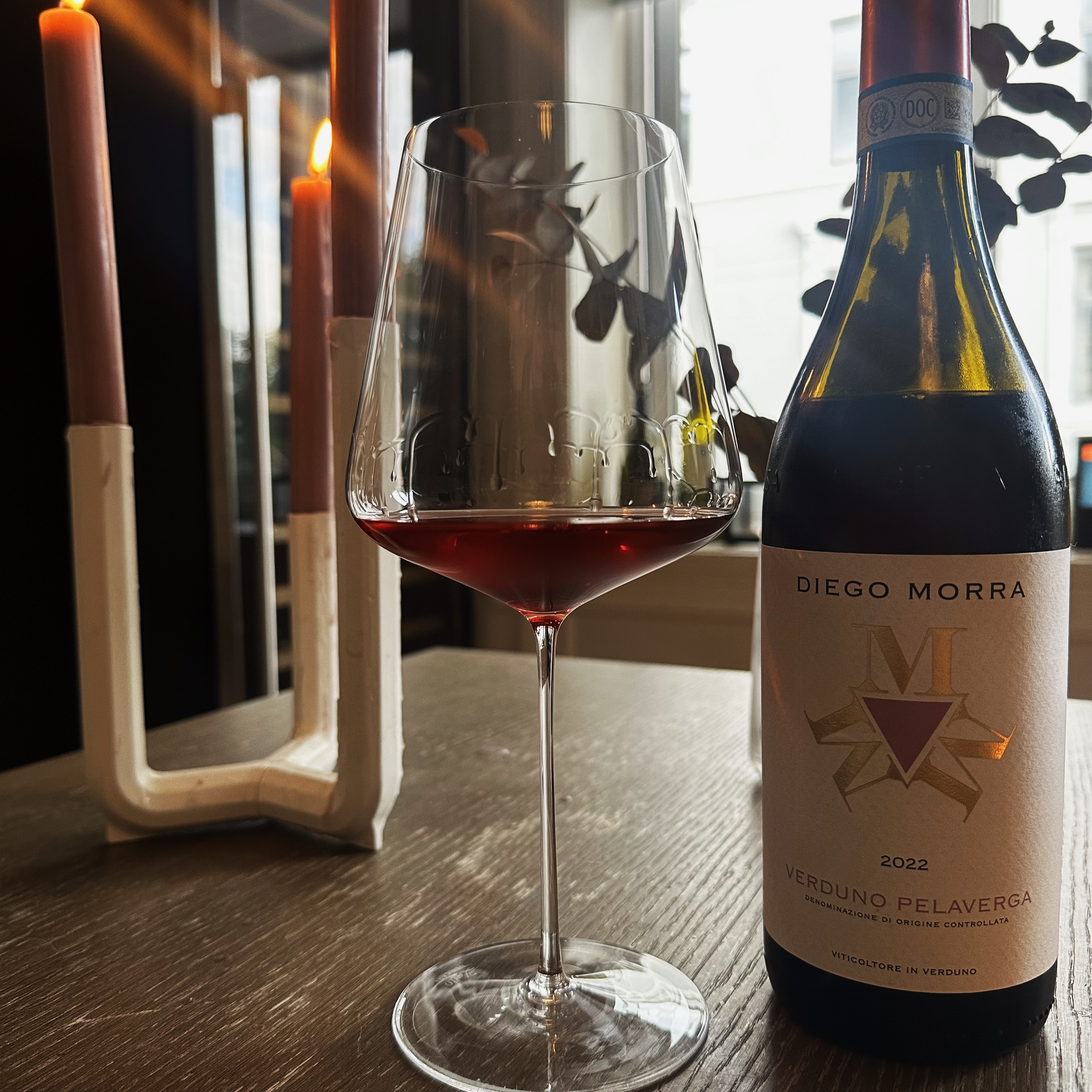
There’s something extra special about cooking a meal using ingredients you found in nature. I honestly don’t really even eat mushrooms I didn’t pick myself. Which is probably something I shouldn’t admit, but whatever. Now, are you ready to hear my what my go to “mushroom wine” is? Drumroll please: Verduno Pelaverga. It wouldn’t surprise me if it’s the first time you’re hearing about Pelaverga. So let me tell you a bit about it.
Pelaverga
Pelaverga is a red grape variety that’s native to Piemonte. It’s most commonly grown in the town of Verduno. Although it’s not widely grown, there are thankfully still some winegrowers in Langhe who still make it. like Burlotto, Diego Morra and Fratelli Alessandria. Pelaverga typically has a very light color, and often has a strawberry aroma. Hisotrically it was a sparkling wine, but that is less and less common. I haven’t had any that are sparkling recently. But sparkling or not, it’s still one of my favorite wines with mushroom!
Others suggestions of wines with mushroom
Pelaverga is a fairly versatile wine and goes with a variety of dishes, but since it’s not a super easy wine to find, I’ll give you some alternative examples. If you’re making a very creamy mushroom dish, it might be a good idea to pair it with a Barbera, like the one from Cristian Boffa or Fratelli Revello. Or maybe you’re having steak with a side of mushrooms. Then I’d go for a Langhe Nebbiolo or Barolo. Have you tried the Barolo from Paolo Giordano? He makes a great Langhe Nebbiolo as well, but if you can’t get a hold of it, you could try the one from Trediberri.
Most of you are probably already quite familiar, but let’s talk about Barolo. I mean, what is Barolo? I honestly don’t really know where to start but I guess I could start with the basics. Barolo is a wine made in the Barolo area, and it’s made with the Nebbiolo grape. There are strict rules with regards to the location and the vinification process of the grapes, and unless you follow those rules, you can’t call it a Barolo. I’ll just touch on some of the rules really quickly:
The grapes have to come from inside the Barolo area, which includes 11 villages
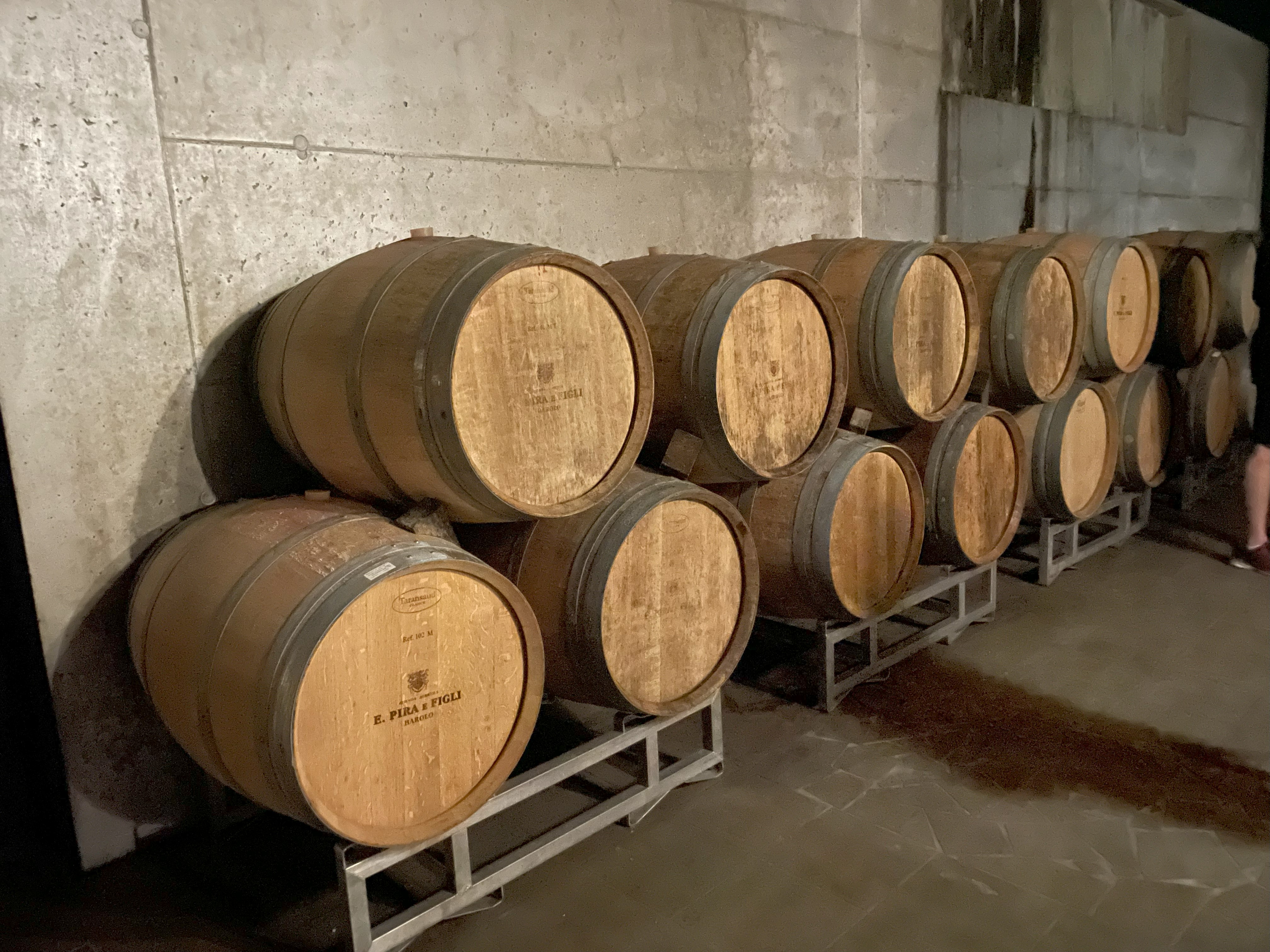
The wine has to age for a minimum of 18 months in oak
The wine should age for 36 months in total, the rest of the aging taking place in the bottle
Barolo – where to start?
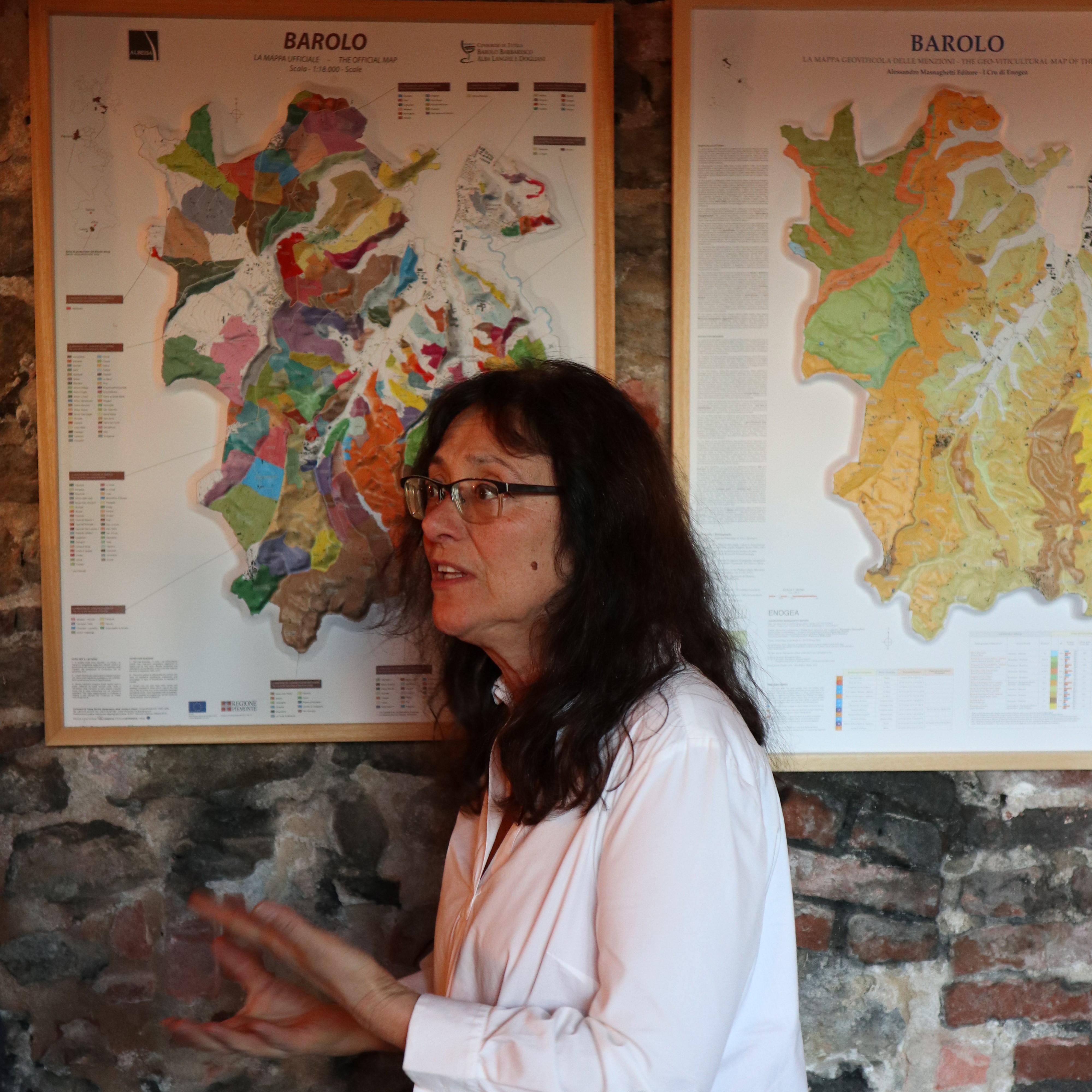
Now, like I mentioned before, there are 11 villages in which you can make Barolo. Some are more “famous” than others, like the Barolo village. But one of the most important things when it comes to Barolo is the terroir. The terroir varies quite dramatically across the Barolo area, in the different villages. So much so that it’s common to make Barolo’s with grapes harvested from very specific vineyards, and there are called single vineyard or cru Barolo’s. One of the most important educators on this topic is Alessandro Masnaghetti, aka Map Man Masna. I think terroir should have it’s own article, so I won’t go into too much detail here, but basically, the soil, the altitude, the climate and the biodiversity in each village plays a huge role in how the wine tastes. And I swear it’s evident in the different wines. Don’t believe me? Try it for yourself and see!
Where to start?
Ok, let’s talk about Barolo and how to start exploring the different kinds. One way, is to start at the top (literally) and work your way down. In the north you’ll find the village of Verduno. Burlotto is one of the first winemwakers that come to mind here, but his wines are nearly impossible to find these days. But don’t worry! Diego Morra also makes a Barolo Monvigliero, as well as a classic Barolo, so you could start there. Next up on this mini tour of Barolo: La Morra. The Cristian Boffa Barolo del Comune di La Morra is a safe bet. Another favorite is the Brunate from Marengo. And let’s not forget about Arborina. Nadia Curto, Giovanni Corino and Elio Altare come to mind. There are obviously many more wines I could suggest, but the article would be 7 pages long with a 100 links…
Moving right along to Castiglione Falletto, one of the wines that immediately come to mind is the Barolo from Cavallotto. Alfio and Giuseppe make really good wines, from their Pinner to their top cru Barolo. In certain vintages, I’d dare to say that their Langhe Nebbiolo resembles a “baby Barolo”. Just a friendly tip… From Barolo there’s the Francesco Borgogno Castellero. You could try to get your hands on a Chiara Boschis Cannubi, but those are a bit harder to come by.
We’ve made it all the way to Serralunga, at least for those of you who kept reading. If you haven’t already, you have to try the Barolo from Daniele Grasso. I could give a lengthy explanation why, but this is already a long article, so you’ll just have to take my word for it. Serralunga, similar to other towns in the Barolo area, is quite known for one vineyard in particular: Vignarionda. I’d give the one from Luigi Pira a try. But Vignarionda can be quite punchy, and is on the more expensive side, so another option is the Barolo del Comune di Serralunga. It will be a bit more approachable and won’t leave as big a dent in your wallet.
Last, but not least: Monforte d’Alba. There are some important Cru’s in Monforte as well, but my mind immediately goes to the Gianfranco Alessandria Barolo San Giovanni. Their classic Barolo is also a Monforte Barolo, so that’s another option. A more unknown cru within the borders of Monforte is Perno. You might know Perno because of Repubblica di Perno, one of my favorite restaurants. Right across the street you’ll find a brand new winemaker named Paolo Giordano. He makes a Perno Barolo, and it’s definitely worth a try.
Disclaimer: I know I didn’t touch on all 11 villages here, but I tried to include some of the most important ones. The thing to note is that I didn’t forget them! Maybe that’s a topic for the next article?
Introducing Burlotto Castelletto 2018 – the latest addition to the Burlotto estate. Fabio has been thinking about expanding his lineup for some time, looking mainly at vineyards in the south-east part of Barolo. At the beginning of 2018, opportunity came knocking. A plot in Castelletto had become available, and Fabio acquired about 1 hectares of vineyard. Which plot, you might ask? If you imagine the Castelletto hill, it’s located along the wooded area, towards the bottom. For a more accurate description, you can check out the zoom session with Fabio, where he talks about his new wine!
Castelletto
Castelletto is located in Monforte, near Gramolere, at around 250m.a.s.l. The highest part has looser, more sandy soil, while the lower part has more compact soil, giving the wine a bit more powerful tannins. The wooded area creates a slightly cooler microclimate than in Mosconi, perhaps giving the wine less intensity. At least compared to other Monforte Barolo’s, like Mosconi or Gramolere.
As Fabio said, “I adore the 18’s”. I too adore the 18’s. Don’t get me wrong, I like the 17. And 16. And 15. And 14. I think each vintage has their own characteristics, and will honestly go so far as to say that there is no such thing as a bad vintage. And it seems, on this, Fabio and I agree.
Because we pay a lot of attention in the vineyard and in the cellar, I think that it’s difficult to have a bad vintage
Fabio
According to Fabio, he had more work in the vineyards in 2018 than 2017. The spring was more humid, which led to more mildew. The wetness also led to more vegetation and good growth. Overall, the 18’s are quite approachable, gentle and elegant. Although Fabio finds it hard to predict the age of a wine, he thinks the 17 might age a bit better than 18. But as he also said, “it’s important to have wines that are more drinkable in the beginning.”
Burlotto Castelletto 2018
The Burlotto Castelletto 2018 has the structure of a Monforte Barolo, but the tannins were not invasive. So elegant in the nose, floral and fruity, with aromas of mint and orange, along with a balsamic note. A very balanced wine, with good length.
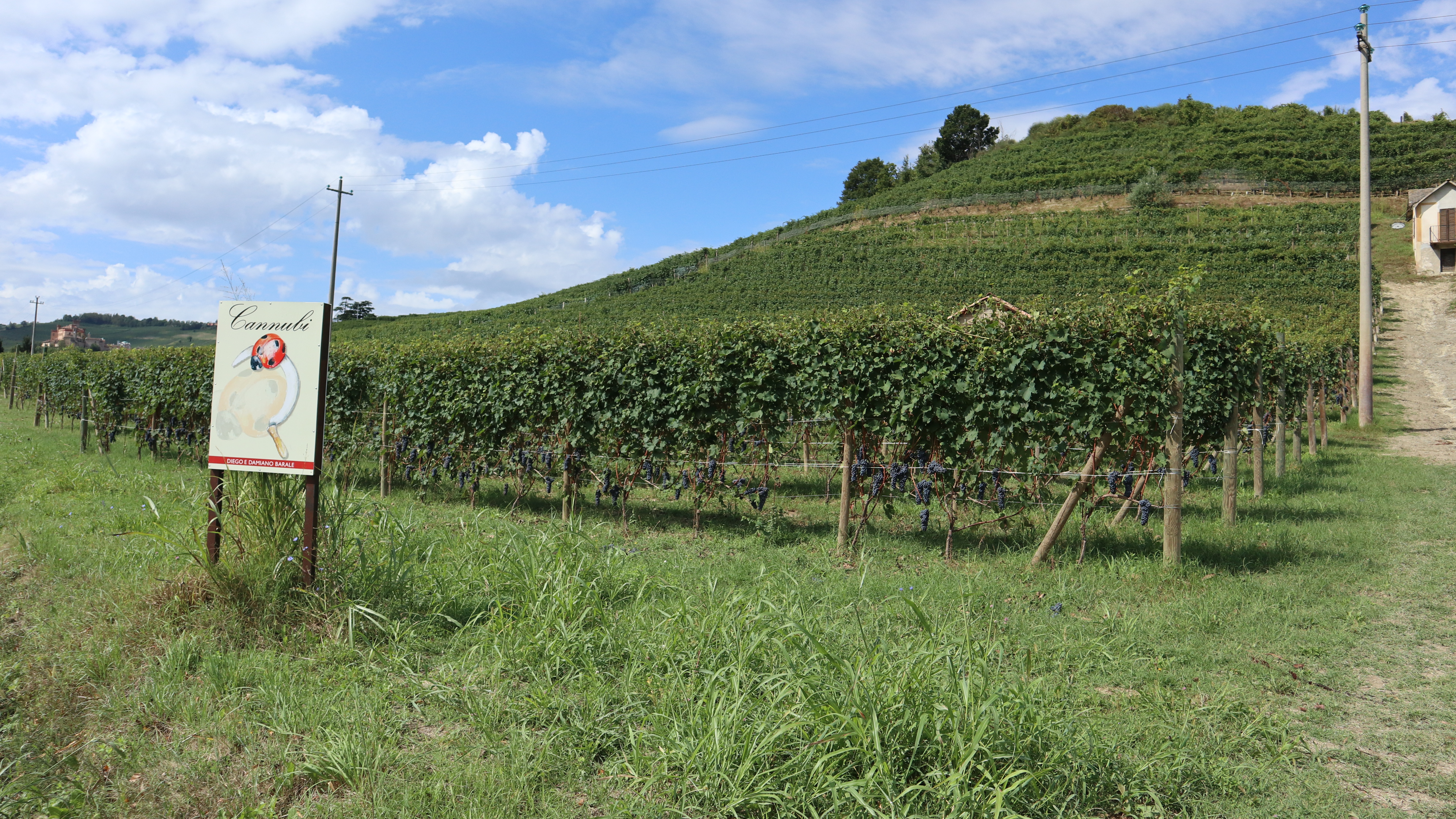
It’s not like we need yet another reason to love Chiara Boschis, but CannuBio definitely makes the list! And what is CannuBio you might ask? Well, it’s one of the many projects Chiara is currently working on.
Chiara Boschis has always worked in a sustainable and organic way, but in 2010, she decided to get the organic certification. She thinks it’s “very important to push on this and let people know. And to start to change the mind of the people.” One of the reasons why it’s important for Chiara to try and convince others to farm organically, is because her plants can be affected by her neighbors actions. So even if she farms organically, if one of her neighbors use chemicals, some of it might transfer over to her plants. This is a problem in any vineyard, including Cannubi, where the parcels are quite small. So she decided to start a project: CannuBio.
CannuBio
In Cannubi, there are 26 different owners. And Chiara, accompanied by what she calls the “guru of the organic farming”, went around to all the different owners and tried to convince the ones who weren’t already doing so, to start farming organically. One by one they agreed, and today 23 have joined the CannuBio project.
“I had nothing to lose. Even if it seems a crazy project, you know, the classical mission impossible, I really wanted hard to try to convince the other people.”
Chiara Boschis
One of the winemakers farming in Cannubi, is Fabio Alessandria from Burlotto. He sees first hand how important this project is, acknowledging that “when all the vineyard is treated like this, the benefit are much bigger than a single winemaker working this way”. And the benefits aren’t just limited to this one vineyard. In addition, he says that this project “motivated (them) to work more and more in this way”.
What does it all mean?
One of the main aspects of organic farming, is to avoid using chemicals. But for Chiara, it’s about so much more. Of course, not using chemicals is incredibly important, but “it’s really an holistic approach that means to care about every aspect of the agriculture and the winemaking. Not using chemicals is number 1 but you need to create the right environment which means of course to take care of the fauna and the birds, the insect, organize the soil, to have cover crop, flowers in the vineyard, manage the canopy.”
Let’s take it one step further, from organic farming to sustainable winemaking. As Carlotta Rinaldi says, “it’s a wider conversation, than just saying organic or biodynamic, using chemicals or not using chemicals.” It’s the whole picture. She goes on: “It doesn’t just cover treatments, it covers the amount of time of passages of the tractor in the vineyard for example.”
What motivates them to farm organically?
Another winemaker who farms organically is Nadia Curto. And when asked what motivates her to farm organically, Nadia had the best answer: “One more philanthropic reason, for we would like to offer to the customer wine that are healthy, that don’t give problem to the stomach. to the head, etc. But also for an ego reason because we are in the front line in the field, and so when we use chemicals we breathe these chemicals and we stay really in between that situation and so also for myself, and for the child, for my dog, because the little dog runs every day in the field, and so it’s very important to also protect this situation, for try to stay better.”
I think this is so important to keep in mind: they are on the front lines. They are in the field. They spend a lot of time in the vineyard. Of course they don’t want to be surrounded by chemicals. I bet you don’t either. I mean, we are so concerned with avoiding chemicals in the other aspects of our lives. Why shouldn’t this be extended to the wine we consume? And, for many of you, it probably already does. But I bet there are a lot of people who buy organic spinach, free range eggs, or BPA free water bottles, yet they drink wine that was made using chemicals.
So that was the “egoistic” and ethical reason behind organic farming. But Nadia also says that “the wine is better”. Why? “The wine without chemicals is something different. Every time is something unique. The character is special. When you drink a natural wine the heart become big, the joy arrive, its something different because give the life” she adds.
The future of CannuBio
Chiara’s goal is to reach 100% participation rate of the project in Cannubi, but it’s easier said than done. One of the hopes was that this idea would spread to other vineyards like Brunate. But Carlotta says that so far, “the response was a bit difficult.” However, even if it seems like a “mission impossible”, no one is giving up. And the CannuBio project had other positive “side effects” like the birth of the Green Experience. What started as a passion project in Cannubi, evolved into something bigger. And it’s definitely not the end.
So, let’s keep talking about it. Let’s do our part. And let’s support those who farm organic, so that they can do their part.
Curious about the recent release from Burlotto? So was I.
The visits with Fabio usually tends to be one of the most educational. Yes, we taste the wines, but we also talk. About everything. And the more he talks, the more you realize how profound he is. Want to see for yourself? Check out this recording of our zoom session from last year. We talk about Dolcetto, Freisa, the 2020 and the new Burlotto entry: Castelletto 2018!
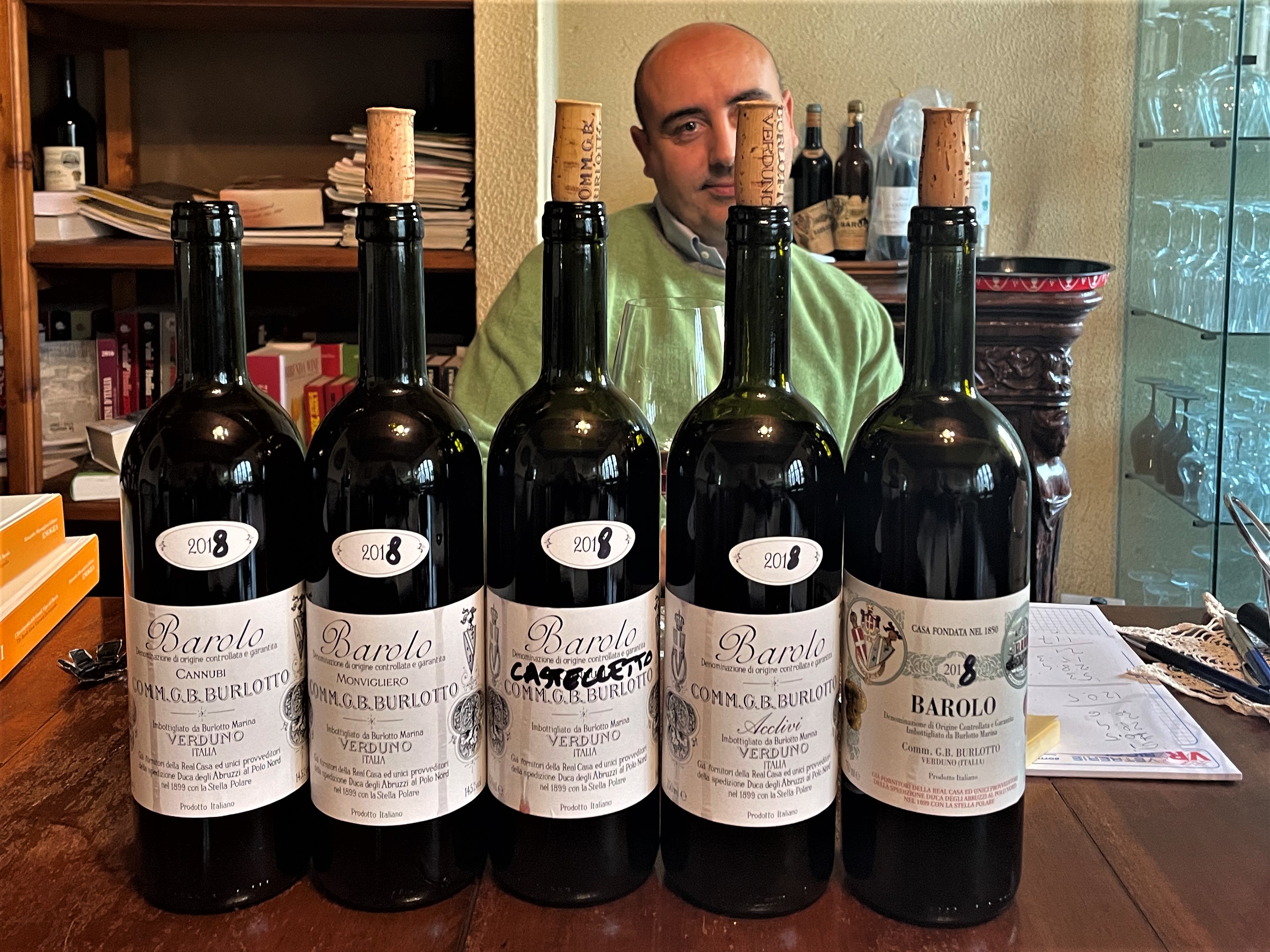
Now, back to the recent release from Burlotto. I did not taste the full lineup this time around. Both the Freisa and Pelaverga were “left out”, but I did get to sneak a peak at the 2018 Barolo’s!
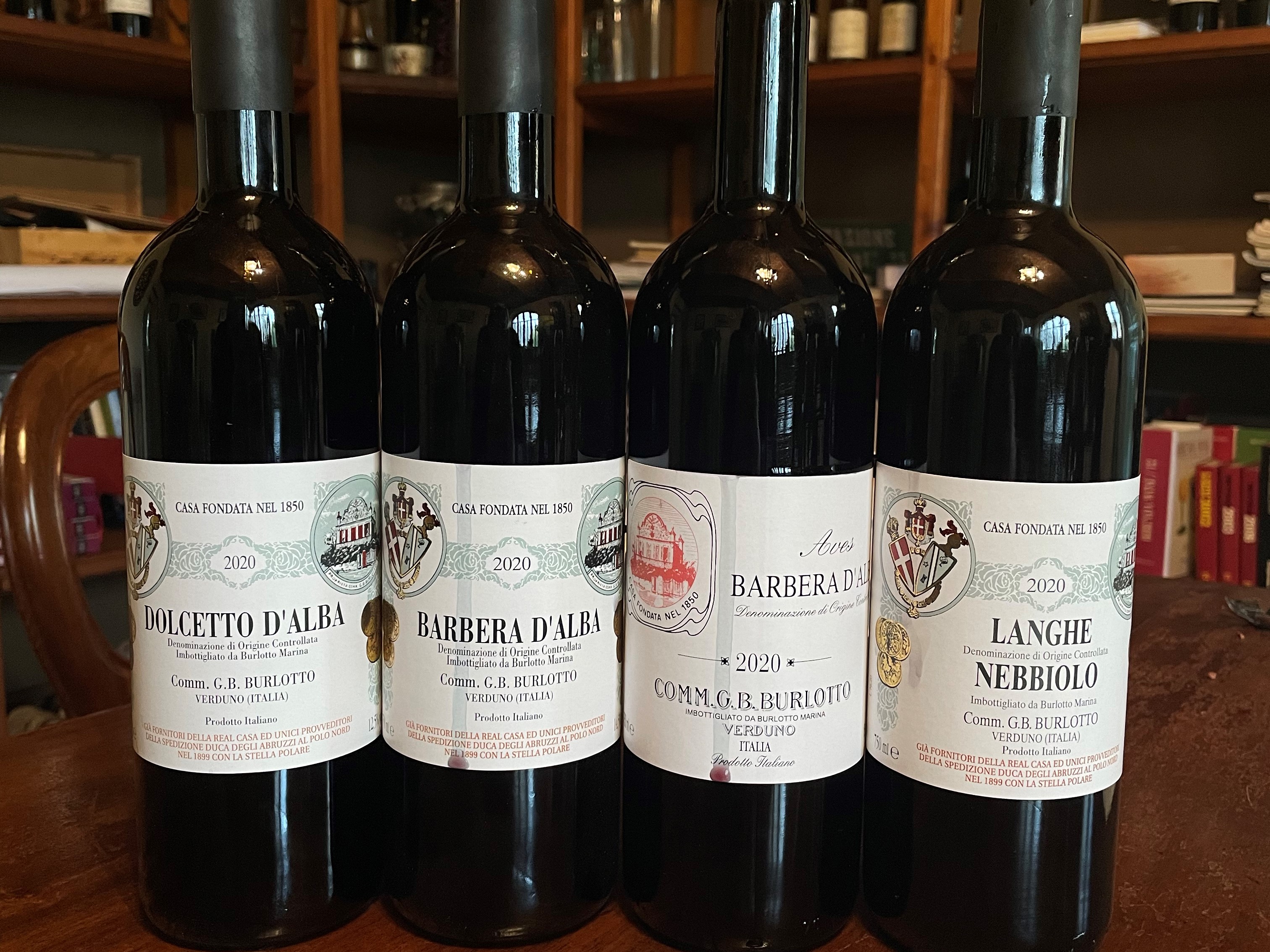
Burlotto Dolcetto 2020
A very fruity and elegant Dolcetto, with a bit of structure. As Fabio says, “a lot of brightness”. There is also a sensation of bitter almonds and cherry. I am not sure if you know, but they use around 50% whole cluster in the Dolcetto, giving it that structure.
Burlotto Barbera 2020
Balanced, good body, long finish. Has a bit of spiciness and aromas of pepper, probably from stemming from the soil in Verduno. We all know the Monvigliero has that white pepper characteristic.
Burlotto Barbera Aves 2020
The Burlotto Barbera Aves is probably one of my all-time favorite Barbera’s. The 2020 is no exception. The Aves 2020 is rich and fleshy but not heavy. Spice notes and red fruit, good structure and high acidity, followed by a long finish.
Burlotto Langhe Nebbiolo 2020
Fabio decided he wouldn’t make Acclivi in 2020, so he put the grapes into the Langhe Nebbiolo instead. Perhaps that’s why this has quite a complex nose. I found aromas of fruit and flowers, as well as leather, and tobacco. Is equally complex in the mouth. It could probably benefit from a few years in the bottle.
Barolo 2018: A Preview
As Fabio said, “I adore the 18’s”. I too adore the 18’s. Don’t get me wrong, I like the 17. And 16. And 15. And 14. I think each vintage has their own characteristics, and will honestly go so far as to say that there is no such thing as a bad vintage. And it seems, on this, Fabio and I agree.
Because we pay a lot of attention in the vineyard and in the cellar, I think that it’s difficult to have a bad vintage
Fabio
According to Fabio, he had more work in the vineyards in 2018 than 2017. The spring was more humid, which led to more mildew. The wetness also led to more vegetation and good growth. Overall, the 18’s are quite approachable, gentle and elegant. Although Fabio finds it hard to predict the age of a wine, he thinks the 17 might age a bit better than 18. But as he also said, “it’s important to have wines that are more drinkable in the beginning.”
Burlotto Barolo 2018
Masculine nose with aromas of leather and tobacco, but still fruity and quite approachable. A gentle and elegant wine.
Burlotto Barolo Acclivi 2018
The Acclivi is a bit deeper than the Classico. So elegant in the mouth with a very gentle structure. Fruity and crisp, with a long finish.
Burlotto Barolo Monvigliero 2018
Incredible nose with aromas of white pepper and red fruit, with a hint of spice. It was actually a bit spicy in the mouth as well. A very distinctive wine with a lot of personality.
Burlotto Barolo Cannubi 2018
With the Cannubi, the word elegance springs to mind. Elegant nose, elegant tannins, elegant structure. If I were to pick a wine to demonstrate how a Barolo should smell, this one would be a perfect example.
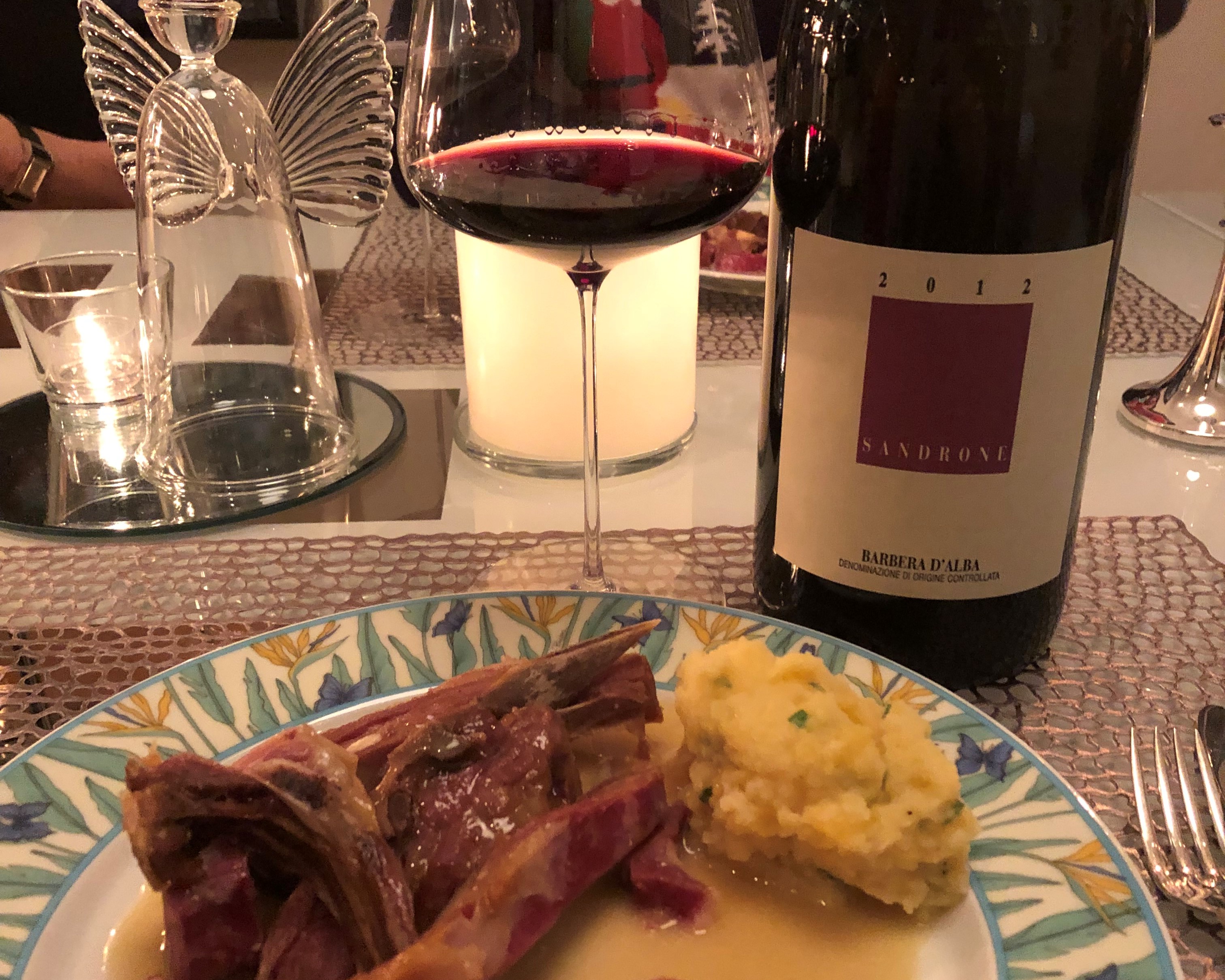
I’ve tasted quite a few Barbera 2020 this past year, and since I drink a lot of Barbera during the holiday season, I thought it’d be the perfect time to highlight some of my favorite ones! Barbera pairs very well with a lot of Norwegian Christmas food like pinnekjøtt, ribbe and turkey. The acidity in the Barbera goes very well with fatty foods, which is the common denominator in a lot of Norwegian Christmas food. But keep in mind the wine pairing also depends on the side dishes.
Anyways, here are some of my Barbera 2020 highlights. The tasting notes are in alphabetical order.
Alberto Viberti Barbera
I tasted the Alberto Viberti Barbera 2020 2 weeks after it was bottled, so the wine was a bit stressed. But even then this wine showed very well. A very fruity Barbera that will only get better after a while in the bottle.
Burlotto Barbera
The grapes in the Burlotto Barbera come from vineyards in Verduno and Roddi, including a vineyard that borders Monvigliero. Therefore it’s not odd to find notes of pepper in this wine. A very balanced Barbera with good acidity and good body.
Burlotto Barbera Aves
The Aves has a tad more acidity than the classic Barbera, good structure and a long finish. Notes of spices and red fruit. The Aves is rich and fleshy, but not heavy.
Crissante Alessandria Barbera
The Crissante Alessandria Barbera has quite a brilliant color. Notes of red fruit with a good acidity. A balanced wine.
Diego Morra Barbera
Notes of cherry and spices. Round with a good body. A very good wine, both on the nose and in the mouth.
Emilio Vada Barbera d’Asti
The Emilio Vada Barbera d’Asti 2020 has a very fresh nose with notes of raspberry. A very drinkable Barbera.
Ettore Germano Barbera d’Alba
Beautiful barbera with intense notes of Cherry. Quite concentrated in the mouth with good structure.
Fratelli Revello Barbera d’alba
A bit concentrated on the nose, but not warm. Aromas of dark red fruit. This wine would go very well with food.
Ghiomo Lavai
I tasted the Lavai 20 days after bottling, so it was very young. A wine with good balance that developed in the mouth. A balanced wine with a long finish.
La Vedetta Barbera Sarasino
A fruity, full bodied wine. A bit concentrated on the nose with aromas of dark red fruit.
Malabaila di Canale Barbera
This Barbera was very drinkable. Aromas of dark red fruits. Could I sense some notes of blueberry?
Marengo Barbera
A floral and fruity wine with a long finish. Balanced with good acidity.
Mauro Veglio Barbera
A very drinkable Barbera. Light and fruity. Couldn’t feel the 15% alcohol at all!
Nadia Curto Barbera
A fresh and mineral Barbera with notes of cherry. Balanced with good acidity. Cherry, fresh, mineral. Good acidity, balanced.
Paolo Scavino Barbera
Dark dark purple with bright hue, a very intense color. Fruity in the mouth with a bit of structure. Aromas of plum and ripe cherry.
Celebrating Valentine’s Day? Honestly, if there is a time to celebrate, it’s now. Grab a bottle, pour a glass and toast with yourself, your friends, your family or your significant other! Here are some of my current favorites!
The Langhe Arneis Inprimis is a fresh and fruity white wine that pairs well with fish and shellfish. You’ll find aromas of yellow flowers and peach and a high (but balanced) acidity!
The first notes that hit are spices. Herbs. Licorice. Concentrated fruit in the mouth, typical of a Roberto Voerzio Dolcetto. Juicy, almost sweet. Predominantly ripe cherries, but also other ripe dark fruits. An impressive wine!
I tasted the 2017 and 2018 side by side. The 2017 was very good, but when tasting it next to the 2018 it almost fell a little short. In the 2018 there is an explosion of floral notes. A very powerful nose. One of the more expressive Nebbiolo’s I’ve tried. The wine is young with big tannins, but they disappear quite quickly and you’re left with beautiful floral notes.
Subtle nose with notes of spices, leather, flowers. Tastes just like a Barolo should taste – elegant and balanced. A big powerful wine, yet elegant, with a long finish.
Burlotto Langhe Freisa is a wine that should not be forgotten. Freisa is an underappreciated grape, in my humble opinion, and should get some more attention. But before we dive into this underrated grape variety, let’s have a look at the history of G.B. Burlotto!
Burlotto
Giovan Battista Burlotto worked as a winemaker for seventy-seven years, and in that time he became world renowned. In addition to his accomplishments as a winemaker, he also made history by being the first to sell Barolo in bottle! After G.B. Burlotto’s death in 1927, the driving force behind the winery went with him and it wasn’t until his great-grandson Fabio Alessandria took over that the winery was brought back to its former glory.
Fabio continues the legacy of G.B., and has himself gained notoriety for his excellent work. His wines receive high marks and high praise from prominent wine critics. The focus is often on Barolo, and in the case of Burlotto, Monvigliero gets a lot of attention. But I think a good winemaker is defined not just by his Barolo, but the other wines like Dolcetto or Freisa. And Fabio does not disappoint!
Freisa
Freisa likely originates from Piemonte, and plantings date all the way back to the 18th century. Traditionally it was produced as a light sparkling wine, but today you’ll find full sparkling and still Freisa. Similar to Nebbiolo, Freisa has both tannins and acidity. Typical aromas are raspberry, strawberry and violets.
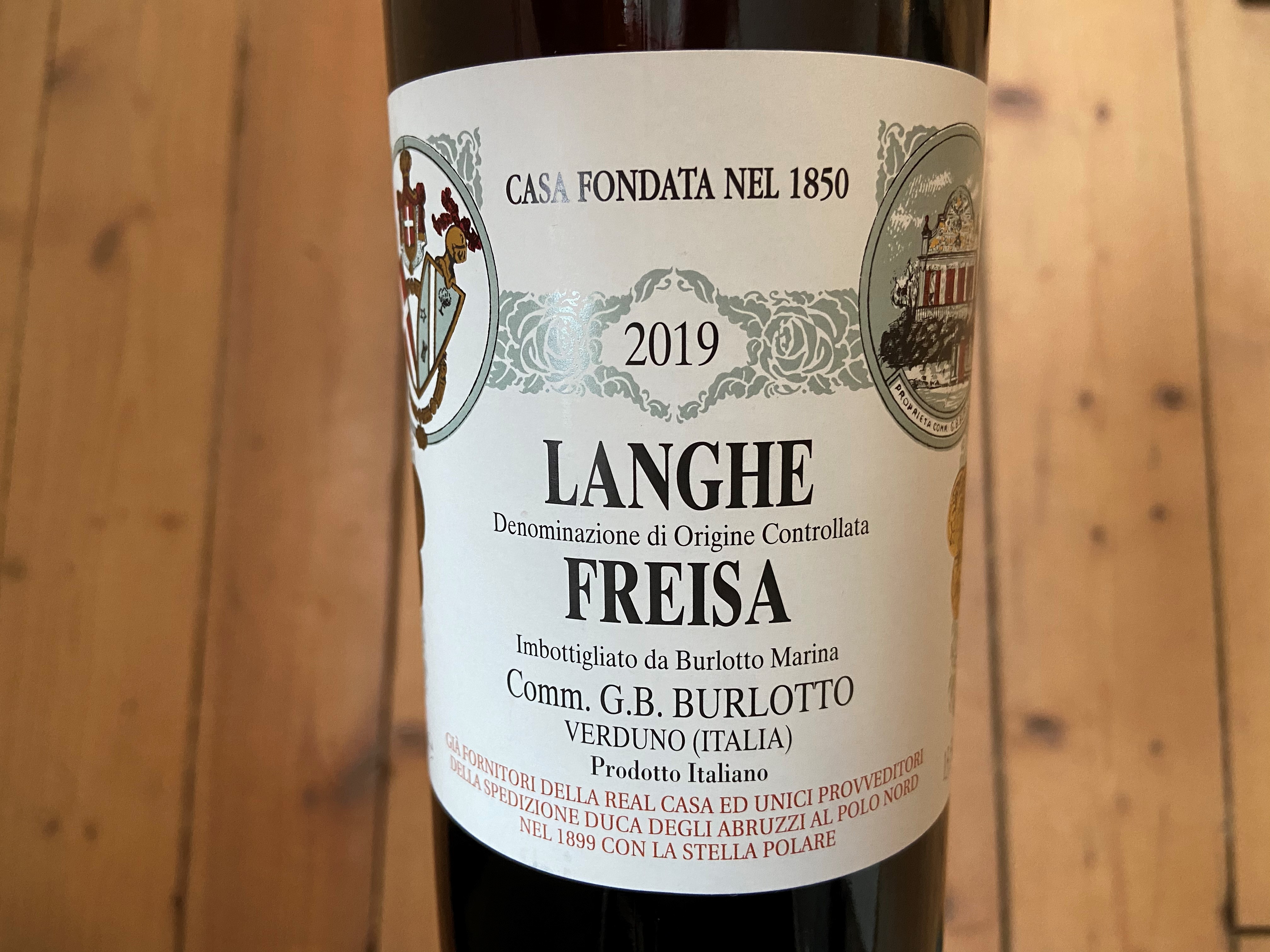
Burlotto Langhe Freisa 2019
The Burlotto Langhe Freisa 2019 is very fruity and fresh. On the nose you’ll find notes of red fruits and violet. It’s powerful, but elegant with soft tannins and medium acidity. A very balanced wine with a long finish.
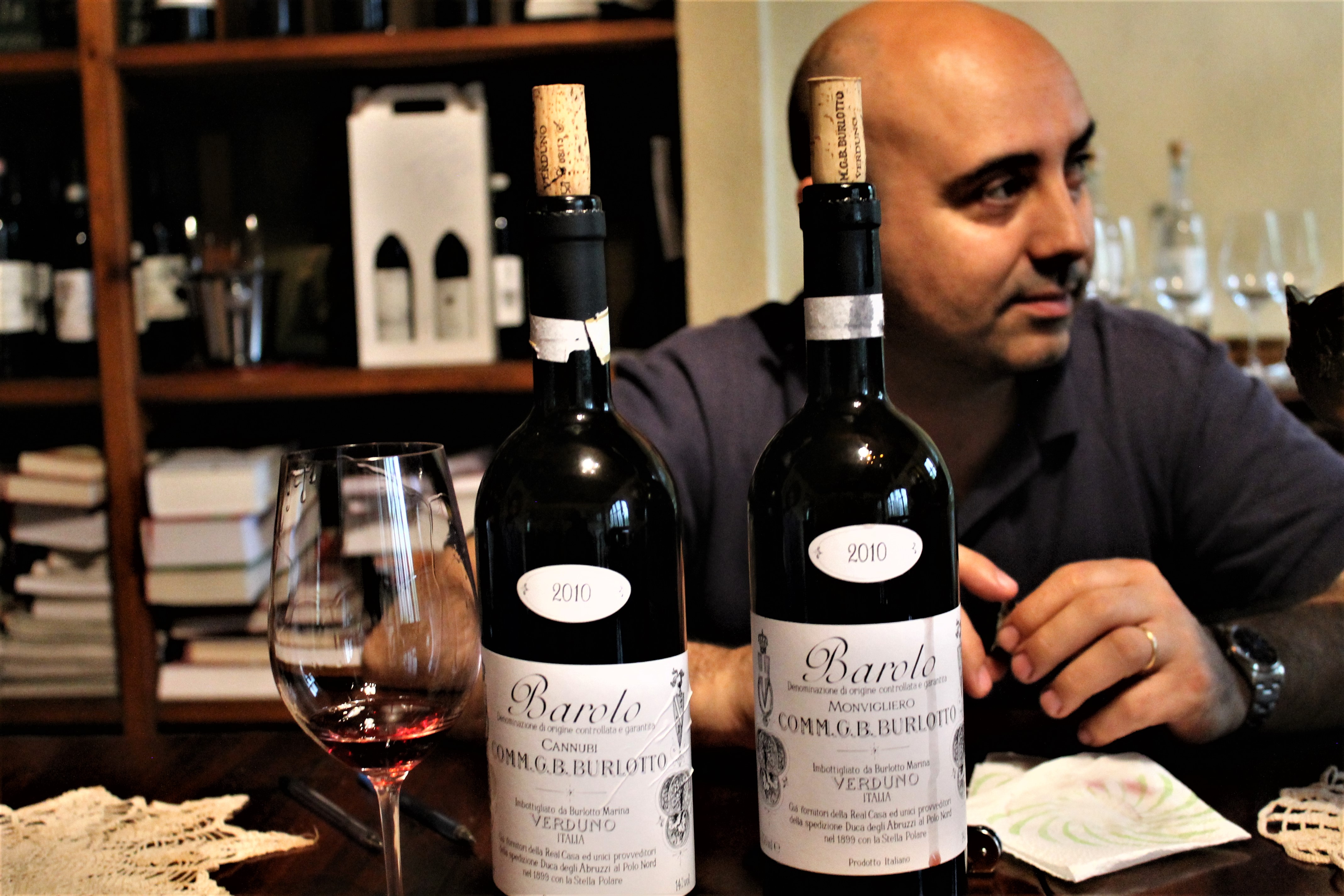
My first encounted with the Burlotto Barolo 2016 happened to coincide with my first ever tasting in the little church. Covid-19 has changed many things, including how Fabio conducts his tastings. Fortunately, the only difference was the venue. The wines are still top quality, like they were 10-20 years ago (long before Galloni gave the 100 points). And Fabio is the same: kind, funny and honest.
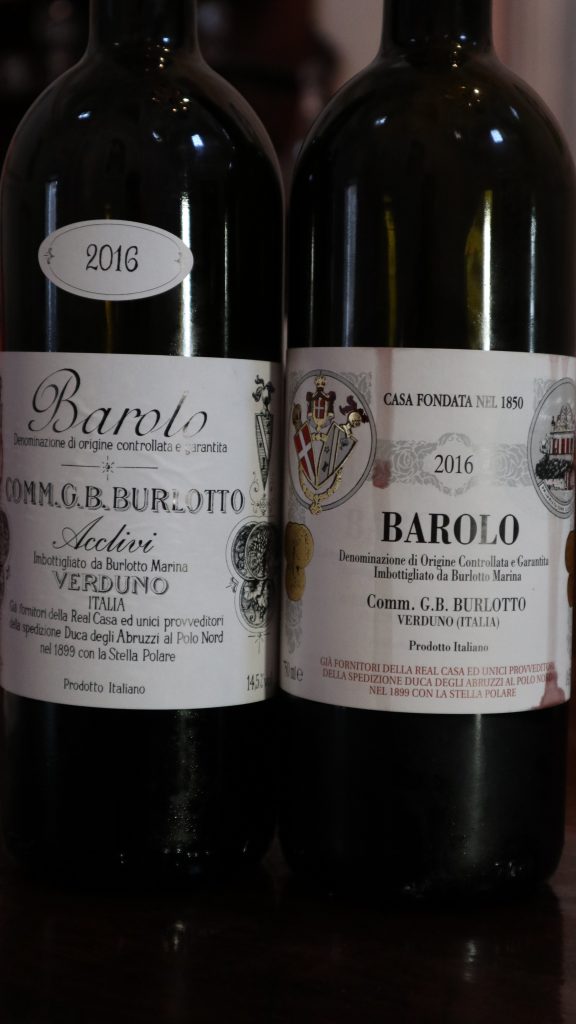
The 2016 vintage has already gotten a lot of good press. This includes the Burlotto Barolo 2016 wines. Cannubi 2016 and Monvigliero 2016 recently recieved 100 points from Wine Advocate. But I have to say, the classic Barolo really blew me away. Literally my first note was “Holy Shit.” And it’s true what Fabio said: “The classico is open for business”.
2016 is a vintage of harmony
Fabio
Langhe Sauvignon 2019
2019 is a vintage with a lot of tension. One the nose of Langhe Sauvignon you get the stereotypical goosberry notes. Normally it’s not my favorite grape, but i quite like the 2019 vintage. High in acidity and salty in the mouth.
Pelaverga 2019
Can we call Pelaverga the unsung hero of Verduno? Maybe that’s taking it too far, but I don’t think Pelaverga get’s the attention it deserves. A perfect wine for a hot summer day. Goes well with food but can also be enjoyed as an aperitivo. The 2019 is almost sweet, leaving a very good feeling in the mouth. Spicy but light at the same time, and only has 13% alcohol.
This might be one of my absolute favorite Barbera’s. It’s not the first time I say this and it probably won’t be the last. The 2018 edition does not disappoint. Highacidity with dark fruits. Good grip, balanced. The Aves 2018 is high in alcohol but you don’t feel it in the mouth. How he does that is beyond me.
Langhe Freisa 2018
Strange nose. Almost like a pinot noir. Strawberry, fruity. Powerful tannins, bold wine.
Burlotto Barolo 2016
Barolo 2016
Holy shit. The Barolo Classico 2016 is so approachable. Spices, tobacco, some chocolate and violets on the nose. The tannins are sweet and the wine is elegant.
The Barolo Classico 2016 is very engaging now
Fabio
Barolo Acclivi 2016
My first thought: What an xtreme difference to the classic. The nose was so much more explosive. Roses, wet forest floor, spices. Smooth tannins. Spicy in the mouth.
Barolo Monvigliero 2016
Again, so different on the nose. Typical monvigliero notes, almost like perfume. Spicy and floral. Impressive wine that is both powerful and elegant at the same time, with a long finish.
Barolo Cannubi 2016
Floral, fruity, fresh. Bigger in the mouth than the other three. Big but with sweet tannins, making it relatively approachable now. But this is a wine I would store for a while.
Sneak Peak on the 2017
The 2017 Barolo’s are slightly more extreme and more concentrated than 2016. 2017 was a warm vintage, but Fabio does not see any sign of overripening in the wine. Overall he was quite happy with 2017 vintage. There is an important structure in the tannins. The wines will likely have a strong body.

 PIEMONTEGIRL