Listen, it’s entirely possible to enjoy quality “value wines”. And what do I mean when I say “value wines”? I mean wines with a high quality-price ratio; wines that won’t break the bank, but are still of high quality. People are very often under the impression that to be able to drink good wines, you have to break the bank. And sure, wine can cost quite a bit. But there are plenty of options out there that are on the more affordable side. So here are some of my favorite value wines from Piemonte, all under 300 NOK.
Wines under 300
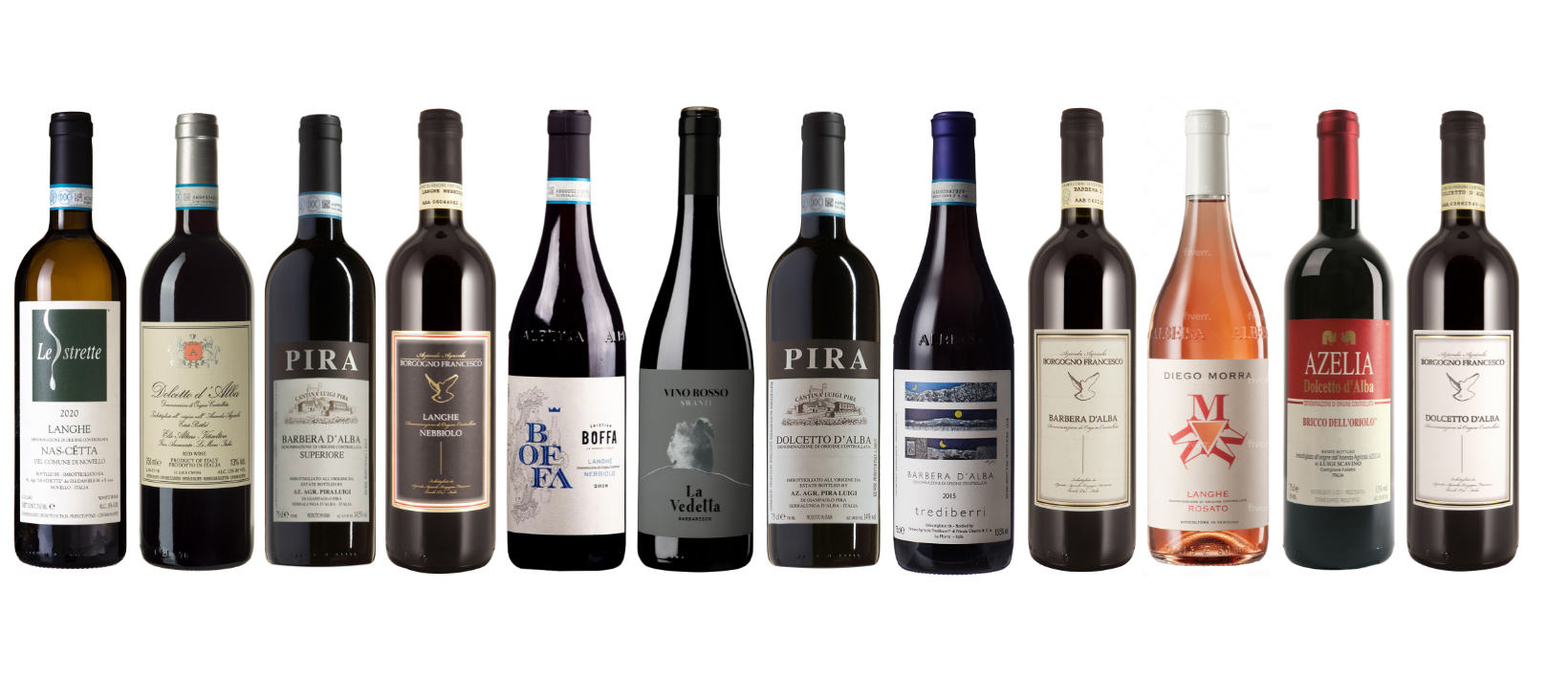
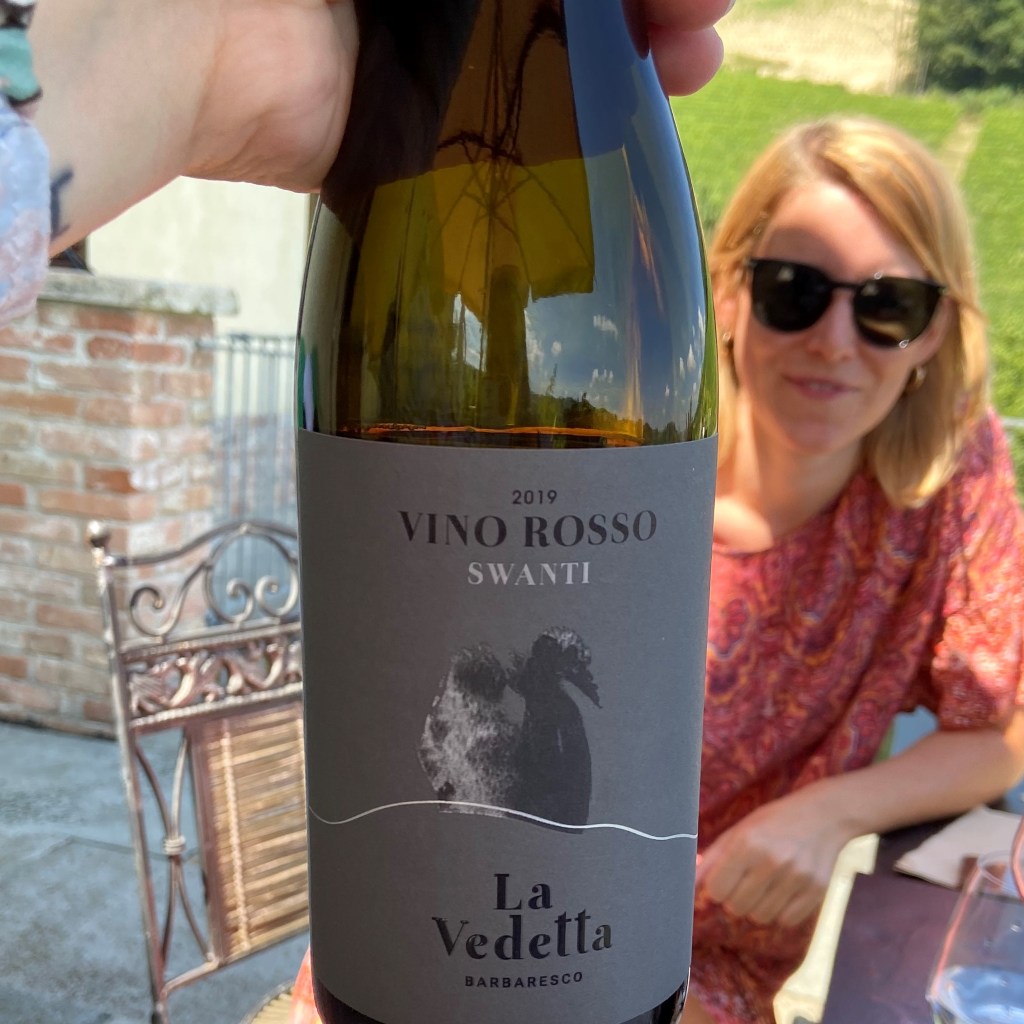
In this category, there are tons of options. If you’ve never tried Nascetta, this is your sign to change that. I discovered Le Strette some years ago, and their Langhe Nascetta del Comune di Novello is one of my favorites! Moving on to reds, the Elio Altare Dolcetto is still under 300NOK! This probably won’t last very long, so here’s your chance! Another favorite is the Luigi Pira Barbera d’Alba Superiore, which is also still in this category. Two Langhe Nebbiolo’s that are frequently found in my wine fridge are Francesco Borgono Langhe Nebbiolo and Cristian Boffa Langhe Nebbiolo. The latter is basically a “Baby Barolo”, so it’s a frickin’ steal! Now, there are not that many Barbera + Nebbiolo blends available in Norway, unfortunately. But one of the few that are available is the La Vedetta Swanti.
Wines under 250
Moving on to wines below 250NOK. The number of quality wines available are reduced in correlation to price, but there are still quite a few good options here! Two good Dolcetto’s, one from Luigi Pira and one from Cristian Boffa. Both of them are what I like to call “stainless steel” Dolcetto’s, but the one from Luigi Pira is likely to be a bit “bigger” than the one from Cristian Boffa, mostly due to the location of the grapes. As for Barbera, there’s the one from Trediberri. Aged in stainless steel and cement. Very classic and delicious. The Mauro Veglio “Angelo” Langhe Nebbiolo is another classic. Named for Mauro’s father, it’s always been a very special wine.
Wines under 200
Here’s where it gets tricky. These days, it’s not easy to find a high quality wine under 200NOK. That’s just the way it is. But there are still a select few available in Norway. The Diego Morra Langhe Rosato is now available for only 179kr. And you might think a rosé wine is only suitable for the summer. But did you know that a lot of seafood is considered “in season” in the winter? Which is perfect, because this wine is what I consider a “food wine” that will go great with shrimp, crab, salads or white meat.
Two Dolcetto’s made it into this category, both good, but very different from one another. The Azelia Dolcetto is made from very old vines located in fairly high altitude, making it quite special. You also have the Francesco Borgogno Dolcetto, a “stainless steel” Dolcetto, very clean and fresh.
There you have it. Hope you found some treasures in here.
PS: some of these won’t be available at these prices for long, so I’d act fast. Enjoy!
Most of you are probably already quite familiar, but let’s talk about Barolo. I mean, what is Barolo? I honestly don’t really know where to start but I guess I could start with the basics. Barolo is a wine made in the Barolo area, and it’s made with the Nebbiolo grape. There are strict rules with regards to the location and the vinification process of the grapes, and unless you follow those rules, you can’t call it a Barolo. I’ll just touch on some of the rules really quickly:
The grapes have to come from inside the Barolo area, which includes 11 villages
The wine has to age for a minimum of 18 months in oak
The wine should age for 36 months in total, the rest of the aging taking place in the bottle
Barolo – where to start?
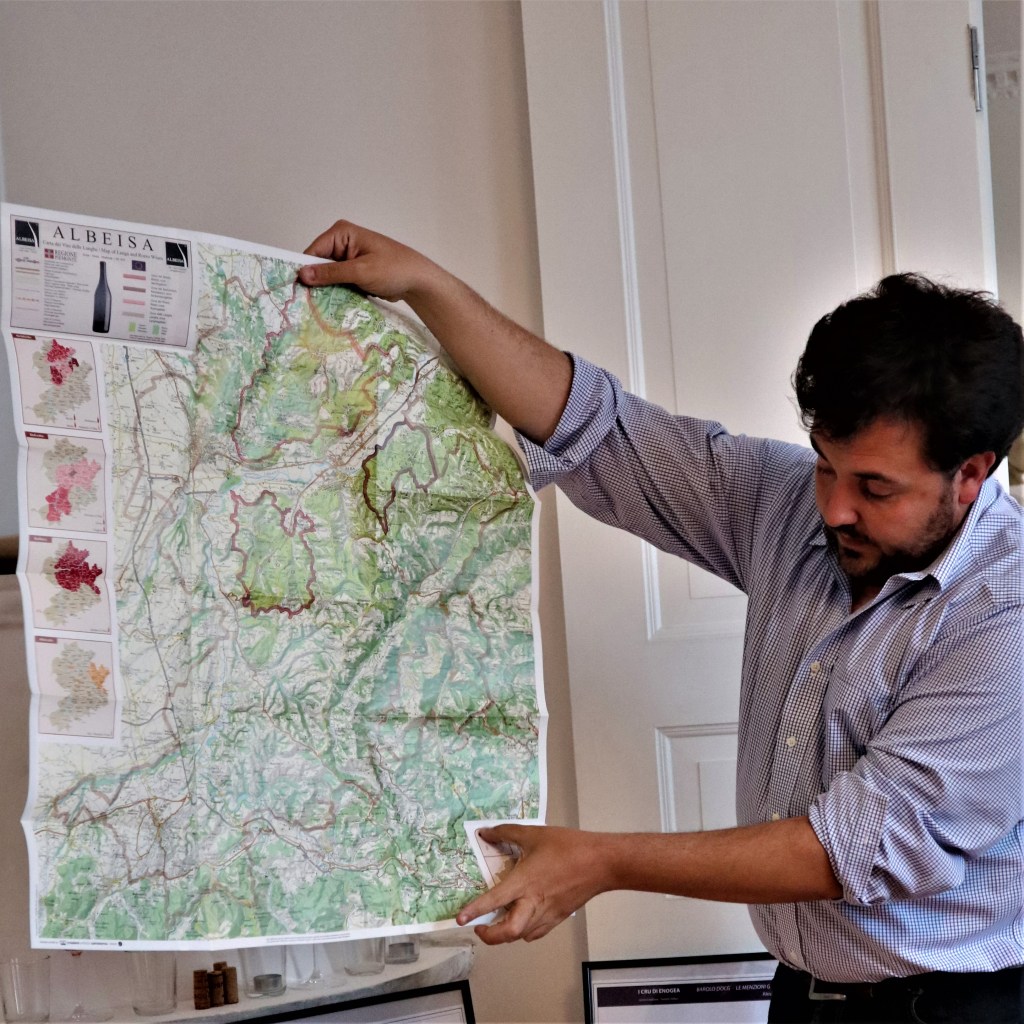
Now, like I mentioned before, there are 11 villages in which you can make Barolo. Some are more “famous” than others, like the Barolo village. But one of the most important things when it comes to Barolo is the terroir. The terroir varies quite dramatically across the Barolo area, in the different villages. So much so that it’s common to make Barolo’s with grapes harvested from very specific vineyards, and there are called single vineyard or cru Barolo’s. One of the most important educators on this topic is Alessandro Masnaghetti, aka Map Man Masna. I think terroir should have it’s own article, so I won’t go into too much detail here, but basically, the soil, the altitude, the climate and the biodiversity in each village plays a huge role in how the wine tastes. And I swear it’s evident in the different wines. Don’t believe me? Try it for yourself and see!
Where to start?
Ok, let’s talk about Barolo and how to start exploring the different kinds. One way, is to start at the top (literally) and work your way down. In the north you’ll find the village of Verduno. Burlotto is one of the first winemwakers that come to mind here, but his wines are nearly impossible to find these days. But don’t worry! Diego Morra also makes a Barolo Monvigliero, as well as a classic Barolo, so you could start there. Next up on this mini tour of Barolo: La Morra. The Cristian Boffa Barolo del Comune di La Morra is a safe bet. Another favorite is the Brunate from Marengo. And let’s not forget about Arborina. Nadia Curto, Giovanni Corino and Elio Altare come to mind. There are obviously many more wines I could suggest, but the article would be 7 pages long with a 100 links…
Moving right along to Castiglione Falletto, one of the wines that immediately come to mind is the Barolo from Cavallotto. Alfio and Giuseppe make really good wines, from their Pinner to their top cru Barolo. In certain vintages, I’d dare to say that their Langhe Nebbiolo resembles a “baby Barolo”. Just a friendly tip… From Barolo there’s the Francesco Borgogno Castellero. You could try to get your hands on a Chiara Boschis Cannubi, but those are a bit harder to come by.
We’ve made it all the way to Serralunga, at least for those of you who kept reading. If you haven’t already, you have to try the Barolo from Daniele Grasso. I could give a lengthy explanation why, but this is already a long article, so you’ll just have to take my word for it. Serralunga, similar to other towns in the Barolo area, is quite known for one vineyard in particular: Vignarionda. I’d give the one from Luigi Pira a try. But Vignarionda can be quite punchy, and is on the more expensive side, so another option is the Barolo del Comune di Serralunga. It will be a bit more approachable and won’t leave as big a dent in your wallet.
Last, but not least: Monforte d’Alba. There are some important Cru’s in Monforte as well, but my mind immediately goes to the Gianfranco Alessandria Barolo San Giovanni. Their classic Barolo is also a Monforte Barolo, so that’s another option. A more unknown cru within the borders of Monforte is Perno. You might know Perno because of Repubblica di Perno, one of my favorite restaurants. Right across the street you’ll find a brand new winemaker named Paolo Giordano. He makes a Perno Barolo, and it’s definitely worth a try.
Disclaimer: I know I didn’t touch on all 11 villages here, but I tried to include some of the most important ones. The thing to note is that I didn’t forget them! Maybe that’s a topic for the next article?
It’s a pleasure to see the Dolcetto from Altare on Vinmonopolet.no. For as long as I can remember it has been my go-to Dolcetto, and even with Covid screwing up prices, it’s still below 300kr.
Mr. Viberti is the new kid on the block! This young man, who works at the family winery Cascina Ballarin, decided to forge a new path for himself and now makes his own wines!
Yes, Nicola’s wines have been available in Norway for quite some time BUT for the first time the Langhe Nebbiolo will be on the shelves in most stores across Norway!
Swanti combines the best of Barbera and Nebbiolo, and the result is amazing. I find I really like blends. I also know you will just love the woman the wine is named after!
As Mario says: “It’s not that I release my wines late. The others release theirs early.” And with that I welcome his Castiglione Barolo 2015 to Norway!
Norwegians are gearing up for Constitution Day. Many are graduating from school this spring. Perhaps some of you are getting ready for a birthday or an anniversary? And what better way than to celebrate with some good wine!
Champagne
I personally celebrate with Champagne. There’s something about bubbles that puts me in a festive mood. And I have a few “regulars” that I go back for. Bereche Brut Reserve 495,00kr is one of them. A very fresh and crisp wine, with subtle bubbles, just the way I like it. Agrapart Terroirs Grand Cru Blanc de Blancs Extra Brut 568,10kr is another great wine. It’s a little more expensive, but worth it if you want to celebrate a little extra!
Pierre Peters Brut 399,90kr still has to be the Champagne with the best QPR. Even with the small increase in price, it’s still under 400kr and one of my go-to when drinking bubbly. But if I really want to celebrate, I sometimes get Philipponnat Royale Réserve Brut 559,90kr. After meeting Charles Philipponnat at a winemakers dinner many years ago it has been my favorite!
White Wine
Not a fan of bubbles? Not even Champagne? Don’t worry! There are many other wines in the world. White wine is a good alternative. Vietti Roero Arneis 249,90kr is perfect for summer. Goes well with seafood, salads and light dishes. And while we are in Piemonte, maybe try the Diego Morra Chardonnay 198,00kr. Although a Chardonnay from Piemonte is typically more mineral than a Chardonnay from Burgundy, it’s still juicy and fresh. But if Burgundy is more to your liking, try the Matrot Bourgogne Chardonnay 250,00kr.
Red Wine
After drinking some Champagne and white wine, red wine often becomes an obvious choice. Need something light that doesn’t necessarily require food? Dolcetto is the grape for this scenario. Just saw that Cascina Fontana Dolcetto 260,00kr arrived in Norway, and I had to run out and get a bottle. Luigi Pira Dolcetto 205,90kr is a good, slightly cheaper option. And I know we are all excited to see the Dolcetto from Trediberri!
Speaking of Trediberri, his Barbera at only 189,90kr is still the best buy in Norway at the moment. There are plenty other great Barbera’s, and one of them is the Altare Barbera 315,00kr. Prices recently went up in Norway, and unfortunately this wine is no longer under 300kr. I blame Covid-19…
Silvia Altare, Queen of the Andals, the Rhoynar and the first Cry, Protector of the grape, Queen of the Langhe, Khaleesi of the Great Grass Sea, Mother of Dragons, The Unburnt, Breaker of Chains and the Lady of the Annunziata
Toni Fadnes
Photo of the Altare Family, from their website
The words that come to mind when thinking of the Altare family are: Insieme & Energy.
And for those of you who are not Game of Throners, when I say that the Altare family is first of their name, I am referring to the “Barolo Revolution” and the introduction of barrique to the area. On top of that, they are known for their extraordinary wines and and incomparable energy.
Winemaking
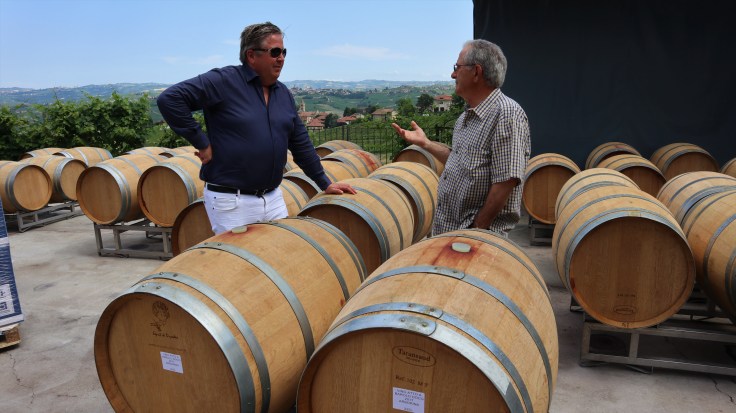
In 1976, Elio traveled to Burgundy and it was a trip that would change the course of history forever. Elio infamously took his father’s big barrels outside and chopped them up. He wanted to use small barrels instead, barrique, like the french. This act would eventually lead to his disinheritance. But Elio persevered.
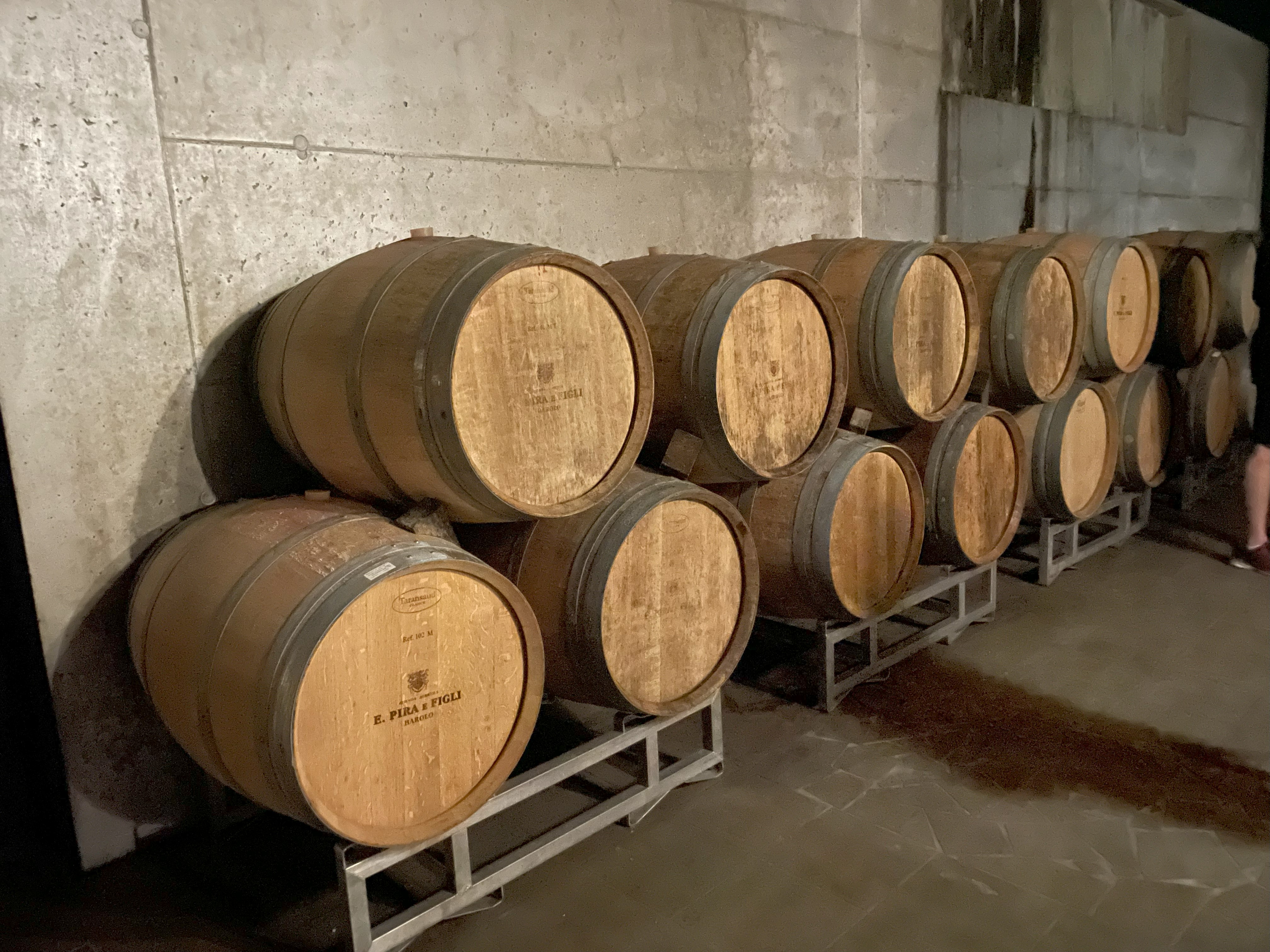
Today, the family still use small barrels (barrique) for most of their wines, and steel tanks for the dolcetto d’alba , barbera d’alba and langhe nebbiolo. The oak is used as a tool, and none of their wines have a significant presence of oak flavors. Try putting it in a blind tasting lineup and see for yourself.
With a total of 10 hectares, they make about 70,000 bottles a year.
Fun fact
SEVEN PRODUCERS, SEVEN DIFFERENT STORIES, ONE SINGLE LABEL: L’INSIEME
Silvia’s father, Elio Altare, isthe founder of L’Insieme. And what is L’Insieme? It’s a project between 7 winemakers in Langhe where they donate a percentage of the proceeds to a good cause. Below you will see their own explanation of the project (found on their website).
The project aims to make wines which, under a single brand, tell a story of friendship and collaboration, of hard work, shared passion for the Langhe and its outstanding grapes.
The dream is that, from this union, the resultant label will be a symbol of friendship and mutual aid. A wine that is our personal way of thanking the land that gave us our roots and its support.
Our goal is to make L’Insieme wine a practical ethical tool, allowing us to fund projects of high social value as a way of giving back to our local area a part of the good fortune and beauty it has given us.
Fun fact II
When it comes to blind tasting, we all know Silvia and Elio are very good. They have trained their noses for years. But the one who always seems to surprise us with her incredible ability is Lucia, Elio’s wife. She will sit quietly, while everyone shares their opinions and then all of a sudden she will blow you away with her analysis. A very impressive woman.
The Altare Wines
Wines available in: Norway Sweden Denmark USA UK Italy
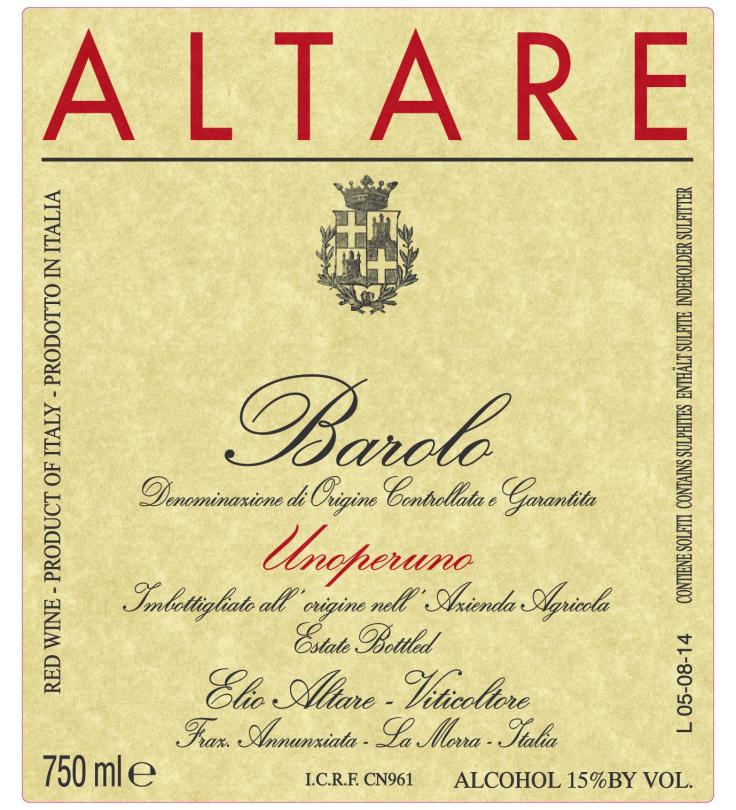
Altare Uno Per Uno
It’s exactly what it says: one by one. The family hand destems the grapes, berry by berry, and the results are magnificent. It’s also why the price might be a little higher. Imagine the work behind this wine. And if you can’t, check out the picture below.
BASIC INFORMATION
Product name: Uno Per Uno Grape: 100% nebbiolo Classification: DOCG Number of bottles produced: 1,500 Color: light ruby red with garnet reflections Fragrance: fresh fruits, rose petals and flowers Taste: warm, elegant, smooth silky tannins Food pairing: red meat, aged cheese
VINIFICATION (Wine-making)
Method: hand-destemming the berries, one by one. Looking for the purity of the fruit of nebbiolo, making sure there are no stems, no leaves and no ugly berries Ageing:
VINEYARD
Soil: marna with clay and sand Exposure: south, south-east Year of plantation: 1948
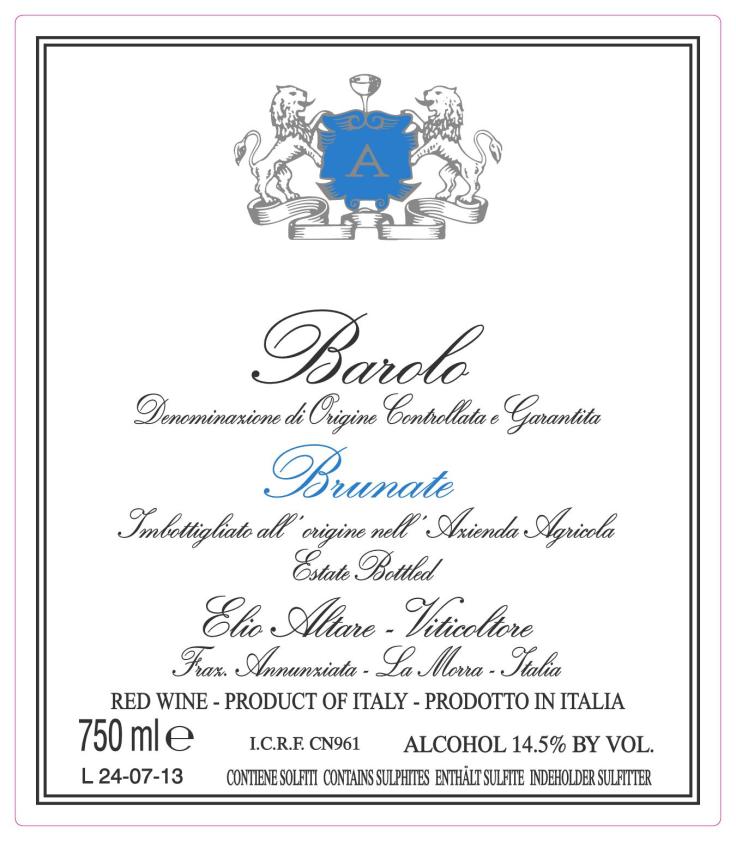
Barolo Brunate
The last vintage of Brunate is 2011. Altare rented the plot and the owners decided to make their own wine.
BASIC INFORMATION
Product name: Brunate Grape: 100% Nebbiolo Classification: DOCG Number of bottles produced: 1,200 – 1,500 Color: intense ruby red with garnet reflections Fragrance: red fruits, floral, light and feminine Taste: warm, elegant, long finish with wild rose and violet Food pairing: red meat, game, aged cheese
VINIFICATION (Wine-making)
Method: maceration on the skins for 4/5 days in rotary fermentors with temperature control Ageing: 24 months in french barrique
VINEYARD
Soil: various Exposure: south, south-east Age of plants: 20 to 90 years old
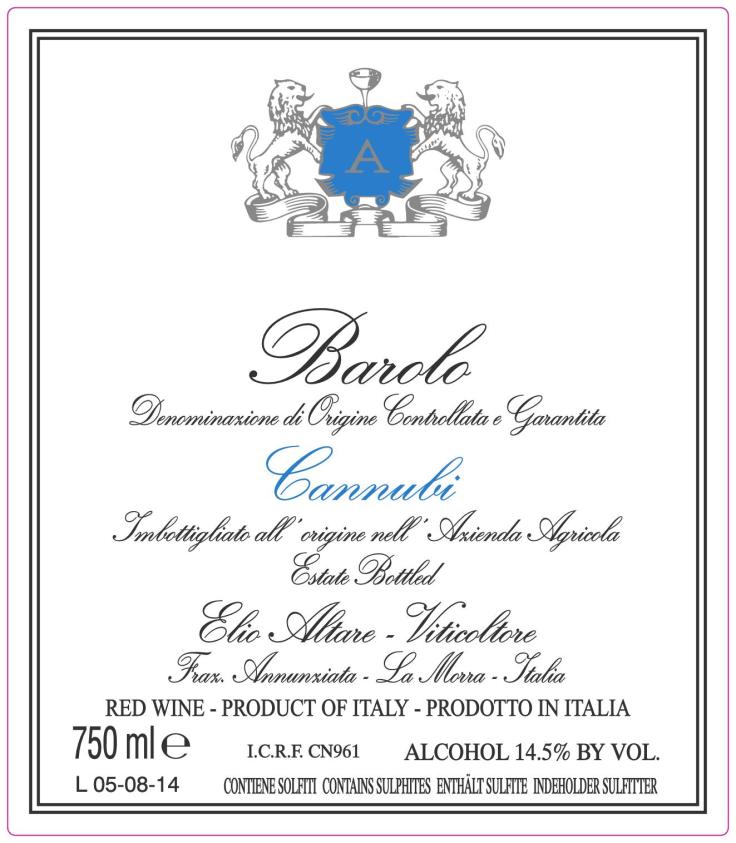
Cannubi
BASIC INFORMATION
Product name: Cannubi Grape: 100% Nebiolo Classification: DOCG Number of bottles produced: 1,500 Color: light ruby red with garnet reflections Fragrance: fresh fruits, rose petals and flowers Taste: elegant, soft silky tannins Food pairing: red meat, aged cheese
VINIFICATION (Wine-making)
Method: maceration on the skins for 4/5 days in rotary fermentors with temperature control Ageing: 24 months in french barrique
VINEYARD
Soil: marna with clay and sand Exposure: south Age of plants: 30 years old
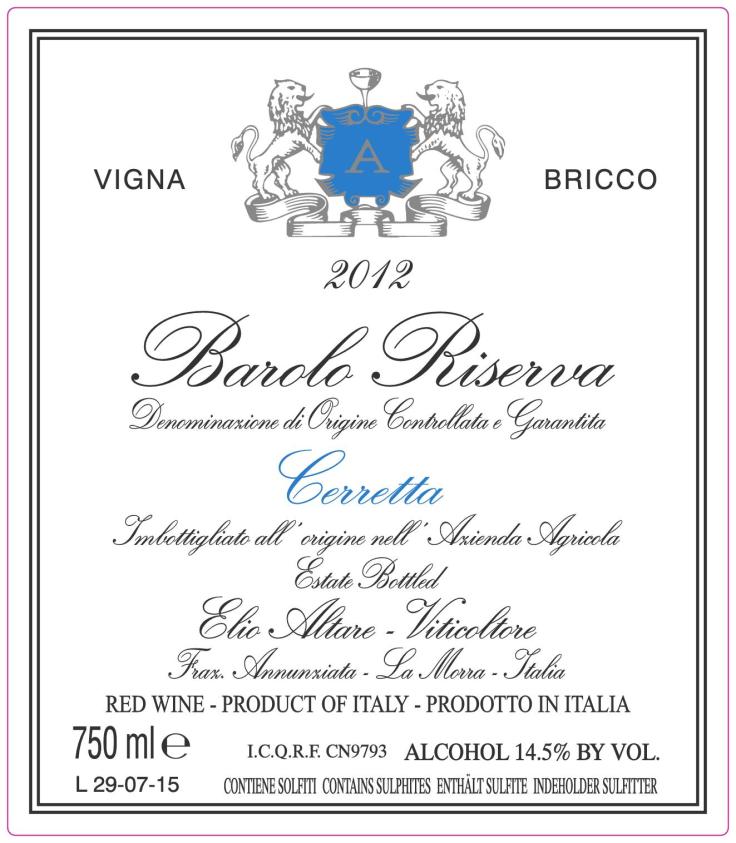
Barolo Ceretta Vigna Bricco Riserva
Altare chooses to release this wine later than the rest of the barolo’s. The extra time can be beneficial for a wine with more masculine characteristics.
BASIC INFORMATION
Product name: Ceretta Vigna Bricco Riserva Grape: 100% Nebbiolo Classification: DOCG Number of bottles produced: 5,000 – 6,000 Color: intense ruby red with garnet reflections Fragrance: mature fruits, spicy, tobacco, darker fruits, licorice Taste: warm and elegant, with mint and spice notes Food pairing: red meat, aged cheese
VINIFICATION (Wine-making)
Method: maceration on the skins for 4/5 days in rotary fermentors with temperature control Ageing: 24 months in french barrique
VINEYARD
Soil: sandstone, limestone and chalk Exposure: south, south-east and south-west Age of plants: 15 years old
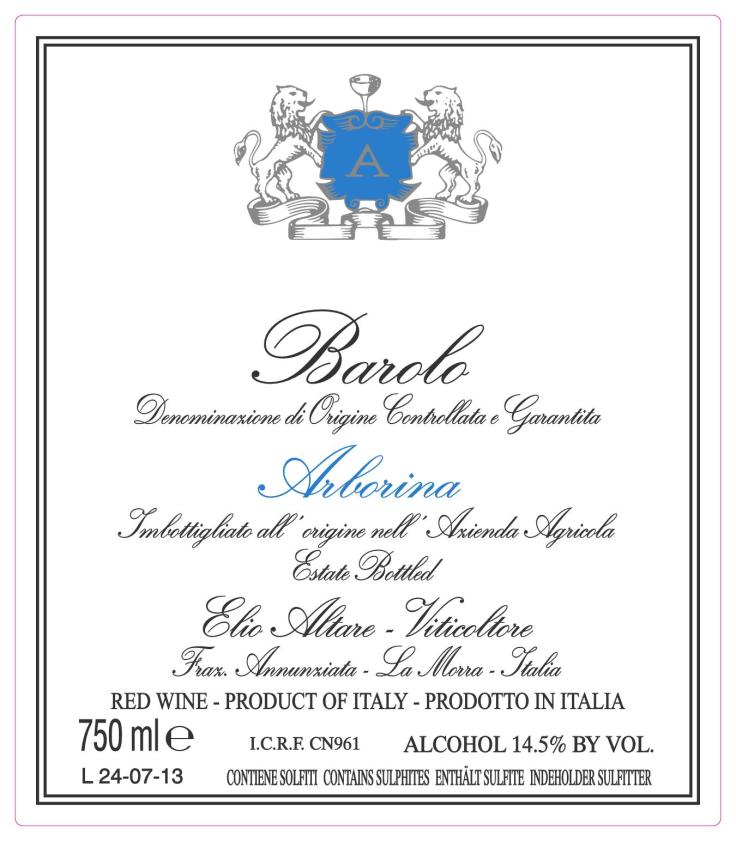
Barolo Arborina
BASIC INFORMATION
Product name: Arborina Grape: 100% Nebbiolo Classification: DOCG Number of bottles produced: 6,000 Color: intense ruby red with garnet reflections Fragrance: rose petals, flowers, light, sweet Taste: elegant, with smooth but intense tannins Food pairing: red meat, game, aged cheese
VINIFICATION (Wine-making)
Method: maceration on the skins for 4/5 days in rotary fermentors with temperature control Ageing: 24 months in french barrique
VINEYARD
Soil: marna stone with clay and sand Exposure: south, south-east Year of plantation: 1948
Barolo
BASIC INFORMATION
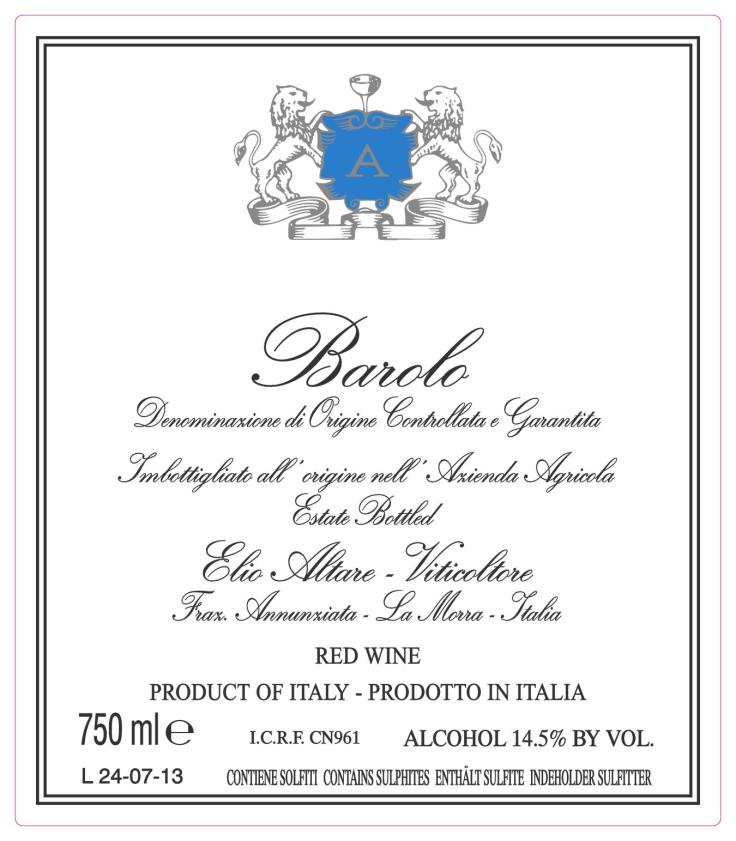
Product name: Barolo Grape: 100% Nebbiolo Classification: DOCG Number of bottles produced: 10,000 Color: intense ruby red with garnet reflections Fragrance: red fruit, raspberry, redcurrant, wold roses that evolve into licorice and spice notes Taste: elegant, persistent with long finish ans soft tannins Food pairing: red meat, aged cheese
VINIFICATION (Wine-making)
Method: maceration on the skins for 4/5 days in rotary fermentors with temperature control Ageing: 24 months in french barrique
VINEYARD
Soil: various Exposure: south, south-east Age of plants: from 20 to 30 years
La Villa
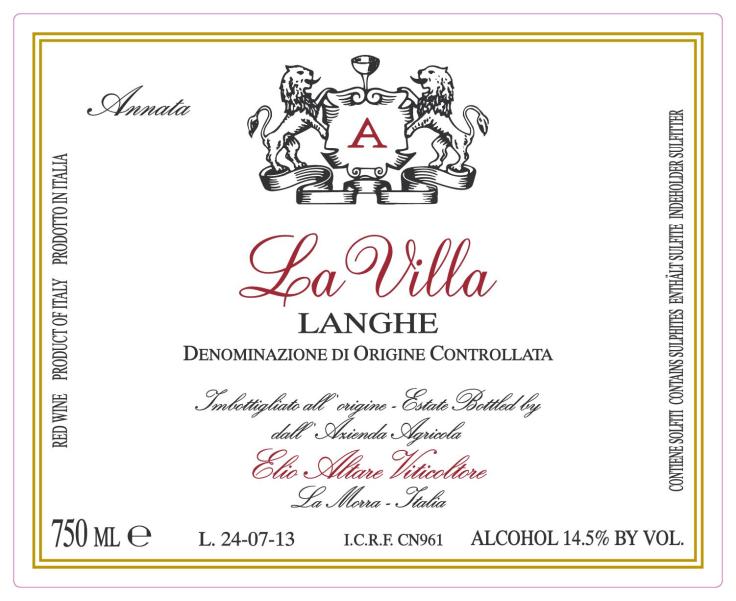
La Villa is a blend of nebbiolo and barbera grapes, which gives the best of both worlds; tannins and acidity.
BASIC INFORMATION
Product name: Langhe La Villa Grape: Barbera & Nebbiolo Classification: DOC Number of bottles produced: 2,500 – 3,000 Color: intense ruby red Fragrance: plums, berries, rose petals Taste: fresh, well balanced tannins, pleasant acidity from the barbera Food pairing: pasta, charcuterie, meat
VINIFICATION (Wine-making)
Method: maceration on the skins for 3/4 days in rotary fermentors with temperature control Ageing: new french barrique for 18 months
VINEYARD
Soil: clay and tufa stone Exposure: south-east Year of plantation/age of plants: various
Giarborina
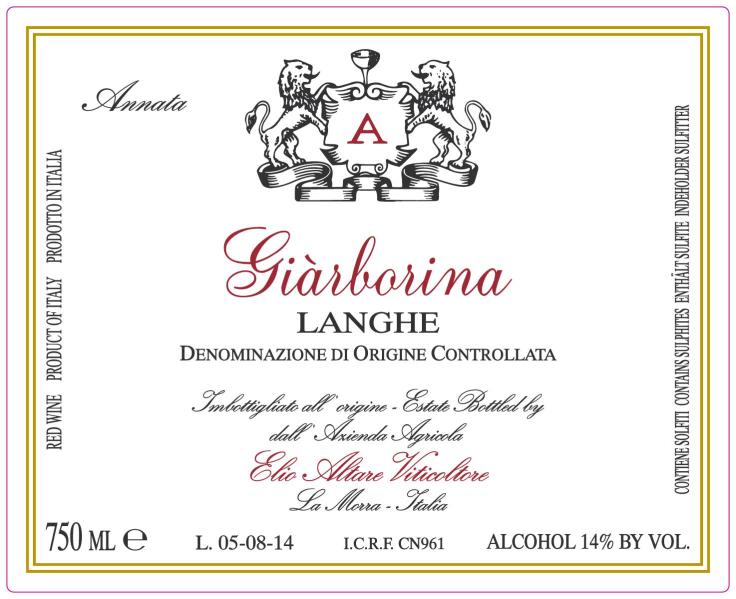
A “baby barolo”, somewhat in the middle of a langhe nebbiolo and a barolo, made with grapes from the Arborina vineyard.
BASIC INFORMATION
Product name: Langhe Giarborina Grape: 100% nebbiolo Classification: DOC Number of bottles produced: 2,000 – 2,500 Color: ruby red with garnet reflections Fragrance: intense balasmic notes, aromas of fruit, rose petals Taste: red fruit, raspberry, persistant Food pairing: red meat, soft to medium aged cheese
VINIFICATION (Wine-making)
Method: maceration on the skins for 3/4 days in rotary fermentors with temperature control Ageing: new french barrique for 18 months
VINEYARD
Soil: clay and sand Exposure: south, south-east Year of plantation: 1948, 1989
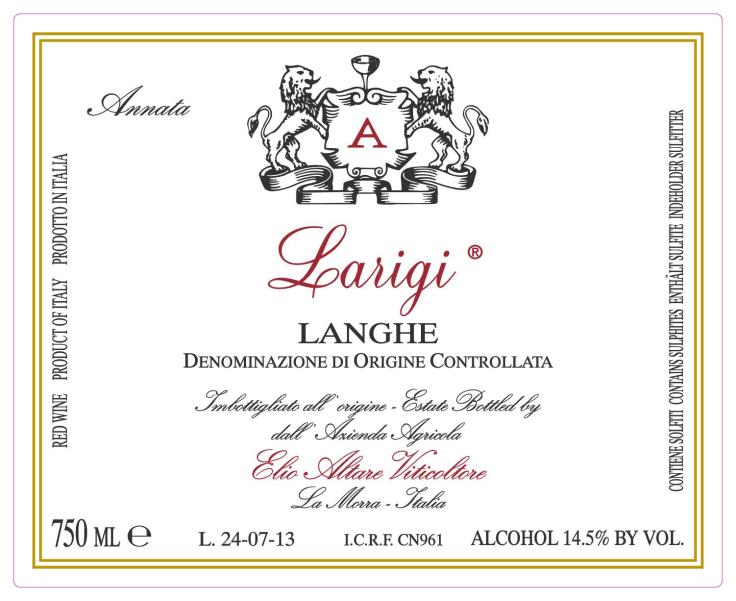
Larigi
Could also be called a “barbera superiore”, but I prefer the name Larigi. The vineyeard is located next to the winery. A “single vineyard” barbera named Larigi.
BASIC INFORMATION
Product name: Larigi Grape: Barbera Classification: DOC Number of bottles produced: 2,500 – 3,000 Color: dense purple red Fragrance: small red fruits, very persistent Taste: warm, soft, intense, silky tannins, pleasant acidity, red berries Food pairing: grilled meat,c heese and salami
VINIFICATION (Wine-making)
Method: maceration on the skins for 3/4 days in rotary fermentors with temperature control Ageing: new french barrique for 18 months
VINEYARD
Soil: clay and sand Exposure: south, south-east Year of plantation/age of plants: 1948
Product name: L’Insieme Grape: various Classification: Number of bottles produced: 1,500 Color: intense ruby red Fragrance: spicy and intense Taste: big structure, taste is much more “international”, spicy and herbal Food pairing: red meat, game, cheese
VINEYARD
Soil: various Exposure: various Age of plants: 10 to 30 years
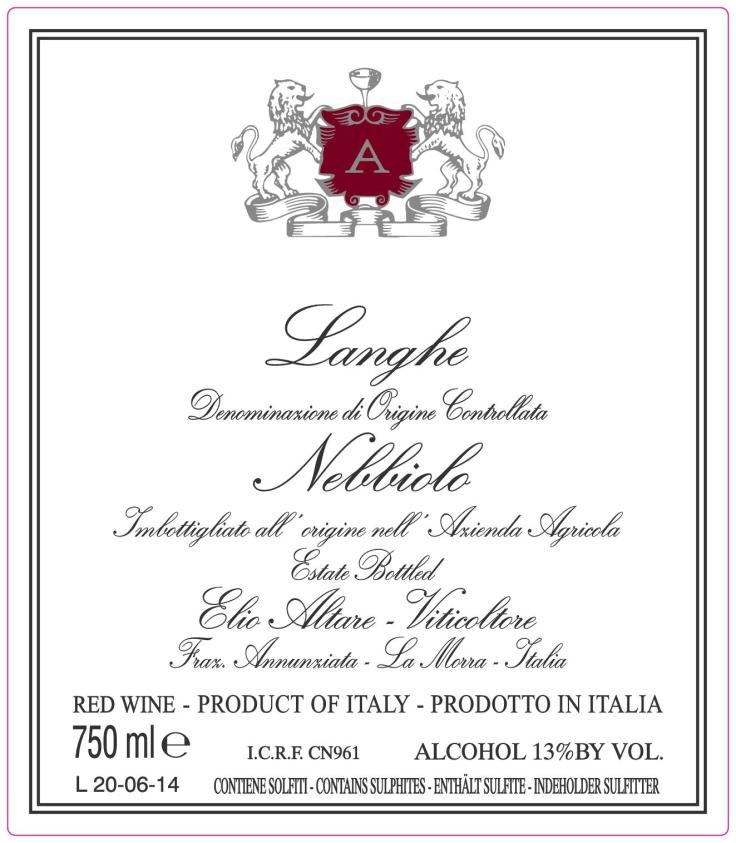
Langhe Nebbiolo
BASIC INFORMATION
Product name: Langhe Nebbiolo Grape: Nebbiolo Classification: DOC Number of bottles produced: 8,000 Color: intense ruby Fragrance: rose petals and red fruits Taste: Tannins, but not dry. Red fruits and good acidity Food pairing: antipasto, pasta, red meat
VINIFICATION (Wine-making)
Method: maceration on the skins for 3/4 days in rotary fermentors with temperature control Ageing: 5 months in aged french barrique
VINEYARD
Soil: calcareous but also sandy Exposure: various, south-east, east Age of plants: 20 to 50 years old
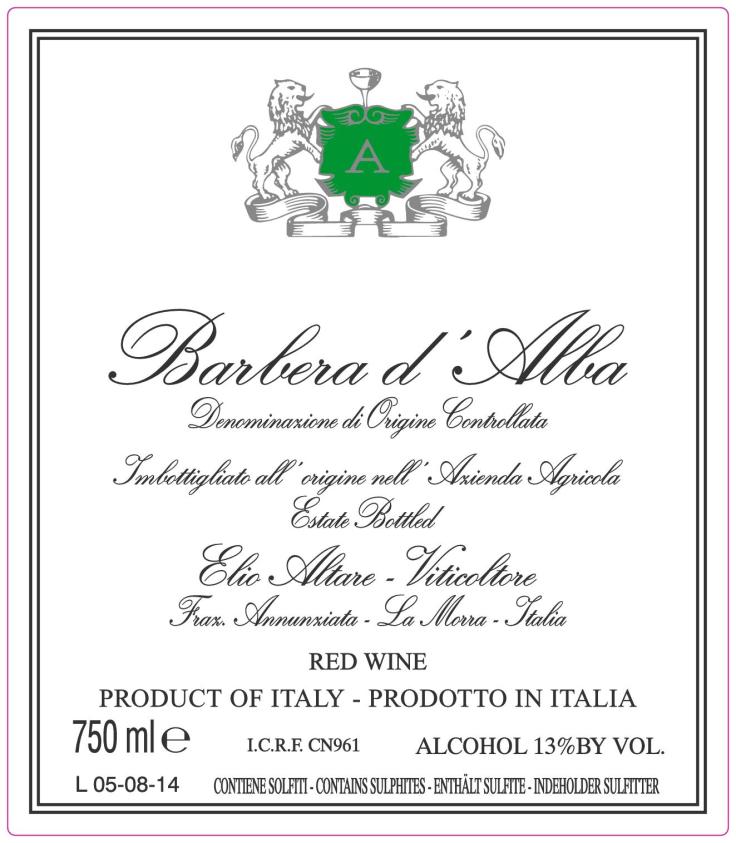
Barbera d’Alba
BASIC INFORMATION
Product name: Barbera d’Alba Grape: Barbera Classification: DOC Number of bottles produced: 15,000 Color: ruby red with violet reflections Fragrance: violets and black cherry Taste: full bodied, good acidity, dark red fruits Food pairing: antipasto, pasta, fatty cheese and salami
VINIFICATION (Wine-making)
Method: maceration on the skins for 3/4 days in rotary fermentors with temperature control Ageing: 5 months in aged french barrique
VINEYARD
Soil: calcareous but also very sandy Exposure: various, east, north-east Age of plants: 10 to 30 years old
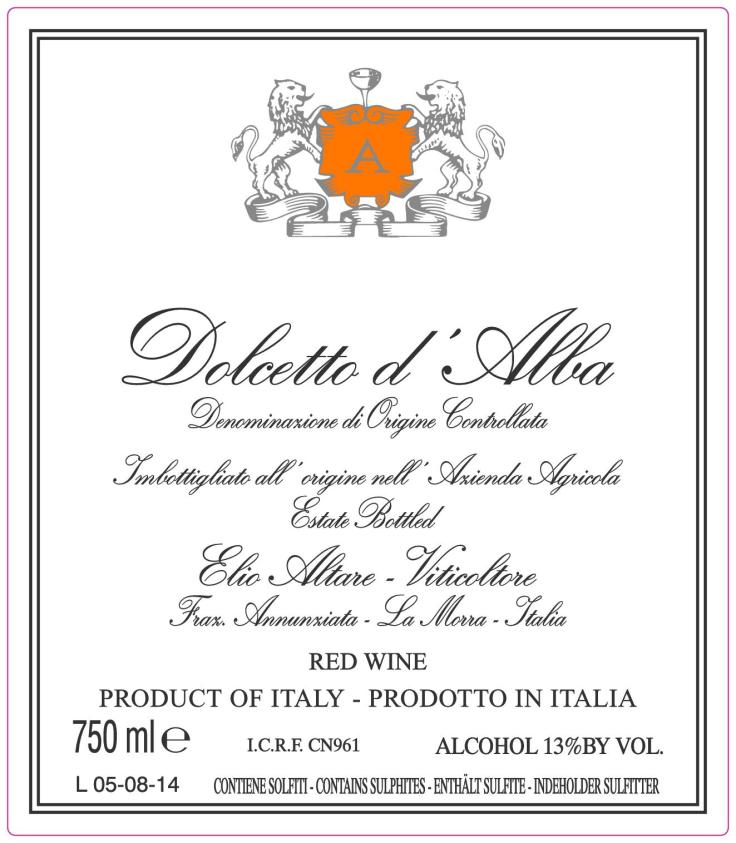
Dolcetto d’Alba
BASIC INFORMATION
Product name: Dolcetto d’Alba Grape: Dolcetto Classification: DOC Number of bottles produced: 18,000 – 20,000 Color: intense violet Fragrance: violet and black cherry Taste: cherries, black cherry, medium-bodied, easy to drink Food pairing: antipasto, pasta, light cheese, pizza, panini
VINIFICATION (Wine-making)
Method: maceration on the skins for approximately 2 to 3 days maximum in rotary fermentors with temperature control Ageing: stainless steal tank for about 10 months
VINEYARD
Soil: calcareous but also very sandy Exposure: various, mostly north and north-east Age of plants: 20 to 40 years old
Altare Winery
Frazione Annunziata 51, 12064 La Morra elioaltare@elioaltare.com +39 0173 50835
Cover photo: Elio Altare Website Labels: Elio Altare Website Other photos: Oda Randmæl Text: Oda Randmæl & Toni Fadnes
Elio Altare, aslo known as the Godfather of Barolo, has been making wines since about 1950. In 1976, Elio traveled to Burgundy and it was a trip that would change the course of history forever. Elio infamously took his father’s big barrels outside and chopped them up. He wanted to use small barrels instead, barrique, like the french. This act would eventually lead to his disinheritance. But Elio persevered.
Elio Altare’s use of Oak
Elio Altare uses barrique for their wines, but the oak is not dominant in the wines, just a helpful tool. Use of oak allows for small amounts of oxygen to pass through, helping to work the tannins. Oak can also help combat reductive qualities and add a richness to the barbera. The wines of Elio Altare do not have a huge presence of vanilla or toast, which can be a common aspect of wines made in barrique.
Altare Barbera d’Alba
Elio Altare Barbera is made with 10-30 year old vines, from different plots. The soil is calcareous but also very sandy. The wine spends about 5 months in 100% used barrique before it’s bottled. A barbera is perfectly paired with pasta or cheese.
Vintage 2017
2017 was a “big” vintage. Nicola at Trediberri comared it to Pamela Anderson. 2017 was one of the hottest and driest vintages, with temperatures above average throughout almost the entire season. The vintage will also be known for the lack of rain. Because of both the high temperatures and the lack of rain, the harvest was very early, with some barolo grapes picked before September! Although these conditions don’t sound great, it was quite optimal for barbera.
Where can you find it?
In Norway, you can either order it online or check out these local Vinmonopol: Ullevaal, Oslo – 15 Gjøvik – 8 Bagn – 18 Bergen, Valkendorfsgt. – 6
I was recently asked about barbera, and if I had a favorite. This is a tough question to answer, because there are so many good ones. And so many different styles. I don’t think I could pinpoint just one, and here’s why.
Barbera vs Barbera Superiore
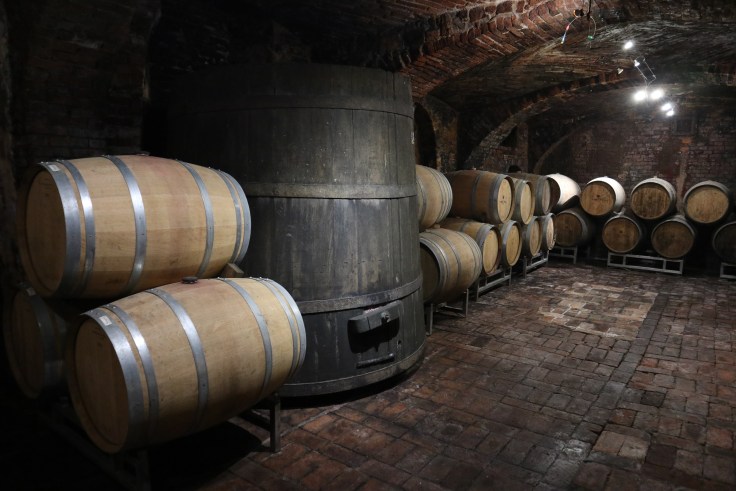
Barbera is a grape, and just like with Nebbiolo, there are multiple ways to make it. Most winemakers have a “classic” barbera, a wine made in steel tanks with no influence of wood. The wine completes both malolactic and alcoholic fermentation in steel tanks, and remain there until bottling. These wines tend to be high in acidity, full bodied with aromas of red fruits.
You will also find barbera superiore, and this wine will have influence of oak. After pressing the juice, the wine is transferred into barrels and complete the malolactic and alcoholic fermentation in barrels instead of steel tanks.* The wood gives the wine some tannins, helps balance the acidity and you might find hints of oak flavor.
“The Mario Fontana Way”
Mario Fontana is what we would call a “traditional” wine maker, and uses big barrels for all his wines. Except his Barbera. A few years ago, he decided to use cement for this grape because that made more sense to him. And we see this with other winemakers. They may chose to interpret the grapes in different ways, and use new types of material when cultivating them. Kinda cool, right?
Now, you can see where choosing a favorite can be difficult. However, there are a few I tend to chose over and over again.
About 30 years ago there was a revolution in the Langhe area, when the so called “modernists” where born. You may be able to debate how it started, but it can be argued that Elio played a big role when he brought his father’s big barrel outside and turned it into kindling. What followed was a sort of “war” between the modernists and traditionalists.
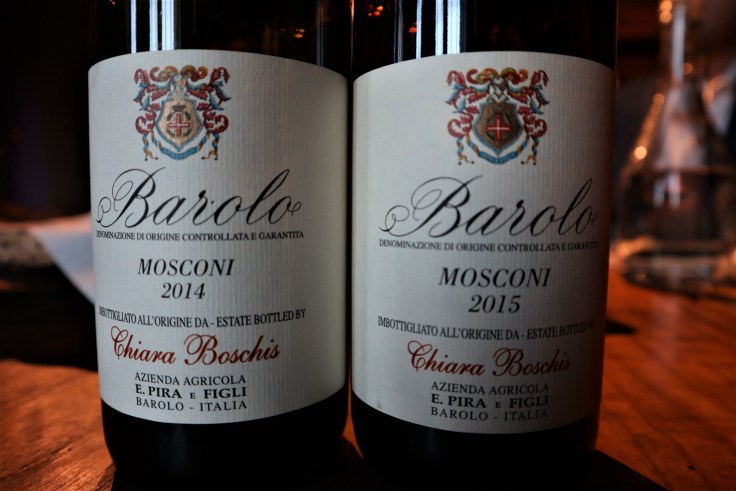
I’m not sure you’ve heard of the “Barolo Boys“, but they are the main characters in this so called war. And amid all the boys – Elio Altare, Accomasso, Beppe Rinaldi & Roberto Voerzio – you have Chiara Boschis. Chiara assumed responsibility of the winery in 1980, and back then it was uncommon for women to be winemakers. But she persevered and the results are outstanding.
Chiara is a fiery, feisty, fantastic person with boatloads of passion. And her incredible energy is contagious. Chiara is not just a winemaker, she is a hard core farmer on a mission to save the planet. Global warming or global climate change is a common topic in the area these days.
Extreme weather & temperatures creates all sorts of issues for the vines. This year, there has been almost no rain, and rain is crucial in this period when the buds are appearing on the vines. And if there is frost after the buds have appeared, then there is a whole other set of issues. Just look at Burgundy the past week.
But Chiara, along with many other winemakers in the area, fights with all she’s got. Biodiversity & organic are popular words these days, and for Chiara they are words to live by! She always looks for new ways to aid the land where she grows her wine. She continuously thinks of new ways to improve. Chiara never gives up!
As for the wines, Chiara always strives for perfection. 2014 was a difficult year, so 2015 I think would automatically be a good year (compared to the 2014). As with any agricultural product, the wine reflects the vintage was well as the soil. Chiara Boschis made excellent wines both years, but I think I prefer 2015 over 2014 Mosconi. I look forward to the next vintages, as well as the transformation of the wines in the bottle.
The year is 1992. In a cold, rainy little town called Stavanger, Oda Emilie aka Piemontegirl was born. Around the same time, in what seams like a different world, the cold also encompassed Piemonte. For the family and their bundle of joy, weather mattered very little. But to the farmers in Piemonte, weather matters. A lot. It can be all consuming.
1992 has a reputation for being a bad vintage. Starting off cold, warming up slightly in May and June, and lots of rain during the second half of the year does not add up to an “easy” vintage. The wet weather can be very problematic, bringing with it diseases and other issues. It was not looking very good for the 1992 vintage. Many estates did not bottle wine.
But I have a question for you? Have you tried a 1992 recently?
I have. Barbaresco 1992 from Produttori del Barbaresco. And guess what? It was MAGNIFICENT!
You should probably not keep them for very much longer, if you find any at all. I plan on drinking mine soon, probably for my 30th birthday! But my point is, that 1992 is not bad. Maybe it never was bad? I was not old enough to drink back then, so I’ve only ever had “old” 1992, but was it really that bad back then? Elio and Silvia Altare don’t seem to think so.
It was cold rainy difficult vintage but super smooth elegant wines were made. Pure magic for the wines made by the winemakers that are farmers first.




 PIEMONTEGIRL