It’s officially Spring, which means that the newest vintage is making its way to stores. The same is true in Norway. So if you’re living in Norway, mark your calendars for May 8th!
In addition to new vintages, there are also new “kids on the block”! Keep reading to find out more!
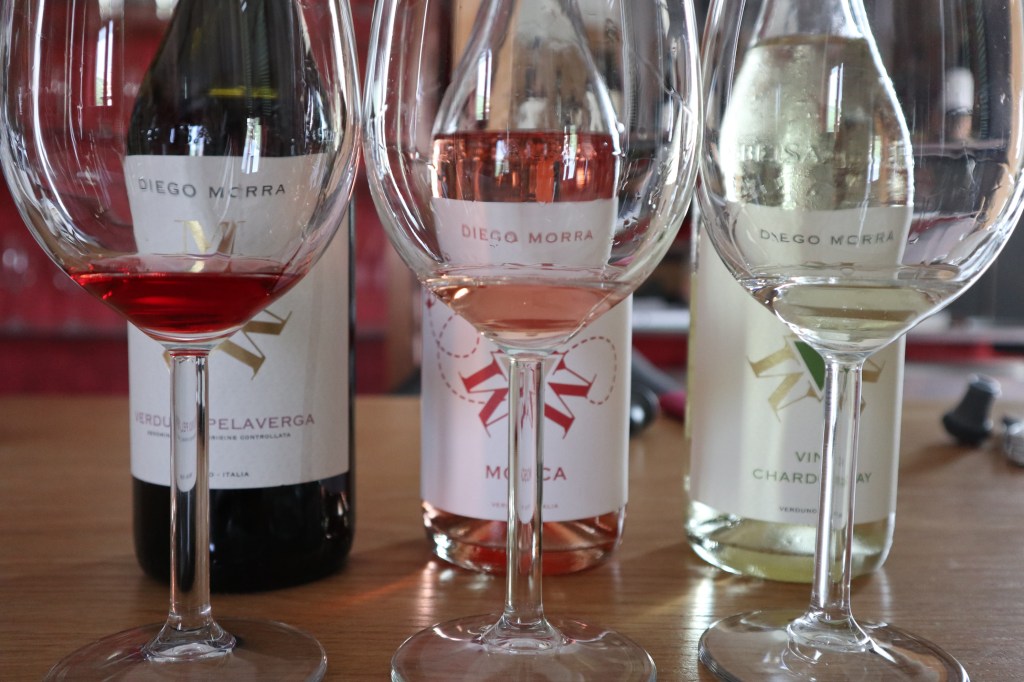
Diego Morra Rosato 2019 For the first time you’ll find Diego Morra wines in Norway! This wine, a Langhe Rosato, is made with 100% Nebbiolo grapes and is what I would call a “food rosè”, perfect with summer salads or fish.
Ghiomo Inprimis Langhe Arneis 2019 Fasten your seatbelts, because this is a newcomer in Norway as well. The Ghiomo winery is located in Guarene, a commune bordering on the more well known wine regions in Piemonte like Barolo and Barbaresco. The Langhe Arneis Inprimis is a fresh and fruity white wine that pairs well with fish and shellfish. Perfect for summer!
Bartolo Mascarello Dolcetto 2018 There is not much to say about Mascarello that has not already been said. And unfortunately I’ve not tried the 2018 vintage yet, but 2018 looks more promising for Dolcetto than 2017 was. I guess time will tell.
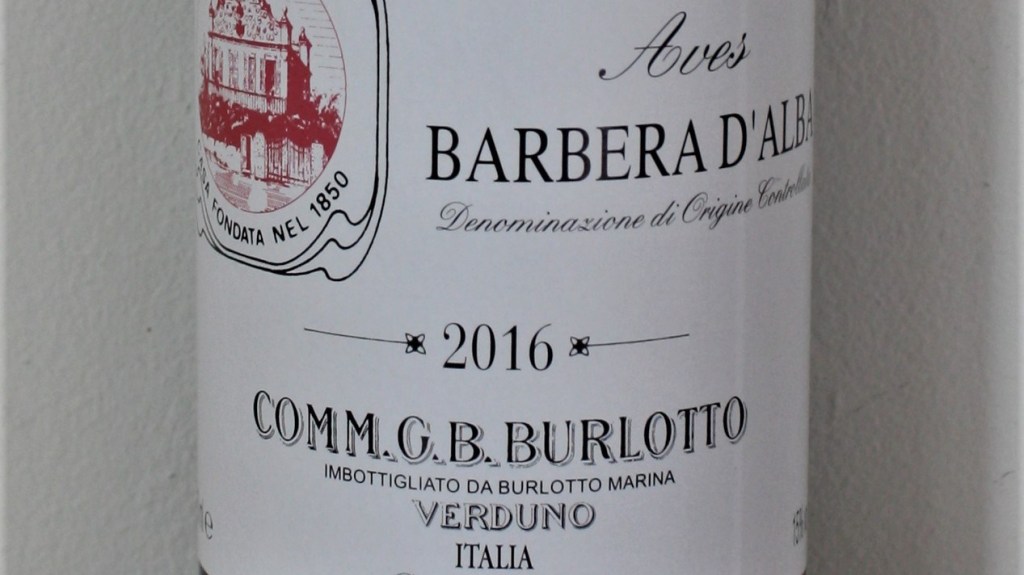
Burlotto Barbera Aves 2018 As far as Barbera goes, this might be one of my absolute favorites. His classic Barbera is good, but the Aves is just on a whole other level. I can’t wait to try the 2018 vintage!
Nadia Curto Barbera 2017 Did you know that you could get Nadia’s wines in Norway? You can! And the 2017 Barbera will be available Friday May 8th! Modernist or Traditionalist? If there is anyone I know that doesn’t “belong” in any boxes, it’s Nadia Curto. Her winemaking style is influenced by both her father and her uncle, and she applies the different methods to different wines. Does it matter what style you prefer, if your wines are good? I don’t think so.
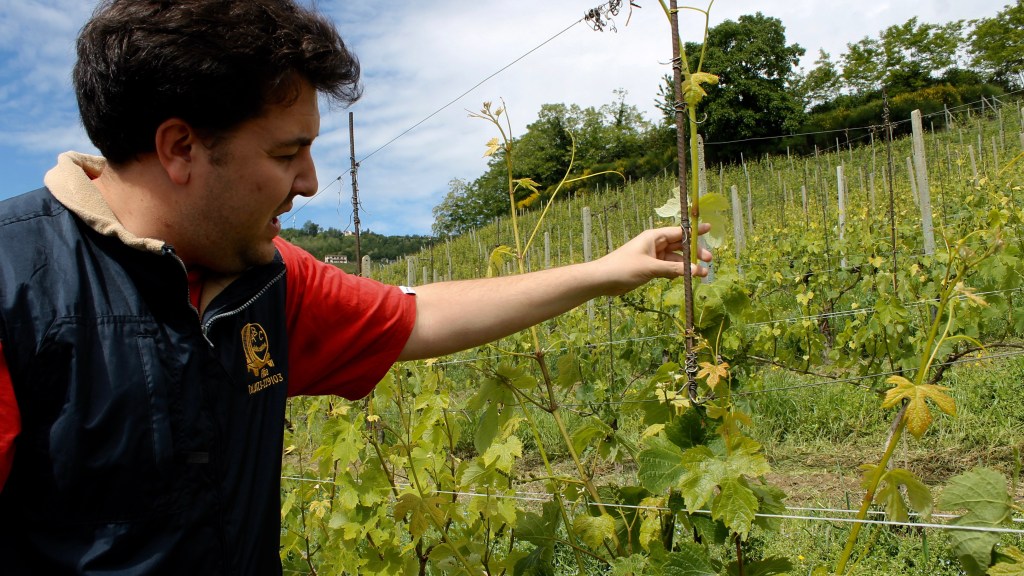
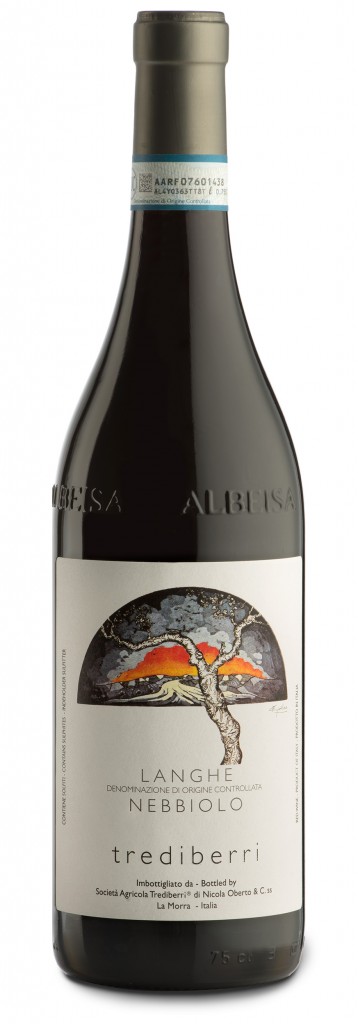
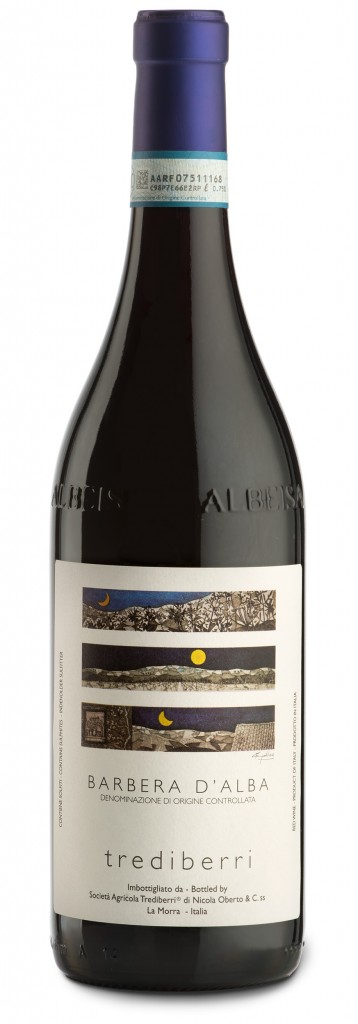
Inimitable. Passionate. Affable. Energetic. Incomparable. Words often used to describe Nicola Oberto, the face of Azienda Agricola Trediberri. And, a lover of fine wine.
I often think of Nicola as a young Bill Gates – smarter
than most, passionate beyond words, with an unprecedented attention to detail,
and an inherent ambition to get better every day. Bill, back in the days, would get so
passionate at exhibitions selling his vision that he would forget to change his
clothes for 3 days. I am not saying that Nicola does not change clothes, but I
am not saying that it is not entirely possible either.
Add multifaceted. Always a smile lurking, the jokes come
regularly, yet probably one of the most serious people you will ever meet. So visionary at times that you’re afraid he is
going to disappear in into the sky, yet fully grounded. With ideas at the forefront of wine making
innovation, but always wholly rooted in the tradition.
Do not take my word for it – visit the Trediberri winery
and vineyards, and you will have an experience for life.
The Trediberri Family
Nicola is quick to put out though, this is not his show
alone, this is a family effort. His
father, Federico, spent 40 years working for Renato Ratti, a renowned winery in
La Morra. You do not perhaps see Anna
Rosa (mother of Nicola and wife of Federico) too often, but there is no
underestimating her. She is guiding the
work in the vineyards as much as anybody.
Finally, you have Stefania, who keeps the checks and balances in the
winery. In addition to making sure there
is always gas in Nicola’s car.
Winemaking
“We love to drink wine, therefore the
greatest recognition for us is a bottle that is quickly finished.”
Want to try to put Trediberri in a box labelled
“Modernist” or “Traditionalist”? Forget about it. Instead, Trediberri follows a
beautiful philosophy: equilibrium. Using cement tanks, stainless steel tanks
and wood barrels, they modify the method each year in order to make the wine as
balanced and as drinkable as possible!
Trediberri Fun fact
Whilst there is absolutely no chance of the industrious Nicola
Oberto ever running out of gas, there is a big chance his car will. We have yet to figure out the underlying logic
behind the fear of a full tank of gas, but it sure makes every trip in his car
an adventure.
Fun fact II
The Trediberri winery of La Morra got its
name from the fact that it pulls together the triumvirate of Nicola Oberto, his
father Federico and their associate Vladimiro Rambaldi. Together they invested. 5 hectars of Berri
vineyards, a hamlet of La Morra, back in 2008.
Hence, Tre – Di – Berri.
Wines
Wines available in: Norway Australia Denmark Germany Hong Kong Italy United Kingdom United States & more
indigenous yeasts, 11 days of alcoholic
fermentation in concrete (3-4 pump-overs per day) + 7 days of skin
post-fermentative maceration (1-2 pump-over a day)
BASIC INFORMATION
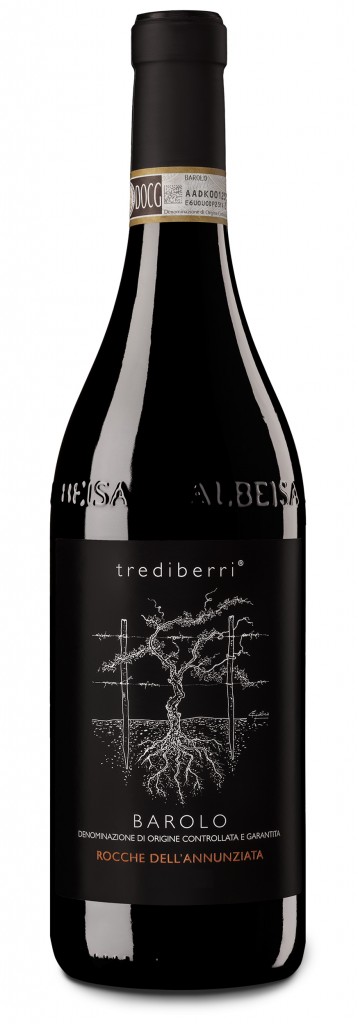
Product name: Barolo Rocche dell’Annunziata Grape: 100% Nebbiolo Classification: DOCG Fragrance: delicate, floral, spicy aromas. Cherry, rose and strawberry. Taste: Full bodied, good balance, structured, approachable tannins
VINIFICATION (Wine-making)
Method: indigenous yeasts, 11 days of alcoholic fermentation in concrete (3-4 pump-overs per day) + 7 days of skin post-fermentative maceration (1-2 pump-over a day) Ageing: 23 months in big barrels (slavonian oak)
VINEYARD
Soil: Calcareous blue marl Exposure: Southeast, south Year of plantation: 1951, 1961, 1989, 1999
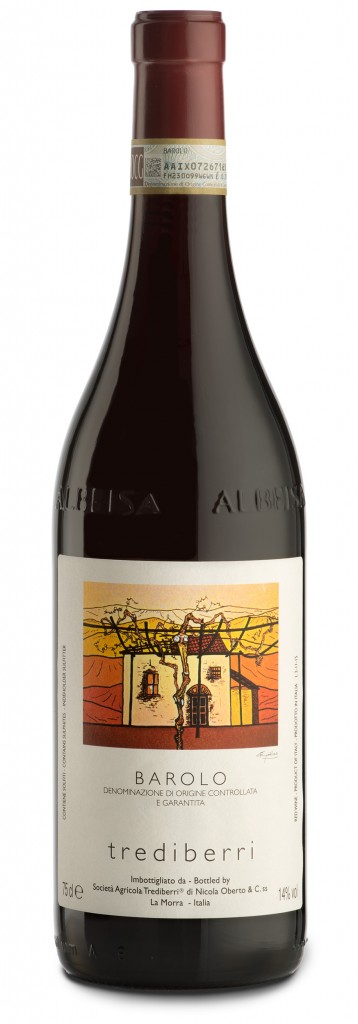
Barolo
The grapes come
from vineyards located in La Morra, within the hamlets Berri and Capalot. Alcoholic fermentation occurs in concrete and
starts with a specific pied de cuve. It lasts around 2-3 weeks and, after the
first racking, the wine goes straight into wooden casks, where malolactic
fermentation starts. We use 52 and 25 hectoliter barrels, made of Slavonian
oak, crafted by Garbellotto. The wine ages for about 2 years, then it is
blended in steel or concrete and it is bottled in July, 6-7 months before its release.
Length: 2-3 weeks alcoholic fermentation in concrete tanks Ageing: 2 years in large casks Ageing in bottle: 6-7 months
VINEYARD: Berri & Capalot
Langhe Nebbiolo
Grapes come from different vineyards of
Nebbiolo within La Morra (Berri and Torriglione), Levice, Vicoforte and Roero
area.
Alcoholic fermentation happens in concrete
tanks that starts with a specific pied de cuve and lasts around 1-2 weeks with
no temperature control. Each parcel is processed and aged separately until the
cold stabilization. Total ageing is approximately 6 months exclusively in
concrete and stainless steel, with frequent rackings.
The 2015 Azelia Langhe Nebbiolo brings me right back to the tasting room that lies at the beginning of the “Champagnemilå” hill in Castiglione. The old clock ticks away in the background, drowned out by a passioante Lorenzo who is telling me about this wines (for the umpteenth time). Oh how I wish I was back there right now.
I’ll have to make do with drinking Azelia wines in Oslo while practicing Social Distancing.
Azelia
The story of Azelia starts in 1920 when Cavalier Lorenzo Scavino started to vinify the grapes from the family owned vienyards. This would be the start of an incredible journey for the Scavino family. Today, Luigi, Lorella and their son Lorenzo run the show. Lorenzo, who bears the name of his great grandfather, represents the 5th generation of winemakers in the family.
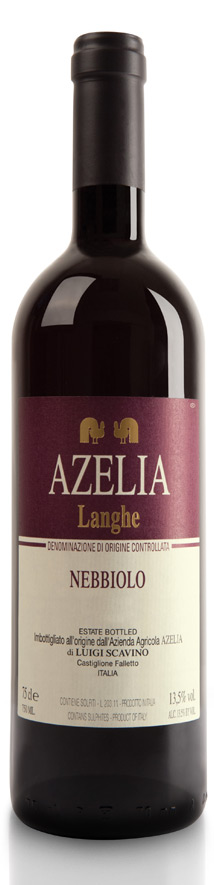
The Azelia Langhe Nebbiolo come from vines with an average age of 20 years. After a short temperature controlled fermentation in rotorfermenters, the wine moves into steel tanks where it stays until its bottled.
Since I don’t have access to the current release of Azelia Langhe Nebbiolo I had to “make do” with the 2015 vintage.
Fruity – the first thing that comes to mind. Digging deeper you’ll find strawberry, red fruit, some tobacco & hint of roses. All those good things that a nebbiolo should smell. And then there’s the tannins. They are there, but they are smooth. 2015 was a warm vintage with very little rain, which often results in “warm” wines, i.e. ripe fruit, hints of toffee, etc. But the Langhe Nebbiolo from Azelia was fresh, full of red fruits and berries! Just the way I like it!
For my Norwegians
I just checked and the Langhe Nebbiolo is sold out at Vinmonopolet… I believe a new shipment is coming in, but while you wait you can try his Barbera or perhaps a Barolo!?
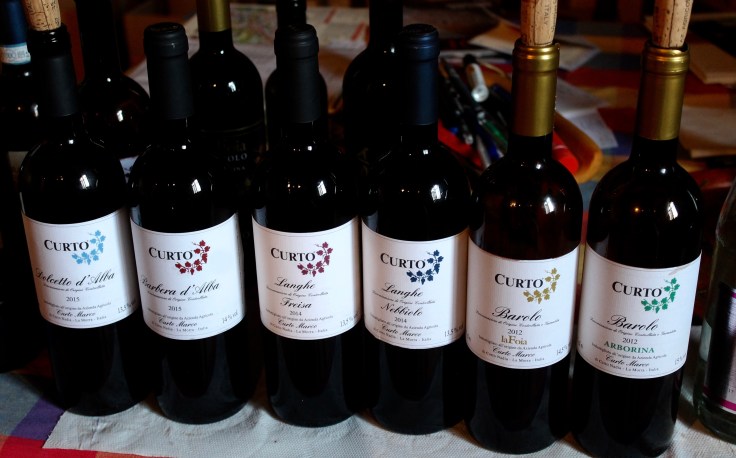
Nadia Curto, like her cousin Silvia Altare, is just bursting with energy! A visit with Nadia is sure to put a smile on your face, and not just because the wines are good!
Nadia Curto’s parents, Marco and Adele,
have been cultivating their 4 hectares of vineyards for over 60 years. In 2000,
Nadia joined the family winery, and have been running it for many years now.
Winemaking
Modernist or Traditionalist? If there is
anyone I know that doesn’t “belong” in any boxes, it’s Nadia Curto. Her
winemaking style is influenced by both her father and her uncle, and she
applies the different methods to different wines. Does it matter what style you
prefer, if your wines are good? I don’t think so.
Fun fact
Both the Barolo Arborina and the Barolo La Foia are made with grapes from the Arborina vineyard. However, the winemaking methods are very different. With the Barolo Arborina, Nadia applies her uncle Elio’s method with short maceration and ageing in barrique. The Barolo La Foia undergoes a longer maceration and ages in larger barrels.
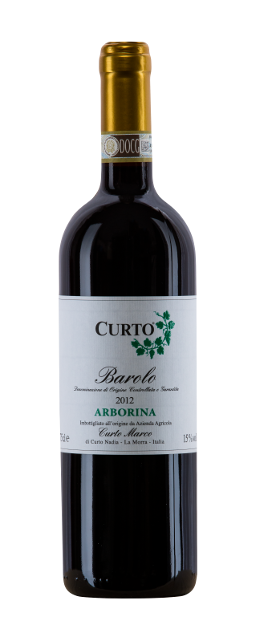
The Barolo Arborina from Nadia Curto is made in the “modern way” with short maceration time and ageing in small barrique. The plants are located in the Arborina vineyard in La Morra, with a south exposure at an altitude of about 270-300 m a.s.l.
BASIC INFORMATION
Product name: Barolo Arborina Grape: 100% Nebbiolo Classification: DOCG Number of bottles produced: 5000 Color: Garnet red Fragrance: Spicy with hint of rose petals, fruity with balsamic notes Taste: Elegant, austere, fruity Food pairing: Braised meats
VINIFICATION (Wine-making)
Method: Fermentation takes place in rotary fermenters Temperature: 30 – 32 degrees Celsius Length: 5 day maceration Ageing: 2 years in Barrique Minimum aging in bottle: 1 year
VINEYARD
Vineyard: Arborina Soil: marna stone with clay and sand Exposure: South
Barolo La Foia
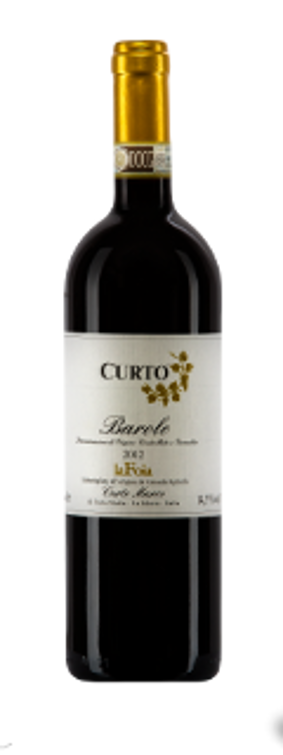
The grapes for this wine is also located in Arborina, but Nadia uses a different method of vinification. With the Barolo La Foia, the wine undergoes long maceration and ages in bigger barrels (30 – 40 HL). The plants are located at an altitude of about 270-300 m a.s.l and have east, south-east exposure.
BASIC INFORMATION
Product name: Barolo La Foia
Grape: 100% Nebbiolo Classification: DOCG Number of bottles produced: 7000 Color: Bright garnet red
Fragrance: Spicy with hint of rose petals, liquorice, leather Taste: Austere, full, elegant Food pairing: Braised meats, aged cheese
VINIFICATION (Wine-making)
Method: Manual
repassing and pressing
Temperature: 30 – 32 degrees Celsius Length: 20 day maceration Ageing: 2 in oak barrels (20 or 30 HL) Minimum aging in bottle: 1 year
VINEYARD
Vineyard: Arborina Soil: marna stone with clay and sand Exposure: South east
Langhe Nebbiolo
BASIC INFORMATION
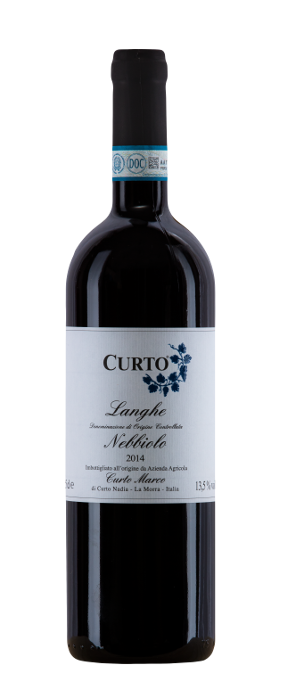
Product name: Langhe Nebbiolo Grape: 100% Nebbiolo Classification: DOC Number of bottles produced: 2000 Color: Garnet red Fragrance: Roses, red fruits, spices Taste: Elegant yet structured. Fresh. Food pairing: Pasta, meat, cheese, salami
VINIFICATION (Wine-making)
Method: Manual repassing and pressing Length: 15 day maceration Ageing: Aged in oak for about 1 year
VINEYARD
Vineyard: Arborina Soil: marna stone with clay and sand
Barbera d’Alba
BASIC INFORMATION
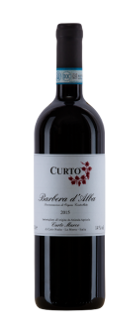
Product name: Barbera d’Alba Grape: 100% Barbera Classification: DOC Number of bottles produced: 3000 Color: Deep ruby red Fragrance: Blackcurrant, black cherries, blackberries Taste: Fresh acidity, long finish, red fruits Food pairing: Cheese and cured meats
VINIFICATION (Wine-making)
Method: Fermentation in rotary fermenters Temperature: 30 – 32 degrees Celsius Length: 5 day maceration Ageing: 4 months in wood
VINEYARD
Vineyard: Arborina Soil: marna stone with clay and sand Exposure: South
Dolcetto d’Alba
BASIC INFORMATION
Product name: Dolcetto d’Alba
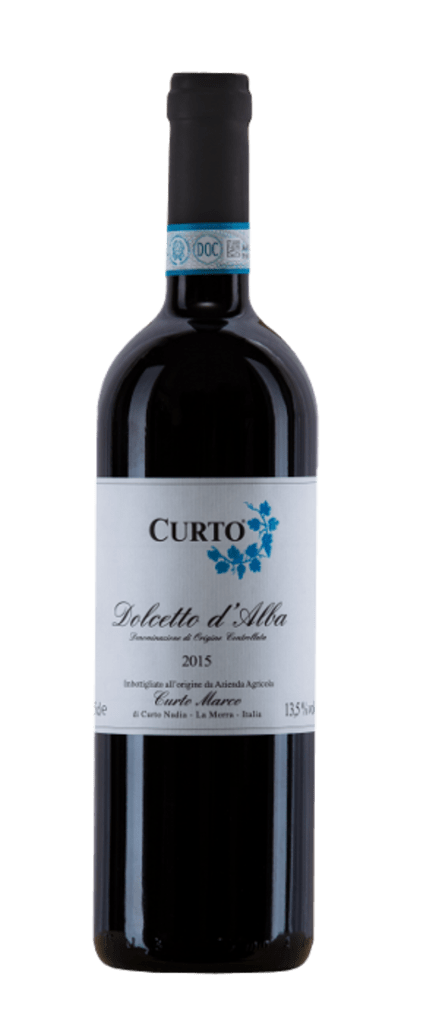
Grape: 100% Dolcetto Classification: DOC Number of bottles produced: 3500 Color: Ruby red with purple tendencies
Fragrance: Violet, cherry, plum, blueberry
Taste: Fruity, easy to drink
Food pairing: Pizza, light dishes, aperitivo
VINIFICATION (Wine-making)
Temperature: About 30 degrees Celsius Length: 4 day maceration Ageing: Stainless steel tanks
VINEYARD
Vineyard: Gattera Exposure: West – Northwest
Langhe Freisa
BASIC INFORMATION
Product name: Langhe Freisa
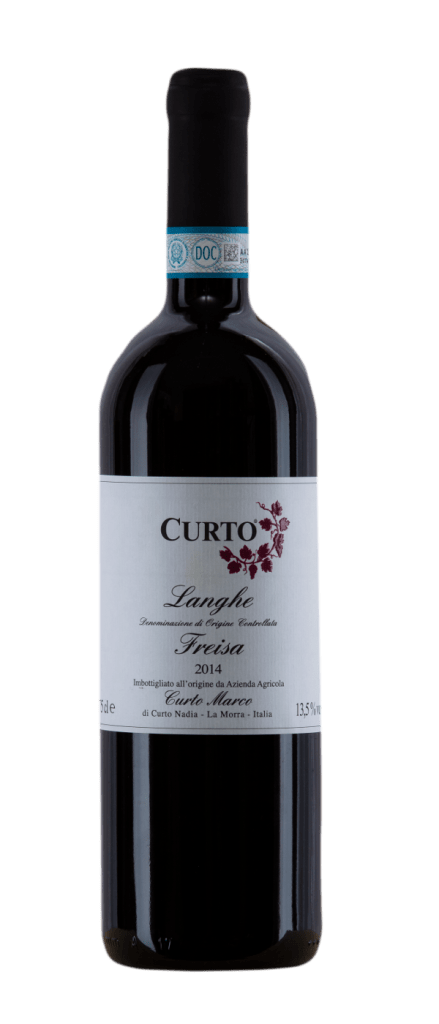
Grape: 100% Freisa Classification: n/a Number of bottles produced: 1000 Color: Ruby red
Fragrance: Vegetable, fruity, spicy
Taste: Rustic wine, rich tannins, good acidity
Food pairing: Fatty foods, cheese, cold cuts
VINIFICATION (Wine-making)
Method: Temperature: Length: 8 day maceration Ageing: Stainless steel tanks
VINEYARD
Vineyard: Arborina Soil: marna stone with clay and sand
Disclaimer: I have not visited Moccagatta before. And honestly, haven’t tried many of their wines. However, a few weeks ago my friend served me the Bric Balin 2016 blind and it blew me away! Which then led to my new interest in the Moccagatta wines.
Barbaresco
Nebbiolo for Barolo or Nebbiolo for Barbaresco? The grape may be the same, but the end results are quite different. Why? Climate has a lot to do with it. So does soil. The “Map Man” makes great 3d maps of the different areas, that show you how different the soil, altitude & exposition are in the different cities of Piemonte.
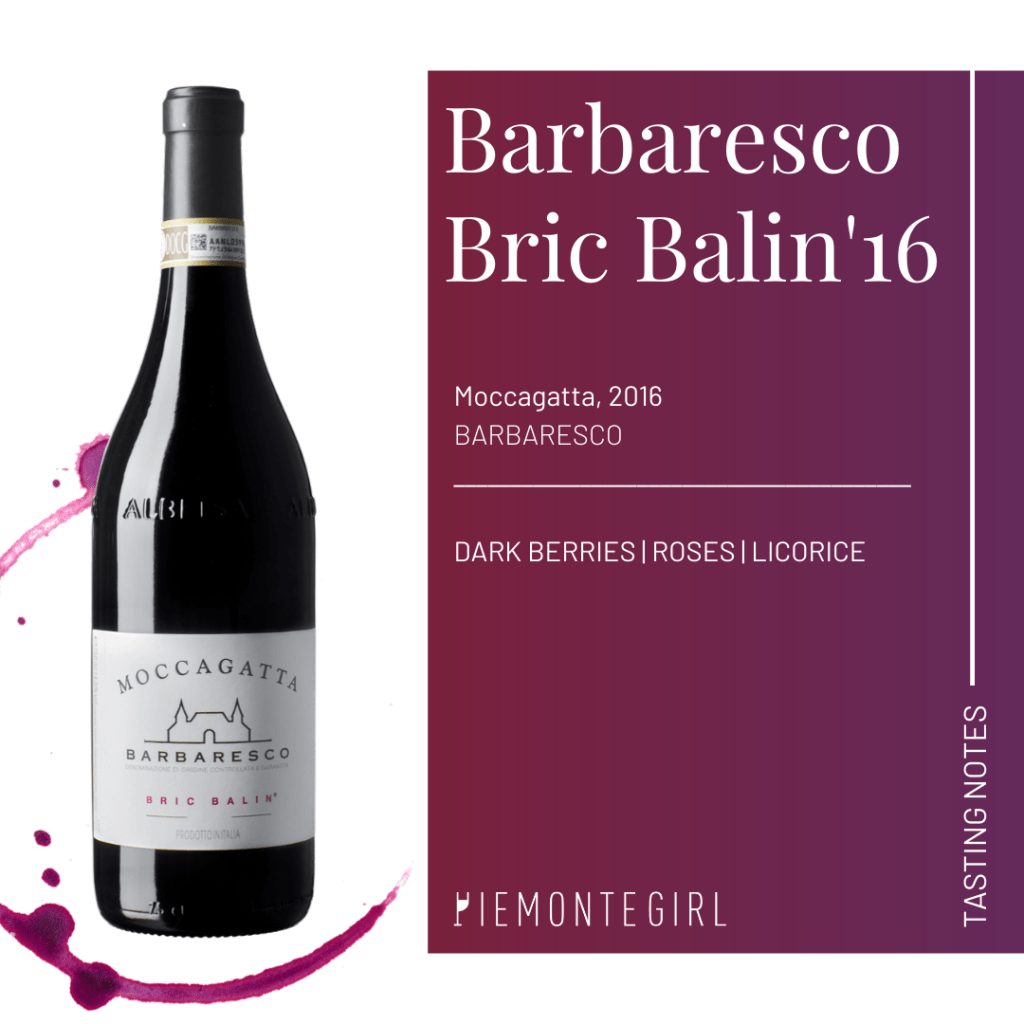
Even though I tend to stay within the confounds of Barolo, I do try to venture out and try wines from all over Piemonte (and the world). And Barberasco is not exactly very far away from Barolo. Although I have not tried all wines from Barbaresco, I normally prefer the wines from Barolo. But the Moccagatta Barbaresco Bric Balin 2016 really impressed me.
Moccagatta Bric Balin 2016
2016 produced some really big wines. Often compared to 2010, wines from 2016 will benefit from staying in the cellar for quite a few years.
The tannins are big, but they disappear fairly quickly and you’re left with beautiful fruit flavors. The wine lasts long in the mouth and it’s hard to put the glass down. If you drink it now, having some food with a glass will go a long way. Some air might also be beneficial to the drinking experience.
Barbera d’Alba 2017 308kr (New Vinatage) Cavallotto’s barbera supriore is excellent. 2017 is not my favorite vintage, but when you’re a good winemaker, you make good wines in any vintage. This is a barbera that has excellent aging potential. It spends 15-18 months in big barrels and then 6 months in the bottle before it’s release. Good acidity, dark fruits, intense – perfect with pasta or pizza.
Langhe Nebbiolo 2017 280kr (New Vintage) Cavallotto makes their Langhe Nebbiolo almost like a barolo. The grapes come from the Barrolo Cru vineyards and spend 15-18 months in big barrels after a long fermentation. The tannins are quite persistent, but the fruit shines through and lasts a while in the mouth. Can drink now, but I’d keep it for a little bit.
Moccagatta
Moccagatta Barbaresco Bric Balin 2016 575kr (New Vintage) I’ve recently been served this blind, and I was mega impressed. 2016 is a big vintage, but the tannins disappear quite quickly and you’re left with an impressive fruit boquet.
Vietti
Vietti Barolo Castiglione While we’re waiting for the 2016 Barolo’s from Vietti, the 2015 is drinking quite nicely right now!
Trediberri
Shhhh don’t tell anyone, but the 2016 Barolo from Trediberri will be released tomorrow! I’ve only ever tried it directly from a freshly bottles bottle, but I can tell you that the wine is INCREDIBLE.
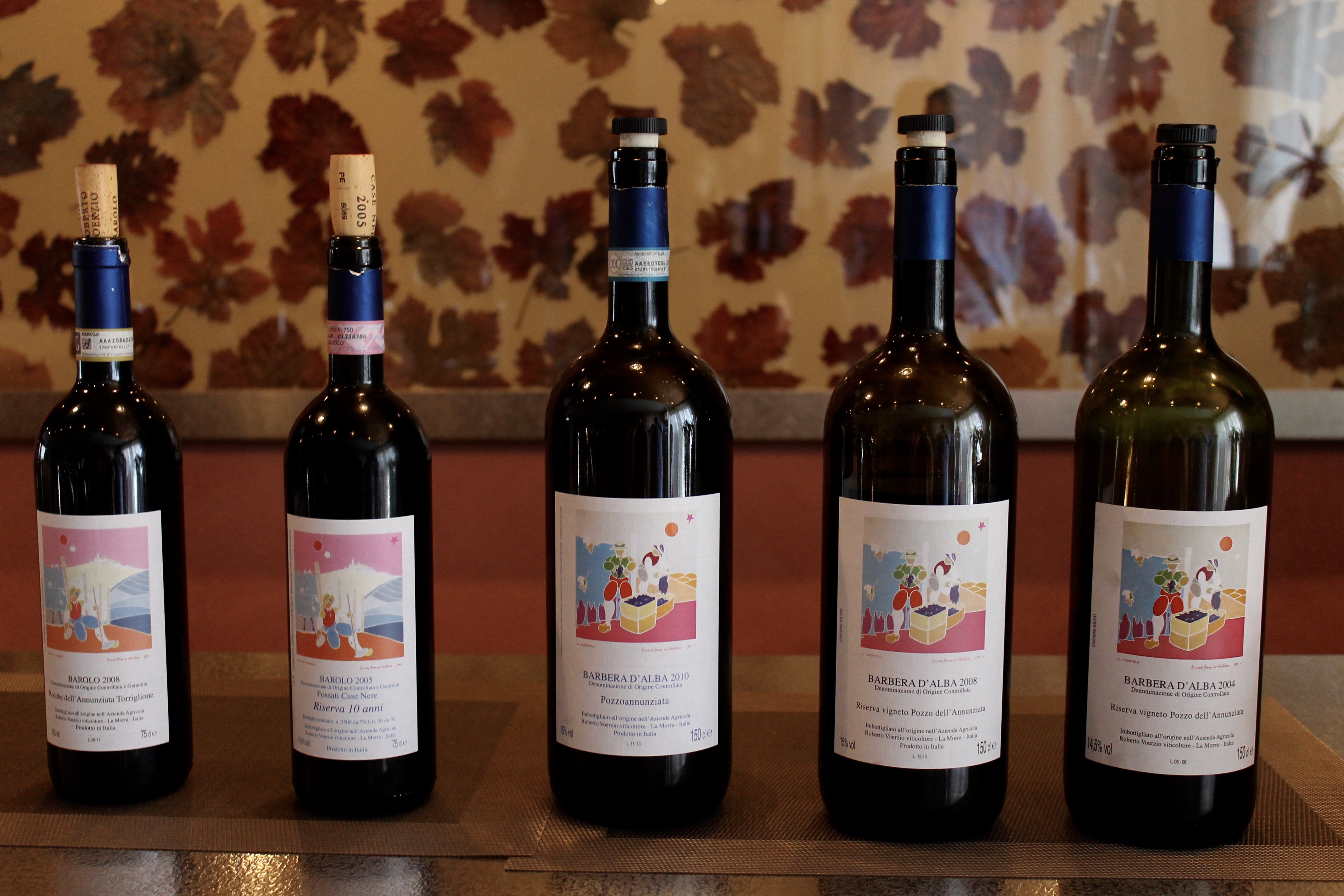
Norwegians rejoice! The Roberto Voerzio Dolcetto finally came back to the Norwegian market last month! It had been a while since I’d seen his wines here. And if you haven’t already, it’s still possible to order it at Vinmonopolet.
A myriad of Roberto’s other wines are also available. My personal favorite of his is the Barbera Pozzo. It only exists in Magnum bottles and since I can’t afford it, I hope to try it at the winery again this March. Or hope that someone will buy it for me. HINT: my birthday is coming up… haha
A gift from Roberto
Roberto Voerzio
Roberto’s winemaking style stands out. A “modernist”, just like Elio Altare, using small oak barrels and long maceration time. But what he is know for, is his work in the vineyard. Roberto chooses to do a very aggressive green harvest, reducing the number of grapes per plant, which results in more concentrated wine.
Voerzio Dolcetto 2018
In a blind tasting, this wine can be hard to figure out. Since Roberto doesn’t make wines that are “typical”, his Dolcetto doesn’t really seem like a Dolcetto. It could almost be mistaken for a Barbera, apart from the lack of acidity.
The first notes that hit are spices. Herbs. Licorice. Concentrated fruit in the mouth, typical of a Roberto Voerzio Dolcetto. Juicy, almost sweet. Predominantly ripe cherries, but also other ripe dark fruits. An impressive wine!
My good friend Lorenzo is the youngets generation of the Azelia family. Fun fact: one of the people in the world that makes me laugh the most is Lorenzo Scavino. I’m not sure why, but I swear I’m in stitches like 50% of the time I spend with Lorenzo.
The story of Azelia starts in 1920 when Cavalier Lorenzo Scavino started to vinify the grapes from the family owned vienyards. This would be the start of an incredible journey for the Scavino family. Today, Luigi, Lorella and their son Lorenzo run the show. Lorenzo, who bears the name of his great grandfather, represents the 5th generation of winemakers in the family.
Winemaking
When it comes to the “style” of winemaking, Azelia adopted a method in the cellar that represents a fusion between modern and traditional; a method I like to call Contemporary Traditionalist. But, as I’ve mentioned before, who really cares as long as the wines are good? As Luigi says, “It’s always a matter of balance.”
Azelia Wines
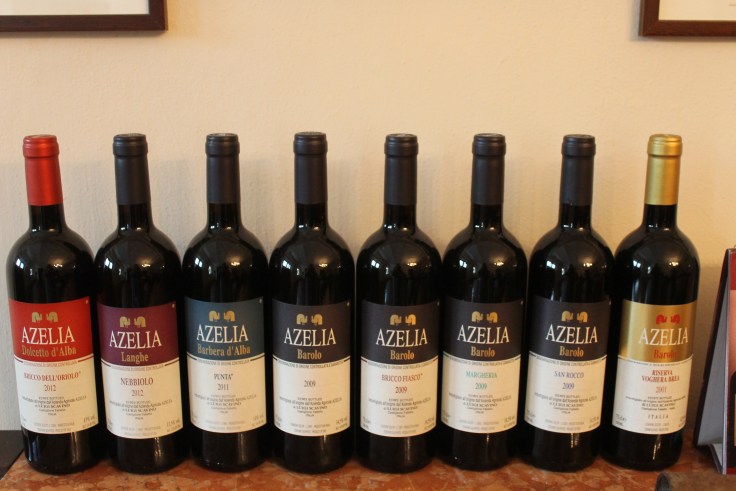
Azelia has 16 hectares across Castiglione Falletto, Serralunga d’Alba and Monelupe Albese. Some of their vineyards include Margheria, Bricco Fiasco and San Rocco, of which they make excellent Cru Barolo’s.
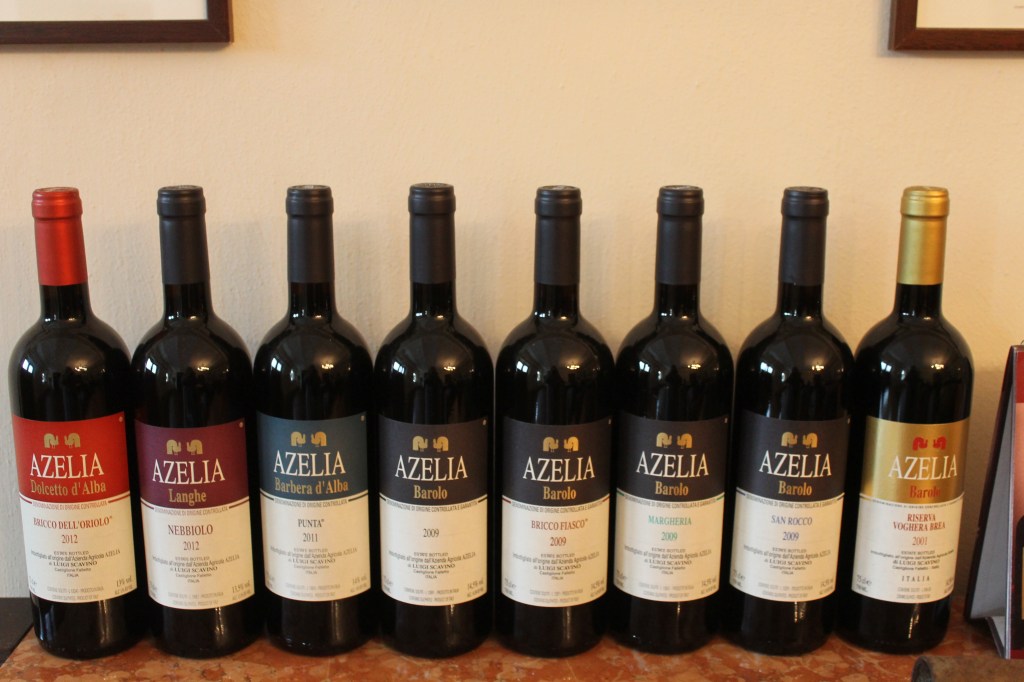
With 8 wines in their lineup, there are many good options to chose from. In addition to the Barolo’s, Azelia also makes Dolcetto, Langhe Nebbiolo and a Barbera Superiore.
Fun fact about the Azelia Label
Because there are a few Scavino’s in the area, Lorenzo the 1st decided to use a different name on the label: Azelia. Azelia (Azalae) is a wild flower similiar to Daisy that used to grow in the Langhe. Sadly, this flower no longer grows in this region.
And you might have noticed an image of a peacock on the label. It’s there because the family’s farm used to have many peacocks running around.
Fun fact II
You may have heard of the winemakers Paolo Scavino and Cavallotto. Well, as it turns out that the Azelia, Cavallotto and Paolo Scavino families are related (somehow). I forget exactly which family member is related to who, but how cool is it to have winemaker in your blood! Must have been some good genes in that family!
Azelia Wines
Wines available in: Norway Italy Sweden Switzerland USA United Kingdom
*List is not complete
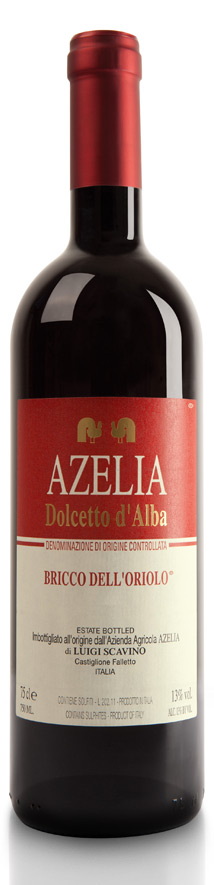
Dolcetto d’Alba
What distinguishes this Dolcetto from many other in the Barolo region, is the location of the vineyard. Located outside of the “borders” in Montelup Albese, the soil of this vineyard gives the wine a very different impression than if it were grown inside the “borders”.
BASIC INFORMATION
Product name: Dolcetto d’Alba
Grape: Dolcetto Classification: DOC Number of bottles produced: 15,600 Color: Intense purple red color
Fragrance: Red fruits, blackberry, rose, sweet spices
Taste: Aromatic and mineral, fruity and flolar
Food pairing: pizza, pasta, aperitivo
VINIFICATION (Wine-making)
Method: Rotorfermentors, vinification with indigeneous yeast Temperature: 27 degrees celcius Length: 7 days Ageing: Stainless steel
VINEYARD:
Soil: Calcareous tending to sandy Exposure: South, 600 m a.s.l. Age of plants: 45 years
Langhe Nebbiolo
BASIC INFORMATION
Product name: Langhe Nebbiolo Grape: Nebbiolo Classification: DOC Number of bottles produced: 10,200 Color: Fragrance: Violet and floral aromas, cherry, strawberry, currant Taste: Good acidity, ripe tannins, easy to drink
VINIFICATION (Wine-making)
Method: Rotorfermentors, vinification with indigeneous yeast Temperature: 28 degrees celcius Length: 7 days Ageing: Stainless steel
VINEYARD:
Soil: White calcareous Exposure: Age of plants: Average of 20 years
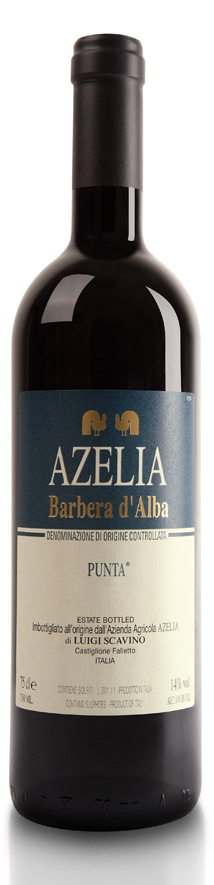
The age of the vines used for the Barbera are around 60 years old! It’s also a Barbera Superiore, which means it spends some time in oak.
BASIC INFORMATION
Product name: Punta Grape: Barbera Classification: DOC Number of bottles produced: 6,700 Color:
Fragrance: Forrest berries, prune and blackberry.
Taste: Balanced acidity, fresh, fruity
Food pairing:
VINIFICATION (Wine-making)
Method: Rotorfermentors, vinification with indigenous yeast Temperature: 29 degrees celcius Length: 15 days Ageing: 14 months in small barrels
VINEYARD:
Soil: Calcareous
and Clayey Exposure: South-west Age of plants: 60 years old
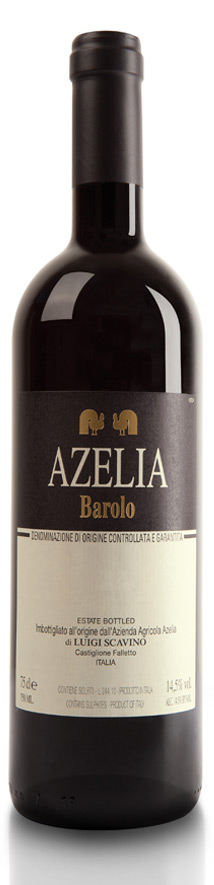
Azelia Barolo
A classic Barolo with grapes from both Castiglione Falletto and Serralunga d’Alba. Spends about 2 years in big barrels. In the vintages where the Riserva isn’t made, those grapes go into this wine,
BASIC INFORMATION
Product name: Barolo Grape: Nebbiolo Classification: DOCG Number of bottles produced: 26,400 bottles, 600 magnums Fragrance: Sweet nose, hints of cherry, black currant and licorice Taste: Fruity tannins
VINIFICATION (Wine-making)
Method: Rotorfermentors, vinification with indigenous yeast Temperature: 31 degrees Celcius Length: 4-5 weeks with submerged cap Ageing: 24 months in large casks Minimum aging in bottle: 1 year
VINEYARD:
Soil: White calcareous tending to clayey Exposure: South-West Age of plants: 45 years
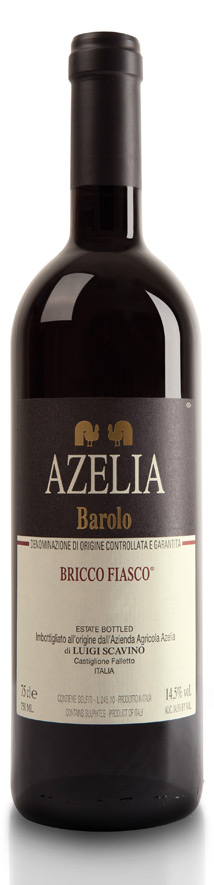
Barolo Bricco Fiasco
The Barolo Bricco Fiasco has been made since 1978. A historic cru from Castiglione Falletto. The age of the vines average 65 years.
BASIC INFORMATION
Product name: Bricco Fiasco Grape: Nebbiolo Classification: DOCG Number of bottles produced: 6,800 bottles, 520 magnums and 60 double magnums Fragrance:Perfumed, floarl, red fruit Taste: Rich, warm, fresh, ripe tannins
VINIFICATION (Wine-making)
Method: Vertical fermenters in stainless steel, vinification with indigenous yeast Temperature: 31 degrees Celsius Length: 4-5 weeks with submerged cap Ageing: 24 months in small barrels Minimum aging in bottle: 1 year
VINEYARD:
Soil: White calcareous Exposure: South Age of plants: 65 years
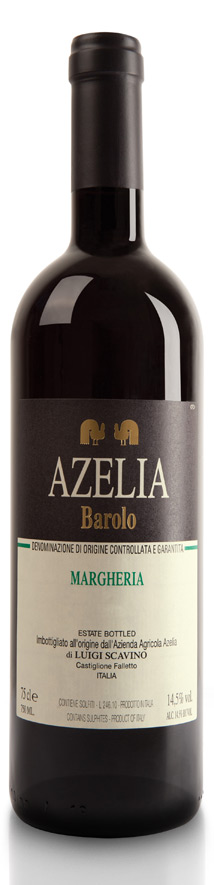
Barolo Margheria
This was one of the first Barolo’s Luigi decided to put in big barrels. Typical Serralunga style. Energetic.
BASIC INFORMATION
Product name: Margheria Grape: Nebbiolo Classification: DOCG Number of bottles produced: 8,100 bottles, 520 magnums, 60 double magnums Fragrance: Complex aromas, black fruits, licorice and spices Taste: Persistent tannins that give it structure, long finish
VINIFICATION (Wine-making)
Method: Vertical fermenters in stainless steel, vinification with indigenous yeast Temperature: 31 degrees celcius Length: 4-5 weeks with submerged cap Ageing: 28 months in large casks Minimum aging in bottle: 1 year
VINEYARD:
Location: Serralunga d’Alba Soil: Clayey with tufaceous marls Exposure: South Age of plants: 50 years
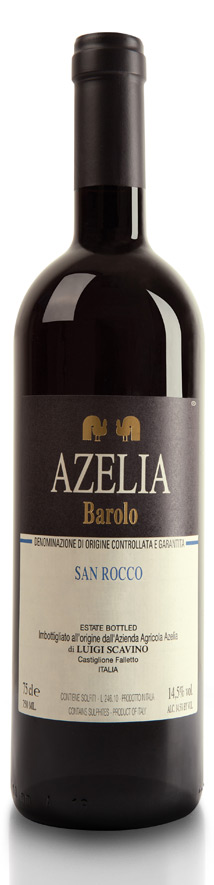
Barolo San Rocco
BASIC INFORMATION
Product name: San Rocco Grape: Nebbiolo Classification: DOCG Number of bottles produced: 6,400 bottles, 520 magnums, 60 double magnums Fragrance: Licorice, spices, dark fruits Taste: Fruity, cherry and blueberry. Sweet, ripe tannins, complex.
VINIFICATION (Wine-making)
Method: Vertical fermenters in stainless steel, vinification with indigenous yeast Temperature: 31 degrees celcius Length: 4-5 weeks with submerged cap Ageing: 24 months in small barrels Minimum aging in bottle: 1 year
VINEYARD:
Location: Serralunga d’Alba Soil: Clayey and Calcareous Exposure: South Age of plants: 55 years
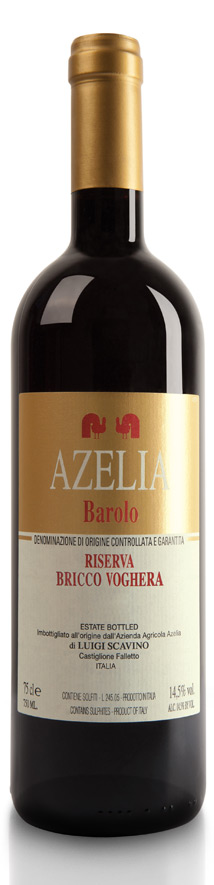
Barolo Riserva Bricco Voghera
The Riserva from Azelia is only made in excellent vintages, and is
released after 6 years.
BASIC INFORMATION
Product name: Riserva Bricco Voghera Grape: Nebbiolo Classification: DOCG Number of bottles produced: 3,100 bottles, 340 magnums and 60 double magnums Fragrance: Dried flowers, dried fruit, great freshness Taste: Black cherry, prune, rose, violet, dark chocolate, round tannins, long finish
VINIFICATION (Wine-making)
Method: Vertical fermenters and stainless steel, vinification with indigenous yeast Temperature: 31 degrees Celcius Length: 4-5 weeks with submerged cap Ageing: 30 months in large casks
VINEYARD:
Location: Serralunga d’Alba Soil: Clayey and calcareous Exposure: South Age of plants: 75 years old
Before we talk about the Accomasso Barolo, let’s talk about Lorenzo Accomasso. After his quick rise to fame, Accomasso’s wines have been harder and harder to come by. The story of Lorenzo Accomasso is a peculiar one. And he’s a peculiar man. And his wines can be a bit peculiar too. I’ve only ever had his wines a handful of times, and the experience has been quite varied to be honest.
However, I have been lucky enough to visit him twice. And it’s quite the experience. He doens’t speak a word of english or regular italian. Only dialect. So I always bring along a translator. Not that it really helps. He doesn’t really talk about wine. The last time I was there, he was very excited about the land he has just bought. At age, 80+. He really is very peculiar. Hopefully I’ll be able to visit again this year!
Accomasso Barolo 2010
2010 has a big reputation, and this 2010 Barolo lived up to it. There’s a whole debate going on about whether or not the 2010’s are ready now, and in my limited experience with 2010 I think they could use a few more years.
The aroma’s immediately reminded me of La Morra. I love it when a wine can take you back to some of your fondest memories. A mix of fruits and herbs on the nose, really beautiful aromas. The first sip took me a bit by surprise. It’s a big wine. Tannins are strong, but still smooth, if you know what I mean.
His wines get mixed reviews, but the 2010 Accomasso Barolo was really good! I tasted it blind, and was honestly quite surprised when I saw which wine it was. It’s a very big wine, so it got even better with some food. If you have any 2010, you can keep them another 5-10 years!
Enzo Bartoli was born in 1897 in Nizza di Monferrato and have his life to the soil, wine and people from the town at the foot of the mountain. He was a simple and honorable man who devoted his life to find and cultivate the perfect soil to produce the finest fruit from the vineyards and handcraft wines that reflect the majesty of the Piedmont.
Now, the question remains the same: Who is, or was, Enzo
Bartoli?
And the answer? Enzo never existed. He was made up by the company
that produces the Enzo Bartoli wines. And how do I know this? Well, I did some
research.
Digging a little deeper
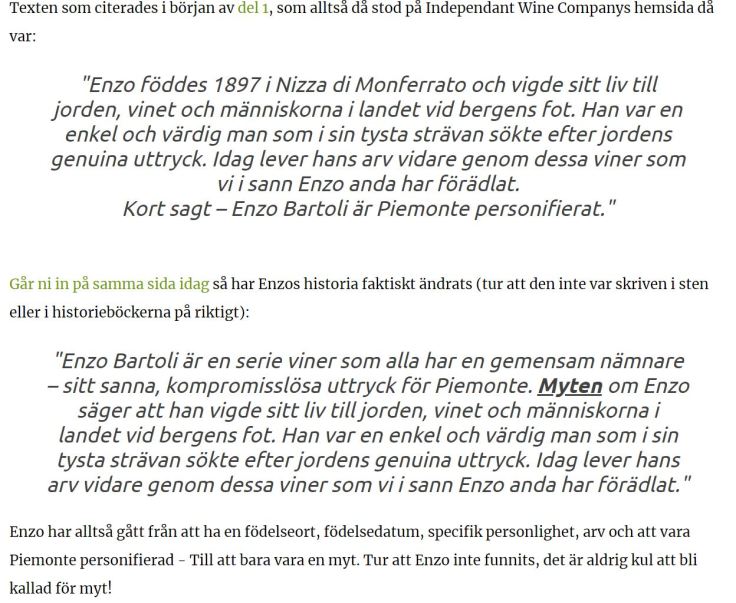
Research showed that the import
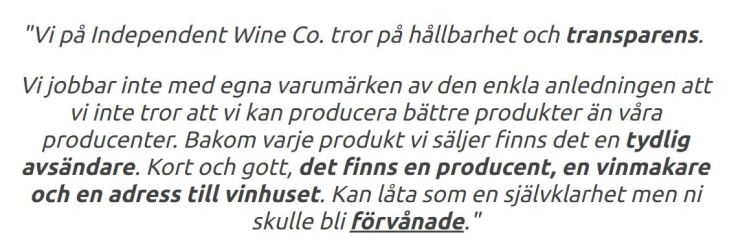
company Independent Wine Company
previously spun a tale about who Enzo Bartoli was on their website. Back in 2018
you could find this statement (in Swedish) on the website:
“Enzo föddes 1897 i Nizza di Monferrato
och vigde sitt liv till jorden, vinet och människorna i landet vid bergens fot.
Han var en enkel och värdig man som i sin tysta strävan sökte efter jordens
genuina uttryck. Idag lever hans arv vidare genom dessa viner som vi i sann
Enzo anda har förädlat. Kort sagt – Enzo Bartoli är Piemonte
personifierat.”
This statement was later changed,
and the Enzo who was born in 1987 in Nizza Monferrato was all of a sudden
referred to as a myth. And now, any mention of Enzo, myth or otherwise, has been
removed completely from the website.
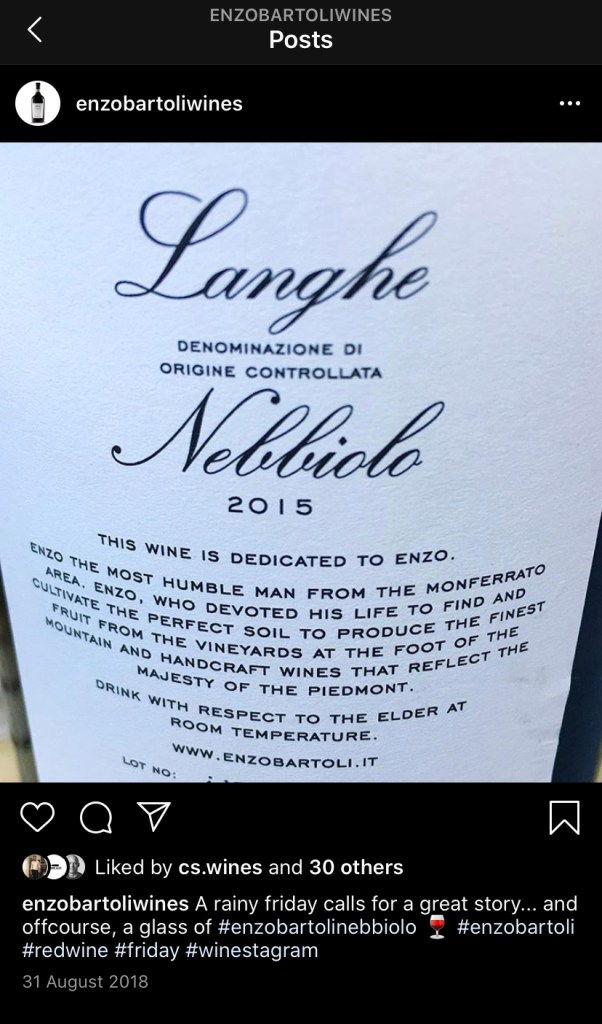
If you dig deep into the Enzo
Bartoli Instagram, you’ll find traces of this story. The back label used to
say: This wine is dedicated to Enzo. Enzo, the most humble man from the
Monferrato area. Enzo, who devoted his life to find and cultivate the perfect
soil to produce the finest fruit from the vineyards at the foot of the mountain
and handcraft wines that reflect the majesty of the Piedmont. Drink with
respect to the elder at room temperature.” But if you look at the Enzo Bartoli
website today, there is no mention of Enzo at all.
Turns out I am not the only one…
As it turns out, I am not the first to question the wines of
Enzo Bartoli. During my research I came across this article from 2018 on
Eftersmak.se, where the myth of Enzo Bartoli was debunked. Along with multiple
screen shots, pictures of the bottles and multiple quoted conversations with customer
service at Systembolaget seems to prove that Enzo Bartoli was indeed made up.
After the good work of the people at Eftersmak.se, The Independent
Wine Company issued a statement in 2018 where they apologized for the miscommunication
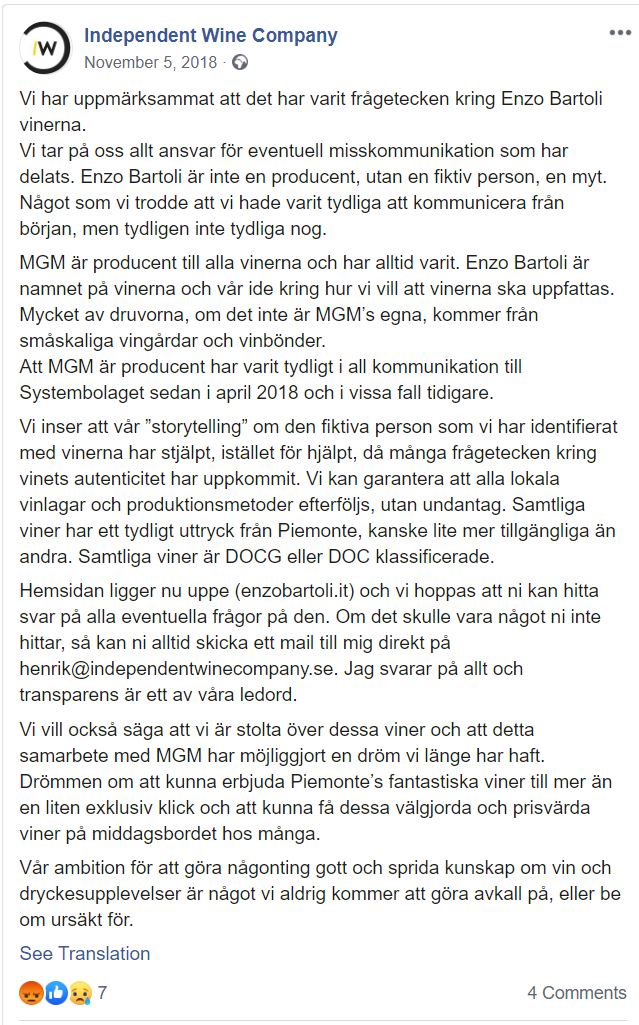
around Enzo Bartoli, and confirmed that he was never a real person, but a myth.
You’ll find the screenshot of the Facebook statement
What is Enzo Bartoli?
I think the more pressing question is: What is Enzo Bartoli?
Because calling it wine would be a disservice to the other winemakers in
Piemonte.
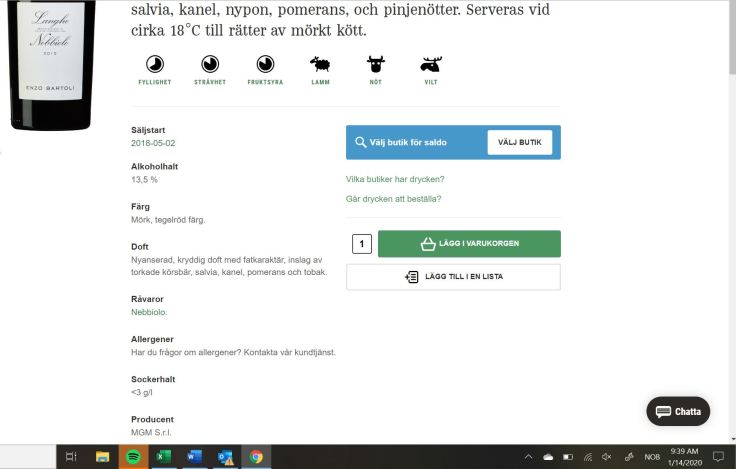
On the Enzo Bartoli website it states that “all Enzo Bartoli Wines are made my Mondo del Vino. However, on the website of Mondo Del Vino, Enzo Bartoli is not listed in their portfolio. The headquarters of MGM Mondo Del Vino is in Forli and the only other address is in Priocca. In other words, not really anywhere close to Barolo. So how come a Barolo is associated with these companies? And where is the wine made? Because in order for it to be called Barolo, the wine should be produced within the borders of Barolo.
Anyone have any idea where to find this winery? Or factory? No one seems to be able to answer this question… I have reached out to Mondo Del Vino via their contact form online, but have not heard back. I’ve also spoken to a man (presumably one of the Norwegian importers) at a wine fair in Norway, and he was unable to answer any of my questions.
What does all this mean? I know
the world is changing, but since when has it become ok to pass off mass
produced juice as quality wine? How can someone create a fictional character
and pass him off as real in order to sell wine? How insulting is that to
winemakers like Elio Altare or Maria Teresa Mascarello, or any of the other
legends or hardworking winemakers from Piemonte?
Nebbiolo for Peace
It’s important to speak up when something isn’t right, but
it’s also important to focus on all the good things. The main reason why I love
wine is the people. The hardworking, passionate, hardcore men and women who dedicate
their lives to winemaking. Let’s come together and celebrate these wonderful
people.
I’m certainly dedicating my life to tell the world about these amazing farmers. My life is definitely richer because of them. I frequently laugh when I think about Nicola from Trediberri comparing the 2018 Barolo to Miley Cyrus. And I’m in awe of Elio who went against his family in order to follow his heart. And I look up to Chiara Boschis, one of the few female winemakers during a time when it was a “man’s world”.
So le’ts celebrate the wonderful winemkars of Piemonte. And drink lots of Nebbiolo.

 PIEMONTEGIRL